 Burlington
 Board & Batten in a Skagit Valley Climate
Board and batten has been a staple look on homes around Sedro-Woolley for generations — tall, clean vertical lines with raised battens marking each seam. It reads as sturdy and traditional, which is part of why it still shows up on farmhouses, craftsman remodels, and new builds throughout the valley. But the look is only half the story. Out here, siding doesn't just have to look right sitting between the Skagit River and the foothills — it has to survive a climate that punishes vertical seams, exposed fasteners, and anything that traps moisture against wood fiber.
Sedro-Woolley sits inland from the immediate coastline, but it still gets the same weather system that batters the rest of Skagit County: long stretches of driving rain pushed sideways by wind off the Sound, a moisture-laden salt air that travels further inland than most homeowners expect, and a moss season that can run most of the year on north-facing walls and shaded elevations. Board and batten siding, done wrong, is exactly the style that suffers most from that combination. Done right, in the right material, it's one of the most durable options available.
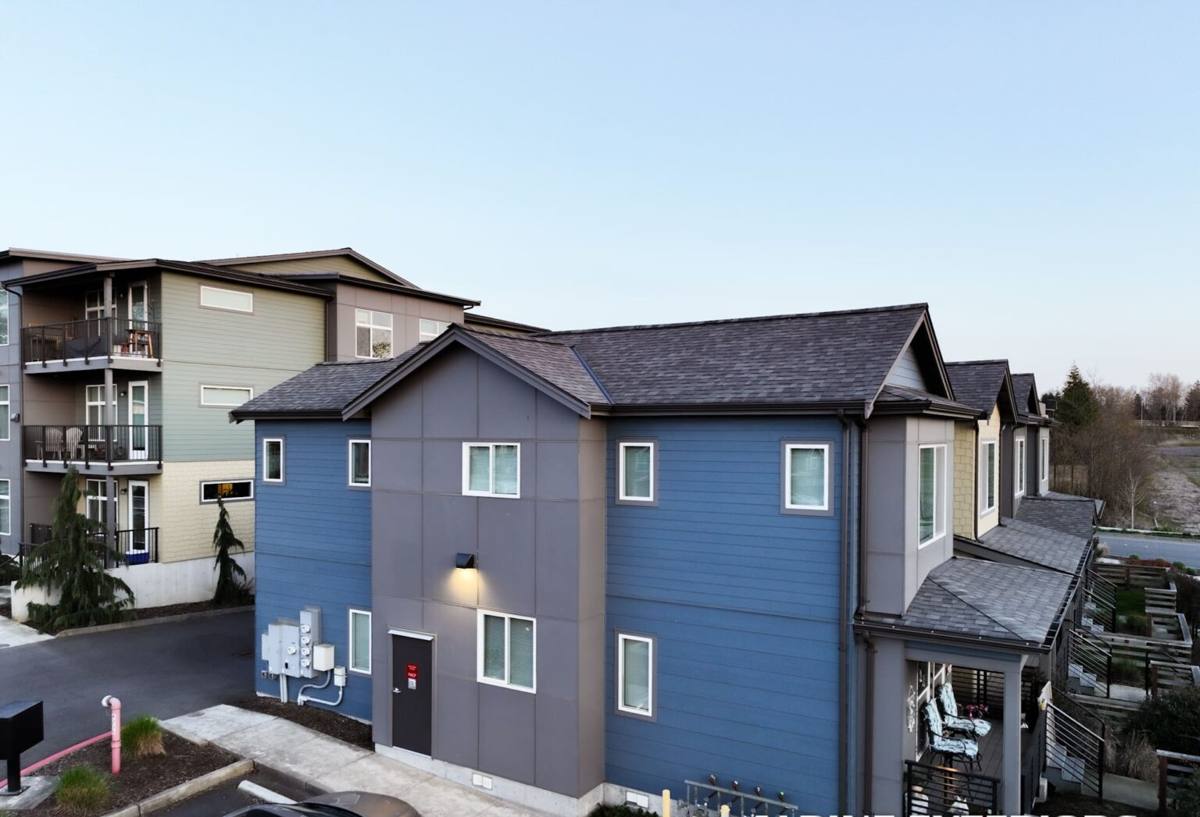
What Local Weather Actually Does to This Style of Siding
Moss and Trapped Moisture
The vertical battens that give this style its look also create dozens of narrow shadow lines and horizontal ledges along the top of every board. Those ledges are where moss spores settle first. On wood-based battens, moss holds moisture against the surface long after the rain has stopped, and that constant damp cycle is what eventually leads to soft, swelling, or rotting battens — usually starting at the bottom few feet of the wall, where splash-back and standing moisture do the most damage.
Driving Rain and Seam Failure
Wind-driven rain doesn't fall straight down here — it gets pushed horizontally into wall seams, especially on the west and south-facing elevations that catch storms coming off the water. Board and batten has more vertical seams than lap siding, and every one of those seams is a potential entry point if the batten spacing, fastening, and water-resistive barrier underneath aren't installed correctly. This is a style where installation quality matters more than the material label on the box.
Salt Air and Fastener Corrosion
Skagit County's salt-tinted air corrodes exposed or undersized fasteners faster than most homeowners realize, and board and batten uses a lot of fasteners — both through the base panel and again through each batten. Standard fasteners can start bleeding rust streaks down the face of light-colored siding within a few years. It's a small detail that gets overlooked constantly, and it's one of the first things we check on any board and batten job in this area.
Why We Install This Style Only in James Hardie Fiber Cement
We don't offer board and batten in vinyl, LP SmartSide, cedar, or primed spruce. That's a deliberate standard, not a limitation on style options. Board and batten is unforgiving of the weaknesses in those materials specifically because of how exposed its seams and battens are:
- Wood battens (cedar or primed spruce) absorb moisture at the end grain and along horizontal ledges — exactly where this climate delivers the most standing water.
- Vinyl board and batten profiles can look flat and plasticky up close, expand and contract with temperature swings, and aren't repairable in sections the way fiber cement is.
- LP SmartSide is an engineered wood strand product; it performs reasonably in dry climates, but wood strand cores are more sensitive to sustained moisture exposure than fiber cement, which matters on a style with this many seams and joints.
James Hardie's board and batten system — HardiePanel vertical siding paired with HardieTrim battens — is built from fiber cement, which doesn't have wood grain, doesn't have a strand core, and doesn't absorb water the way wood-based products do. It's manufactured in a climate-engineered formulation for regions like ours that see sustained wet weather, and it carries a factory-applied ColorPlus finish baked on before the panel ever reaches the jobsite, which holds up better against the fading and moss staining that plain painted wood or spruce trim show first. It's also non-combustible, which matters more each year as wildfire smoke and ember exposure become a bigger conversation in Washington, even west of the Cascades.
What a Correct Board & Batten Installation Involves
The Rainscreen Gap
The single most important detail on this style is what's behind it, not in front of it. A proper installation includes a rainscreen gap — a drainage space between the water-resistive barrier and the back of the panel — so that any moisture that does get past a seam has somewhere to drain and dry out instead of sitting against the panel or the sheathing. On a style with this many vertical joints, skipping the rainscreen is the single most common shortcut that leads to hidden moisture problems years down the road.
Fastening and Batten Spacing
Battens need to land over structural framing, follow the manufacturer's specified spacing, and use corrosion-resistant fasteners rated for coastal and marine-influenced air — not the general-purpose fasteners that get used on interior trim work. Fastener placement and depth both matter: overdriven fasteners crack the panel face and create a moisture entry point that's easy to miss until the paint starts bubbling around it.
Trim, Flashing, and Butt Joints
Every horizontal butt joint, window head, and transition to trim needs proper flashing and correct shingling order — upper panels lapping over lower ones, never the reverse. Caulk has a role at specific joints, but it's a backup, not the primary water management strategy. A wall that depends on caulk to stay dry will eventually leak, because caulk is the first material on the house to fail.
Comparing Board & Batten Materials
| Material | Moisture Behavior | Maintenance | Finish Durability |
|---|---|---|---|
| James Hardie fiber cement | Doesn't absorb water or swell; performs well with a rainscreen | Occasional wash; no repainting needed for years | Factory ColorPlus finish resists fading and moss staining |
| Cedar | Absorbs moisture at seams and end grain; prone to swelling | Regular refinishing, sealing, and moss treatment | Site-applied paint or stain fails faster in constant damp |
| LP SmartSide | Engineered wood strand core; sensitive to sustained wet exposure | Requires attentive caulk and paint upkeep at seams | Factory finish is durable but panel core is the weak point |
| Vinyl | Doesn't absorb water, but seams can allow moisture behind panel | Low, but not repairable in sections if damaged | Color fades over time; can look flat up close |
Our Process for Sedro-Woolley Board & Batten Projects
Every job starts with a walk-around of the existing walls, paying close attention to north and west-facing elevations, areas with heavy tree cover or shade, and anywhere we can already see moss buildup, soft trim, or rust streaking below fasteners — these are the tells that point to what's happening behind the surface. From there:
- We check the sheathing and water-resistive barrier condition once the old siding is off, and address any moisture damage before anything new goes up.
- We install (or verify) the rainscreen drainage gap — non-negotiable on a board and batten wall in this climate.
- HardiePanel goes up first, fastened to framing per manufacturer spec, followed by HardieTrim battens set at consistent, code-compliant spacing.
- All flashing, butt joints, and trim transitions are detailed before any caulk is applied.
- We do a final walk-through with the homeowner so you know exactly what was done and what to expect from the finish over time.
Simple Maintenance for the Life of the Siding
- Rinse the siding down once or twice a year, especially shaded and north-facing walls where moss takes hold first.
- Keep gutters clear so overflow doesn't run down the wall face and saturate battens near the roofline.
- Trim back vegetation and tree limbs that keep a wall section shaded and damp longer than the rest of the house.
- Do a quick visual check after major windstorms for any loose battens, cracked caulk joints, or fastener issues.
- Address small issues — a loose batten, a gap at a trim joint — right away rather than waiting for a full season.
Why Local Experience Matters for This Style
Board and batten hides mistakes well right after installation and reveals them slowly over the following years — by which point the crew that installed it may be long gone. A contractor who works Sedro-Woolley regularly already knows which elevations catch the worst of the wind-driven rain, which neighborhoods deal with heavier moss pressure from tree cover, and how the salt-influenced air moving up the valley affects fastener choice. That local pattern recognition is what separates a board and batten installation that looks good on day one from one that still looks good after a decade of Skagit County winters.
If you're weighing board and batten for a home in Sedro-Woolley, we're happy to take a look and talk through what your specific walls need — no pressure, no pushy sales pitch. Fill out the form below and we'll set up a free estimate.