 Burlington
 Samish Island Roofs Work Harder Than Most
Samish Island sits out where the weather comes straight off the water, and that changes what a roof needs to survive. Homes here take on a mix of stresses that inland Skagit County roofs rarely see all at once: salt-laden air drifting in off Samish Bay and Padilla Bay, wind-driven rain that gets pushed sideways into laps and flashings that were only designed to shed water falling straight down, and a moss and algae season that runs long because the shoreline stays shaded, damp, and cool for much of the year. None of these on their own is unusual for Western Washington. Together, on a roof exposed to open water, they wear materials down faster and expose weak points sooner than a typical Burlington-area roof.
That's the backdrop for every repair call we take on Samish Island. A shingle or a seam that would hold up fine in a sheltered inland yard can fail early out here, and the fix that actually lasts has to account for the exposure, not just patch the symptom.
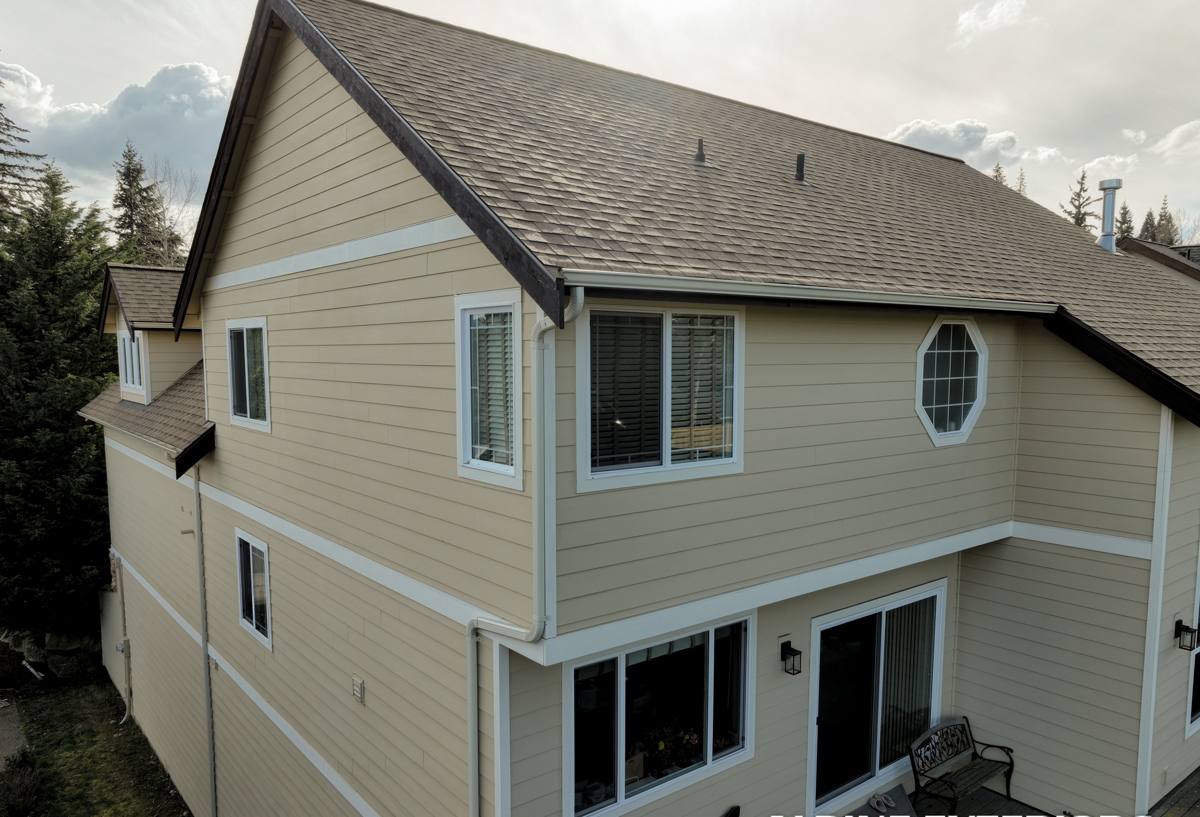
How Salt Air, Rain, and Moss Actually Damage a Roof
Salt Air
Airborne salt is corrosive to exposed metal — nail heads, flashing, gutter fasteners, and any fastener where the coating has worn thin. Once corrosion starts at a fastener or a flashing seam, water finds a path underneath the roofing material, and what looks like a small rust spot on the surface can be tracking moisture into the deck below it.
Driving Rain
Open water exposure means wind-driven rain hits the roof at an angle instead of falling straight down. That pushes water up under shingle laps, into valleys, and around chimney and vent flashing that would otherwise be adequate. Repairs on Samish Island roofs need flashing and underlayment details built for sideways water, not just standard-pitch drainage.
Moss and Algae
Shaded, moisture-retentive spots — north-facing slopes, areas under tree cover, valleys that stay damp — grow moss for a longer stretch of the year here than they would further inland. Moss holds water against the roofing material, lifts shingle edges as it grows, and works its way into gaps over time. Left alone, a moss mat on a roof edge or valley is one of the more common causes of a slow leak that a homeowner doesn't notice until there's a stain on a ceiling.
Signs Your Samish Island Roof Needs Repair
Most roof problems out here don't show up as a dramatic leak on day one. They show up as small signals that are easy to dismiss until the damage has spread. Worth checking for, or having us check for:
- Granules collecting in gutters or at downspout outlets — a sign shingles are wearing thin
- Dark streaking or green-black growth on north-facing slopes or in valleys
- Curling, cupping, or lifted shingle edges, especially on the sides facing open water
- Rust staining below metal flashing, vent boots, or exposed fasteners
- Soft spots or slight sagging felt when walking the roof (we check this, not homeowners)
- Water stains on interior ceilings, especially near chimneys, skylights, or where two roof planes meet
- Daylight visible through the attic roof deck at seams or nail holes
- Gutters or flashing that have visibly corroded or pitted
Any one of these is worth a look. Several at once usually means the repair window is closing and it's worth having someone assess whether repair still makes sense or whether the roof is closer to the end of its service life.
What a Correct Repair Actually Involves
A repair that holds up on Samish Island isn't just replacing the shingle or piece of flashing that's visibly damaged. The failure point is usually a symptom of something underneath — a flashing detail that was never built for driving rain, underlayment that's degraded from years of moisture cycling, or fasteners that have corroded and stopped holding tight. A repair that only addresses the surface tends to fail again within a season or two, often in the same spot.
A correct repair on this kind of exposure typically includes:
- Pulling back enough surrounding material to see the actual extent of the damage, not just the visible spot
- Checking the roof deck underneath for soft or rotted wood before closing anything back up
- Replacing corroded fasteners and flashing with materials rated for coastal exposure, not standard-grade hardware
- Rebuilding flashing details — valleys, chimney counterflashing, vent boots — so they shed water pushed at an angle, not just straight down
- Matching underlayment and shingle tie-in so the repaired section drains into the surrounding roof correctly instead of creating a new dam point
- Clearing moss and debris from the surrounding area so the repair isn't immediately sitting under a fresh moss mat
Our Repair Process
We keep the process straightforward because homeowners deserve to know exactly what they're paying for and why.
1. Inspection and Diagnosis
We start on the roof itself, not just at the spot where the leak or stain showed up inside. Because water travels before it shows itself indoors, the interior stain and the actual failure point on the roof are often several feet apart. We trace it back to the source before recommending anything.
2. Honest Scope
We tell you plainly whether this is a contained repair, a larger repair covering a section, or a case where the roof's overall condition means a repair is a short-term fix and replacement should be part of the conversation. We're not going to sell a repair on a roof that's genuinely past the point where repair makes financial sense — and we're not going to push replacement on a roof that just needs a proper fix.
3. The Repair Itself
Corroded fasteners and degraded flashing get replaced, not reused. Underlayment gets tied in correctly at the repair boundary. Moss and organic debris get cleared from the work area and immediate surroundings so the fix isn't undermined within a season.
4. Cleanup and Walkthrough
We clear debris, old materials, and fasteners from the yard and gutters, and walk through what we found and what we did before we leave.
Repair Approaches Compared
| Situation | Typical Fix | What to Watch For |
|---|---|---|
| Isolated flashing leak (chimney, vent, valley) | Flashing rebuild with coastal-rated materials | Reused old flashing that's already corroding |
| Localized shingle wear or wind lift | Section replacement, tied into existing courses | Poor color/course match if not handled carefully |
| Moss damage along edges or valleys | Moss removal, damaged material replacement, treatment to slow regrowth | Moss killer used without addressing the underlying moisture source |
| Corroded fasteners or gutter hardware | Hardware replacement with corrosion-resistant fasteners | Standard-grade fasteners that corrode again within a few years |
| Widespread wear across multiple areas | Full condition assessment — repair vs. replacement conversation | Repeated patch repairs on a roof nearing end of service life |
Maintenance Between Repairs
A repair holds up longer on Samish Island when it's paired with regular upkeep, given how much the salt air and moss season shorten a roof's margin for neglect. This isn't about upselling maintenance — it's genuinely the difference between a repair that lasts and one that reopens in a year.
- Keep gutters and downspouts clear so water isn't backing up under the roof edge
- Have moss and algae growth addressed before it spreads across a slope, not after
- Trim back tree cover where it's keeping sections of roof shaded and damp longer than necessary
- Have flashing and fasteners checked periodically for early corrosion, before it becomes a leak
- After major wind or storm events, have the roof looked at rather than waiting for a stain to appear indoors
What Repairs Typically Cost
Every roof and every repair is different, so we won't quote a number without seeing the roof, but the factors that drive cost are consistent:
| Factor | Why It Matters |
|---|---|
| Size of the affected area | A single flashing point costs far less than a full section of shingles and underlayment |
| Roof deck condition underneath | Rotted decking found during the repair adds material and labor to replace it properly |
| Roof pitch and access | Steeper roofs and harder-to-reach sections take more time and safety setup |
| Materials involved | Matching existing shingle type, color, and age affects sourcing and labor |
| Extent of moss or corrosion damage | Damage that's spread beyond the immediate failure point widens the repair scope |
Generally, small isolated repairs land in the low hundreds of dollars, while larger section repairs involving deck damage or extensive flashing work run into the low thousands. We'll always give you the actual number for your roof before any work starts, and we'll tell you honestly if a repair isn't the right call.
Why It Matters to Hire a Crew That Already Works Samish Island
Roofing crews that mostly work sheltered, inland neighborhoods don't always think in terms of driving rain and salt exposure by default — their standard details are built for a different environment. A crew that regularly works Samish Island and the rest of the Skagit County shoreline builds those conditions into every repair as a matter of habit: corrosion-resistant fasteners as the default, flashing details sized for wind-driven rain, and an eye for the moss and algae patterns specific to shaded, water-adjacent lots. That's not a marketing distinction — it's the difference between a repair that holds for years and one that needs to be redone.
Burlington Siding is based right here in Skagit County, and roof repair work on Samish Island and the surrounding shoreline is a regular part of what we do. We know what this exposure does to a roof over time, and we build every repair with that in mind.
Get a Free, No-Pressure Estimate
If you've noticed granules in the gutters, a stain on a ceiling, moss creeping along a valley, or you just want a second opinion on a roof's condition before it becomes a bigger problem, we're happy to take a look. Fill out the form below for a free estimate — no pressure, just an honest read on what your roof needs.