 Burlington
 Building a Deck That Holds Up in Conway
Conway sits low in the Skagit River delta, close enough to the water that salt-laden air, driving rain off Skagit Bay, and a moss season that can run eight months out of the year all show up in the condition of an outdoor deck faster than most homeowners expect. A deck built to a generic national spec — the kind you get from a crew that doesn't normally work this stretch of Skagit County — tends to show its age within a few years: soft spots at the ledger, streaked and slick decking boards, rusted hardware bleeding through the finish. A deck built for this specific ground and this specific weather holds its structure and its looks a lot longer.
This page covers what a correctly built deck looks like for a Conway property, the material and framing choices that actually matter here, and how we approach the job from design through final inspection.
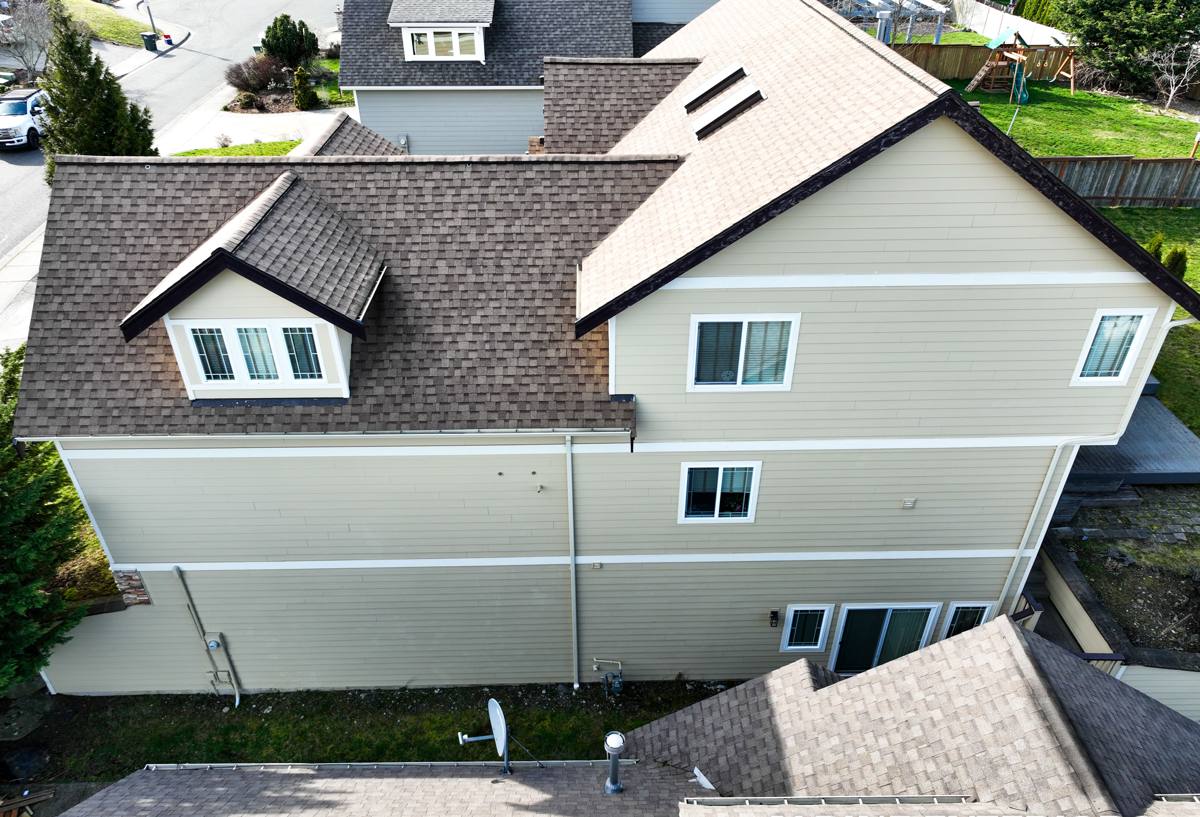
What Conway's Ground and Weather Actually Do to a Deck
Three conditions drive almost every deck problem we see in this area:
Salt Air
Proximity to Skagit Bay means airborne salt reaches fasteners, flashing, and metal railing components even on lots that aren't waterfront. Salt accelerates corrosion in anything less than a fully rated fastener, and corroding hardware is one of the most common reasons a structurally sound-looking deck fails at a connection point.
Driving Rain
Wind-driven rain off the water pushes moisture sideways, not just down. That matters at the ledger board connection (where the deck attaches to the house), around post bases, and at any horizontal surface where water can pool instead of shed. A deck detail that works fine in a drier inland climate can trap water here.
A Long Moss Season
Shade, moisture, and mild temperatures give moss and algae a long growing window on horizontal wood and composite surfaces alike. Left unmanaged, moss holds moisture against the decking surface, stains it, and turns it slick and genuinely unsafe underfoot — this is as much a safety issue as a cosmetic one.
Conway's low elevation in the delta also means some lots sit close to the water table or within flood zone overlays, which can affect footing depth, post base selection, and how close to grade the structure sits. We check this during design, not after footings are already poured.
Choosing the Right Decking Material
There's no single correct material for every Conway deck — the right choice depends on budget, how much upkeep the homeowner wants to do, and how exposed the deck is to weather. Here's how the common options actually perform in this climate:
| Material | Moisture Behavior | Moss Resistance | Upkeep |
|---|---|---|---|
| Cedar | Naturally decay-resistant if finished and maintained; can cup or check if neglected | Needs regular cleaning; moss takes hold without upkeep | Annual cleaning and re-finishing |
| Pressure-treated fir/hem-fir | Good rot resistance from treatment; more prone to warping over time | Same as cedar — needs regular cleaning | Annual cleaning, periodic sealing |
| Capped composite | Won't rot or absorb water into the core | Moss and mildew can still grow on the surface film and need washing | Periodic washing, no sealing or staining |
| PVC decking | Fully moisture-resistant, doesn't require a wood core at all | Same surface-level moss washing as composite | Lowest overall upkeep |
Wood gives a warmer, more traditional look and a lower upfront cost, but it asks for real ongoing maintenance in this climate — skip a year of cleaning and sealing and you'll see it. Composite and PVC cost more up front and don't eliminate moss entirely, but they remove the rot risk that wood decking faces from splashback and standing moisture at board edges.
Framing and Substructure: Where Decks Actually Fail
The decking surface is what homeowners see, but the framing underneath is what determines whether a deck lasts fifteen years or thirty. Most deck failures we're called to look at start below the boards, not on top of them.
Ledger Board Flashing
The ledger — where the deck bolts to the house — is the single most common failure point in this climate. Without proper flashing, water driven sideways by wind works its way behind the ledger and into the house band joist, leading to rot that's hidden until it's serious. A correct ledger detail uses flashing that sheds water fully away from the house framing, not just a bead of caulk.
Joist Protection
Untreated joist tops and cut ends are where treated lumber is most vulnerable, because pressure treatment doesn't always penetrate a field cut. Taping joist tops and sealing cut ends keeps standing moisture from soaking into exposed wood fiber.
Footings and Post Bases
Given the delta's low elevation and, in some spots, higher water tables, footing depth and post base selection need to account for local soil and drainage conditions, not just a standard frost-depth minimum. Post bases that hold the post above grade and away from standing water matter more here than in drier, higher-ground areas.
Hardware Grade
Salt air rules out lower-grade coated fasteners for anything structural. Structural connectors and fasteners rated for coastal or treated-lumber exposure cost more but don't corrode and weaken at the connections that hold the deck together.
Railings, Stairs, and Hardware Choices for Salt Air
Railing posts, baluster hardware, and stair stringer connectors are exposed to the same salt air as the framing, often with less protection. We spec fasteners and connectors rated for coastal exposure as standard, not as an upgrade — the cost difference over the life of the deck is small compared to replacing corroded hardware in a finished railing system a few years in. Cable railing and metal baluster systems in particular need corrosion-resistant hardware from the start, since replacing individual components later means disassembling finished work.
Our Deck Building Process
- Site and design walk: We look at grade, drainage, sun/shade exposure, and how the deck will attach to the house before recommending materials.
- Permitting: Skagit County deck permits depend on height, size, and whether the lot falls within a flood zone or shoreline overlay — we handle this as part of the job rather than leaving it to the homeowner to sort out.
- Footings and framing: Footings sized and placed for local soil conditions, ledger flashed properly, joists protected before decking goes down.
- Decking and railing installation: Installed per the manufacturer's spacing and fastening spec — this matters for warranty coverage on composite and PVC products.
- Final walk-through: We check every connection point and finish detail with the homeowner before calling the job done.
Maintenance in a Long Moss Season
No deck material in this climate is maintenance-free. The difference between materials is what kind of maintenance they need:
- Rinse or sweep debris off the deck surface regularly — trapped leaves and needles hold moisture and feed moss growth.
- Wash the deck surface at least once a year with a cleaner appropriate to the material; a pressure washer on the wrong setting can damage both wood fibers and composite caps.
- Keep gutters and downspouts clear so runoff isn't draining directly onto or under the deck.
- Check the ledger flashing and any visible fasteners annually for early signs of rust staining or gaps.
- For wood decks, plan on re-sealing or re-staining on a regular cycle rather than waiting until the finish has visibly failed.
Why Hire a Crew That Already Works in Conway
A deck built for a dry-climate spec, or by a crew unfamiliar with Skagit County's permitting and this delta's ground conditions, is more likely to need early repairs — a ledger that wasn't flashed for driving rain, footings that weren't sized for local soil, hardware that wasn't rated for salt exposure. A crew that already builds decks in Conway and the surrounding Burlington area knows which details matter here specifically, has already worked through the county's permitting requirements for this kind of lot, and builds to that standard as the default, not as an upsell.
What a Correct Deck Build Includes — Quick Checklist
- Properly flashed ledger connection, not just caulked
- Taped joist tops and sealed cut ends on treated lumber
- Footings sized for local soil and water table conditions
- Coastal-rated structural fasteners and connectors throughout
- Decking installed to manufacturer spacing and fastening specs
- Drainage planned so water doesn't pool under or against the structure
- Permit pulled and inspected through Skagit County where required
If you're planning a new deck or replacing one that's showing its age, we're happy to walk the site, talk through material options, and put together a straightforward estimate — no pressure, no obligation. Use the form below to get started.