 Burlington
 Samish Island Roofs Work Harder Than Most
A roof on Samish Island isn't dealing with the same conditions as a roof a few miles inland in Burlington. Sitting out on the water, homes here take a steady dose of salt-laden air, wind-driven rain that gets pushed sideways under poorly flashed edges, and a moss season that runs long and wet almost year-round in this part of Skagit County. None of that is unusual for a Puget Sound island property, but it does mean a roof built for a typical subdivision often falls short out here — and it means a re-roof done right the first time matters more, not less.
This page covers what we look at, what we install, and how we run a new roof installation job specifically for Samish Island homes, from the first walk-around to the last swept nail.
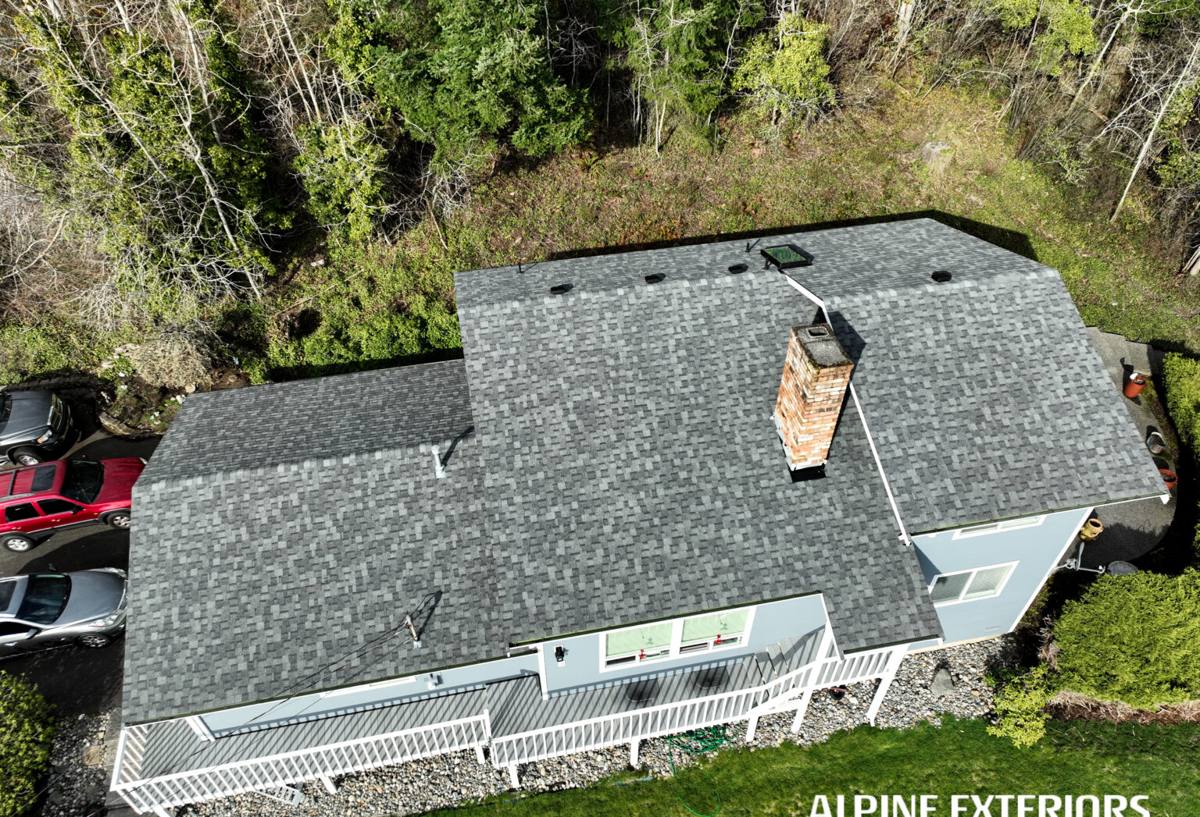
How the Local Climate Actually Wears On a Roof
Salt Air
Airborne salt accelerates corrosion on exposed metal — nail heads, flashing, vent boots, and any fasteners that aren't rated for coastal exposure. Over years, that corrosion is often what causes a leak long before the shingles themselves are worn out. It's a slow, quiet failure mode, which is exactly why it gets missed on a quick visual inspection.
Driving Rain
Storms coming off the water tend to drive rain horizontally, not just straight down. That puts real pressure on details that a calmer inland roof can get away with cutting corners on — step flashing at walls, valley construction, and the seal around any roof penetration. A roof that would perform fine on a dry, sheltered lot can leak here if those details aren't done to a higher standard.
Moss and Algae
Shade, moisture, and mild temperatures are a perfect combination for moss growth, and Samish Island gets plenty of all three. Moss doesn't just look bad — it holds moisture against the roofing material, lifts shingle edges, and works its way under laps over time, which shortens the life of the roof underneath it.
Signs a Samish Island Home Needs a New Roof, Not Another Patch
Homeowners often ask whether a repair will hold them over. Sometimes it will. But there's a point where patching starts costing more over a few years than a proper replacement would have, and that point comes faster in a marine climate like this one. Some signs it's time to talk replacement instead of repair:
- Granule loss heavy enough that you're finding grit in gutters every season
- Moss established across multiple slopes, not just isolated patches
- Soft or spongy decking felt underfoot during any roof access
- Repeated leaks in different spots rather than one recurring one
- Flashing that's visibly rusted, lifted, or was never properly stepped at walls and chimneys
- Shingles cupping, curling, or cracking, especially on south- and west-facing slopes
- The roof is nearing or past the manufacturer's expected service life for its material and local exposure
What a Correct New Roof Installation Actually Involves
"New roof" covers a lot of ground, and the quality gap between a rushed job and a correct one is almost entirely in the parts you won't see once it's finished. On a coastal property, we treat these as non-negotiable:
Full Tear-Off and Deck Inspection
We remove the old roofing down to the deck rather than laying over it. That's the only way to actually see the sheathing, catch any soft or water-damaged sections, and replace them before new material goes down. Roofing over existing damage just seals the problem in.
Underlayment Built for Wet Exposure
Given how much wind-driven rain a Samish Island roof takes, underlayment choice matters more here than on a sheltered inland lot. We use synthetic or ice-and-water shield underlayment at eaves, valleys, and other vulnerable areas as a second line of defense behind the shingles or panels themselves.
Flashing Done Properly
Step flashing at every wall intersection, correctly lapped valley flashing, and new boots at every pipe penetration — reused or "good enough" flashing is one of the most common causes of early leaks in this kind of environment, and it's not worth the shortcut.
Corrosion-Resistant Fasteners
In salt air, standard fasteners corrode faster than they would a few miles inland. We use fasteners rated for coastal or marine exposure so the roof isn't fighting rust from year one.
Ventilation That Matches the Home
A roof deck that can't breathe traps moisture, which shortens the life of both the roofing material and the decking underneath. We check existing intake and exhaust ventilation and correct it as part of the install, not as an afterthought.
Material Options for a Marine, Moss-Prone Climate
There's no single "best" roofing material for every home — it depends on the roof's exposure, the home's style, and what the homeowner wants to manage long-term. Here's how the common options stack up for a property like this:
| Material | Typical Lifespan Here | Moss/Algae Resistance | Salt Air Performance | Relative Cost |
|---|---|---|---|---|
| Architectural asphalt shingle | 20-30 years | Good with algae-resistant granules; still needs periodic cleaning | Good with corrosion-resistant fasteners and flashing | $ |
| Standard 3-tab shingle | 15-20 years | Fair; more prone to early granule loss | Fair | $ |
| Metal (standing seam or panel) | 40-50+ years | Very good; moss struggles to hold on smooth metal | Very good with the right coating and fasteners | $$$ |
| Synthetic/composite shingle | 30-50 years | Good | Good | $$-$$$ |
For most Samish Island homes, a quality architectural shingle with algae-resistant granules and proper flashing is a solid, cost-effective choice. Homes with heavier tree cover or owners who want to minimize moss maintenance long-term often lean toward metal, since moss has far less to grip onto. We'll walk through the honest trade-offs for your specific roof rather than push one product across the board.
Our Installation Process
- On-site assessment — we inspect the current roof, attic ventilation, and any problem areas specific to your home's exposure to wind and salt air.
- Written estimate — clear scope, material options, and pricing before any work starts, no pressure to decide on the spot.
- Material delivery and staging — coordinated in advance since getting a full crew, dump trailer, and materials out to an island property takes more planning than a job a few blocks from our shop.
- Tear-off and deck repair — old roofing removed, decking inspected, any damaged sheathing replaced.
- Underlayment, flashing, and ventilation correction — the details that determine whether the roof actually holds up to coastal weather.
- Roofing installation — installed to manufacturer specification, which is also what keeps the material warranty valid.
- Cleanup and magnetic sweep — job site and yard cleared of debris and stray fasteners before we call it done.
- Final walkthrough — we go over the finished roof with you before wrapping up.
Why a Crew That Already Works Samish Island Matters
Access, logistics, and site conditions on an island community aren't the same as a standard in-town lot. A crew that's already worked this area knows how to plan material staging and scheduling around that, instead of learning it on your job. There's also real value in familiarity with how this specific stretch of coastline treats a roof — which slopes tend to hold moss longest, where wind-driven rain causes the most trouble, and what level of corrosion resistance actually makes sense here versus a roof going up in a more sheltered part of Burlington. That's not something you get from a crew doing their first job on the water.
Permits, Timeline, and Cost Factors
Most full roof replacements in Skagit County require a building permit, and we handle that as part of the job. Actual installation for a typical single-family home usually runs one to three days once materials are on site and weather cooperates — weather windows matter more for an island property, so we plan around forecasts rather than pushing through a storm. Cost depends on several factors:
- Roof size and number of slopes/facets
- Current layer count and whether a full tear-off is needed (it usually is)
- Decking condition and how much replacement it needs
- Material choice — asphalt, metal, or synthetic
- Roof pitch and accessibility for crew and equipment
- Extent of flashing, ventilation, and any structural correction required
We put all of this in writing during the estimate, so there are no surprises once work starts.
Get a Straight Answer on Your Roof
If you're dealing with moss buildup, a roof that's past its expected life, or recurring leaks on a Samish Island property, we're happy to come take a look and give you an honest assessment — no pressure, no inflated scare tactics, just what we actually see and what it would take to fix it right. Use the form below to request a free estimate.