 Burlington
 Windows Built for Samish Island, Not Just "Burlington Average"
Samish Island sits out on the water, and that changes what a window needs to do. A window that performs fine in a dry inland neighborhood can struggle here — not because it's a bad product, but because it was never matched to marine exposure, near-constant moisture, and the kind of wind-driven rain that comes off Samish Bay and Padilla Bay. When we install energy-efficient windows for homes out here, we're not just swapping glass for a lower utility bill. We're solving for salt air corrosion, sustained humidity, and a moss season that runs long even by Skagit County standards.
This page is specifically about window replacement and upgrades for Samish Island homes. If you're comparing window options anywhere else in Burlington, the fundamentals of energy efficiency are similar — but the exposure conditions on the island change several of the decisions that matter most: frame material, hardware finish, sealant choice, and how the window is flashed into the wall.
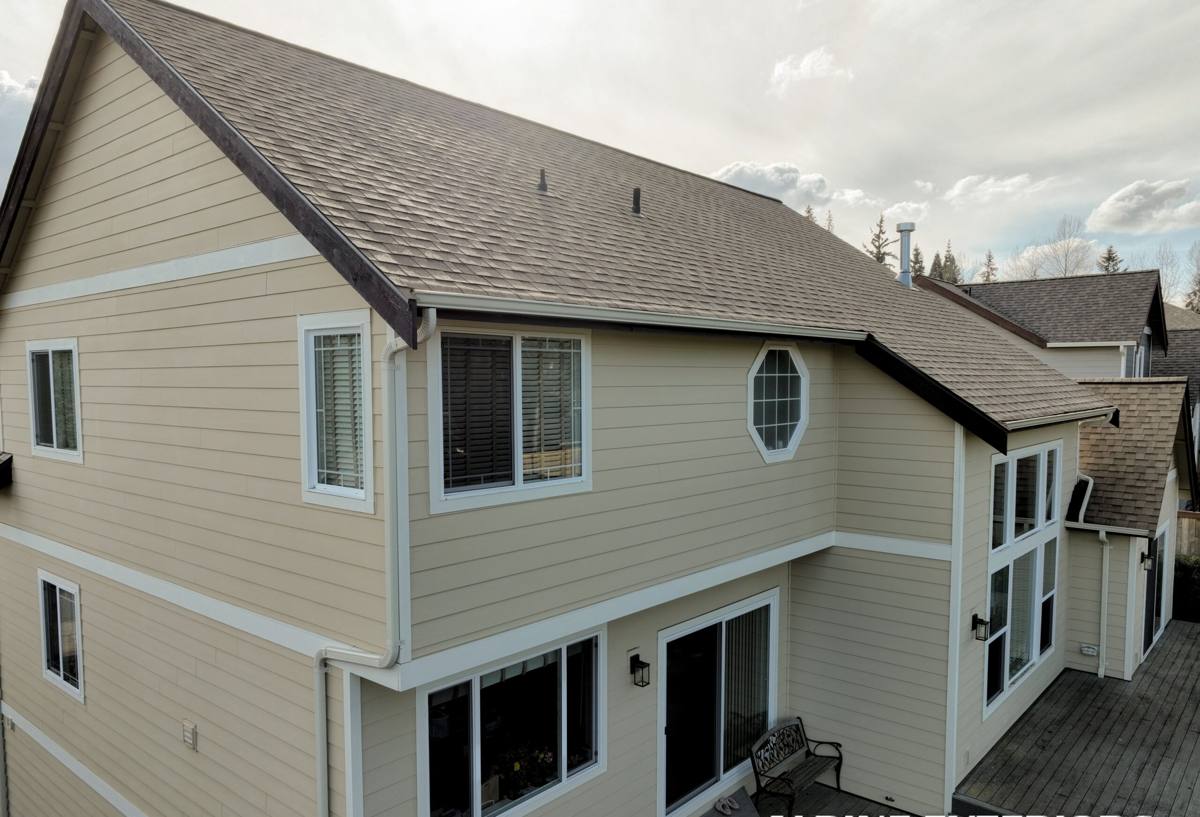
What Salt Air and Marine Exposure Actually Do to a Window Over Time
Homes near saltwater don't fail the same way inland homes do. The damage is slower and less obvious at first, which is part of why it catches people off guard.
Corrosion of hardware and frames
Salt-laden air accelerates corrosion on anything metal — hinges, locks, balance systems, and especially aluminum frames or cladding that isn't rated for coastal use. Standard mill-finish aluminum and lower-grade fasteners can pit and corrode years ahead of schedule this close to the water. Once hardware starts binding or corroding, the window's seal is compromised even if the glass itself is fine.
Moisture intrusion behind the trim
Wind-driven rain off the water doesn't fall straight down — it gets pushed sideways into wall assemblies, gaps, and improperly lapped flashing. On Samish Island, a window that's "close enough" on flashing detail will eventually let water track behind the siding, and that's a rot and mold problem long before it's a comfort problem.
Moss, algae, and prolonged surface moisture
The same damp conditions that keep the island green support moss and algae growth on wood trim, sills, and shaded elevations. Left alone, that growth holds moisture against the window frame and finish, which shortens the life of caulking, paint, and wood components well ahead of the manufacturer's expected timeline.
What "Energy-Efficient" Should Mean in This Climate
Energy efficiency for a Samish Island home isn't only about a U-factor number on a sticker — though that matters. It's the combination of glass performance, frame material, and installation quality working together. A high-performance window installed with a mediocre seal will still leak air and moisture; a modest window installed correctly will often outperform it in real-world comfort.
The main performance factors worth understanding:
- U-factor — how well the window resists heat transfer; lower is better for our marine, rain-heavy Pacific Northwest winters.
- SHGC (solar heat gain coefficient) — how much solar heat passes through the glass, relevant on south- and west-facing elevations that catch afternoon sun off the water.
- Air leakage rating — how much air passes through the assembly itself, separate from installation quality.
- Condensation resistance — how well the glass and frame resist interior condensation, which matters a lot in a climate with sustained high humidity.
Double-pane, low-E glass is the practical baseline for this area. Triple-pane can make sense on exposed, waterfront-facing elevations where wind load and heat loss are both higher, but it's not automatically the right call for every wall of the house — we'll walk through where it actually earns its cost.
Frame Material: What Holds Up Near Saltwater
Frame material choice matters more on Samish Island than it does a few miles inland. Here's how the common options generally hold up under marine exposure and long moss seasons:
| Frame Material | Coastal/Salt Air Behavior | Maintenance |
|---|---|---|
| Vinyl | Doesn't corrode; performs well in humidity, but quality varies widely between manufacturers | Low — occasional cleaning |
| Fiberglass | Very stable dimensionally, resists corrosion and moisture-driven expansion well | Low |
| Wood-clad | Attractive, but exposed wood components need vigilant sealing near salt air and moss growth | Higher — periodic finish upkeep |
| Aluminum (standard) | Prone to pitting and corrosion in salt air unless specifically coastal-rated | Moderate to high near water |
We don't recommend standard-grade aluminum for direct waterfront exposure on the island — not because aluminum as a material is bad, but because ordinary finishes and fasteners corrode faster than homeowners expect in this specific setting, and that shows up as sticking hardware and failed seals well before the glass itself would need replacing. Vinyl and fiberglass are our default recommendations for most Samish Island homes because they simply don't have that corrosion pathway.
Installation Details That Determine Whether a Window Actually Performs
Most window failures we see on service calls aren't glass failures — they're installation failures. This is the part of the job that's invisible once trim goes back on, and it's where corners get cut.
Flashing and water management
Every window opening needs to be flashed so that any water that gets past the exterior cladding is directed back out, not into the wall cavity. On a site exposed to wind-driven rain, we pay particular attention to head flashing and how it integrates with the existing weather-resistive barrier — a detail that's easy to fake from the outside and expensive to fix later if it's wrong.
Sealant selection and placement
Not every exterior sealant is rated for sustained UV and salt exposure. We use sealants suited to marine climates and apply them in a way that allows the assembly to drain rather than trap water — a sealed-tight-everywhere approach can actually be worse, because it can lock moisture inside the wall.
Shimming and squaring
A window that isn't shimmed square will bind, won't seal evenly, and will show air leakage at inconsistent points around the frame — often diagnosed later as a "bad window" when it was actually a bad install.
Insulation of the gap
The gap between the window frame and the rough opening needs to be filled with an appropriate low-expansion insulating material — not stuffed with fiberglass batting, which settles and leaves gaps, and not overfilled with rigid foam, which can bow the frame.
Our Process for a Samish Island Window Project
- On-site assessment — we look at current window condition, frame material, sun exposure by elevation, and any signs of existing moisture intrusion around openings.
- Product recommendation — we recommend frame material and glass package based on exposure per elevation, not a single blanket spec for the whole house.
- Accurate measurement — precise measurements for either full-frame replacement or insert replacement, whichever suits the existing opening's condition.
- Removal and inspection — once old windows come out, we inspect the rough opening for hidden rot or moisture damage before anything new goes in. This is often where problems from a prior, lower-quality install get found.
- Correct flashing and installation — following the water-management sequence described above, adapted to your siding type.
- Sealing, insulating, and finish work — interior and exterior trim, caulking, and a final function check on every window.
- Walkthrough — we show you how each window operates and what maintenance it needs going forward.
Signs Your Current Windows Are Already Costing You Money
A lot of homeowners live with underperforming windows for years because the signs are gradual. Worth checking for:
- Visible condensation or fogging between panes (failed seal on the insulated glass unit)
- Drafts you can feel by hand near the frame on a windy day
- Soft or discolored wood trim around the window, inside or out
- Windows that are hard to open, close, or lock — often a sign of frame or hardware corrosion
- Persistent moss or dark staining on the sill or lower frame
- Noticeably higher heating costs compared to similarly sized homes nearby
- Noise transmission that seems worse than it should be for the glass type
Why It Matters That We Already Work Samish Island
Samish Island isn't like working a standard subdivision lot in town. Access can be tighter, staging materials takes more planning, and weather windows for exterior work are genuinely different this close to the water — a forecast that looks fine in Burlington can turn windy and wet faster out on the island. A crew that's done window projects out here already knows to plan around tide-influenced weather patterns, build in realistic timelines, and bring materials rated for the exposure instead of learning that the hard way mid-project.
We're a Burlington-based crew, and Samish Island is well within our regular service area — this isn't a special trip for us, it's routine work we understand the specifics of.
Maintenance After Installation: Keeping Moss and Salt From Winning
Even a well-installed, well-chosen window benefits from basic upkeep in this climate:
- Rinse salt residue off frames and glass periodically, especially on elevations facing the water
- Keep sills and tracks clear of standing moss and organic debris so moisture doesn't sit against the frame
- Check exterior caulking annually for cracking or separation and have it renewed before it fails, not after
- Operate hardware regularly — locks and hinges that sit unused are more prone to seizing in humid, salty air
- Watch for early signs of interior condensation, which can indicate a developing seal issue while it's still an easy fix
None of this is intensive, but skipping it is exactly how a good window installation underperforms its expected lifespan in a marine climate like this one.
Getting Started
If your Samish Island home has windows that are drafty, fogged, hard to operate, or just past their prime, we're glad to come take a look. We'll walk the exterior with you, talk through what your specific exposure calls for, and give you a straightforward, no-pressure estimate — use the form below to get started.