 Burlington
 Why Edison Roofs Wear Differently Than Roofs Inland
Edison sits low in the Skagit Valley, close enough to the water and surrounding tidal flats that the air carries a steady trace of salt most of the year. Add Skagit County's long wet season and the shade from mature trees common on older Edison lots, and you get a roofing environment that's genuinely harder on materials than what a roof faces twenty minutes inland in Burlington or Mount Vernon. We don't say that to sell you something extra — it's just the honest starting point for any roof replacement conversation out here.
Salt Air and Coastal Exposure
Salt-laden air accelerates corrosion on anything metal: fasteners, flashing, valleys, and vents. A roofing system that isn't detailed with this in mind will show rust streaks, loosened flashing, and premature fastener failure years before a comparable roof would fail somewhere drier and further from the water. This is a materials and detailing issue, not a scare tactic — it just means the fastener schedule, flashing metal, and vent hardware need to be chosen deliberately.
Driving Rain and Wind-Driven Moisture
Storms moving through Skagit County often come in sideways off the water rather than straight down. That matters for roofing because wind-driven rain finds its way under shingles, around poorly lapped flashing, and into any gap that a calmer rain would never reach. Underlayment choice and lap direction matter more here than in a sheltered inland neighborhood.
A Long Moss Season
Between the tree cover common in Edison and Western Washington's extended damp season, moss has a long window to establish itself on north-facing slopes and shaded valleys. Moss isn't just cosmetic — it holds moisture against the roofing material, lifts shingle edges as it grows, and shortens the life of whatever's underneath it. A roof replacement done right for this area factors moss resistance into the material choice from day one, rather than leaving it as an annual maintenance chore.
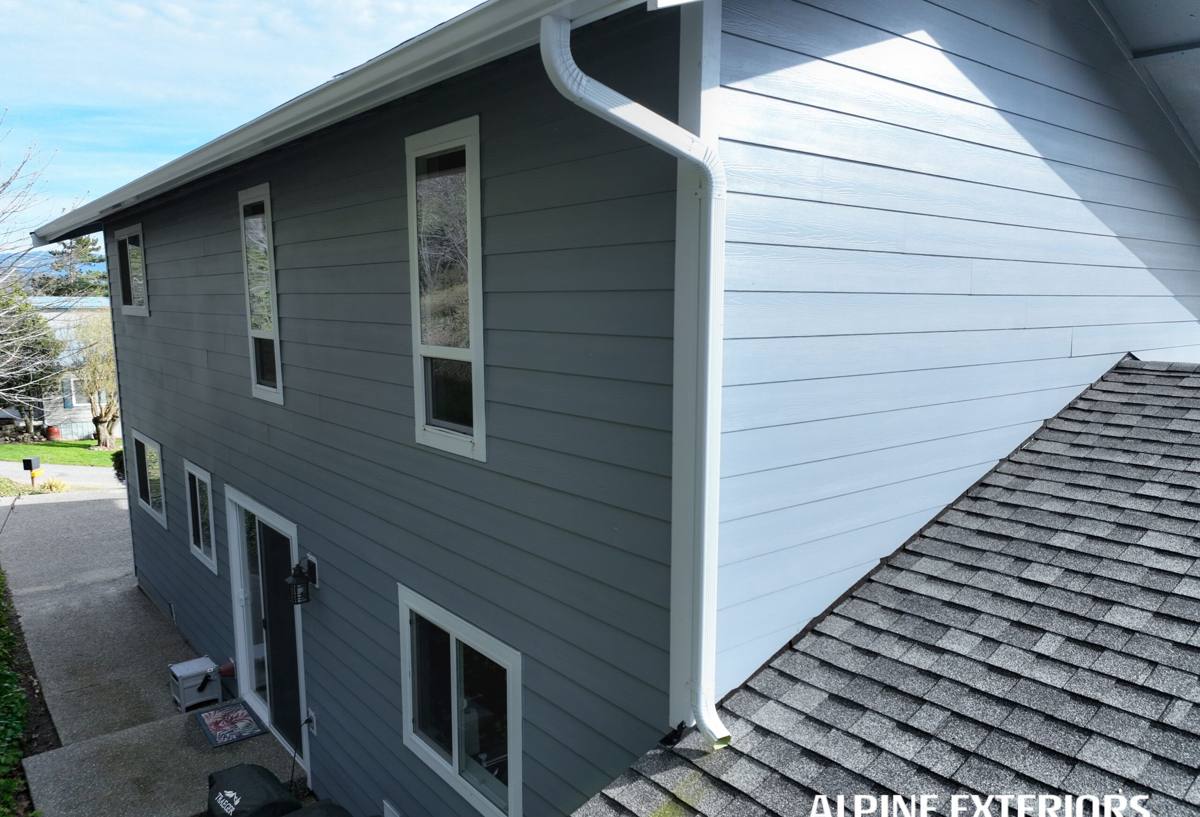
Signs an Edison Home Needs a Roof Replacement, Not Another Repair
Not every roofing problem in Edison calls for a full replacement — plenty of issues are legitimately fixable with a targeted repair. But there's a point where patching starts costing more than it saves. Here's what tells us a home is past that point:
- Granule loss heavy enough that you can see bare, shiny patches on asphalt shingles
- Shingles that are curling, cupping, or cracking across multiple slopes, not just one isolated area
- Moss or algae growth that keeps returning within a season or two of cleaning
- Soft spots, sagging, or visible deck flex when walked on
- Daylight visible through the roof deck from inside the attic
- Repeated leaks in different spots after past patch repairs
- A roof already past, or close to, its material's realistic service life for this climate
If a roof shows one or two of these, a repair may still make sense. If it shows several at once, replacement is usually the more honest recommendation — and we'll tell you that plainly during an inspection rather than stretching out repairs that won't hold.
What a Correct Roof Replacement Actually Involves
A roof replacement is more than swapping old shingles for new ones. The parts that don't show once the job is finished are usually the parts that determine whether the roof lasts fifteen years or thirty-five.
Full Tear-Off and Deck Inspection
We remove the existing roofing down to the deck rather than layering over it. That's the only way to actually see the plywood or plank decking underneath, which is especially important on Edison homes where long-term moisture exposure can quietly rot decking behind an intact-looking shingle surface. Any soft or damaged decking gets replaced before anything new goes down — no exceptions, because new shingles over a compromised deck fail early no matter how good the shingle is.
Underlayment Built for Wind-Driven Rain
Given how often storms here arrive with real horizontal push, we install underlayment and ice-and-water protection at the eaves, valleys, and any low-slope transitions with extra care for lap direction and fastening. This is the layer doing the real waterproofing work — the shingles are the first line of defense, the underlayment is the backup that actually keeps a home dry when the first line gets overwhelmed.
Flashing and Metal Detailing
Given the salt air, we pay close attention to the metal used at valleys, chimneys, skylights, and wall transitions, along with the fasteners holding it in place. Corrosion-resistant materials and correct lapping at these transition points prevent the slow leaks that show up two or three years after a rushed job.
Ventilation That Matches the Climate
Proper intake and exhaust ventilation keeps moisture from condensing inside the attic, which matters year-round in a climate this damp. It also helps regulate deck temperature, which affects how long shingles hold up and how quickly moss and algae can take hold on shaded slopes.
Choosing Roofing Materials That Hold Up in Edison's Climate
There's no single "best" roofing material for every home — it depends on the roof's slope, shade exposure, budget, and how the home is built. What we won't do is recommend a product that looks good on paper but creates a maintenance burden we know this climate will expose. Here's an honest comparison of the common options for a home in this part of Skagit County:
| Material | Moss Resistance | Salt Air Durability | Typical Lifespan Here | Trade-Offs to Know |
|---|---|---|---|---|
| Architectural asphalt shingle | Moderate — improves with algae-resistant granules | Good with corrosion-resistant fasteners and flashing | 20–30 years | Most cost-effective; needs periodic moss/debris maintenance on shaded slopes |
| Standing seam metal | Very good — sheds moisture and debris quickly | Requires marine-grade coatings/fasteners near the coast | 40+ years | Higher upfront cost; installation quality is critical to avoid oil-canning and fastener issues |
| Synthetic/composite shingle | Good | Good — resists corrosion since it's non-metal | 30–50 years | Higher material cost; fewer local installers experienced with it |
| Wood shake | Poor without diligent maintenance | Fair | 20–30 years with upkeep | Highest maintenance burden in a damp, shaded, moss-prone setting like Edison |
For heavily shaded Edison lots specifically, we lean toward steering homeowners away from wood shake unless they're committed to regular maintenance, simply because moss and moisture find an easy foothold in wood grain. That's a maintenance and moisture-behavior judgment on our part, not a knock on the material itself — it performs fine in drier, more open settings.
Our Roof Replacement Process
We keep the process straightforward so you know what's happening at each stage:
- Inspection and honest assessment — we walk the roof and attic, document actual condition, and tell you plainly whether repair or replacement makes sense.
- Material and scope walkthrough — we go over material options suited to your roof's slope, shade, and exposure, with a real cost range for each.
- Written estimate — clear scope, materials, and price before any work begins.
- Tear-off and deck repair — full removal, deck inspection, and replacement of any compromised sheathing.
- Underlayment, flashing, and ventilation install — the layers that determine long-term performance.
- Final roofing material installation — installed to manufacturer spec and detailed for this climate's wind and moisture patterns.
- Cleanup and final walkthrough — site cleared of debris and nails, roof reviewed with you before we call the job done.
Ventilation and Moisture Control: The Detail Homeowners Rarely Ask About
Most homeowners focus on the visible shingle when planning a roof replacement, and understandably so — it's what you see every day. But in a climate with as long a wet season as Skagit County's, attic ventilation quietly does as much work as the roofing surface itself. Poor ventilation traps humid air against the underside of the deck, which encourages rot from the inside out and can shorten a shingle's life from the back side, invisibly, long before it shows on the surface. Getting the balance of intake and exhaust right during a replacement is one of the cheaper things to do correctly while the roof is already open, and one of the more expensive things to fix later.
What Drives Roof Replacement Cost in Edison
Every roof is different, so we won't quote a number without seeing the property, but the honest cost drivers are consistent:
| Factor | Why It Matters |
|---|---|
| Roof size and number of slopes | More material and more labor hours, straightforward math |
| Existing deck condition | Rot or soft decking found during tear-off adds material and labor to replace it correctly |
| Material choice | Asphalt, metal, and composite carry different material and installation costs, as shown above |
| Roof pitch and access | Steeper or harder-to-access roofs require more safety equipment and time |
| Flashing and penetrations | Chimneys, skylights, and multiple valleys add detailing time |
| Ventilation upgrades | Adding or correcting intake/exhaust vents during the tear-off |
As a broad, honest range, most complete roof replacements on typical single-family homes in this area land somewhere between the mid-teens and low-thirties in thousands of dollars, depending heavily on the factors above — metal roofing and larger or steeper homes push toward the higher end. The only way to get a real number is a site visit, which is exactly what a free estimate is for.
Why It Matters to Hire a Crew That Already Works in Edison
A roofing crew that works this specific pocket of Skagit County regularly already knows which slopes hold moss longest, how far wind-driven rain can push under improperly lapped shingles, and which fastener and flashing choices actually hold up against the salt air instead of just looking good the first year. That's not something you can fully substitute with a generic checklist — it comes from having done the work here, seen what fails, and adjusted the approach accordingly. It also means faster response if something needs a look after a storm, since we're not driving in from across the county.
If your roof is showing its age, or you just want a straight answer about whether repair or replacement is the right call, we're happy to take a look. Reach out for a free, no-pressure estimate using the form below — we'll walk the roof, give you an honest assessment, and lay out real options and real numbers before anything is decided.