 Burlington
 Why La Conner's Waterfront Climate Is Hard on a Roof
La Conner sits close enough to the water that homes here deal with a different set of conditions than roofs a few miles inland in Burlington. Salt-laden air moves in off Skagit Bay and settles on every exposed surface, including your roof. Combine that with the driving, wind-pushed rain that comes through Skagit County in the fall and winter, plus a moss season that can stretch for months under the shade of mature trees and marine-layer humidity, and you have a roof that's working harder than most people realize.
None of this means a roof in La Conner needs to be exotic or overbuilt. It means the materials, fasteners, underlayment, and ventilation details need to be chosen and installed with this specific combination of salt exposure, wind-driven moisture, and moss growth in mind — not just installed to a generic manufacturer spec sheet.
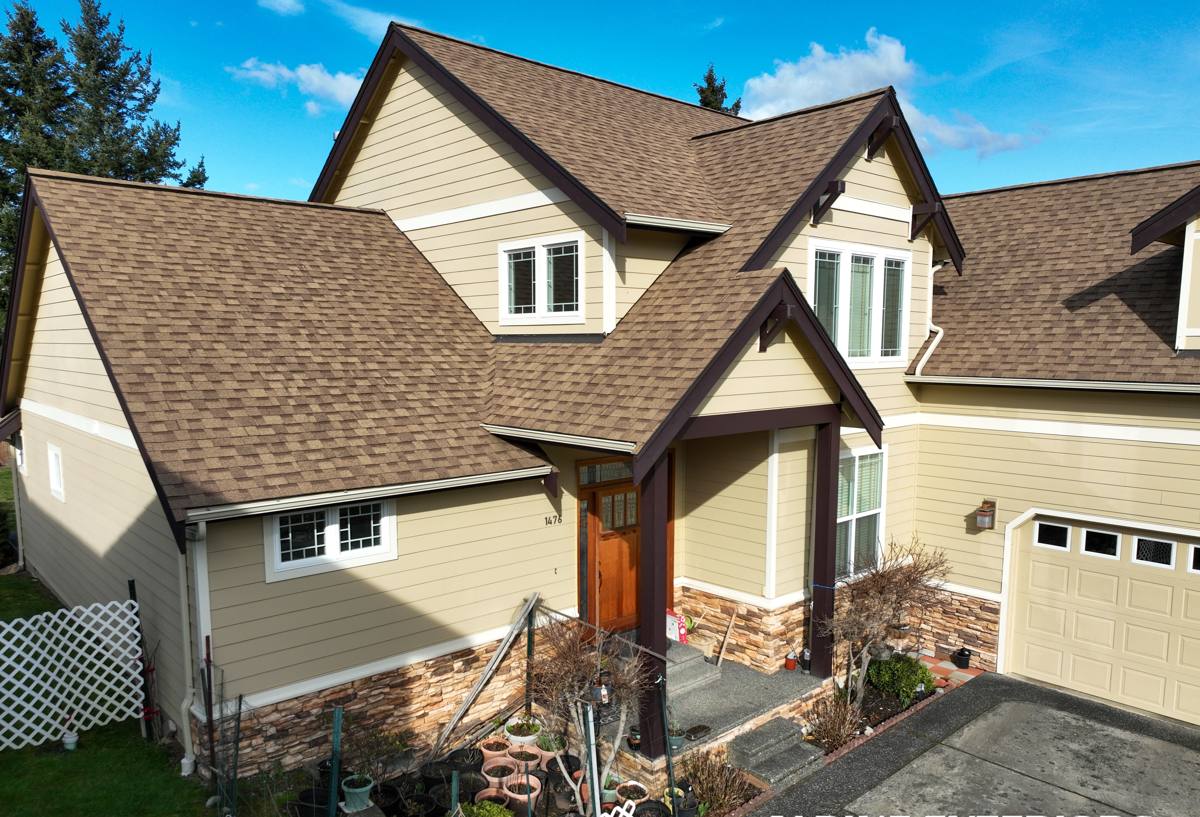
What Salt Air, Rain, and Moss Actually Do to a Roof
Salt Air
Airborne salt accelerates corrosion on any exposed metal — nails, flashing, vent boots, and gutter hardware. A roof that looks fine from the ground can have fasteners or flashing quietly corroding underneath, which is how small leaks start.
Driving Rain
Wind-driven rain doesn't just fall straight down — it gets pushed sideways and upward under shingle edges, around chimney flashing, and into any gap in the underlayment. A roof that would be fine in a calmer inland climate can leak in La Conner if the underlayment and flashing details weren't built for wind-driven moisture.
Moss
Moss holds moisture against the roof surface long after the rain has stopped. Over time it lifts shingle edges, traps organic debris, and keeps the roof deck damp — which is exactly the environment that leads to premature rot and granule loss on asphalt products.
What a Correct New Roof Installation Includes
A new roof is more than shingles nailed to plywood. For a La Conner home, a properly done installation includes several layers working together:
- Tear-off and deck inspection — removing the old roofing down to the deck so any soft, rotted, or water-stained sheathing is found and replaced, not covered up.
- Ice-and-water shield at eaves, valleys, and around every penetration, since these are the spots where wind-driven rain finds its way in first.
- Synthetic underlayment across the full roof for a consistent moisture barrier under the primary roofing material.
- Corrosion-resistant flashing and fasteners at chimneys, walls, skylights, and vents — a detail that matters more here than in a drier, inland climate.
- Balanced intake and exhaust ventilation so the attic can actually dry out between rain events instead of staying damp.
- Proper starter strip, ridge, and edge detailing so wind can't get under the first course of shingles.
Skip any one of these and the roof may look complete on install day but fail early in exactly the areas La Conner's climate stresses most.
Choosing the Right Roofing Material for This Climate
There's no single "best" roofing material for every La Conner home — it depends on your budget, your home's style, and how much maintenance you want to take on. Here's how the common options compare against the conditions that matter most here: salt exposure, moss resistance, and long-term maintenance.
| Material | Salt Air Resistance | Moss Resistance | Typical Lifespan | Maintenance Needs |
|---|---|---|---|---|
| Architectural asphalt shingle | Good, with corrosion-resistant fasteners | Moderate — benefits from zinc/copper strips | 25–30 years | Periodic moss treatment, gutter clearing |
| Standing-seam metal | Very good with marine-grade coatings | Very good — moss struggles to hold on smooth metal | 40–50+ years | Low; occasional fastener and sealant checks |
| Cedar shake/shingle | Fair — needs regular treatment near salt air | Poor without diligent upkeep | 20–30 years with maintenance | High — cleaning, treating, and inspection |
| Synthetic/composite shingle | Good | Good to very good depending on product | 30–50 years | Low to moderate |
We'll walk through these trade-offs with you honestly. If you love the look of cedar, we'll tell you upfront what kind of upkeep it needs in a moss-prone, salt-air environment so you can decide with your eyes open — not talk you out of it or into it.
Our Roof Installation Process
1. On-Site Inspection and Estimate
We walk the roof, check the attic for ventilation and moisture issues, and look at flashing points before quoting anything. This is also when we flag any deck repair that's likely needed so it's not a surprise mid-project.
2. Material Selection
We go over the options above in the context of your home, your budget, and how much long-term maintenance you're willing to take on.
3. Tear-Off and Deck Repair
Old roofing comes off completely. Any rotted or water-damaged sheathing is replaced before anything new goes down — this step gets skipped by corner-cutting crews and it's the single biggest cause of early roof failure.
4. Underlayment and Flashing
Ice-and-water shield and synthetic underlayment go down first, followed by new flashing at every wall, chimney, and penetration using corrosion-resistant materials suited to a salt-air environment.
5. Roofing Installation
Your chosen material goes on to manufacturer specifications, with attention to nailing patterns, exposure, and edge details that hold up under driving rain and wind.
6. Ventilation Check and Final Walkthrough
We confirm intake and exhaust ventilation is balanced, clean up the site thoroughly, and walk the finished roof with you before calling the job done.
Ventilation and Moisture Control Matter as Much as the Roofing Material
A common mistake homeowners make is focusing entirely on the shingle or metal panel and overlooking what's happening underneath. In a climate with this much ambient moisture, a poorly ventilated attic stays damp, which leads to condensation on the underside of the deck, premature aging of the roofing material from the inside out, and conditions that encourage mold and wood rot. Every new roof installation should include a real look at intake vents (typically at the soffits) and exhaust vents (ridge or roof-mounted), not just an assumption that whatever was there before is adequate.
Signs Your La Conner Home May Need a New Roof, Not a Repair
Repairs make sense for isolated damage. A full replacement makes sense when the roof as a whole is past the point where patching keeps up with the problems. Watch for:
- Granule loss showing up in gutters or at the base of downspouts
- Shingles that are curling, cracking, or lifting at the edges
- Moss buildup that returns quickly after cleaning
- Soft spots or sagging when walking the roofline visually from the ground
- Daylight visible through the attic roof boards
- Water stains on interior ceilings, especially after wind-driven storms
- Rusting or deteriorating flashing around chimneys and vents
- A roof that's approaching or past the upper end of its material's expected lifespan
If you're seeing two or more of these, it's worth having someone take a real look rather than continuing to patch.
What Affects the Cost of a New Roof
Every home is different, but the main cost drivers on a La Conner roof replacement are fairly consistent:
| Factor | Why It Matters |
|---|---|
| Roof size and pitch | More square footage and steeper pitches increase material and labor time |
| Material choice | Asphalt, metal, cedar, and synthetics carry very different material and install costs |
| Deck condition | Rotted or water-damaged sheathing found during tear-off adds repair cost, but skipping it costs more later |
| Number of penetrations | Chimneys, skylights, and vent stacks each need individual flashing work |
| Ventilation upgrades | Adding or correcting intake/exhaust ventilation protects the new roof's lifespan |
| Access and site conditions | Landscaping, roof height, and staging space can affect labor time |
We give straightforward, itemized estimates so you can see exactly what you're paying for and why — not a single lump number with no explanation behind it.
Why Hiring a Crew That Knows La Conner Matters
A roofing crew that mostly works drier, inland areas isn't necessarily thinking about corrosion-resistant fasteners, moss-conscious material choices, or wind-driven rain detailing at chimneys and valleys — because they don't need to where they usually work. A crew that regularly works in and around La Conner and the rest of Skagit County already builds those decisions into every estimate and every installation, because we see what happens to roofs here that were built for a different climate. That's not a sales pitch — it's the difference between a roof that needs attention again in eight years and one that goes the full distance of its expected lifespan.
Get a Straightforward Estimate
If your roof is showing its age or you're planning ahead rather than reacting to a leak, we're happy to come take a look and walk you through your options honestly — no pressure, no hard sell. Use the form below to request a free estimate, and we'll talk through what your home actually needs.