 Burlington
 Why Mount Vernon Roofs Wear on a Different Schedule
Roofs in Mount Vernon don't fail for the same reasons roofs fail in drier parts of the country. Skagit County sits close enough to the water that salt-laden air is a constant, and it settles onto metal flashing, fasteners, and roof vents year-round. Add in long stretches of driving rain off Puget Sound weather systems, and you've got moisture finding every seam and nail hole a roof has. Then there's moss. Our shaded, damp winters give moss and algae months at a time to take hold on north-facing slopes and anywhere tree cover blocks the sun.
None of this means a roof in Mount Vernon needs to be exotic or over-built. It means the details — underlayment choice, flashing work, ventilation, and fastener quality — matter more here than they would in a dry climate. A roof that's installed correctly for this specific environment will outlast one that was installed to a generic spec and just happens to sit under our sky.
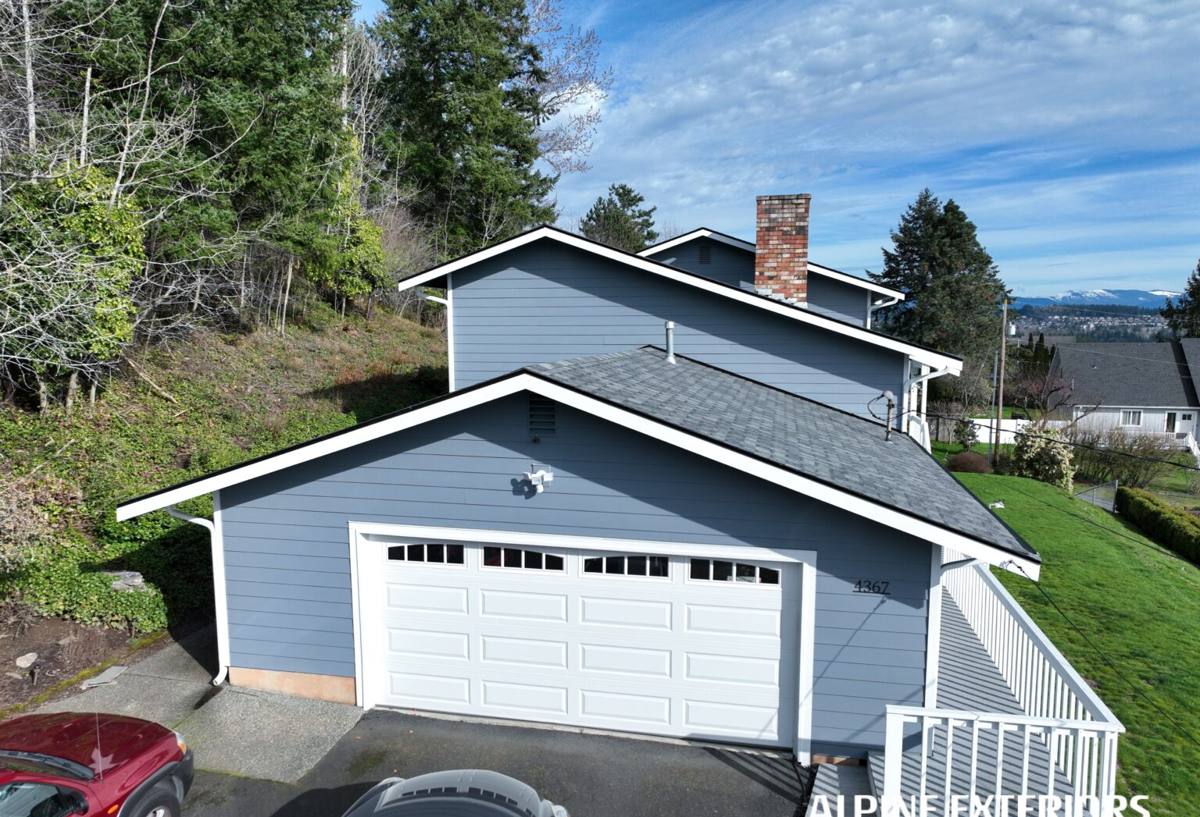
Signs a Mount Vernon Roof Is Ready for Replacement
Homeowners often wait for an active leak before calling anyone, but by that point the decking underneath may already be compromised. Here's what we look for when we walk a roof in this area:
- Granule loss on asphalt shingles, especially in valleys and at gutter lines — a sign the shingle's protective layer is thinning
- Curling, cupping, or cracked shingles, particularly on south- and west-facing slopes that take the most sun and wind exposure
- Moss or algae buildup that keeps returning even after cleaning, which usually means moisture is being held against the roof surface longer than it should be
- Dark streaking or staining that doesn't wash off
- Soft spots when walked, or visible sagging along the ridge or eaves
- Rust or corrosion at flashing, vents, or valleys
- Daylight visible through the roof deck from inside the attic, or damp insulation after a heavy rain
- A roof approaching or past 20-25 years old for asphalt shingle, even if it looks okay from the ground
Any one of these on its own might not mean replacement is urgent. Several together, especially on a roof that's already past its expected service life, usually mean it's time to stop patching and start planning.
What an Honest Roof Replacement Actually Involves
Full Tear-Off, Not a Layover
We remove the existing roofing down to the deck rather than layering new shingles over old. Layering hides the condition of the decking underneath and traps moisture between layers — a real problem in a climate that already sends more water at a roof than most.
Deck Inspection and Repair
Once the old roofing is off, we inspect the plywood or OSB decking for soft spots, delamination, or rot — common wherever a slow leak has been running unnoticed. Damaged sections get replaced before anything new goes down. Skipping this step is one of the most common shortcuts in cheap roof jobs, and it's the one that causes the most expensive problems later.
Underlayment Built for Wet Weather
Given how much rain this area sees, we use underlayment products suited to prolonged wet exposure, with extra attention to ice-and-water shield style membrane at eaves, valleys, and around penetrations — the places water concentrates and lingers.
Flashing Done Right
Flashing failure, not shingle failure, is behind a large share of the leaks we get called out for. Chimneys, skylights, dormers, and wall-to-roof transitions all need properly formed and sealed flashing, not just a bead of caulk over old metal.
Ventilation That Matches the Climate
Attics need balanced intake and exhaust ventilation to manage the moisture that naturally moves through a house, especially in a climate where the air outside is often as damp as the air inside. Poor ventilation shortens shingle life from underneath, which is invisible until the roof is already failing.
Material Options for Mount Vernon Homes
There's no single "right" material for every roof — it depends on the home, the budget, and how the roof is shaded and exposed. Here's how the common options compare for this climate specifically:
| Material | Typical Lifespan | How It Handles Salt Air & Moisture | Moss Resistance |
|---|---|---|---|
| Asphalt composition shingle | 20-30 years (architectural) | Good with proper underlayment and flashing; standard choice locally | Moderate — benefits from algae-resistant granules and periodic cleaning |
| Metal (standing seam or panel) | 40-60 years | Very good when properly coated and fastened; needs corrosion-resistant fasteners near salt air | High — sheds moisture quickly, little surface for moss to grip |
| Synthetic/composite shingle | 30-50 years | Good; doesn't absorb moisture the way organic materials can | Moderate to high, depending on product |
We install and stand behind all three, and we'll walk you through the honest trade-offs for your specific roof rather than pushing whatever has the best margin. Upfront cost, appearance, and how long you plan to stay in the home all factor into which one makes sense.
What Drives the Cost of a Roof Replacement
Every roof is priced on its own specifics, but these are the factors that move the number most:
| Factor | Why It Matters |
|---|---|
| Roof size and number of stories | More square footage and steeper access mean more material and labor time |
| Roof pitch and complexity | Multiple valleys, dormers, and hips take longer to flash correctly than a simple gable roof |
| Decking condition | Rotted or delaminated sheathing found during tear-off adds material and labor to replace it properly |
| Material chosen | Asphalt, metal, and synthetic options span a wide range in material cost alone |
| Ventilation and flashing upgrades | Bringing older ventilation or flashing details up to current standards adds some cost but pays off in roof life |
| Layers to remove | Tearing off multiple existing layers takes more labor and disposal than a single-layer tear-off |
Because of this range, we avoid quoting a number without seeing the roof. What we can say is that a properly done tear-off replacement, with attention to decking and flashing, costs more upfront than a quick overlay — and consistently costs less over the life of the roof.
Our Process, Start to Finish
- On-site inspection — we walk the roof and attic, note deck condition, ventilation, and any problem areas, and take measurements.
- Written estimate — a clear breakdown of material, labor, and any deck or flashing repairs, with material options explained rather than assumed.
- Scheduling — we plan around weather windows, which matters here more than in drier regions; we don't tear off a roof and leave it exposed to a forecast we can't trust.
- Tear-off and deck inspection — old roofing removed, decking checked and repaired as needed before anything new is installed.
- Underlayment, flashing, and roofing installation — installed to manufacturer specification and matched to local conditions, not just the minimum code requirement.
- Cleanup and final walkthrough — site cleared of debris and nails, and we walk the finished roof with you before calling the job done.
Why a Crew That Already Works Mount Vernon Matters
A roofing crew that regularly works in and around Burlington and Mount Vernon has already seen how local weather patterns actually behave on roofs — not just in a training manual, but on homes down the street from yours. That familiarity shows up in small decisions: which underlayment to use given how long a roof might sit exposed during a wet stretch, where moss tends to reestablish first on a given roof orientation, and which flashing details tend to fail first in salt-influenced air.
It also means faster response if something needs a look after the job is done, and a crew that isn't guessing about permitting or typical construction in Skagit County homes. Roofing is not a job where "close enough" specs hold up long-term in this climate — the difference between a roof that lasts 15 years and one that lasts 30 is almost always in details a homeowner never sees once the job is finished.
Protecting Your Investment After Replacement
A new roof isn't maintenance-free, even a well-installed one. A few habits keep it performing as designed:
- Keep gutters clear so water isn't backing up under the roof edge, especially during heavy fall and winter rain
- Trim back overhanging branches that keep a section of roof shaded and damp longer than the rest
- Have moss and algae growth treated before it spreads, rather than waiting until it's visible from the street
- Schedule a periodic visual inspection, particularly after any major windstorm
- Address any flashing or sealant issues quickly — small gaps get worse, not better, over a wet winter
If you're weighing whether your roof needs a full replacement or just repair, or you want a straight answer on what a correct job looks like for your specific home, we're happy to take a look. Fill out the form below for a free, no-pressure estimate — we'll tell you what we actually see, not just what sells a job.