 Burlington
 Deck Building for Lyman Homes: Built for This Climate, Not Just Any Climate
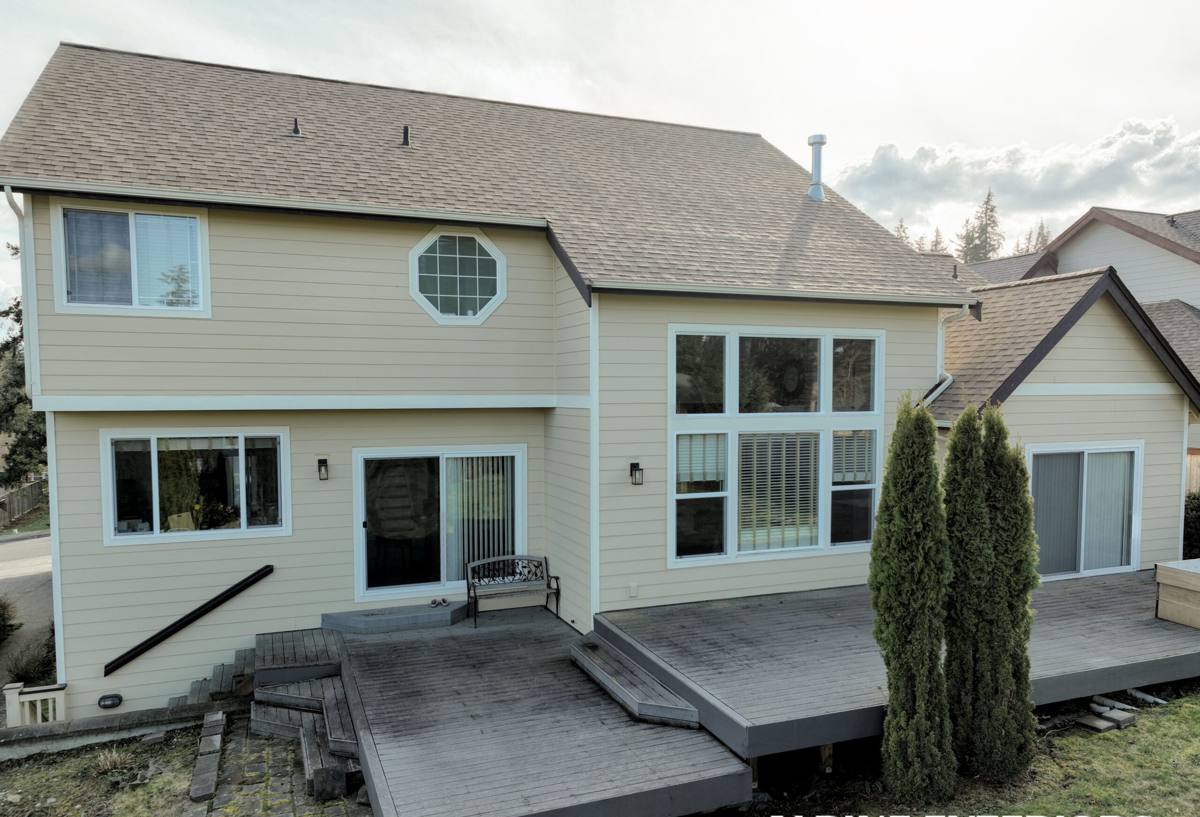
A deck in Lyman does a different job than a deck in a dry climate. It has to shed water fast, dry out between storms, and shrug off the moss and mildew that show up on anything shaded or slow to drain. We build and rebuild decks for homes around Burlington and the surrounding Skagit County communities, and Lyman's mix of tree cover, river-valley humidity, and long wet stretches is a big part of how we plan every project — from the footings up to the railing caps.
This page is about one thing: building a deck that actually holds up here. Not a generic checklist, not a sales pitch — just what a correctly built deck for this area looks like, what goes wrong when corners get cut, and how we handle the work from first estimate to final walkthrough.
What Lyman's Climate Actually Does to a Deck
Skagit County doesn't get extreme weather, but it gets a lot of moderate weather for a lot of the year, and that's harder on a deck than the occasional big storm. Driving rain soaks into end grain and fastener holes. Shaded, tree-lined lots — common around Lyman — stay damp longer after rain, which is exactly what moss and algae need to take hold on decking, stair treads, and railings. Add in the salt-tinged marine air that moves through this part of western Washington, and you've got conditions that accelerate corrosion on cheap or mismatched hardware faster than most homeowners expect.
None of that means a deck here is doomed to rot in a few years. It means the build has to account for moisture from day one — drainage, fastener choice, gaps between boards, and how the structure ties into the house — instead of treating those as afterthoughts.
The three things that fail first
- Ledger boards and rim joists where flashing was skipped or done wrong, letting water track into the house framing
- Fasteners and hardware that weren't rated for exterior or coastal-influenced exposure, leading to rust streaks and weakened connections
- Decking laid tight to the house or with poor board spacing, trapping moisture and speeding up rot, cupping, or moss growth
Choosing Decking Material for a Lyman Property
There's no single "best" decking material — there's the right material for how you use the deck, how much upkeep you want to do, and your budget. We walk every Lyman customer through the same honest trade-offs.
Pressure-treated lumber
Still the most common choice, and for good reason: it's affordable, strong, and easy to repair a section of if it's ever damaged. The trade-off is maintenance — in this climate, that means re-staining or sealing on a regular schedule and staying ahead of moss on any shaded boards. Skip the maintenance and it will show faster here than in a drier climate.
Cedar
Naturally resistant to rot and insects, and it looks the part. It costs more than pressure-treated lumber and still needs periodic sealing to keep its color and resist the moisture this area throws at it, but a lot of homeowners like the look enough to accept that upkeep.
Composite decking
Composite boards resist moisture, don't need staining, and hold up well against moss compared to bare wood — moss still needs to be cleaned off occasionally, but it doesn't work its way into the material the way it can with wood grain. The trade-off is upfront cost and the fact that composite still needs a properly ventilated, well-built substructure underneath — it doesn't forgive bad framing just because the surface is low-maintenance.
| Material | Upfront Cost | Maintenance in This Climate | Typical Lifespan |
|---|---|---|---|
| Pressure-treated lumber | Lowest | Annual cleaning, periodic sealing | 15–20 years with upkeep |
| Cedar | Moderate | Periodic sealing, moss/mildew cleaning | 15–25 years with upkeep |
| Composite | Highest | Occasional washing, no staining | 25–30+ years |
Framing and Footings: Where a Deck's Lifespan Is Actually Decided
Homeowners naturally focus on the decking surface, but the framing underneath is what determines whether a deck is still solid in fifteen years. Footings need to be set to the correct depth for our frost and soil conditions, and on a lot with slope or soft ground — not unusual around the Lyman area — that sometimes means additional footings or engineered support rather than the bare minimum spacing.
The ledger connection
Where the deck attaches to the house is the single most common point of failure we see on decks we're asked to repair or rebuild. Proper flashing at the ledger board keeps water from running behind the siding and into the house structure. This is not an area to save money on — a poorly flashed ledger can cause hidden water damage long before anyone notices a problem with the deck itself.
Joists, hangers, and airflow
Joist hangers and structural connectors need to be rated for exterior, corrosion-resistant use — not just because code requires it, but because mismatched or interior-grade hardware is one of the fastest things to fail in our humidity and marine-influenced air. We also build in enough clearance and airflow underneath the deck so the structure can actually dry out between rain events instead of staying damp against the ground.
Railings, Fasteners, and the Hardware Most People Never Think About
Railings take a lot of abuse — hands, weather, sun on one side and shade on the other — and they're a safety component, not just a finishing touch. We build railing systems to hold up to that use and to current code requirements for height and baluster spacing.
Fasteners are a small detail with an outsized impact. Coated deck screws rated for treated lumber, stainless or high-corrosion-resistance hardware in areas exposed to more moisture, and hardware matched correctly to the wood treatment chemicals used — mismatching these is a quiet, slow way to weaken a deck years before it looks like a problem on the surface.
Our Deck Building Process
Every Lyman deck project follows the same basic sequence, adjusted for the site and the scope of work.
- On-site assessment. We look at the site, existing structure (if there is one), drainage, sun and shade exposure, and how the deck connects to the house.
- Material and design discussion. We walk through decking material options, layout, railing style, and any stairs or built-ins, with honest cost and maintenance trade-offs for each.
- Written estimate. A clear, itemized estimate before any work starts — no surprise add-ons for things we should have caught up front.
- Permitting. We handle the permitting process for the scope of work that requires it.
- Demo and footings. Removal of any old structure, then footings set to proper depth for our soil and frost conditions.
- Framing. Ledger flashing, joists, hangers, and structural connections built to hold up in this climate, not just to pass a minimum inspection.
- Decking, railings, and stairs. Installed with attention to board spacing, fastener choice, and drainage.
- Final walkthrough. We go over the finished deck together before we consider the job done.
Permits and Code in Burlington and Skagit County
Most new decks and many significant deck rebuilds require a permit, and requirements can vary depending on the deck's height, size, and how it attaches to the house. We handle the permitting piece as part of the project so homeowners aren't left navigating that process alone. If you're unsure whether your specific project needs a permit, that's a fair question to bring up during the estimate — we'd rather answer it upfront than have it come up as a problem later.
Keeping a Skagit County Deck Looking Good Year-Round
A well-built deck still needs some upkeep in this climate — the goal of good construction is to make that upkeep manageable, not to eliminate it entirely.
- Sweep leaves and debris off the deck regularly, especially in fall — trapped organic matter holds moisture and feeds moss
- Clean moss and algae off boards and stairs before they get established, rather than after they've stained the wood
- Check and clear gaps between boards so water can drain instead of pooling
- Re-seal or re-stain wood decking on the schedule appropriate for the product you have
- Walk the structure once a year and look for loose railings, popped fasteners, or soft spots near the ledger board
- Keep gutters and downspouts near the deck clear so roof runoff isn't dumping extra water onto or under the structure
Why Hire a Crew That Already Works Around Lyman
Building codes, permitting expectations, and the practical realities of our soil, drainage, and weather patterns aren't the same everywhere. A crew that already works this part of Skagit County isn't guessing at how deep footings need to go here, or what kind of hardware actually holds up against our combination of rain, humidity, and marine air — that's just the baseline knowledge from doing the work in this area repeatedly. It also means straightforward things work the way they should: someone local to reach for questions during the project, and a crew that isn't driving in from far outside the region and treating your deck like a one-off stop.
If you're planning a new deck or looking at replacing one that's showing its age, we're glad to come take a look and talk through honest options for your property. Reach out for a free, no-pressure estimate using the form below.