 Burlington
 La Conner's Climate Is Harder on a Roof Than It Looks
La Conner sits right on the Swinomish Channel, close to the open water of Skagit Bay, and that location puts a different kind of stress on a roof than you'd find on a house a few miles inland. Salt-laden air off the water works into metal flashing, fasteners, and shingle granules faster than it does in drier parts of Skagit County. Winter storms bring driving rain that comes in sideways off the water instead of straight down, which finds weak spots at valleys, flashing, and eaves that a calmer climate would never expose. And because this is a marine climate with mild, wet winters, moss season isn't a few weeks — it can run most of the year on a roof that doesn't get much sun.
None of that means asphalt shingle roofing is a poor fit for La Conner. It's still the most practical, cost-effective roofing option for the large majority of homes here. It means the installation details matter more than they would in a drier climate, and a roof installed correctly for these conditions will noticeably outlast one that wasn't.
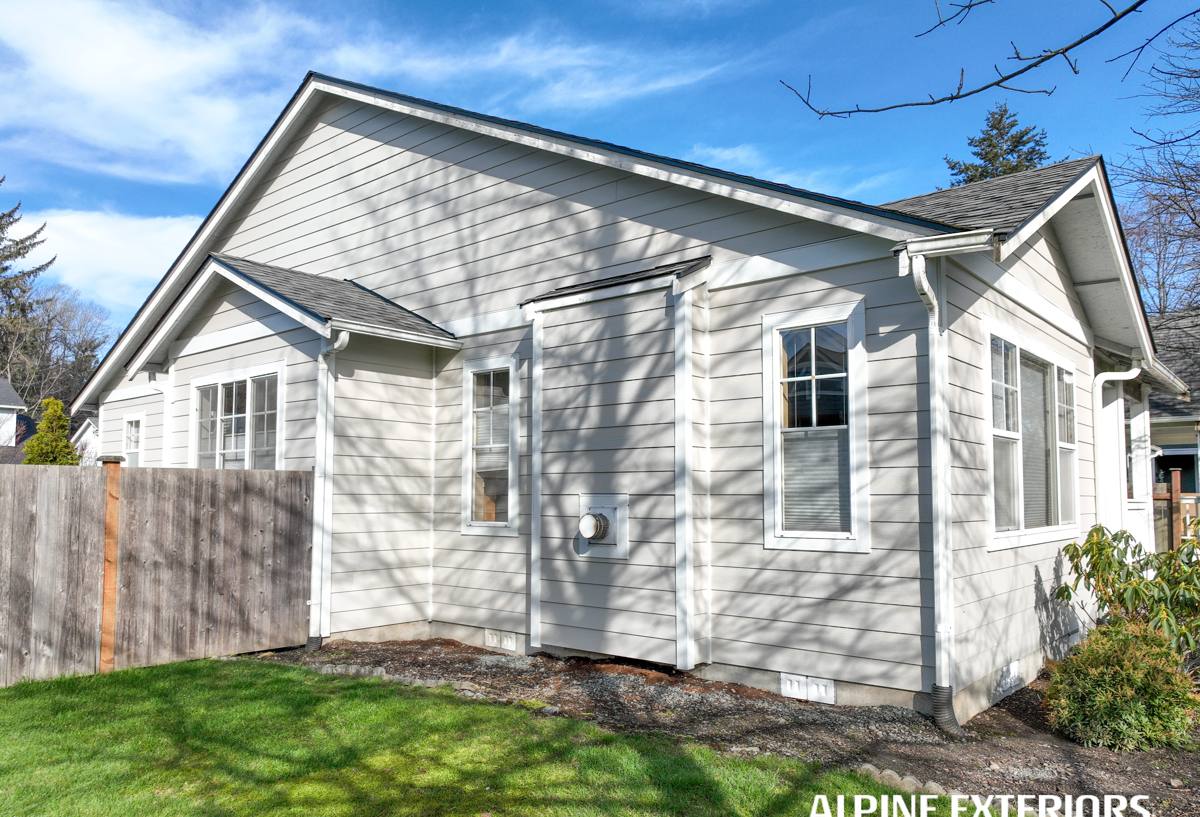
What a Correct Asphalt Shingle Roof Needs in This Climate
Underlayment and Water Barriers
Shingles are the visible layer, but the underlayment underneath is what actually keeps a home dry when wind-driven rain gets past the shingle line — and in a spot exposed to channel and bay winds, it will get past the shingle line eventually. We use synthetic underlayment rated for high-wind, high-moisture exposure, and we run self-adhering ice-and-water membrane at eaves, valleys, and any roof-to-wall transition, not just where code requires it. Those are the areas where standing water and wind-blown rain do the most damage over time.
Flashing That's Built for Salt Air
Flashing around chimneys, skylights, vents, and sidewalls fails long before shingles do if it's the wrong material or poorly installed. Salt air corrodes cheap or under-gauge metal flashing faster than homeowners expect, so we spec flashing that holds up to marine exposure and we form and seat it properly rather than relying on caulk to do the job flashing should be doing.
Ventilation That Matches the Climate
A shingle roof needs balanced intake and exhaust ventilation to let heat and moisture escape from the attic. In a damp climate like this, poor ventilation doesn't just shorten shingle life — it can trap moisture against the roof deck and encourage rot and mold you won't see until it's a real problem. We check existing ventilation on every roof and correct it as part of the job, not as an upsell afterward.
Choosing the Right Shingle for a Marine Climate
Not every asphalt shingle product is built the same way, and the differences matter more here than in a mild, dry climate. The table below covers the main factors we walk homeowners through.
| Factor | Standard 3-Tab Shingle | Architectural (Dimensional) Shingle |
|---|---|---|
| Typical lifespan in this climate | Shorter — more exposed edge, less wind resistance | Longer — thicker, better wind rating |
| Algae/moss resistance options | Limited | Widely available with algae-resistant granules |
| Wind rating | Lower, more prone to lifting in gusts off the water | Higher, better suited to exposed sites |
| Upfront cost | Lower | Moderate step up |
| Best fit | Budget-driven, less wind-exposed roofs | Most La Conner homes, especially near open water |
For most homes in and around La Conner, we recommend architectural shingles with algae-resistant granules. The extra upfront cost is modest compared to the cost of redoing a roof years earlier than it should need it.
How We Handle Moss and Algae
Moss and dark algae streaking are the two most common complaints we hear from homeowners in this area, and both are climate problems more than product defects. A few things make a real, lasting difference:
- Algae-resistant shingles with copper-infused granules, which slow algae growth without chemical treatments
- Zinc or copper strips installed near the ridge, which release trace metals with every rain to inhibit moss and algae growth down the slope
- Keeping overhanging tree branches trimmed back so roof sections stay drier and get more sun
- Gutters cleared regularly, since clogged gutters hold moisture against the roof edge where moss gets its first foothold
- Avoiding pressure washing, which strips granules and shortens shingle life — moss and debris should be removed with a soft-bristle approach instead
Moss removal on an existing roof is a maintenance job, not a fix for a roof that's already failing underneath. If moss has been established long enough to hold moisture against the shingles, we'll tell you honestly whether cleaning it is worthwhile or whether the roof is past the point where that helps.
Our Process
1. Inspection and Honest Assessment
We start by getting on the roof, not just looking at it from the ground. We check shingle condition, flashing, decking, ventilation, and signs of moisture intrusion, and we tell you plainly whether you need a full replacement, a targeted repair, or nothing at all right now.
2. Tear-Off and Deck Inspection
For a full replacement, we remove the old roofing down to the deck. This is the point where hidden problems — soft or rotted decking, past water damage, inadequate ventilation — actually show up. We repair or replace any compromised decking before anything new goes down; installing new shingles over a bad deck just hides the problem for a few more years.
3. Underlayment, Flashing, and Ventilation
We install ice-and-water membrane at vulnerable areas, synthetic underlayment across the field, and new flashing sized and formed for the conditions here, then correct ventilation as needed.
4. Shingle Installation
Shingles go down to manufacturer spec for nail placement, pattern, and exposure — details that directly affect wind performance, which matters on a roof exposed to channel and bay winds.
5. Cleanup and Walkthrough
We clean the site, including a magnetic sweep for stray nails, and walk the finished roof with you so you know what was done and what to watch for going forward.
Signs Your La Conner Roof Needs Attention
A quick self-check that's worth doing once or twice a year, especially after a hard winter storm:
- Granules collecting in gutters or at downspout outlets
- Shingles that look curled, cracked, or are missing outright
- Dark streaking or visible moss patches, especially on north-facing or shaded slopes
- Soft spots or sagging when the roof is walked
- Water stains on interior ceilings or in the attic
- Daylight visible through the roof deck from inside the attic
- Flashing that looks lifted, rusted, or separated from the surface it seals
Catching these early is almost always cheaper than waiting. A repair caught in year twelve is a repair; the same problem ignored until year eighteen is often a full replacement.
What Affects the Cost of a Shingle Roof Here
| Factor | Why It Matters in La Conner |
|---|---|
| Roof size and pitch | More surface area and steeper pitches take longer and require more safety setup |
| Deck condition | Rot from long-term moisture exposure means added repair before shingles go on |
| Shingle grade chosen | Architectural shingles cost more upfront but hold up better to wind and moisture |
| Number of penetrations | Chimneys, skylights, and vents each need proper flashing, which adds labor |
| Ventilation upgrades | Correcting inadequate ventilation adds cost but protects the new roof's lifespan |
| Access and site conditions | Waterfront lots, tree cover, and tight access can affect setup and staging |
We give a specific number after we've actually seen the roof — broad online estimates don't account for deck condition or ventilation needs, and those are usually the line items that change the price the most.
Why It Matters to Hire a Crew That Already Works La Conner
A roofing crew that mostly works dry inland climates can still do competent work, but they're often making judgment calls on the fly about flashing details, underlayment coverage, and ventilation that a crew familiar with Skagit County's marine exposure has already settled on through repeated experience. Knowing how far wind-driven rain actually travels up a valley in a channel-side storm, or how long moss takes to become a real problem on a shaded north slope here, isn't something you learn from a manufacturer's install guide. It's something you learn by doing the work in this specific climate, season after season.
We're a Burlington-based crew that works throughout Skagit County, including La Conner, and we build every shingle roof to hold up against the conditions this area actually produces — not the average conditions a shingle warranty is written around.
If you're dealing with an aging roof, storm damage, or you just want an honest read on where your current roof stands, we're glad to take a look. Reach out below for a free, no-pressure estimate.