 Burlington
 Anacortes Sits Right at the Edge of Puget Sound's Weather
Anacortes homes take a different kind of beating than houses ten miles inland. Being surrounded by saltwater on three sides means siding here deals with salt-laden air, near-constant humidity, driving rain off the Sound, and long stretches of gray, damp months where surfaces barely get a chance to dry out before the next system rolls through. Add in the tree cover common on many Anacortes lots and you get a fourth factor: a moss and algae season that can run most of the year if a wall never sees direct sun.
None of that is exotic weather. It's simply what Skagit County's marine climate does to a house, year after year, for as long as that house stands. The siding question isn't whether a product will get wet — everything here gets wet — it's whether the product, the install, and the finish were built to handle it without breaking down.
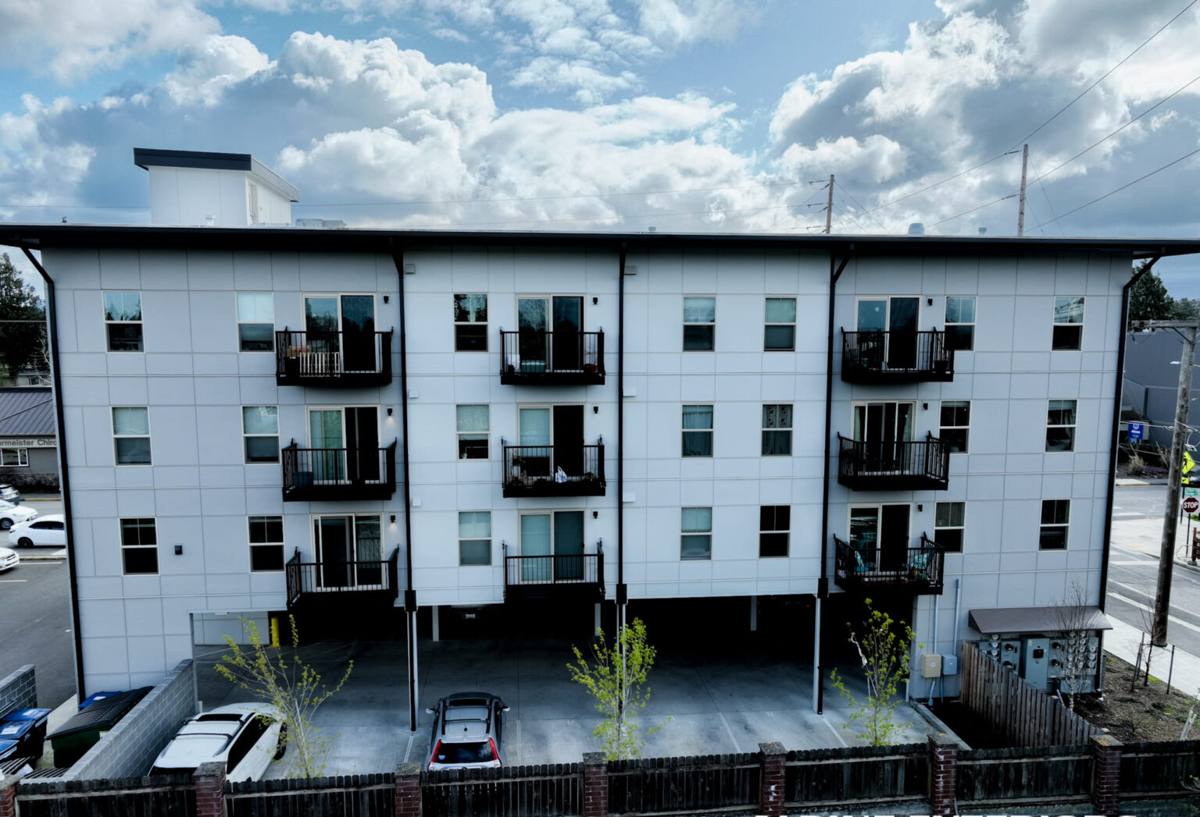
What This Climate Actually Does to Siding Over Time
Moisture that never fully leaves
Wood-based and wood-adjacent siding products absorb moisture through end cuts, fastener holes, and any gap in the paint film. In a climate where the air itself carries humidity most of the year, that moisture doesn't get the drying window it would in a drier region. The result is slow, often hidden, deterioration — swelling, soft spots, and eventually rot — that frequently isn't visible from the ground until it's advanced.
Salt air and coastal exposure
Homes closer to the water deal with airborne salt that settles on every exterior surface. Salt accelerates the breakdown of some paint films and can be harder on certain fasteners and trim metals if the wrong materials are used. It's a slow, cumulative effect — not something that shows up in year one, but something that shows up by year ten if the materials weren't chosen with it in mind.
Moss, algae, and shaded walls
North-facing walls, walls under tree canopy, and anything that stays shaded and damp for long stretches are prone to moss and algae growth. Beyond the cosmetic issue, moss holds moisture against the siding surface, which extends the amount of time that surface stays wet — the exact condition that speeds up decay in moisture-sensitive materials.
Why We Install Only James Hardie Fiber Cement
Burlington Siding does not install vinyl, LP SmartSide, primed spruce, cedar, or other fiber cement brands. That's not a marketing position — it's a standard we hold because of what we've seen these products do, and not do, in exactly the conditions Anacortes homes face. James Hardie's fiber cement is non-combustible, dimensionally stable, and manufactured with a factory-applied finish system that's built to hold up in wet, coastal climates rather than depend on a homeowner repainting every few years to keep water out.
We'd rather stand behind one product line we know performs here than offer a menu of options and let a homeowner unknowingly choose the one that struggles in this climate. If a product isn't right for a marine environment, we don't think it's honest to install it just because it's cheaper up front.
What James Hardie Brings to a Coastal Marine Climate
Fiber cement composition
James Hardie siding is made from cement, sand, and cellulose fibers, pressed and cured into a dense, stable board. It doesn't absorb and swell the way wood or wood-composite products can, and it isn't susceptible to rot the way organic wood fiber siding is. That matters directly in a climate where the siding rarely gets a long, dry stretch.
HardieZone engineering for this region
James Hardie engineers its products by climate zone. Products specified for HZ5 — the zone that covers the Pacific Northwest, including Skagit County — are formulated for regions with sustained moisture and freeze-thaw cycles, as opposed to the HZ10 formulation built for hot, humid southern climates. Using the zone-correct product isn't a minor detail; it's the difference between siding engineered for exactly this kind of weather and siding that happens to also be sold here.
ColorPlus factory finish
Most James Hardie siding on Anacortes homes should go up with ColorPlus Technology — a finish baked onto the board at the factory under controlled conditions, rather than field-applied paint. It resists fading and holds up to UV and moisture exposure far better than a coat of paint applied on-site in variable weather, and it comes with its own finish warranty separate from the product warranty.
What a Correct Installation Involves
Fiber cement siding performs the way it's supposed to only when it's installed correctly. In a wet climate, installation mistakes don't just look bad — they create the entry points that let water behind the siding, where the real damage happens.
- Proper water-resistive barrier (house wrap) installed and lapped correctly before any siding goes up
- Flashing installed at every window, door, and roof-to-wall intersection so water sheds outward instead of behind the cladding
- Correct fastener type, spacing, and placement per James Hardie's published installation instructions
- Minimum clearance maintained between the bottom edge of siding and grade, decks, patios, and roof lines
- Butt joints and corners sealed or flashed per manufacturer spec, not just caulked and hoped for
- Field-cut edges primed or sealed before installation so raw cement edges aren't left exposed to weather
- Correct panel or plank overlap to shed wind-driven rain rather than letting it wick upward
Every one of those steps is spelled out in James Hardie's installation manual, and every one of them is also a requirement to keep the manufacturer's warranty valid. Skipping steps to save labor time is the single most common reason fiber cement siding underperforms — not the product itself.
Our Process for Anacortes Homes
- Walk-through and assessment. We look at existing siding condition, wall orientation relative to sun and prevailing weather, moisture or rot signs, and any trim, window, or flashing issues that need addressing before new siding goes up.
- Product and profile selection. We help you choose plank width, texture, and color from James Hardie's lineup based on your home's style and the specific exposure of each wall.
- Written estimate. A clear scope covering tear-off (if applicable), house wrap, flashing, siding, trim, and cleanup — no vague allowances.
- Prep and weatherproofing. Old siding removal where needed, sheathing repair if rot is found, and a correctly lapped water-resistive barrier installed before a single piece of Hardie goes up.
- Installation to manufacturer spec. Fastening, flashing, clearances, and joints installed per James Hardie's requirements — not shortcuts.
- Final walk-through. We review the finished job with you and confirm everything meets both our standard and Hardie's warranty requirements.
Comparing James Hardie Product Lines for This Climate
Not every part of an Anacortes home needs the same siding profile. Here's how the main James Hardie product lines typically get used on a coastal Skagit County home:
| Product Line | Best Use | Why It Fits This Climate |
|---|---|---|
| HardiePlank Lap Siding | Primary wall cladding | Overlapping planks shed wind-driven rain effectively; most common choice for full-house coverage |
| HardieShingle | Accent gables, dormers | Adds visual texture while carrying the same moisture and impact resistance as the rest of the system |
| HardiePanel | Modern/board-and-batten looks | Large-format vertical panels for contemporary styling, still engineered for HZ5 conditions |
| HardieTrim | Corners, window and door surrounds | Matches the siding's stability so trim doesn't expand, contract, or fail at a different rate than the field siding |
Living With Fiber Cement Siding in a Moss-Prone Climate
James Hardie siding doesn't rot or absorb moisture the way wood-based products do, but it still lives outside in the same salt air and shade that grows moss on everything else in Anacortes. A little routine attention keeps it looking and performing its best:
- Rinse siding once or twice a year with a garden hose to clear salt residue, pollen, and light grime
- Trim back tree branches and shrubs that keep a wall shaded and damp longer than the rest of the house
- Address moss or algae on shaded walls early with a gentle, siding-safe cleaning approach rather than high-pressure washing that can damage the finish
- Check caulking at trim joints and penetrations periodically; recaulk if it's cracked or pulling away
- Watch for any hairline cracking or chipping in the ColorPlus finish and have it looked at before moisture can get behind it
Compared to repainting a wood or composite exterior every few years, this is a modest maintenance load — but it isn't zero, and homeowners who go in expecting some upkeep are the ones happiest with their siding a decade later.
What Correct Siding Costs Depend On
Every Anacortes home is different, so we don't quote broad numbers without seeing the job. What we can tell you is what actually drives the price:
| Cost Factor | Why It Matters |
|---|---|
| Tear-off vs. new construction | Removing and disposing of old siding adds labor and disposal cost that new-build siding doesn't have |
| Sheathing or framing repair | Homes with hidden moisture damage need repair before new siding goes on — this varies widely house to house |
| Wall complexity | Dormers, multiple gables, and cut-up wall lines take more labor and trim work than a simple rectangular wall |
| Product line and profile | Lap siding, shingle accents, and panel systems carry different material and labor costs |
| Trim and flashing scope | Full trim replacement and proper flashing at every penetration adds cost but is not optional for a correct install |
Why It Matters That We Already Work in Anacortes
A crew that's worked on homes throughout Anacortes and the rest of Skagit County already knows which walls tend to hold moisture, how far wind-driven rain travels up a wall face during a Sound storm, and which details — flashing at a roof-to-wall transition, clearance above a deck — matter most for a specific home's exposure. That's not something you get from a general instruction manual; it's the accumulated experience of installing in this exact climate, on this exact kind of coastline, over and over.
Hiring locally also means accountability that outlasts the job. If a question comes up two years after installation, you're calling a contractor who's still working in your neighborhood — not chasing down a crew that moved on to a different region.
If your Anacortes home needs new siding or you're planning ahead for a project down the road, we're happy to walk the property with you and give you a straight, no-pressure estimate. Use the form below to get started.