 Burlington
 Guemes Island Puts Windows Through More Than Most Skagit County Homes See
Guemes Island sits out in the water, which is exactly why people love living there and exactly why the windows on those homes work harder than windows almost anywhere else in Skagit County. Salt-laden air off the water accelerates corrosion on hardware, screens, and metal components. Wind-driven rain hits window assemblies at angles that a standard install detail was never tested against. And the long, damp moss season that settles over the whole region doesn't just grow on roofs — it holds moisture against sills, trim, and cladding long after a mainland home would have dried out.
None of that means island windows need to be exotic or overbuilt. It means the material choice, the flashing detail, and the sealant work have to actually match the exposure the house gets, instead of using whatever detail works fine forty miles inland. That's the whole difference between a window replacement that holds up on Guemes Island and one that starts failing in five years.
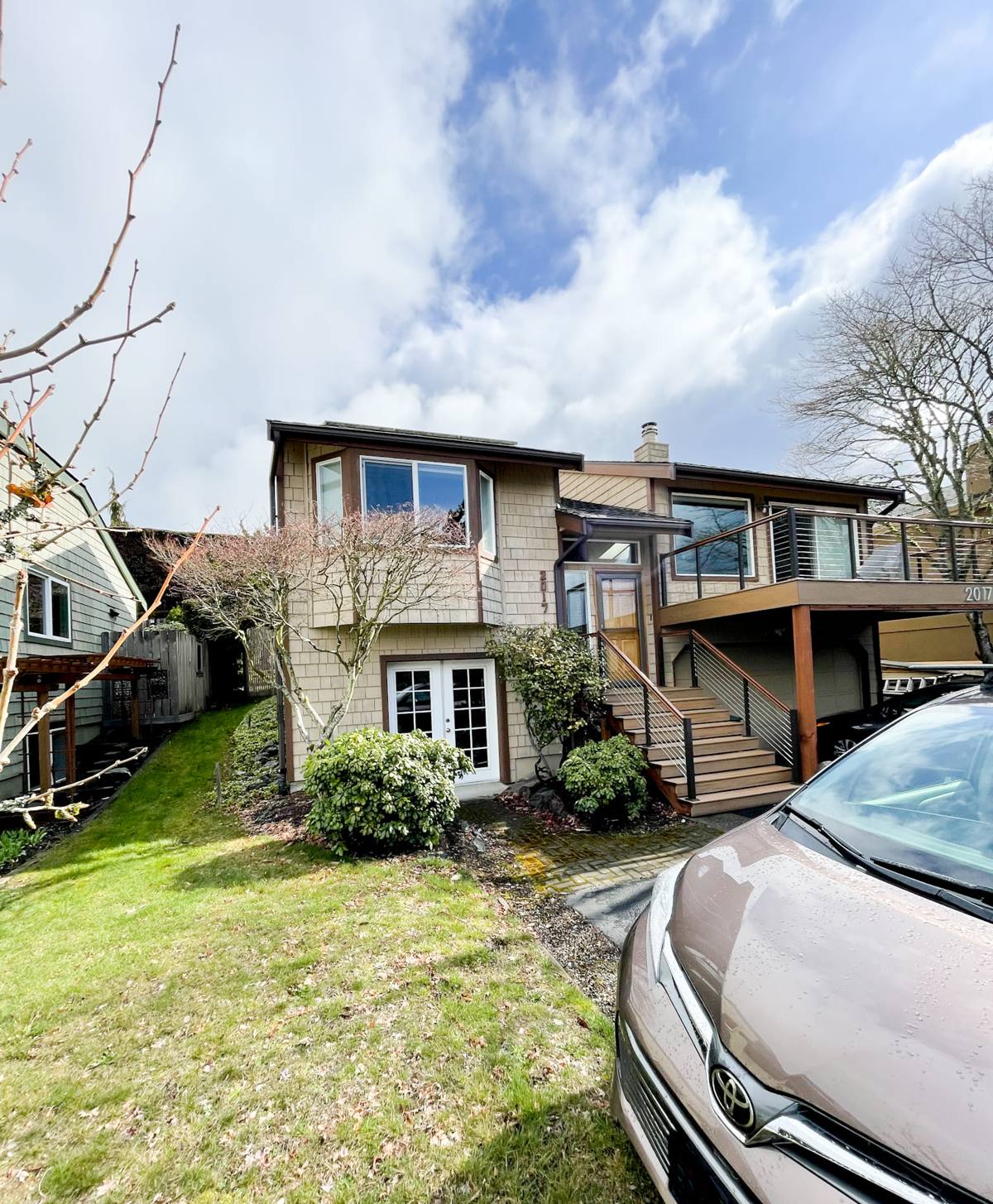
How Salt Air, Driving Rain, and Moss Season Actually Damage Windows
Salt air
Airborne salt is corrosive to exposed metal — hinges, balance systems, screen frames, and lesser-grade fasteners all show wear faster near the water than they would a few miles inland. It also breaks down some finishes and coatings over time, which is part of why we're picky about hardware grade and finish quality on island jobs, not just the glass package.
Driving rain
Wind off the water doesn't let rain fall straight down — it drives it sideways into the wall, which means it's testing the flashing and sealant at the window opening, not just the glass. A window that's watertight in calm conditions can still leak under a sideways gust if the flashing wasn't lapped correctly or the sill pan wasn't sloped to shed water out, not in.
Moss season
The extended wet stretch that settles over this part of Washington keeps humidity high around the building envelope for months at a time. Wood trim, sills, and any cladding near the window opening stay damp longer, which is exactly the condition that lets rot start at a joint or a fastener hole that isn't properly sealed.
Signs Your Windows Are Losing That Fight
Most homeowners don't notice window failure until it's visible, but there are earlier signs worth acting on:
- Fogging or a permanent haze between panes — the seal on the insulated glass unit has failed
- Soft, spongy, or discolored wood at the sill or lower corners of the frame
- Windows that are noticeably harder to open, close, or lock than they used to be
- Visible corrosion, pitting, or a chalky white residue on hardware or metal frames
- A draft you can feel with your hand near the frame on a windy day
- Paint or finish that's bubbling, peeling, or lifting right at the window trim
- Water staining on interior drywall or trim below or beside a window
Any one of these can be a minor fix. Several at once, especially on the weather-facing side of the house, usually means the window assembly itself is past the point where caulk and adjustment will hold.
What a Correct Window Replacement Actually Involves
A window replacement is more than swapping out the sash and frame. On an island property with real weather exposure, the parts that matter most are the parts you won't see once the trim goes back on.
- Remove the old unit and inspect the rough opening — this is where hidden rot or past water intrusion shows up, before it's covered by a new window.
- Repair or rebuild the opening if there's any soft wood or damaged sheathing. Installing a new window into a compromised opening just repeats the same failure on a delay.
- Install a sloped sill pan so any water that does get past the window sheds back outside instead of sitting against the framing.
- Flash the opening correctly, lapped shingle-style so each layer sheds water onto the layer below it — the single most important step for a window that has to handle sideways rain.
- Set and level the new window, shim it properly, and fasten it per the manufacturer's schedule so it isn't relying on foam or caulk to hold shape.
- Seal and insulate the gap between the window and the rough opening with the right products — not just a bead of caulk around the outside trim.
- Finish the exterior trim and interior casing and confirm the unit operates smoothly and locks tight.
Skip step three or four and the window can look perfect for a couple of years before a leak shows up — usually right after a stretch of hard weather, which is not a coincidence.
Choosing a Window Material for Salt Air and Coastal Exposure
There isn't one universally "best" window material — there's a best fit for a given home, budget, and exposure. Here's how the common options stack up for a property that's dealing with salt air and heavy weather:
| Material | Salt air / corrosion resistance | Maintenance | Typical trade-offs |
|---|---|---|---|
| Vinyl | Good — won't corrode; hardware quality varies by manufacturer | Low | Budget-friendly; frame can flex on very large units |
| Fiberglass | Very good — dimensionally stable, resists corrosion well | Low | Higher upfront cost; strong option for exposed elevations |
| Aluminum | Fair — durable but conducts heat/cold and can pit over time near salt air unless well finished | Moderate | Thinner sightlines; less common for residential retrofit here |
| Wood-clad | Fair to good depending on clad finish; interior wood needs protection from interior moisture too | Higher | Classic look; more upkeep in a wet, salty climate |
We steer most Guemes Island homeowners toward vinyl or fiberglass for weather-facing elevations because they don't give corrosion or moisture anything to work with over time. That's a maintenance and longevity call, not a knock on wood-clad windows — they can still be the right choice for a sheltered side of the house or where the look matters more than minimizing upkeep. We'll walk through the honest trade-offs for your specific exposure rather than push one product across the board.
Working Around the Ferry: How We Handle Island Logistics
Any contractor who hasn't worked Guemes Island before will underestimate what the ferry does to a project timeline. Every trip over — crew, tools, materials, and any debris coming back — has to be planned around the schedule, not around convenience. That changes how we run these jobs compared to a mainland Burlington or Mount Vernon project:
- Windows are measured and ordered in advance so the install happens in as few trips as possible
- Materials and tools are staged and loaded together to avoid a wasted ferry crossing mid-project
- Install day is planned as a full, efficient day of work rather than split across multiple partial visits
- Old windows and debris are hauled back off the island properly, not left for the homeowner to deal with
- We build ferry timing into the schedule we give you up front, so there are no surprise delays
This is a logistics skill as much as a construction one, and it's the difference between a job that runs smoothly and one that drags on because nobody accounted for the boat.
Permitting and Code Considerations in Skagit County
Window replacement projects on Guemes Island fall under Skagit County's permitting rules, and requirements can vary depending on the scope of the work — a like-for-like swap is generally treated differently than a project that changes the opening size or involves structural work. Homes near shoreline areas may also have additional considerations tied to critical areas regulations. We handle this conversation with you before work starts so there aren't questions about it later, and we won't cut corners on it to save time.
Why It Matters That We Already Work on Guemes Island
A window replacement is only as good as the details nobody sees once it's finished — the flashing lap, the sill pan slope, the sealant choice for salt air exposure. A crew that's already done this work on the island isn't guessing at how to handle the ferry, the exposure, or the moisture conditions; they've built the habits that make an island job go right the first time. That matters more here than it would on a typical inland Burlington street, simply because a mistake takes longer to notice, longer to fix, and one more ferry trip to correct.
If your windows on Guemes Island are showing wear, fogging, drafts, or just don't feel as tight as they used to, we're glad to take a look and talk through honest options — no pressure, no pushy sales pitch. Use the form below to request a free estimate and we'll get back to you to set up a time.