 Burlington
 Guemes Island Windows Work Harder Than Mainland Windows
A window on Guemes Island earns its keep. Set out in the water at the edge of Skagit County, homes here take on salt-laden air, wind-driven rain that comes in sideways off the water, and a long wet season that keeps everything damp for months at a time. That combination is harder on windows than what a typical inland Burlington home deals with, and it shows up first in the places most homeowners never think to check: the flashing behind the trim, the fasteners in the frame, and the sealant joints that look fine from six feet away.
We install windows across Skagit County, but island jobs get treated differently from the planning stage forward. The product, the flashing detail, and the install sequence all have to account for exposure that's a step up from a sheltered lot in town. This page covers what that actually means for a Guemes Island home, and what a correct job looks like from the first measurement to the final bead of sealant.
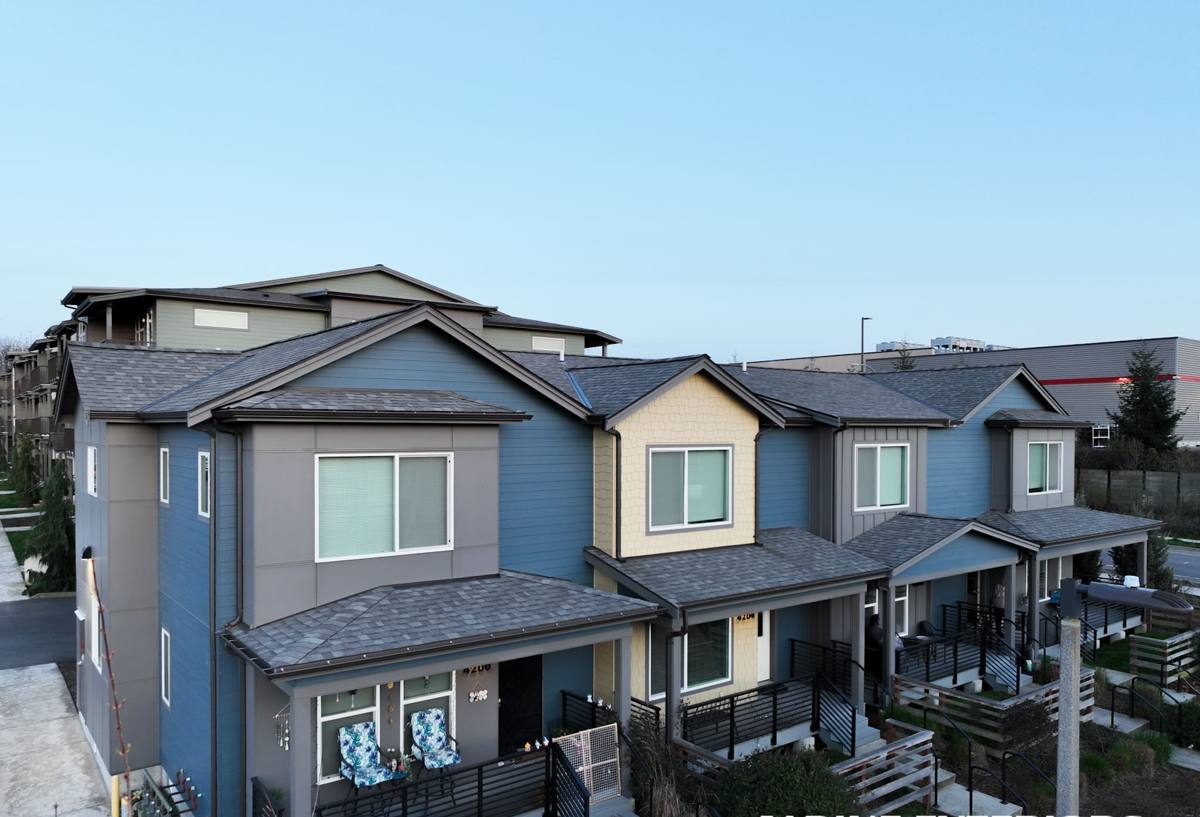
What Salt Air and Driving Rain Actually Do to a Window
It helps to know what you're up against before you pick a product or a contractor. On an island exposure, deterioration doesn't usually start with the glass — it starts with the hardware and the water management around the unit.
Salt air
Airborne salt is corrosive to unprotected metal. Over years, it can pit and weaken hinges, cranks, and locking hardware on windows that aren't rated or finished for coastal exposure. It also accelerates the breakdown of some sealants and finishes faster than they'd wear inland. This is a slow process — most owners don't notice until a crank binds, a lock won't seat right, or a finish starts chalking early.
Driving rain
Wind-driven rain doesn't just fall on a window, it gets pushed sideways and upward into any gap that will take it. On an exposed island lot, that means flashing and sealant details that would be adequate on a calm inland wall can fail on a wall that catches weather off the water. Once water gets behind the trim, it doesn't dry out quickly in this climate — it sits, and that's how rot starts in framing that's otherwise sound.
The long moss season
Extended damp periods keep sills, trim, and cladding wet longer than a drier climate would. Moss and algae growth on window sills and surrounding wood isn't just cosmetic — it holds moisture against the surface and keeps wood assemblies from ever fully drying between rain events, which shortens the life of anything not properly sealed and back-primed.
Choosing a Window Built for This Exposure
Every major window material can work on Guemes Island if it's specified and installed correctly — but some hold up with less maintenance than others in a salt-air, high-moisture setting. We'll talk through trade-offs honestly rather than push one brand.
| Frame Material | How It Handles This Climate | What to Know |
|---|---|---|
| Vinyl | Good moisture resistance, no corrosion risk, low maintenance | Quality varies widely by manufacturer; look for marine-grade or coastal-rated hardware options |
| Fiberglass | Very stable in wet/salt environments, resists warping and corrosion | Higher upfront cost; strong long-term value for exposed sites |
| Wood (unclad) | Handsome, but needs consistent upkeep in a damp coastal climate | We recommend it only where the owner is committed to regular maintenance |
| Aluminum-clad wood | Wood interior with a protective exterior shell | Cladding needs to be properly lapped and sealed at joints, or moisture can get trapped behind it |
| Fiberglass or vinyl-clad wood | Combines interior wood look with a low-maintenance exterior | A common middle ground for owners who want wood inside without the exterior upkeep |
Hardware matters as much as frame material here. We steer owners toward stainless or coated corrosion-resistant hardware on island installs rather than standard hardware packages, even when it costs a bit more — it's cheap insurance against the salt air problem described above.
Flashing: The Part of the Job You'll Never See
If there's one thing that separates a window installation that lasts twenty-plus years from one that leaks in five, it's the flashing and water management behind the trim — not the window itself. This matters everywhere, but it matters more on an exposed island wall.
- A window opening should be wrapped with a water-resistive barrier that integrates with the existing wall wrap, not just taped over it
- Sill pan flashing should slope outward so any water that does get past the window drains back out, not into the wall cavity
- Head flashing needs to shed water out and away, lapped correctly over the barrier below it — never tucked in a way that traps water
- Side flashing (jamb flashing) should integrate with both the sill pan and head flashing so there's no gap where water can find a path inward
- All penetrations — fasteners, trim nails — should be sealed or land in a location that doesn't compromise the water barrier
This is the work that's invisible once the trim goes back on, which is exactly why it's where corners get cut on a rushed job. On a driving-rain exposure, a flashing mistake doesn't show up as a leak on day one — it shows up as rot in the framing two or three years later, usually discovered when a window starts feeling soft or the interior sill shows staining.
Getting Materials and Crews to the Island
Island work has a logistics layer that mainland jobs don't. Windows are ordered to precise measurements, and materials, crew, and equipment all move by ferry on a schedule rather than by truck at any hour. That means:
- Accurate measurement matters even more up front — a wrong order means another ferry trip and a delayed job
- We plan crew and material timing around ferry schedules so a job isn't stretched out by avoidable trips back and forth
- Access on the island can be tighter than in town — narrower driveways and roads sometimes mean adjusting how materials and debris move on and off a site
- Weather windows for exterior work can be narrower on an exposed site, so we build some flexibility into scheduling rather than fighting the forecast
None of this is exotic, but it's the difference between a contractor who's done island jobs before and one who's figuring it out on your project.
Our Window Installation Process on Guemes Island
1. On-site assessment and measurement
We look at the existing opening, framing condition, and current flashing before recommending anything. On an older home, this is also when we check for any hidden moisture damage around existing windows — worth knowing before a project starts, not after.
2. Product selection
We talk through frame material, hardware, and glass options against your budget and how exposed the specific wall is — a window on the water side of a home may warrant a different spec than one on a sheltered wall of the same house.
3. Removal and opening prep
Old units come out carefully to protect the surrounding wall and framing. Any existing rot or compromised flashing gets addressed here — installing a new window into a bad opening just repeats the same failure on a delay.
4. Flashing and water barrier installation
Sill pan, side flashing, and head flashing go in following the sequence described above, integrated with the home's existing water-resistive barrier.
5. Window setting and fastening
The unit is set level, plumb, and square, shimmed correctly, and fastened per the manufacturer's schedule — under- or over-fastening both cause problems over time.
6. Sealing, trim, and finish
Exterior sealant, trim, and any cladding integration are finished with attention to how they'll perform under driving rain specifically, not just how they'll look on install day.
7. Walkthrough
We check operation, look at the finished exterior detail with you, and answer questions about care in this climate before we call the job done.
Signs Your Current Windows Are Already Struggling
A lot of island homeowners call us after noticing a problem, not before. Here's what to look for if you're wondering whether your windows are holding up:
- Cranks, locks, or hinges that feel stiff, gritty, or corroded
- Visible pitting or discoloration on window hardware
- Soft or discolored wood at the sill, especially on the interior side
- Persistent condensation between panes, which usually means a failed seal
- Drafts or a noticeable temperature difference near the window on a windy day
- Moss, algae, or dark staining building up on the exterior sill or trim
- Difficulty opening or closing that wasn't there a year or two ago
Any one of these on its own isn't an emergency. Several together, especially on the weather-facing side of a house, are usually a sign the flashing or seals have already let go and it's worth a look before it becomes a bigger repair.
Why the Contractor You Choose Matters More Here
Window installation looks straightforward from the outside — measure, remove, set, trim. The part that determines whether it lasts is the flashing and sequencing work nobody sees after the trim goes back on, and that's exactly the part that's hardest to judge from a bid alone. On a sheltered inland lot, a mediocre flashing job might not show a problem for a decade. On an exposed Guemes Island wall taking direct wind and rain off the water, the same shortcut can show up in a fraction of that time.
A crew that's done island work knows the ferry logistics, has already made the material and hardware calls that hold up in salt air, and treats flashing detail as the actual product being sold — not an afterthought behind the window itself. That experience doesn't show up in a price quote, but it shows up in whether the job is still watertight in fifteen years.
Ready to Talk About Your Windows?
If you're planning a window project on Guemes Island — whether it's a full-home replacement, a few problem windows, or new construction — we're glad to come take a look and give you an honest read on what your home needs. Reach out for a free, no-pressure estimate using the form below.