 Burlington
 Roofing on Guemes Island Is Its Own Kind of Job
Guemes Island sits close enough to Burlington to feel like part of the same community, but it lives under a different set of conditions than a roof a few miles inland in Skagit County. Salt-laden air off the Salish Sea, wind-driven rain that comes in sideways off the water, and a long, damp moss season combine to put more stress on a roof here than on a comparable home in town. An asphalt shingle roof can absolutely hold up to those conditions for its full expected lifespan — but only if it's specified, installed, and maintained with that environment in mind. This page walks through what that actually looks like, without the sales pitch.
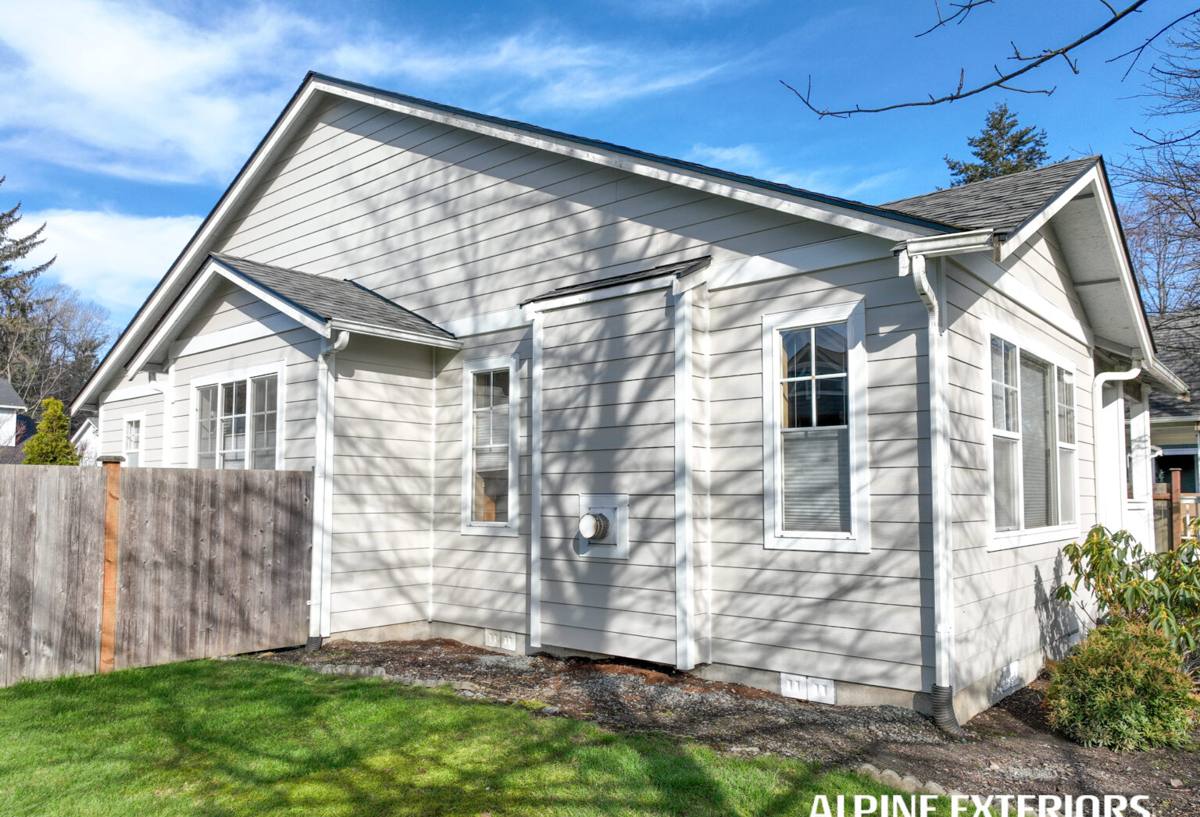
What Salt Air, Rain, and Moss Actually Do to a Shingle Roof
Every asphalt shingle roof ages. The question on an island property is what's accelerating that aging, and where.
Salt Air and Corrosion
Airborne salt doesn't damage the shingle mat itself much, but it's hard on every metal component tied to the roof system — nail heads, flashing, drip edge, vent housings, and fasteners on ridge caps. Corrosion at those points is usually where a roof starts leaking long before the shingles themselves are worn out. That's why fastener and flashing material choice matters more here than it would on a roof set back from the water.
Driving Rain
Wind-driven rain doesn't just fall on a roof, it gets pushed sideways and even slightly upward under the shingle tabs, valleys, and around penetrations like plumbing vents and chimneys. A roof that would be fine with basic underlayment in a calmer location needs a more complete moisture barrier here, particularly at eaves, valleys, and any wall-to-roof transition.
Moss and Sustained Moisture
Guemes Island's tree cover and marine humidity create long stretches where shaded roof sections simply don't dry out between rain events. Moss doesn't just look bad — its root structure lifts shingle edges, holds water against the mat, and accelerates granule loss. Left alone through a few wet seasons, moss growth can shave real years off a roof's service life, especially on north-facing slopes and anywhere overhung by trees.
Shingle Selection: What Actually Matters Here
Homeowners often assume "better shingle" means a bigger name or a higher price tag. On an island roof, the more useful way to think about it is which physical properties address the specific stresses above: wind uplift resistance, algae-resistant granules, and a sealant strip that bonds properly in a marine climate.
| Shingle Type | Wind Rating (typical) | Algae/Moss Resistance | Typical Lifespan | Best Fit |
|---|---|---|---|---|
| 3-tab (economy) | Lower | Standard, unless upgraded | Shorter end of the range | Budget-driven projects, less wind/moisture exposure |
| Architectural / dimensional | Higher | Usually available with algae-resistant granules | Mid-to-long range | Most Guemes Island homes — the standard recommendation |
| Premium / designer laminate | Highest in the asphalt category | Algae-resistant standard | Longer end of the range | Exposed sites, higher wind fetch, homeowners wanting max lifespan |
For most island properties, we steer people toward architectural shingles with algae-resistant (copper- or zinc-infused) granules as the practical middle ground — the wind performance and moisture resistance are noticeably better than economy shingles, without paying premium prices for features a given home may not need. Where a home sits fully exposed to open water and prevailing wind, stepping up to a premium laminate can be worth the difference.
What a Correct Installation Actually Involves
The shingle brand printed on the wrapper is the least important decision in the whole project. What actually determines whether a roof performs for 20-plus years in this climate is everything underneath and around it.
Tear-Off vs. Overlay
We tear off down to the decking on island projects rather than layering new shingles over old. An overlay hides the condition of the deck and the old underlayment, both of which matter more here given the moisture load this climate puts on a roof. Tear-off also lets us inspect and replace any soft or delaminated decking before it's covered up again.
Underlayment and Moisture Barrier
Synthetic underlayment across the full roof, with self-adhered ice-and-water shield membrane at eaves, valleys, and around every penetration, is our standard for this area — not an upsell. Given how often driving rain pushes water sideways under shingle tabs here, that membrane is what actually keeps a small leak point from becoming a decking problem.
Flashing and Fasteners
We use corrosion-resistant flashing and fasteners at every metal touchpoint — step flashing at walls and chimneys, properly lapped valley metal, and drip edge at all eaves and rakes. This is the detail that most often separates a roof that's still tight at year 15 from one that's already showing stains on the interior ceiling.
Ventilation
Balanced intake and exhaust ventilation keeps the underside of the deck dry and the attic temperature stable. On a roof already fighting exterior moisture from salt air and rain, poor ventilation adds a second, interior source of dampness that shortens shingle life from underneath.
Nailing Pattern and Wind Performance
Correct nail placement and count, matched to the shingle manufacturer's wind-rated installation instructions, is what actually delivers the wind rating printed on the shingle wrapper. It's an easy step to shortcut and an easy one to verify — ask any contractor how they nail shingles and how many fasteners per shingle they use.
How We Handle a Guemes Island Project
Working on the island adds real logistics that a mainland Burlington job doesn't have, and we plan around them rather than treating them as an afterthought.
- On-site assessment. We look at the existing roof, decking condition, ventilation, tree cover, and exposure to wind and water before quoting anything.
- Material and logistics planning. Because everything — crew, equipment, shingles, underlayment, dump trailer — has to move via ferry, we schedule material delivery and crew days around ferry availability so the project isn't stretched out waiting on a load that missed a sailing.
- Weather-window scheduling. Tear-off exposes the decking to the elements, so we time that stage for a stretch of dry weather appropriate to the scope of the job, and we tarp in the event conditions turn faster than expected.
- Tear-off and deck inspection. Full removal down to the deck, with any damaged sheathing replaced before anything goes back down.
- Underlayment, flashing, and shingle installation per the standards above, followed by a final walk-through with the homeowner.
- Cleanup and haul-off. Magnetic sweep for nails, full site cleanup, and debris removed off-island — again, planned around ferry scheduling rather than left to chance.
Why Local, Island-Experienced Crews Matter
A roofing crew that's never worked on an island can still do competent work, but they'll learn the logistics on your project's time and dime. A crew that already works Guemes Island regularly already knows the ferry schedule, already accounts for it in the bid instead of discovering it mid-project, and already understands which slopes and tree-shaded sections on island homes tend to hold moss and moisture longest. That familiarity shows up as fewer surprises, fewer delays, and a bid that reflects the real cost of the job up front rather than change orders once the ferry schedule collides with the tear-off day.
It also matters for permitting and code compliance — Skagit County requirements apply on Guemes Island the same as anywhere else in the county, and a crew that pulls permits here regularly knows the process rather than treating it as a one-off.
Maintenance That Actually Extends Roof Life Here
An asphalt shingle roof installed correctly for this climate still benefits from basic upkeep, especially given the moss pressure and salt exposure specific to island properties.
- Have moss physically and chemically treated before it establishes a heavy root mat — waiting until it's thick makes removal riskier for the shingles underneath.
- Keep overhanging branches trimmed back where practical, to cut down on shade and debris that keep sections of the roof damp longer.
- Clean gutters at least once a year, more often if there's heavy tree cover, so water isn't backing up under the eave edge.
- Have flashing, vent boots, and fastener points visually checked every couple of years — these corrode and fail before the shingle field does.
- After any significant windstorm, do a visual check (or have one done) for lifted or missing shingles before the next rain event finds them.
What Drives the Cost of a Guemes Island Roofing Project
Every roof is priced on its own specifics, but on island properties a few factors shift the number more than they would on a comparable mainland Burlington job.
| Cost Factor | Why It Matters on Guemes Island |
|---|---|
| Ferry-dependent logistics | Material delivery and debris haul-off both depend on ferry capacity and schedule, which affects crew time and disposal costs |
| Roof pitch and access | Steeper roofs and homes with limited equipment access take longer and carry higher labor cost, same as anywhere, but access can be more limited on island lots |
| Number of existing layers / tear-off scope | Full tear-off to the deck, which we recommend here, adds labor and disposal cost versus an overlay, but avoids covering up moisture-damaged decking |
| Decking repair | Sections of soft or delaminated decking, more likely on a roof that's held moisture longer, add material and labor once uncovered |
| Shingle grade | Architectural or premium laminate shingles cost more upfront than 3-tab but hold up better against wind and algae in this climate |
| Flashing and ventilation upgrades | Bringing older flashing and ventilation up to current standards adds cost but is what actually prevents the leaks this climate causes |
The honest range for a full asphalt shingle replacement varies widely based on those factors, along with roof size and complexity, so we'd rather walk a specific roof and give a real number than quote a generic figure that doesn't hold up once we're actually on-site.
Signs Your Guemes Island Roof May Need Attention
A few things worth watching for, particularly given the climate this roof is fighting:
- Granules collecting in gutters or at downspout discharge points, which signals accelerated shingle wear
- Dark streaking or moss patches, especially on north-facing or tree-shaded slopes
- Curling, cupping, or lifted shingle edges, often starting where wind exposure is highest
- Rust staining around flashing, vents, or fasteners
- Any interior ceiling staining, which usually means water has already found a path through the roof system
None of these mean a full replacement is automatically necessary — sometimes it's a repair, sometimes it's maintenance, sometimes it genuinely is time for a new roof. That's worth an honest look before assuming the worst or ignoring it.
If you're weighing a shingle repair, a full replacement, or just want a straight answer on where your Guemes Island roof stands, we're happy to come take a look. The estimate is free, there's no pressure attached to it, and you can use the form below to get one scheduled.