 Burlington
 Stanwood's Climate Is Harder on Siding Than It Looks
Stanwood sits close enough to Puget Sound and the Skagit River delta that homes here deal with a combination most siding products were never designed for: salt-laden air drifting in off the water, long stretches of driving rain pushed sideways by wind, and a moss season that can run eight or nine months out of the year. None of these things are dramatic on their own. What they do is work slowly, year after year, on whatever material is covering your walls — and the difference between siding that lasts twenty years and siding that lasts fifty usually comes down to whether the product and the installation were matched to this exact climate.
Salt Air and Marine Exposure
Homes closer to the water take on airborne salt that settles on exterior surfaces and accelerates corrosion of fasteners, staples, and any exposed metal trim. It also degrades paint film faster than inland exposure does, which is why so many older homes in this part of Skagit County show chalking, fading, or peeling on the side of the house that faces the water. Fiber cement doesn't rot or corrode from salt exposure the way wood or untreated metal accessories can, but the fasteners and flashing details still need to be chosen and installed with that exposure in mind.
Driving Rain and Wind-Driven Moisture
Straight-down rain is easy for any siding to shed. The problem in Stanwood is wind-driven rain that gets pushed sideways and upward at laps, corners, and penetrations. Over time, wind-driven moisture finds every gap in a poorly lapped or under-flashed installation and works its way behind the cladding, where it can sit against sheathing and framing far longer than anyone notices from the outside.
Moss, Mildew, and the Long Wet Season
Skagit County's wet season means siding, trim, and roof lines stay damp for extended stretches, which is exactly the environment moss and mildew need to establish. Moss holds moisture against a surface, and on a wall that's constantly damp, that moisture has nowhere to go. Fiber cement resists the surface breakdown that lets moss and mildew get a foothold the way it can on bare wood, but the siding still needs airflow behind it and proper drainage detailing to actually stay dry.
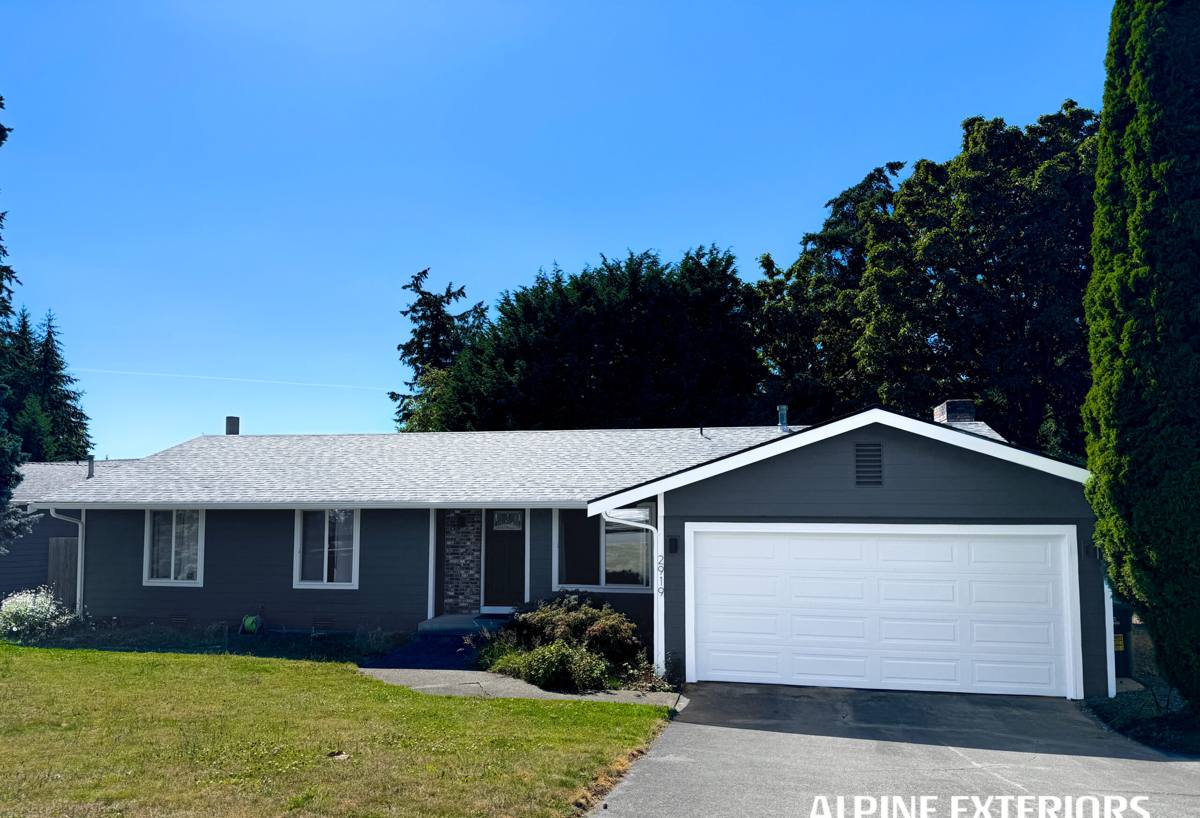
What a Correct Fiber Cement Job Actually Involves
Fiber cement siding is only as good as the assembly it's installed into. The board itself is durable, but the water management system behind it is what actually keeps a Stanwood home dry through the wet season.
A Drainage Plane, Not Just a Weather Barrier
A code-minimum weather-resistant barrier stops bulk water, but it doesn't do much to help incidental moisture that gets behind the siding find its way back out. A furred-out rainscreen gap creates a continuous drainage and drying plane behind the cladding, which matters more in a marine, high-rainfall climate like this one than it does in drier parts of the state.
Flashing Details That Match the Exposure
Window heads, deck ledgers, roof-to-wall transitions, and any penetration through the siding are where wind-driven rain finds its way in. Correct flashing — head flashing over openings, kick-out flashing where roof lines meet walls, and properly lapped housewrap — is not optional trim work. It's the difference between a wall assembly that dries out between storms and one that stays chronically damp.
Fastening and Clearances
James Hardie specifies fastener type, spacing, and embedment for a reason, and those specs change slightly depending on exposure category. Ground clearance, deck and patio clearances, and gaps at trim are all called out in the manufacturer's installation guide, and skipping them is one of the more common ways a fiber cement job fails early even though the board itself is rated for decades of service.
| Detail | Why It Matters in Stanwood |
|---|---|
| Rainscreen gap | Lets wind-driven moisture behind the siding drain and dry instead of sitting against sheathing |
| Corrosion-resistant fasteners | Salt air accelerates corrosion of standard fasteners over time |
| Head flashing at openings | Stops wind-driven rain from tracking in above windows and doors |
| Proper ground/deck clearance | Keeps splash-back and standing moisture off the bottom courses |
| Factory ColorPlus finish | Holds up to UV and salt exposure far longer than field-applied paint |
James Hardie Product Lines We Install
We install James Hardie fiber cement exclusively, and for a climate like this one, the specific product line matters. HardiePlank lap siding is the most common choice for full replacements, HardiePanel works well for accent walls or modern designs, and HardieShingle is an option for homes that want a traditional shingle look without the maintenance burden of real cedar shingles. All of it comes in Hardie's engineered HZ formulations, which are built for specific climate zones rather than a one-size-fits-all product.
ColorPlus Factory Finish
ColorPlus is baked on at the factory under controlled conditions, which gives it better adhesion and UV resistance than paint applied on site after installation. In a climate where fading, chalking, and salt exposure are constant, a factory finish that's warrantied against those issues is worth more here than it would be in a drier, less exposed part of the state.
Color and Trim Coordination
Because ColorPlus colors are matched across lap siding, trim, and soffit material, a full re-side gets a consistent, factory-matched look rather than a patchwork of field-painted pieces that will weather at different rates.
Our Process, Start to Finish
- On-site assessment. We look at your current siding, existing moisture damage, trim condition, and any problem areas specific to your home's exposure to wind and water.
- Written estimate. You get a clear scope covering tear-off, water management upgrades, siding, trim, and finish — no vague allowances.
- Tear-off and sheathing check. Old siding comes off and we inspect sheathing for hidden rot before anything new goes up, since covering damaged sheathing just hides a problem.
- Water management install. Housewrap, flashing, and rainscreen furring go in first — this is the layer that actually keeps the wall dry long term.
- Hardie siding installation to spec. Fastening, clearances, and lap details are installed to James Hardie's published requirements, not shortcuts.
- Trim, caulking, and final finish. Corners, trim boards, and penetrations get sealed and finished to match.
- Final walkthrough. We walk the job with you before calling it done.
Why a Local Burlington Crew Matters for a Stanwood Job
Fiber cement siding performs differently depending on which side of a Skagit County home faces the water and prevailing storms. A crew that already works homes in and around Stanwood and Burlington has seen firsthand which walls take the worst of the wind-driven rain, where moss tends to establish first, and which older installations in this area are failing and why. That local pattern recognition shows up in small decisions — where to add extra flashing, which elevation needs closer attention to the rainscreen gap — that a crew unfamiliar with this specific stretch of coastline might not think to prioritize.
It also matters for accountability. A local crew is easy to reach if a question comes up five or ten years down the road, and warranty work is straightforward when the company that installed your siding is still working in your neighborhood.
Cost Factors for a Stanwood Fiber Cement Project
Every home is different, but the same variables tend to drive cost up or down on jobs in this area.
| Factor | How It Affects the Job |
|---|---|
| Extent of existing moisture damage | Rotten sheathing or framing found during tear-off adds repair scope before new siding can go on |
| Home size and wall complexity | More corners, gables, and penetrations mean more flashing and cutting labor |
| Siding profile chosen | Lap, panel, and shingle profiles differ in material and labor cost |
| Trim and accent detailing | Custom trim packages add cost beyond basic field siding |
| Access and site conditions | Multi-story sections, tight lot lines, or landscaping can affect labor time |
Maintaining Fiber Cement Siding After Installation
Fiber cement is low-maintenance compared to wood, but "low-maintenance" doesn't mean "no maintenance," especially in a wet, salt-influenced climate. A few simple habits go a long way toward protecting the investment.
- Rinse siding annually to clear salt residue, pollen, and organic buildup before it feeds moss growth
- Keep gutters clear so overflow doesn't run down the face of the siding repeatedly
- Trim back vegetation and tree limbs that keep siding shaded and damp
- Re-caulk trim joints and penetrations if you notice cracking or separation
- Watch for soft spots or discoloration near ground level, which can signal a clearance or drainage issue
- Address any moss on nearby roofing promptly, since roof runoff carries moss spores onto siding below
Signs Your Current Siding Is Due for Replacement
Homeowners in Stanwood usually notice a handful of warning signs before siding fails outright: soft or spongy sections when pressed, paint that won't hold no matter how often it's redone, visible warping or buckling, persistent moss or mildew that returns right after cleaning, or a musty smell near exterior walls that can point to trapped moisture. Any one of these is worth a professional look before it turns into a sheathing or framing repair.
Why We Only Install James Hardie
We don't install vinyl, LP SmartSide, or untreated wood siding, and that's a deliberate standard, not a limitation of what we're capable of installing. Vinyl can warp and fade under UV and temperature swings and doesn't hold up structurally the way fiber cement does. Engineered wood products depend heavily on maintaining an intact factory coating, and any breach lets moisture into the wood substrate underneath — a real risk in a climate this wet. Cedar and primed wood need ongoing painting and sealing to survive salt air and constant moisture at all. James Hardie fiber cement is non-combustible, holds its factory finish for years under UV and salt exposure, and is backed by a strong transferable warranty when installed to spec. For a coastal Skagit County climate, it's the product we're willing to put our name behind.
If you're weighing a re-side in Stanwood, we're happy to take a look at your home, walk you through what we're seeing, and put together a straightforward, no-pressure estimate. There's a form below to get that scheduled.