 Burlington
 Siding Repair for Edison Homes: Why the Details Matter Here
Edison sits in one of the wetter, saltier corners of Skagit County, and homes here take a different kind of beating than houses twenty miles inland. Salt-laden air off the water, driving rain that comes in sideways during winter storms, and a moss season that can stretch from October well into spring all put steady pressure on exterior siding. A repair that would hold up fine in a drier part of the county can fail here in a season or two if it's not done with this specific climate in mind.
That's the difference between a patch job and a real repair. Anyone can screw a new board over a rotten one. Doing it right means understanding what's actually happening behind the siding — where moisture is getting in, why it's staying trapped, and what needs to change so the same spot doesn't fail again next winter.
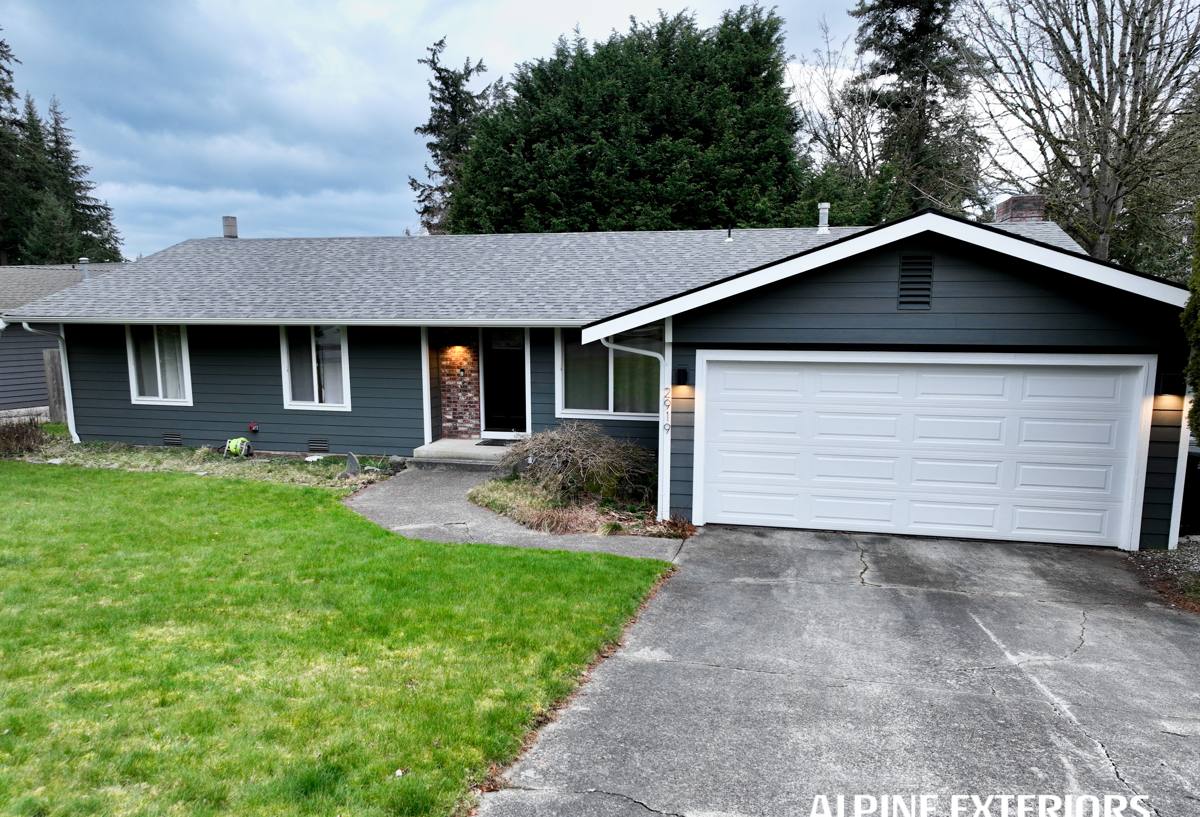
What Edison's Climate Does to Siding Over Time
Salt Air and Corrosion
Homes closer to the water deal with airborne salt that accelerates corrosion on fasteners, flashing, and any exposed metal trim. When a repair uses the wrong fastener or leaves flashing exposed, that corrosion shows up as staining, streaking, and eventually failure points where water can get behind the siding.
Driving Rain and Wind-Driven Moisture
Storms in this part of Skagit County don't just fall straight down — wind pushes rain sideways into wall assemblies, especially around windows, corners, and anywhere siding meets trim. Repairs that don't account for wind-driven rain often look fine for a while, then fail at exactly those transition points.
Moss, Algae, and Prolonged Dampness
A long, damp season means moss and algae get a real foothold on siding that doesn't dry out between rains — particularly on north-facing walls and anywhere shaded by trees or a neighboring structure. Moss holds moisture against the siding surface, and over time that constant dampness is what breaks down wood-based products and un-primed patch materials.
How to Tell If You Need a Repair, Not a Full Replacement
Most siding problems fall into a handful of categories. Knowing which one you're dealing with helps you understand whether a targeted repair makes sense, or whether the damage points to a bigger problem underneath.
- Localized damage — a cracked or split panel, an impact spot, or a section damaged by a fallen branch, with sound siding everywhere else.
- Failed caulking or flashing — gaps have opened up around windows, doors, or trim, letting water track behind the siding even though the siding itself is intact.
- Soft or spongy spots — usually a sign that moisture has been getting behind the siding for a while and the sheathing or framing underneath may already be affected.
- Widespread moss or algae staining — often cosmetic, but worth having a contractor check whether the moisture holding the moss in place has started to cause deeper damage.
- Bowing, buckling, or separating panels — can point to a moisture or ventilation problem across a larger section of the wall, not just one board.
If the damage is confined and the sheathing behind it is dry and solid, a repair is usually the right call. If we find rot, soft framing, or moisture damage spreading across a wall section, we'll tell you honestly — a repair that ignores that just delays a bigger, more expensive fix.
What a Correct Siding Repair Actually Involves
Diagnosis Before Demolition
Before anything comes off the wall, a correct repair starts with figuring out the source of the damage — not just the symptom. If a panel is rotted, we want to know why water got there in the first place: failed caulk, bad flashing, a missing kick-out, or just age and exposure.
Removing Only What's Compromised
Good repair work removes damaged material back to sound substrate, not just the visibly broken section. Cutting back too little leaves hidden damage in place; cutting back too much creates unnecessary cost and disruption.
Matching the Existing Siding
Color and profile matching matters more than people expect. James Hardie's factory-applied ColorPlus finish is formulated to match consistently across production runs, which makes blending a repair into existing Hardie siding far more reliable than trying to match faded field-painted wood or discontinued vinyl profiles.
Sealing and Flashing Correctly
The repair isn't finished when the new board goes up. Proper flashing, correctly lapped house wrap, and the right sealant at every joint are what actually keep water out going forward — this is the step that gets skipped most often in rushed repair work, and it's usually why the same spot fails again.
Why the Material Being Repaired Changes the Job
Not all siding repairs are equal, and the material you're repairing has a lot to do with how long that repair lasts. This is a big part of why we standardized on James Hardie fiber cement rather than installing or patching vinyl, LP SmartSide, cedar, or primed spruce.
| Material | Common Repair Challenge in This Climate | Typical Repair Longevity |
|---|---|---|
| Vinyl siding | Becomes brittle with age and UV exposure; exact color and profile matches get harder to find as products are discontinued | Patch often visible and can crack again in cold weather |
| Cedar or primed spruce | Absorbs moisture directly; requires re-priming and repainting cut edges immediately or rot restarts fast in this humidity | Short, unless maintained closely |
| LP SmartSide (engineered wood) | Edges and cut ends must be fully sealed against moisture intrusion or the strand-based core can swell | Moderate, dependent on sealing quality |
| James Hardie fiber cement | Non-combustible, dimensionally stable, factory-finished — repairs blend in and hold up to damp, salty conditions without swelling or rotting | Long, consistent with the rest of the siding's lifespan |
We don't install or patch with vinyl, LP SmartSide, Cemplank, Allura, cedar, or primed spruce. Each of those products has legitimate uses, but in a climate like Edison's — constant moisture, salt air, and a long moss season — we've found the maintenance burden and moisture sensitivity aren't worth the trade-off. James Hardie's fiber cement doesn't absorb water the way wood-based products do, doesn't become brittle the way vinyl does in cold snaps, and its ColorPlus factory finish means a repaired section can actually match rather than becoming a visible patch.
Our Process for Edison Siding Repair Calls
- On-site assessment — we look at the damaged area and check surrounding siding, trim, and flashing for related issues, not just the obvious spot.
- Honest diagnosis — we explain what caused the damage and whether it's isolated or a sign of a broader moisture problem.
- Straightforward estimate — a clear scope of work and price range before anything is touched.
- Repair with matched material — Hardie fiber cement, cut and finished to blend with your existing siding wherever possible.
- Correct flashing and sealing — so the repaired section performs as well as, or better than, the surrounding wall.
- Walkthrough — we show you what was done and what to keep an eye on going forward.
Why a Crew That Already Works Edison Matters
A contractor who regularly works this part of Skagit County already knows what wind-driven rain does to certain wall orientations, how fast moss builds up on shaded siding here, and which repair shortcuts simply don't hold up through a wet Pacific Northwest winter. That's not something you get from a crew that's mostly worked drier inland areas and is treating your job as one-off.
Local familiarity also means fewer surprises on scheduling and site conditions — knowing how weather windows work in this area, and planning repair work around them, rather than rushing a job between rain systems and hoping the sealant sets before the next storm rolls in off the water.
Before You Call: A Quick Homeowner Checklist
- Note where the damage is located (which wall, how high, near any windows or trim) so you can describe it clearly.
- Check for soft spots by gently pressing near the damaged area — sponginess is worth mentioning up front.
- Look for moss or algae buildup nearby, which can hide the true extent of damage until it's cleaned off.
- Take note of any recent leaks or water stains on interior walls near the exterior damage.
- Avoid caulking or painting over the damage yourself before an inspection — it can mask what a contractor needs to see.
Preventing the Next Repair
Once a repair is done right, a little seasonal attention keeps it that way. Gentle moss and algae removal before it builds up thick, keeping gutters clear so water isn't overflowing onto siding below, and a periodic visual check of caulking around windows and trim will catch small issues while they're still small — long before they turn into another repair call.
If you're noticing damage, staining, or soft spots on your Edison-area home's siding, we're happy to take a look and give you a straight answer about what's going on and what it would take to fix it right. Reach out for a free, no-pressure estimate — the form below gets you started.