 Burlington
 Deck Replacement Built for Edison's Conditions
Edison sits low in the Skagit Valley, close enough to the water that salt air is part of daily life, and open enough that wind-driven rain hits decks from angles a more sheltered lot never sees. Add in a moss season that runs longer here than it does twenty miles inland, and you have a climate that is genuinely hard on exterior wood structures. A deck that would last two decades in a dry inland town can start failing structurally in half that time in Edison if it wasn't built or maintained with this specific environment in mind.
We work on decks throughout the Burlington area, and Edison properties get a specific kind of attention because of where they sit. This page covers what a correct deck replacement actually involves out here, what tends to fail first, and how we approach the job so it holds up.
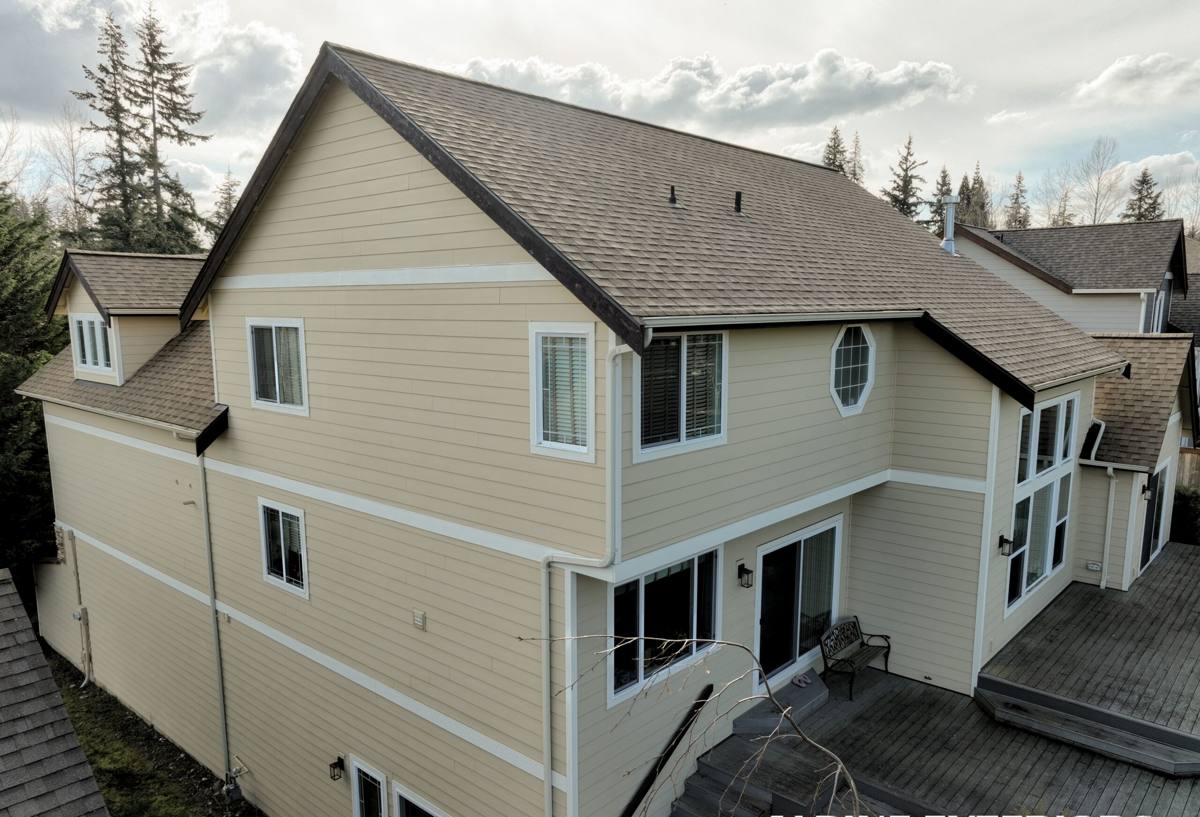
Why Decks Fail Faster Near Edison
Salt Air and Metal Fasteners
Salt-laden air accelerates corrosion in anything metal — joist hangers, structural screws, bolts, and especially any fastener that isn't rated for it. On older Edison decks we've inspected, the decking boards up top often still look fine while the hardware underneath is rusted through. That's the dangerous kind of failure, because it's invisible from the surface until someone puts weight on a weak spot.
Driving Rain and End-Grain Water Intrusion
Rain in this part of Skagit County rarely falls straight down. Wind pushes it sideways, which means it gets driven into joints, board ends, and the ledger connection at the house far more aggressively than in calmer climates. Water that gets into end grain or sits in a poorly flashed ledger board is the single biggest cause of hidden rot we find on deck tear-outs.
A Long Moss Season
Moss doesn't just look bad — it holds moisture against the wood surface for weeks at a time, which keeps boards perpetually damp even between rain events. On shaded or north-facing decks around Edison, moss can establish itself nearly year-round. Left unaddressed, it accelerates surface decay and makes boards slick and unsafe underfoot.
Repair or Replace? How to Tell
Not every tired-looking deck needs full replacement. Here's the honest breakdown we use when we inspect a deck in Edison:
- Soft, spongy decking boards in isolated spots, with a solid frame underneath — usually a board-level repair
- Rust staining or visible corrosion on joist hangers and structural screws — a red flag for the whole fastener system, even if the wood looks okay
- Rot at the ledger board where the deck meets the house — a serious structural issue, often requiring at least partial rebuild regardless of the rest of the deck's condition
- Widespread graying, splitting, or checking across most boards — cosmetic, but often a sign the deck is past the point where staining or sealing will meaningfully extend its life
- Noticeable bounce, movement, or sway when walking or during gatherings — a structural concern that needs inspection before anything else
If the framing and footings are sound and only the surface decking has failed, resurfacing can be a legitimate option. If the ledger, joists, or footings show rot or movement, replacement is the honest recommendation — patching around a compromised structure just delays a bigger problem.
What a Correct Deck Replacement Involves
Structural Foundation First
Everything starts below the decking. Footings need to be sized and set to current code, posts need proper base connections that keep wood off standing water, and the ledger board — the connection point to the house — needs correct flashing so water is directed away from the house framing, not into it. This is the step that gets skipped most often on cheap rebuilds, and it's the one that causes the worst hidden damage later.
Fasteners and Hardware Rated for the Environment
Given the salt air around Edison, we don't treat hardware choice as a minor detail. Stainless steel or hot-dip galvanized fasteners and connectors cost more up front than standard coated hardware, but standard hardware corrodes faster in this environment and that corrosion happens out of sight, under the decking, where nobody checks it until something gives.
Drainage and Airflow Underneath
A deck built tight to the ground with no airflow underneath will trap moisture regardless of what decking material sits on top. Proper joist spacing, grading away from posts, and clearance underneath all matter more here than they would in a drier climate, because the ground itself stays damp longer through the moss season.
Board Spacing and Ventilation
Correct gapping between boards lets water shed through rather than pool on the surface. Too tight, and you're building a moss farm; too wide, and you're sacrificing footing comfort and structural nailing. We set spacing based on the material and expected seasonal movement, not a one-size-fits-all number.
Choosing a Decking Material for Edison Conditions
There's no universally "best" decking material — there's a best material for this climate and this budget. Here's how the common options stack up for a property dealing with salt air, driving rain, and moss:
| Material | Moisture Resistance | Moss/Mildew Resistance | Maintenance | Typical Lifespan |
|---|---|---|---|---|
| Pressure-treated wood | Good if sealed regularly | Needs active upkeep | Annual cleaning and re-sealing | 15-20 years with upkeep |
| Cedar | Naturally decent, degrades if unsealed | Moderate, needs treatment | Sealing every 1-2 years | 15-20 years with upkeep |
| Composite decking | Very good | Good, resists moss buildup | Occasional washing | 25-30+ years |
| Capped/PVC decking | Excellent | Very good | Minimal, occasional washing | 25-30+ years |
Wood costs less up front and has a natural look many homeowners still prefer, but it demands consistent maintenance to hold up against this area's rain and moss — skip a season of sealing and you lose ground fast. Composite and capped composite cost more initially but resist moisture and moss far better with minimal upkeep, which is a real advantage given how long the wet season runs here. We install both and will give you a straight answer on which makes sense for your budget and how much maintenance you actually want to do.
Our Process for an Edison Deck Replacement
- On-site inspection: We check the ledger connection, footings, joists, and any visible hardware corrosion before quoting anything, so the estimate reflects what's actually there, not guesswork.
- Honest scope and estimate: You get a clear breakdown of what's structural, what's cosmetic, and what your material options cost and require in upkeep.
- Permitting: Deck rebuilds of most sizes require a permit through Skagit County; we handle that process as part of the job.
- Tear-out: Old decking, and any framing that doesn't meet current standards, comes out completely — we don't build new decking over compromised framing.
- Rebuild: Footings, framing, ledger flashing, and hardware installed to hold up against this area's rain and salt exposure.
- Decking and railing installation: Installed to your chosen material's spacing and fastening requirements, with attention to drainage and airflow underneath.
- Final walkthrough and cleanup: We walk the finished deck with you and clear the site fully before we consider the job done.
What Drives the Cost
| Factor | Why It Matters |
|---|---|
| Deck size and shape | Larger and multi-level decks require more framing, footings, and labor |
| Material choice | Wood costs less upfront; composite and PVC cost more but reduce long-term maintenance |
| Structural condition | Rotted ledgers, footings, or framing add rebuild scope beyond surface decking |
| Height and railing requirements | Elevated decks need code-compliant railing systems, which adds cost |
| Site access | Decks that are hard to reach for equipment or material delivery take more labor time |
We don't publish flat pricing because every deck and every lot is different — the honest number comes from seeing the site. What we can tell you is that cutting corners on hardware or ledger flashing to save money up front is the most common reason we get called back out to a "recently replaced" deck a few years later.
Maintaining a New Deck in This Climate
Whatever material you choose, a few habits go a long way toward getting the full lifespan out of it here:
- Clean moss and organic debris off the surface and out of gaps at least once or twice a year, more often on shaded sections
- Keep gutters and downspouts near the deck clear so runoff isn't dumping extra water onto or under it
- For wood decking, reseal on the schedule the product calls for — don't wait until it visibly looks dry
- Check railing and stair connections annually for movement or corrosion at fastener points
- Keep planters and furniture from sitting directly on the deck surface for long stretches, which traps moisture underneath
Why Hire a Crew That Already Works Edison
Building codes, permitting requirements, and material behavior in Edison and the surrounding Burlington area aren't the same as they'd be for a deck built somewhere drier or more sheltered. A crew that works this specific stretch of Skagit County regularly knows which hardware holds up, which ledger details actually keep water out, and which materials are worth the extra cost given how long the wet, mossy season runs here. That local pattern recognition is the difference between a deck that needs attention again in five years and one that doesn't.
If your deck is showing rot, corrosion, moss buildup, or just years of wear, we're happy to take a look and give you a straight assessment — no pressure, no upsell. Fill out the form below for a free estimate on your Edison deck replacement.