 Burlington
 Decks Don't Age the Same Way Everywhere in Skagit County
Blanchard sits in a pocket of Skagit County that gets a specific mix of weather: salt-laden air off the nearby water, heavy tree cover that keeps things shaded and damp, and long stretches of driving rain most of the year. That combination is hard on outdoor structures, and decks take the worst of it because they're horizontal, exposed, and load-bearing all at once. A deck built the same way you'd build one in a dry inland climate will not hold up the same way here, and that's the gap we see most often when we're called out to look at a deck that's failing well before it should.
This page is about deck replacement specifically for Blanchard homes — not a general overview of decks everywhere. If you're noticing soft spots, rust streaks, persistent green film, or a deck that just feels different underfoot than it used to, the details below explain why, and what a proper replacement actually needs to account for.
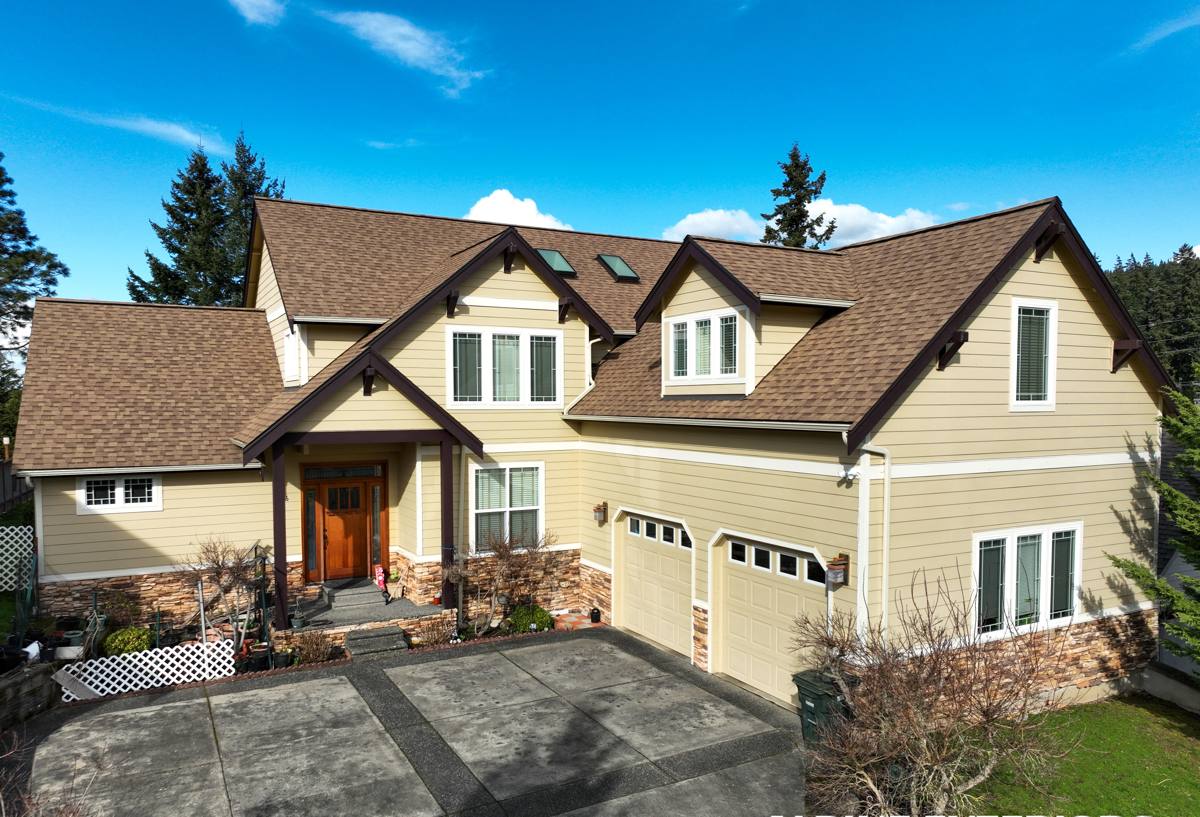
What Blanchard's Climate Actually Does to a Deck
Salt Air and Corrosion
Homes closer to the water in this part of Skagit County deal with airborne salt that settles on metal surfaces and slowly eats away at them. Standard zinc-coated fasteners and brackets corrode faster here than the box at the hardware store would suggest. Once a fastener starts rusting, it weakens at exactly the point where it's holding structural pieces together — and that failure is invisible until something moves or a board pulls loose.
Shade, Moss, and Standing Moisture
Mature trees are part of what makes Blanchard a nice place to live, but they also mean a lot of decks sit in partial or full shade most of the day. Shade plus regular rain equals a surface that never fully dries out between storms. That's the recipe for moss, algae, and the slow breakdown of wood fibers and fastener coatings — even on decking that looks fine on top.
Driving Rain and the Ledger Board
Wind-driven rain doesn't just fall on a deck, it gets pushed sideways into the gap where the deck meets the house — the ledger board connection. This is the single most common failure point we find on older decks in this area, because water intrusion there is slow, hidden behind the rim joist or siding, and it rots the framing from the inside long before the deck surface shows a problem.
Signs It's Time to Replace, Not Repair
Not every tired-looking deck needs a full replacement, but there's a point where patching boards is just delaying a bigger problem. Here's what tells us a deck has crossed that line:
- Soft, spongy, or springy spots in the decking or at the stairs
- Rust stains bleeding out from screws, joist hangers, or post bases
- Gaps or movement where the deck meets the house at the ledger board
- Wood that's gray, splintering, or crumbles when probed with a screwdriver
- Persistent moss or algae that comes back within weeks of cleaning
- Railings or posts that wobble under normal pressure
- A deck built before current code required proper ledger flashing and lateral bracing
If you're seeing two or more of these, repair usually just moves the problem around rather than solving it. That's when replacement is the honest recommendation.
What a Correct Deck Replacement Includes
A deck replacement isn't just swapping old boards for new ones. Done right, it means going back to the structure and rebuilding it to actually handle this climate long-term, not just look good on day one.
At minimum, that means:
- Proper ledger flashing that directs water away from the house rim joist, not into it
- Joist spacing and footing sizing that match the actual load and local frost depth
- Post bases that keep wood off standing water instead of buried in soil or concrete
- Corrosion-resistant fasteners and connectors rated for the exposure this area sees
- Ventilation and gapping under the decking so moisture can actually escape
Skipping any of these to save time or money is exactly how a deck ends up needing another replacement in eight or ten years instead of twenty-five or thirty.
Choosing a Decking Material for This Climate
There's no single "best" decking material — there's the right material for how the deck is used, how much shade it sits in, and what the homeowner wants to maintain. In a shaded, damp, salt-influenced spot like Blanchard, some trade-offs matter more than they would elsewhere.
| Material | How it handles this climate | Maintenance | Typical lifespan |
|---|---|---|---|
| Pressure-treated wood | Needs consistent sealing to resist moisture and moss; lowest upfront cost | Annual cleaning and re-sealing | 10-15 years with upkeep |
| Cedar | Naturally moisture-resistant but still needs sealing in shaded, damp spots | Sealing every 1-2 years | 15-20 years with upkeep |
| Capped composite | Resists moisture and moss buildup well; won't rot, but can stay damp longer in deep shade | Periodic washing, no sealing | 25-30 years |
| PVC decking | Fully synthetic, best moisture and moss resistance, unaffected by salt air | Occasional washing | 25-30+ years |
We don't push one brand or product line as the automatic answer for every Blanchard home. A homeowner who wants the natural wood look and doesn't mind annual maintenance is often better served by cedar or treated lumber. A homeowner dealing with heavy shade and moss who wants to stop fighting it every summer usually leans toward a capped composite or PVC product instead. We'll walk through what your specific site — sun exposure, tree cover, how close you are to the water — actually calls for, rather than defaulting to whatever's easiest to sell.
Railings, Hardware, and the Details That Get Skipped
Salt air punishes exposed metal, so the fasteners, joist hangers, and railing hardware matter as much as the decking itself. We use corrosion-resistant connectors sized for this environment rather than whatever's cheapest at the yard, because a rusted-through bracket is a structural problem, not a cosmetic one. Railing posts get the same attention — proper blocking and bolting so they don't loosen over time from repeated wet-dry cycles, which is a common complaint we hear about older decks in this area.
Permits and Local Code
Deck replacement in Skagit County generally requires a building permit, especially when the work involves structural elements like framing, footings, or ledger attachment — which most full replacements do. Requirements can vary depending on deck size, height, and whether it's attached to the house, so we handle the specifics for your property rather than assuming a blanket rule applies. Pulling the proper permit isn't red tape for its own sake — it means the ledger flashing, footing depth, and railing height actually get inspected against current code, which matters a lot more once you know what a hidden ledger failure looks like ten years down the road.
Our Process, Start to Finish
We keep the process straightforward and try not to make it more complicated than it needs to be:
- On-site assessment of the existing deck, including probing the ledger, joists, and posts for hidden rot — not just a visual look at the surface
- A written scope covering what's being torn out, what's being rebuilt, and material options with honest trade-offs
- Permit handling with the county or city as required for your specific project
- Tear-out and disposal of the old structure
- Rebuild with proper flashing, framing, and corrosion-resistant hardware, followed by decking and railing installation
- Final walkthrough and inspection sign-off
We don't skip the assessment step even on decks that look mostly fine on the surface, because in this climate the real damage is usually hidden at the ledger or under the decking, not out in the open where it's easy to spot.
Why a Crew That Already Works in Blanchard Matters
A contractor who's replaced decks throughout Blanchard and the surrounding Burlington area already knows where the trouble spots tend to show up — which sides of a house catch the worst wind-driven rain, how much shade a typical lot gets from the tree cover, and how far salt air travels inland from the water in this specific area. That's not something you get from a general contractor passing through once. It shows up in small decisions: where extra flashing goes, which fastener spec actually holds up here, and how a deck should be oriented and vented to dry out between storms instead of staying damp for days.
If your deck in Blanchard is showing its age, or you're just not sure whether it's a repair or a replacement, we're happy to take a look and give you a straight answer. Reach out for a free, no-pressure estimate using the form below — no obligation, just an honest assessment of what your deck actually needs.