 Burlington
 Deck Repair for Guemes Island's Waterfront Conditions
Guemes Island sits right in the path of Skagit County's marine weather, and decks there take a beating that inland decks in Burlington rarely see. Salt-laden air off the water speeds up corrosion on fasteners and hardware, driving rain gets pushed sideways under railings and against ledger boards, and the tree cover that gives so many island properties their privacy also means shaded, damp decking that grows moss for a good chunk of the year. A deck that would need minor upkeep somewhere drier can develop real structural problems out here if it's not repaired correctly and on time.
This page covers what deck repair actually looks like for Guemes Island homes specifically: what tends to fail first, what a repair needs to include to hold up, and why it matters to work with a crew that already understands the island's access and exposure.
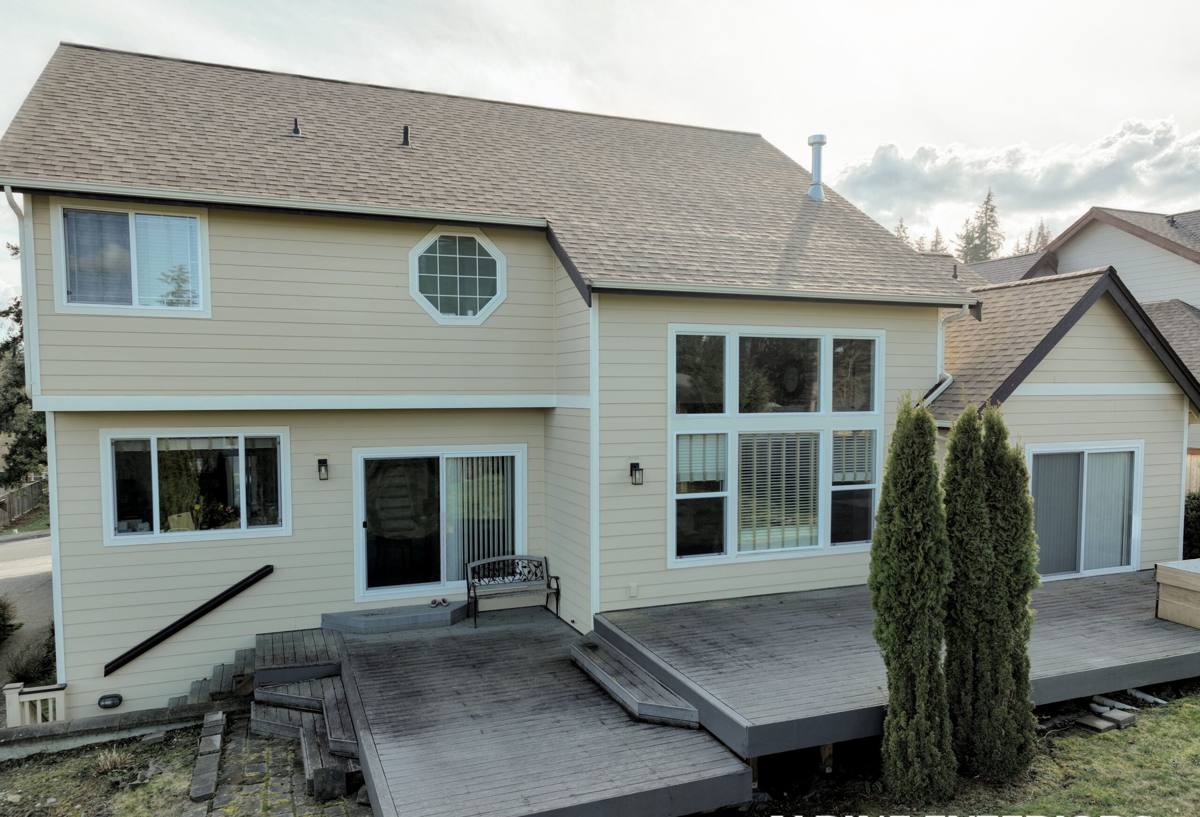
Why Island Decks Fail Differently
Three things drive most of the deck damage we see on Guemes Island, and they usually work together rather than alone.
Salt Air and Corrosion
Even homes set back from the shoreline get salt-carrying air moving across the island regularly. That air accelerates rust on nails, screws, joist hangers, and structural brackets — often well before the wood around them shows obvious damage. A deck can look solid on the surface while the hardware holding it together is quietly failing underneath.
Driving Rain and Wind Exposure
Weather off the Salish Sea doesn't fall straight down. Wind-driven rain gets forced under rail caps, into end-grain cuts, and behind ledger boards where decks attach to the house — exactly the spots that are hardest to inspect and easiest to ignore. Water that gets trapped in these areas doesn't dry out quickly, especially with the shade cover common on island lots.
Moss and Prolonged Moisture
Skagit County's long wet season, combined with tree cover on many Guemes properties, gives moss and algae plenty of time to establish on decking boards, stair treads, and anywhere water sits or drains slowly. Beyond making surfaces slick, moss holds moisture against the wood surface for extended periods, which softens fibers and speeds up rot from the top down — not just from underneath, where most homeowners expect to look.
Signs a Guemes Island Deck Needs Repair
Some of these are obvious. Others are easy to miss until they've gotten expensive.
- Soft, spongy, or springy spots when you walk across the decking
- Rust streaks or corrosion visible around screws, nails, or metal connectors
- Gaps, movement, or cracking where the deck attaches to the house (the ledger board)
- Railings or posts that wobble or flex under moderate pressure
- Persistent moss, algae, or dark staining that keeps returning after cleaning
- Stair treads that feel uneven, loose, or slightly bouncy
- Visible gaps opening up between boards, or boards that have cupped or crowned
- Standing water that doesn't drain within a few hours after rain
Any one of these on its own might be a minor fix. Several together, especially near the ledger board or support posts, usually mean it's time for a full structural look before someone gets hurt.
What a Correct Repair Actually Involves
A lot of deck "repairs" only address what's visible on top — new boards over a frame that's never inspected. That approach doesn't hold up on Guemes Island, where the real damage is often in the connections and structure, not just the decking surface.
A repair done right starts underneath and works up:
- Ledger board and house connection — checked for water intrusion, rot, and proper flashing where the deck meets the structure
- Joists and beams — inspected for soft spots, checked that hangers and fasteners are corrosion-rated and still sound
- Posts and footings — confirmed level, solid, and not shifting or settling
- Railings and guard posts — tested for the lateral strength they're required to hold, not just visual straightness
- Decking boards — replaced where soft, cupped, or rotted, with attention to proper gapping for drainage and airflow
- Fasteners and hardware — upgraded to corrosion-resistant hardware appropriate for coastal exposure, not whatever was on hand
Skipping the structural check to save time is the single most common shortcut that leads to a homeowner paying for the same repair twice.
Repair or Replace? Cost Factors to Weigh
Not every deck problem calls for a full rebuild, but not every problem should be patched either. These are the factors that usually decide it:
| Factor | Leans Toward Repair | Leans Toward Replacement |
|---|---|---|
| Structural frame condition | Joists and posts are sound, damage is isolated | Widespread rot or corrosion in the frame itself |
| Ledger board condition | Solid connection, minor flashing fix needed | Water damage where deck meets the house |
| Age of the deck | Newer deck with a few problem areas | Original construction is old and near end of service life |
| Extent of decking damage | A handful of boards affected | Most boards are cupped, soft, or moss-stained |
| Railing safety | Cosmetic wear only | Fails to hold firm under lateral pressure |
Broad ranges for coastal Skagit County projects: targeted repairs (a section of decking, ledger flashing fix, railing reinforcement) tend to run in the low thousands; a full deck rebuild is a larger investment that depends heavily on size, framing condition, and material choice. We'll always give you a straight answer on which category your deck falls into before any work starts.
Our Repair Process
1. On-Site Assessment
We walk the full deck — surface, structure, and connection points — and check underneath wherever it's accessible. On Guemes Island, that includes a close look at hardware condition, since corrosion is often further along than the wood damage suggests.
2. Honest Scope and Estimate
You get a clear breakdown of what needs fixing now, what's borderline and worth watching, and what's fine. We're not going to sell you a full rebuild when a targeted repair will hold, and we're not going to patch over a structural problem to keep the price low.
3. Repair Work
We address the frame and connections first, then the visible surface — decking, railings, stair treads. All fastener and hardware replacements are matched to coastal exposure requirements, not generic hardware-store stock.
4. Final Check
Before we call it done, we test railings for firmness, confirm drainage across the deck surface, and walk you through what we did and why.
Materials That Hold Up to Island Exposure
Material choice matters more on Guemes Island than it does further inland. Standard interior-grade fasteners and untreated connectors corrode faster in salt air, which is why we use hardware rated for coastal or marine-grade exposure on repairs here — it costs a bit more up front but it's the difference between a repair that lasts and one that fails again in a couple of years.
For decking material itself, both quality pressure-treated wood and composite decking have a place, and the right choice depends on your maintenance preferences and budget rather than one being universally "better":
- Pressure-treated wood costs less upfront, but needs regular cleaning and periodic sealing to resist moss and moisture in this climate
- Composite decking costs more upfront, resists moisture and moss better with less maintenance, but still needs proper structural framing underneath and periodic cleaning to prevent surface algae buildup
We'll walk you through the real trade-offs for your specific deck rather than pushing one option across the board.
Why a Crew That Already Works Guemes Island Matters
Guemes Island is ferry-access only, which changes how a repair project needs to be planned. A contractor unfamiliar with the island can underestimate scheduling, show up without the right materials on hand, or make return trips that stretch a simple repair out over weeks. We plan Guemes Island jobs around the ferry schedule and bring what we need the first time, so your repair moves at the pace it should.
Just as important is knowing what island exposure actually does to a deck. A crew that mostly works inland Burlington properties may not think to check hardware corrosion first, or may not recognize how much shade and tree cover on a wooded island lot changes a deck's moss and moisture pattern. We work Skagit County's coastal properties regularly, so we know where to look first.
Keeping a Repaired Deck in Good Shape
Once your deck is repaired, a little regular attention goes a long way in this climate:
- Sweep debris and standing leaves off the surface regularly, especially under tree cover
- Clean moss and algae buildup before it has a chance to soften the wood surface
- Check railings and stair treads for movement once or twice a year
- Look at ledger board flashing after major storms for any signs of water intrusion
- Reseal pressure-treated wood decking on the schedule recommended for your product
If you're noticing soft spots, corrosion, persistent moss, or a railing that doesn't feel as solid as it used to, we're glad to come take a look. We offer free, no-pressure estimates for Guemes Island deck repairs — just fill out the form below and we'll get a straight assessment scheduled.