 Burlington
 Decks Around Big Lake Take a Different Kind of Beating
Big Lake sits in a pocket of Skagit County where the weather and the landscape work together against outdoor wood. The lake itself keeps humidity high right at ground and deck level, mature trees along the shoreline hold shade over large sections of most decks for much of the day, and the marine air that moves inland off Puget Sound and Skagit Bay carries fine salt and moisture that settles on fasteners and railings. Add in Western Washington's long, driving-rain season and you get a deck environment that's tougher on wood and hardware than a typical inland yard.
None of that means a deck near Big Lake is doomed — it means the repair has to account for how the site actually behaves, not just what's visibly broken. A board that looks fine in July can be soft underneath by February if the framing beneath it never gets a chance to dry out.
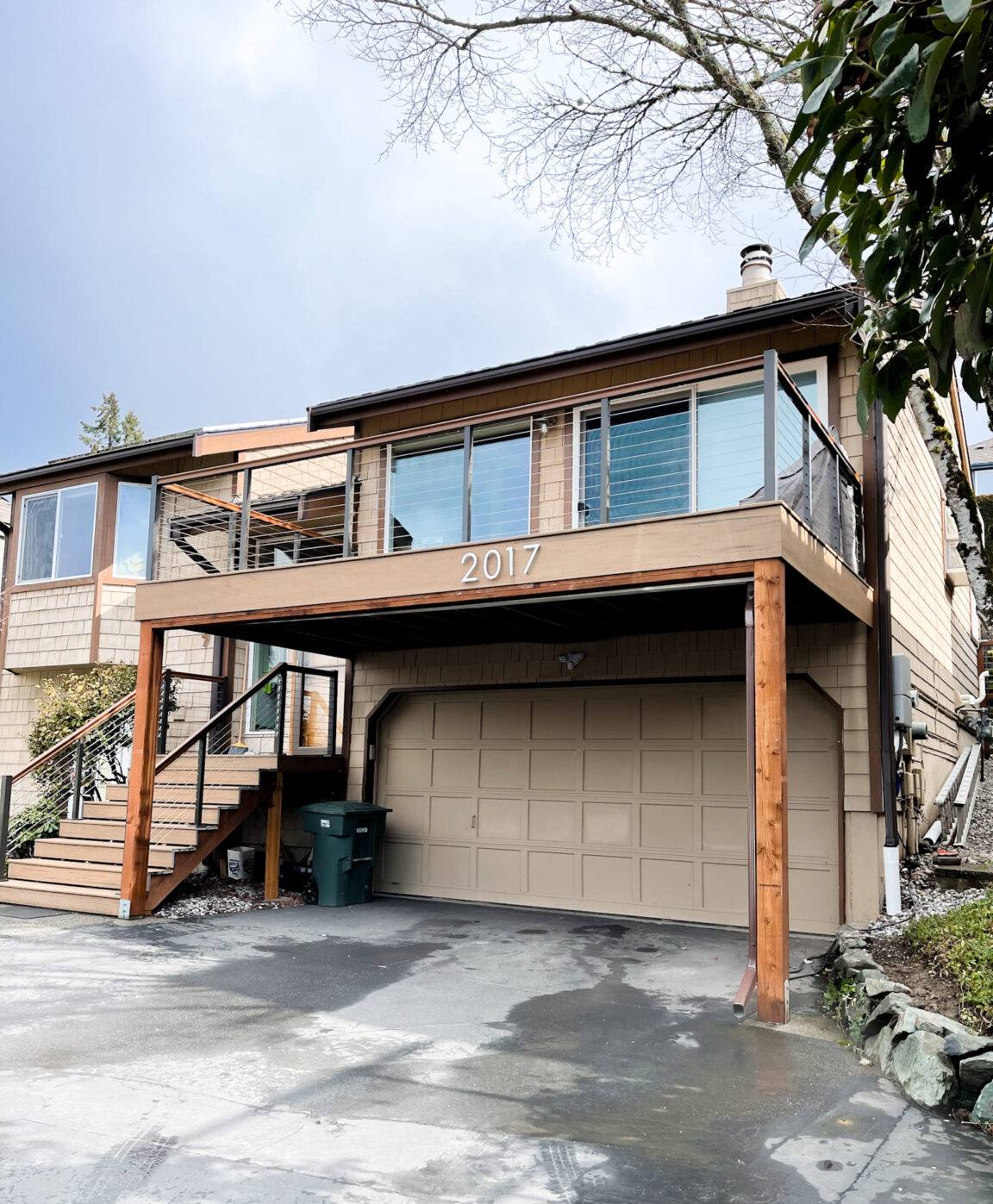
Signs a Big Lake Deck Needs Repair
Most deck problems we see around Big Lake start small and get ignored because the deck still feels "solid enough" to walk on. By the time a board fails underfoot, the damage underneath is usually further along than the surface let on. Walk your deck and check for these:
- Soft, spongy, or bouncy spots when you walk across the boards
- Green or black film on decking, stairs, or the north/shaded side of railings
- Rust streaks below screws, nail heads, or metal connectors
- Gaps or dark staining where the deck ledger meets the house
- Wobble in the railing posts or a stair stringer that flexes
- Wood that's gone gray and fuzzy, or that dents easily with a thumbnail
- Standing water or slow drainage after a rain instead of quick runoff
Any one of these on its own might be a minor fix. Several together, especially near the ledger or main support posts, usually means it's time for a proper inspection rather than a patch job.
What a Correct Deck Repair Actually Involves
A repair that just replaces the boards you can see often misses the reason those boards failed in the first place. We look at the whole system — ledger, framing, fasteners, and surface — because on a shaded, humid lot near Big Lake, the surface is rarely where the real problem started.
Ledger Board and Flashing
The ledger is the board that ties your deck to the house, and it's the single most common source of hidden rot we find in this area. If the flashing behind it was installed wrong, or has failed over time, water gets channeled directly into the house rim joist and the deck framing behind the siding — completely out of sight until the deck starts to sag or pull away. Correcting this means removing enough siding to install proper flashing, not just caulking over the gap and hoping.
Framing and Support
Joists, beams, and posts need to be checked at every point where they contact concrete, soil, or each other — those contact points hold moisture longest and are where rot and rust take hold first. Post bases sitting in standing water, joist hangers with surface rust, and beam-to-post connections without proper hardware are common repair items, especially on older decks built before current fastener and hardware standards.
Decking and Guardrails
Once the structure underneath is sound, decking boards get replaced where damaged, and railings and stairs get checked for the same rot and rust issues as the framing. Guardrail height, baluster spacing, and stair rail requirements are also worth confirming during a repair — a lot of older Big Lake decks were built before current code and it's a good opportunity to bring them up to a safer standard.
Repair vs. Replacement: How We Help You Decide
Not every deck problem calls for a full rebuild, and not every deck is worth patching. The honest answer usually comes down to what condition the structural framing is in versus the surface decking.
| Factor | Leans Toward Repair | Leans Toward Replacement |
|---|---|---|
| Framing condition | Joists and beams are sound, only isolated soft spots | Widespread rot in multiple joists, beams, or posts |
| Ledger connection | Flashing intact, minor staining only | Rot at the ledger or evidence of long-term water intrusion |
| Age of deck | Under 15-20 years, built with treated lumber | Original construction is decades old or undocumented |
| Code compliance | Railings and stairs already meet current standards | Guardrail height, spacing, or footings don't meet code |
| Scope of damage | Concentrated in one area (stairs, a corner, a rail section) | Damage found in multiple, unrelated areas of the deck |
We'll always tell you plainly which side of that line your deck falls on, including when a repair is the right call even though a full replacement would be more profitable for us. A deck that only needs its ledger flashing corrected and a few joists sistered doesn't need to be torn out.
Moss, Algae, and Big Lake's Long Wet Season
The tree cover and lake humidity that make Big Lake a nice place to live are the same conditions that keep decking wet longer than it would be in open sun. Moss and algae aren't just cosmetic — that green film holds moisture against the wood surface and makes stairs and walking surfaces genuinely slick, which is a real fall hazard on wet mornings that make up a good chunk of the year here.
Part of a proper repair on a shaded, lake-adjacent deck is addressing the conditions that let moss take hold in the first place — gaps between boards that have closed up and stopped draining, sections that never see direct sun, or debris buildup between boards that holds water. We can also talk through simple maintenance habits, like periodic cleaning and keeping gutters and nearby branches clear, that meaningfully slow how fast moss comes back after a repair.
Our Deck Repair Process
- On-site inspection — We check the ledger, framing, posts, and decking, including probing for soft wood, not just a visual look.
- Straight assessment — You get a clear explanation of what's failing, why, and whether repair or replacement makes more sense, in plain language.
- Written estimate — Scope and cost factors laid out before any work starts, with no pressure to decide on the spot.
- Repair work — Structural issues are corrected first — ledger, flashing, framing, hardware — then decking, stairs, and railings.
- Final walkthrough — We check the deck with you before calling the job done, including pointing out any maintenance that will extend the repair's life.
Materials: Honest Trade-Offs for a Shaded, Humid Site
Both wood and composite decking can perform well around Big Lake, but each comes with a maintenance reality worth understanding before you choose.
Pressure-treated wood is affordable and easy to repair in sections, but on a shaded lot it needs more consistent upkeep — cleaning, sealing, and prompt attention to any soft spots — to keep moisture from working into the grain. Composite decking resists rot and doesn't need sealing, which is appealing given how long this area stays damp, but it still needs occasional cleaning to keep moss and algae film from building up on its surface, and it's a poor candidate for a quick spot repair if it's ever damaged, since matching an aged board is difficult. Whichever material a deck already has, our standard is to repair with the same or better-grade material and correct hardware, not to cut corners just to close out a job quickly.
Why Hire a Crew That Already Works Big Lake
Deck problems here follow patterns — where flashing tends to fail, which framing details rot first under tree cover, how fast moss comes back on a north-facing stair. A crew that's already worked on decks around Big Lake and the wider Burlington area isn't guessing at those patterns; we've seen them repeatedly and know where to look first instead of chasing symptoms. That translates into a faster, more accurate diagnosis and a repair that actually addresses the cause instead of just replacing what's visible.
We're also familiar with Skagit County permitting expectations for structural deck work, which matters when a repair involves footings, framing, or guardrail changes rather than a simple board swap.
If your deck has soft spots, moss buildup, rust streaks, or just feels off when you walk on it, we're happy to take a look and give you a straight answer — repair, replacement, or nothing urgent at all. Fill out the form below for a free, no-pressure estimate.