 Burlington
 Big Lake sits in a quieter, more wooded pocket of Skagit County than the commercial stretch of Burlington most people picture — tree-lined shoreline, a mix of full-time homes and long-owned cabins, and lots that stay shaded for a good part of the day. That setting is part of why people live there, but it's also exactly the kind of environment that's hard on an outdoor deck. Tree cover holds moisture on a deck surface long after a storm passes, the lake itself keeps humidity higher than it would be on an open, sun-exposed lot, and Skagit County's driving rain and long moss season do the rest. Building a deck that holds up here takes different choices than building one on a dry, open lot across the valley — this page walks through what those choices are, from the ground up rather than starting with which decking board looks best in a showroom.
What Makes Big Lake Tough on a Deck
Every deck in Western Washington deals with rain. What makes a Big Lake deck different is how long that moisture sticks around once it lands, and how little sun many lots around the lake get to dry things back out.
Tree Cover and Standing Moisture
Mature trees around the lake are part of the appeal of the area, but they also mean a lot of decks sit under partial or full canopy for much of the year. Shade slows evaporation, needles and leaf litter collect in the gaps between boards, and a deck surface that would dry out in an afternoon on an open lot can stay damp for days here. That's the exact condition mold, algae, and moss need to get established — and once moss takes hold on a walking surface, it's not just cosmetic, it's a slip hazard on wet boards.
A Long, Wet Season With Few Dry Windows to Recover
Skagit County's weather doesn't hit a home in short, hard bursts and then clear out. It settles in — long stretches of driving rain broken up by overcast, damp days rather than genuine dry spells. A deck near the lake doesn't get much of a chance to fully dry out between storms during the wetter months, which means any weak point in the build — an unflashed ledger, an undersized gap between boards, untreated hardware — stays wet longer and fails faster than it would in a drier climate.
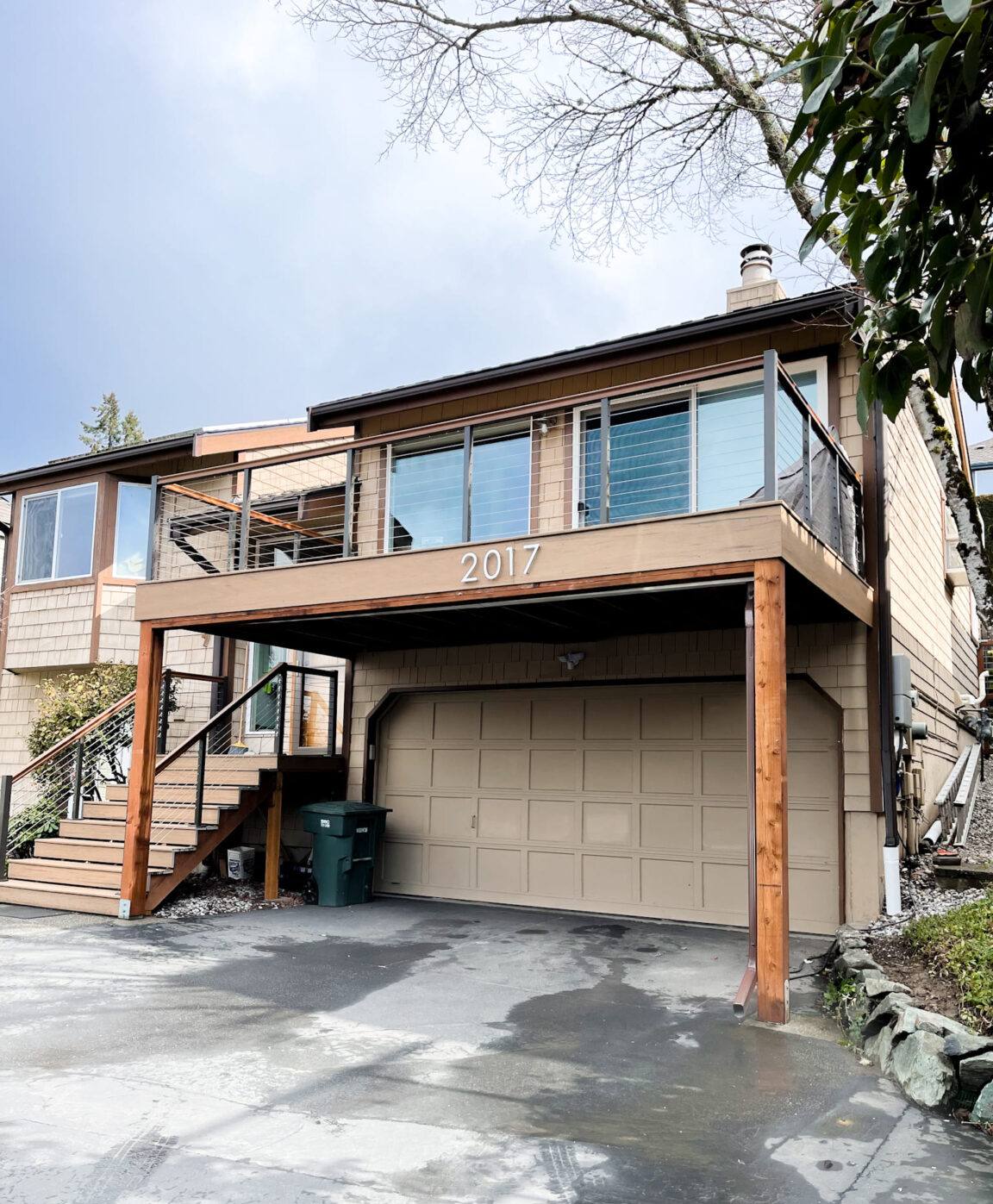
What a Deck Built for These Conditions Actually Needs
None of this means a deck at Big Lake has to be high-maintenance or short-lived. It means the build has to account for moisture and shade from the first footing to the last board, rather than treating this as a standard deck project with local decking swapped on top.
Ledger Board Flashing
The ledger board — where the deck attaches to the house — is the single most common point of failure on decks in this climate, and it's almost always a flashing problem rather than a decking problem. Water that gets behind an unflashed or poorly flashed ledger runs straight into the house's rim joist and wall framing, where it can sit unnoticed for years under the deck surface. Correct ledger flashing means a proper flashing membrane integrated with the house's water-resistive barrier, not just caulk smeared along the top edge.
Footings and Post Bases
Footings need to be sized and set to local frost depth and soil conditions, and post bases need to hold the post itself off the concrete rather than letting it sit in standing water after a storm. On shaded, damp lots this detail matters more than it would on a dry, open lot, because the post base is one of the last things to dry out after rain and one of the first places rot starts if it's done wrong.
Board Spacing and Drainage
Gap spacing between decking boards, and a slight slope away from the house, both exist to move water off the deck instead of letting it pool. Under tree cover, where debris collects in those gaps faster than on an open lot, correct spacing also matters for keeping airflow moving under the boards so the structure has a real chance to dry between storms.
Guardrails and Elevated Decks
Any deck built above a certain height needs a code-compliant guardrail, and on a sloped or lakeside lot that often means the deck sits higher off grade than a typical backyard deck on flat ground. Rail post attachment has to be as carefully flashed and fastened as the ledger board — it's a structural connection, not just a finish detail, and it's one inspectors look at closely for good reason.
Choosing Decking Material for a Shaded Big Lake Lot
There's no single right decking material for every home — the right choice depends on how much sun the deck gets, how much upkeep you want to do, and your budget. Here's how the main options actually compare under shaded, damp conditions like much of Big Lake sees.
| Material | Upfront Cost | Maintenance in Shade | Moss and Mold Behavior |
|---|---|---|---|
| Pressure-treated wood | Lowest | Annual cleaning and periodic re-sealing to hold up in damp shade | Organic surface feeds moss and mildew if not kept clean and sealed |
| Cedar | Mid to high | Regular cleaning, sealing, and occasional refinishing | Natural rot resistance helps, but still an organic surface that needs upkeep in constant shade |
| Composite (capped) | Higher | Occasional washing, no sealing or staining | Capped surface resists moss anchoring far better than wood; keep gaps clear of debris |
| PVC decking | Highest | Occasional washing | Fully synthetic surface, most resistant to moisture absorption and moss growth |
Wood costs less to install but asks the most of a homeowner in a shaded, damp setting — it's an organic material sitting in conditions that are hard on organic materials. Capped composite and PVC cost more up front but shift a lot of that long-term maintenance burden away, which is worth weighing seriously on a lot that doesn't get much direct sun to help a wood deck dry out and shed moss on its own.
The Hardware Nobody Sees
A deck's fasteners, joist hangers, and structural screws take as much of a beating from sustained dampness as the decking surface does, and they're the part most homeowners never think to ask about. Standard or mismatched hardware corrodes faster in a shaded, wet environment, and corroding hardware weakens a structure well before the problem is visible from the surface. We use fastener and hanger systems rated for the specific wood or composite product being installed, matched for corrosion resistance rather than whatever happens to be cheapest at the time — that's a small line item on a bid and a large factor in how long the frame underneath actually lasts.
How We Build a Deck at Big Lake
- Walk the site and talk through sun exposure, tree cover, and how the space will actually be used before any design decisions are made
- Confirm layout, footing locations, and any permitting requirements — lakeside lots can carry additional setback or shoreline review, so it's worth checking early
- Set footings sized to local soil and frost conditions, with post bases that keep wood off standing water
- Frame the structure and integrate proper ledger flashing at the house connection before any decking goes down
- Install decking with spacing and slope set to move water off the surface, not trap it
- Add code-compliant railing, stairs, and any built-in features to the finished frame
- Walk the finished deck with you and go over what routine care it needs going forward
Keeping a Big Lake Deck Ahead of Moss Season
A well-built deck in this setting still benefits from some regular attention — the goal is catching small issues before a long wet season turns them into bigger ones.
- Clear leaves and needles out of board gaps before the fall rains settle in
- Rinse or gently scrub the surface periodically through the wet months to keep early moss and algae from establishing
- Check the ledger board area and flashing for gaps or wear at least once a year
- Look under the deck for standing water or damp post bases after a heavy stretch of rain
- Trim back overhanging branches where practical to give the surface more of a chance to dry between storms
- Reseal wood decking on the manufacturer's recommended schedule rather than waiting until it visibly needs it
Why Hiring a Crew That Already Works Big Lake Matters
A contractor who builds decks across Skagit County, including shaded lakefront lots like Big Lake, has already seen how differently a deck under tree cover ages compared to one on an open, sunny lot a few miles away — and adjusts flashing, hardware, and material recommendations accordingly. That's a different starting point than a crew working from a generic regional spec sheet with no particular experience on lake-adjacent, shaded properties. It also means someone local is reachable years later if a flashing detail or a warranty question comes up, rather than tracking down a crew that's moved on to another region entirely.
If you're weighing a new deck or a rebuild at Big Lake, we're happy to walk the property with you and give you a straight, no-pressure assessment of what the site actually calls for. Reach out for a free estimate below.
```