 Burlington
 Why Lyman's Climate Demands Windows Built to Handle It
Lyman sits along the Skagit River east of Burlington, in a stretch of Skagit County where the weather doesn't do anything halfway. Rain comes in sideways more often than straight down, humidity lingers under the tree cover and river valley air, and the moss season runs long — often eight or nine months out of the year in shaded spots. That combination is hard on windows in ways that dry-climate installers rarely have to think about.
Wood trim absorbs moisture and swells. Vinyl frames can warp if they're not properly shimmed and supported. Seals that would last two decades in a drier region can start failing in half that time here if the flashing and drainage weren't done right the first time. None of this is about the window itself being bad — it's about whether the installation accounted for where the water actually goes once it hits the wall.
Homes throughout Skagit County, including older farmhouses and newer builds around Lyman, deal with the same driving rain and salt-tinged marine air that moves through the broader region. A window that's rated well on paper still fails early if it's installed like it's going into a house in a mild, dry climate instead of one that sees this much sustained moisture.
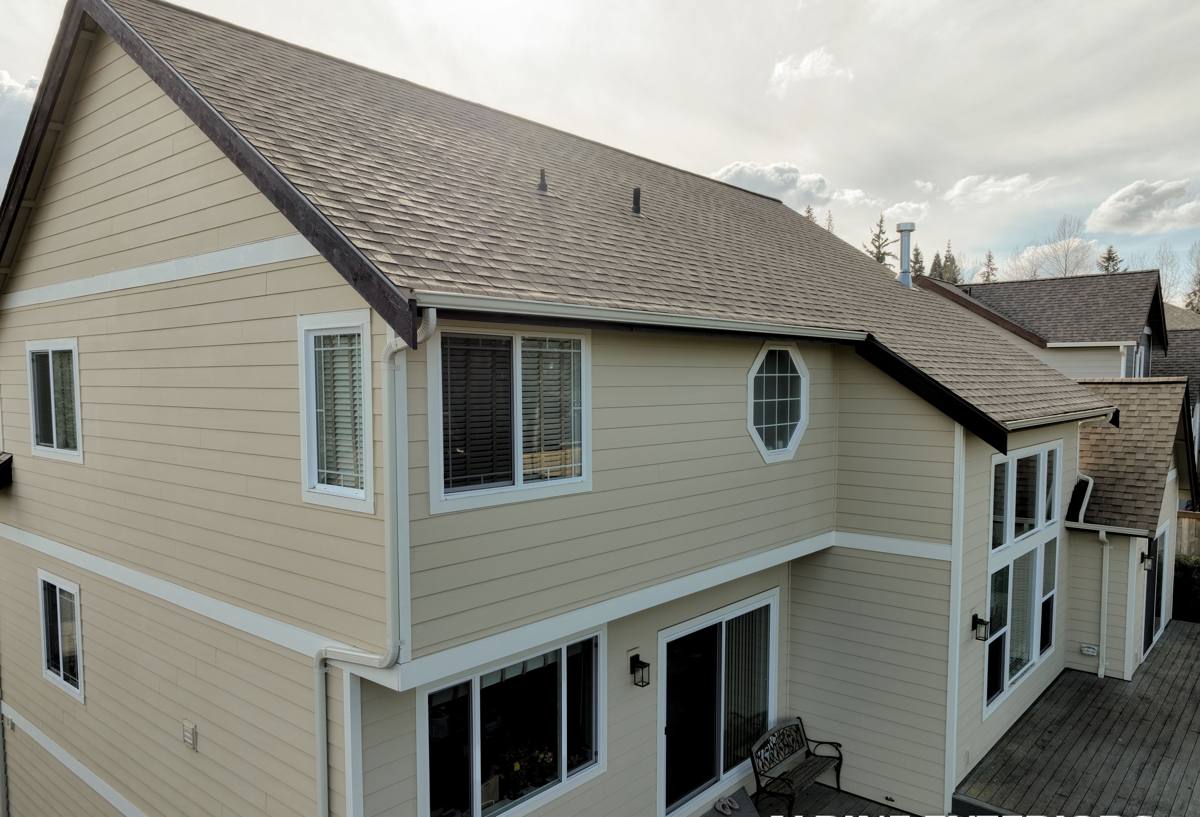
What "Custom" Really Means for a Lyman Window Job
"Custom" isn't a marketing word here — it's a practical necessity. Very few window openings in older homes are perfectly square, and even newer construction settles over time. A custom window job means every opening gets measured on its own, not assumed to match a catalog size, and the window is built or selected to fit that actual opening rather than forcing the opening to fit a stock window.
Common Home Types Around Lyman
The area has a mix of older farmhouses and rural homes with original wood-frame windows, along with newer construction that may already have vinyl or fiberglass units nearing the end of their service life. Older homes often have deeper wall cavities and original wood trim that needs to be matched or carefully restored. Newer homes are more likely to need a straightforward replacement, but even those can have settling or moisture issues around the rough opening that need to be addressed before a new window goes in.
Matching Windows to Existing Siding and Trim
Whether a home has cedar siding, vinyl, or fiber cement, the window has to integrate cleanly with what's already there. That means matching trim profiles, making sure the window's exterior cladding or paint won't clash with the siding, and — most importantly — making sure the transition between window and siding is actually weathertight. A window that looks right but wasn't flashed correctly into the siding system will leak eventually, no matter how good it looks the day it's installed.
What a Correct Installation Involves (Not Just the Window Itself)
The window unit is maybe a third of the job. The rest is everything around it that determines whether the installation holds up through a wet Skagit County winter.
Flashing and Water Management
In a climate with this much driving rain, flashing isn't optional detailing — it's the primary defense against water getting behind the siding. That means a proper sill pan to catch and direct any water that gets past the window, correctly lapped flashing tape at the head and jambs, and a drainage path that lets any moisture that does get in find its way back out instead of sitting against the framing. Skipping or rushing this step is the single most common reason window replacements fail early.
Insulation and Energy Performance
Once the window is set and flashed, the gap between the window frame and the rough opening needs to be insulated correctly — not overpacked with expanding foam that can bow the frame, and not left with gaps that let cold, damp air infiltrate. Done right, this step also cuts down on condensation forming on interior sills, which is a common complaint in homes with older single-pane windows during Skagit County's cold, wet months.
Comparing Window Materials for This Climate
There's no single "best" material for every home — it depends on the home's age, budget, and how much upkeep the owner wants to take on. Here's how the common options stack up for a climate like Lyman's.
| Material | Moisture Behavior | Maintenance | Typical Lifespan |
|---|---|---|---|
| Vinyl | Won't rot; can warp if poorly installed or in direct heat exposure | Low — occasional cleaning | 20-30 years |
| Fiberglass | Very stable in moisture and temperature swings | Low | 30-40+ years |
| Wood | Attractive but vulnerable to moisture without diligent upkeep | High — regular painting/sealing | Varies widely with maintenance |
| Wood-clad (exterior aluminum or fiberglass shell) | Good — exterior shell protects the wood interior from weather | Moderate | 25-35+ years |
For glass, a good low-E coating and argon or krypton gas fill between panes makes a real difference in a climate with this much sustained gray, wet weather — it helps with both heat retention in winter and keeping interiors cooler on the rare hot summer days. Double-pane is the standard baseline; triple-pane adds cost but can be worth it on north-facing or particularly exposed walls.
Signs Your Current Windows Are Losing the Battle
A lot of homeowners live with failing windows longer than they need to simply because the signs show up gradually. Worth checking for:
- Fogging or moisture trapped between panes of a double-pane window (the seal has failed)
- Visible condensation or water staining on the interior sill, especially after heavy rain
- Soft or discolored wood trim around the window, inside or out
- Windows that are difficult to open, close, or lock — often a sign the frame has shifted or swollen
- A noticeable draft near the frame even when the window is fully closed
- Moss or dark staining building up on the exterior trim or sill faster than on surrounding siding
- Higher heating bills without another clear explanation
Any one of these on its own might just need a repair. Several together, especially on an older window, usually mean it's cheaper in the long run to replace than to keep patching.
What Drives the Cost of a Custom Window Project
Every home is different, but the same handful of factors determine most of the cost on a project like this:
- Number of windows being replaced and their sizes
- Material chosen (vinyl, fiberglass, wood, or wood-clad)
- Glass package — standard double-pane versus upgraded low-E, gas-filled, or triple-pane
- Condition of the existing rough openings — rot repair or structural work adds time and cost
- Trim work needed to match existing siding and interior finishes
- Access and site conditions, including how the home's layout affects staging and disposal of old units
We'll walk through all of this during the estimate so there aren't surprises once work starts — the goal is a number that reflects your actual home, not a generic per-window rate.
Our Process, Start to Finish
- On-site assessment of every window being considered, including a look at the surrounding trim, siding, and any signs of existing moisture damage
- Honest recommendation on materials and glass based on that specific window's exposure to weather, sun, and wind — a window on the rain-facing side of a Lyman home may need a different spec than one that's sheltered
- Detailed written estimate covering materials, labor, and any rough-opening repair that's needed
- Scheduling that accounts for weather — installation timing matters in a climate this wet, and we plan around it rather than rushing an opening in the rain
- Removal of the old window and inspection of the rough opening for hidden rot or moisture damage before anything new goes in
- Installation with proper sill pan flashing, head and jamb flashing, and correctly insulated gaps
- Interior and exterior trim finishing to match the home
- Final walkthrough to confirm operation, seals, and finish before we consider the job done
Why a Crew That Already Works Lyman Matters
A contractor who works this part of Skagit County regularly knows what actually happens to windows here after a few wet seasons — not just what a manufacturer's spec sheet claims. That means knowing which details of flashing and drainage matter most given the driving rain and long moss season, understanding how tree cover and river valley humidity affect drying time and material choice, and being familiar with local permitting through Skagit County for exterior work.
It also means being realistic about scheduling. Window replacement in this climate goes better when it's planned around dry windows rather than squeezed in regardless of forecast, and a crew that works the area consistently builds that judgment into how jobs get scheduled rather than treating every install the same way they would in a drier part of the state.
If your windows in Lyman are drafty, fogged, hard to operate, or just old enough that you're wondering whether it's time, we're happy to take a look. Reach out for a free, no-pressure estimate — the form below gets you started, and there's no obligation attached to having us come take a look.