 Burlington
 Building a Deck That Actually Survives Skagit County Weather
Sedro-Woolley sits inland from Burlington along the Skagit River, but it still gets the full weight of western Washington's wet season — long stretches of driving rain from fall through spring, heavy morning dew even in summer, and the kind of persistent damp that keeps shaded surfaces green for most of the year. A deck built here isn't just outdoor furniture. It's a structure that spends more days wet than dry, and it needs to be designed with that reality in mind from the footings up.
We've framed and finished decks throughout the Burlington and Sedro-Woolley area long enough to know which shortcuts show up as problems two or three winters later — soft ledger boards, rusted fasteners, slick surfaces under the trees, and rot starting at joints that never had a chance to dry out. This page walks through what a correctly built deck looks like for this specific climate, not a generic one.
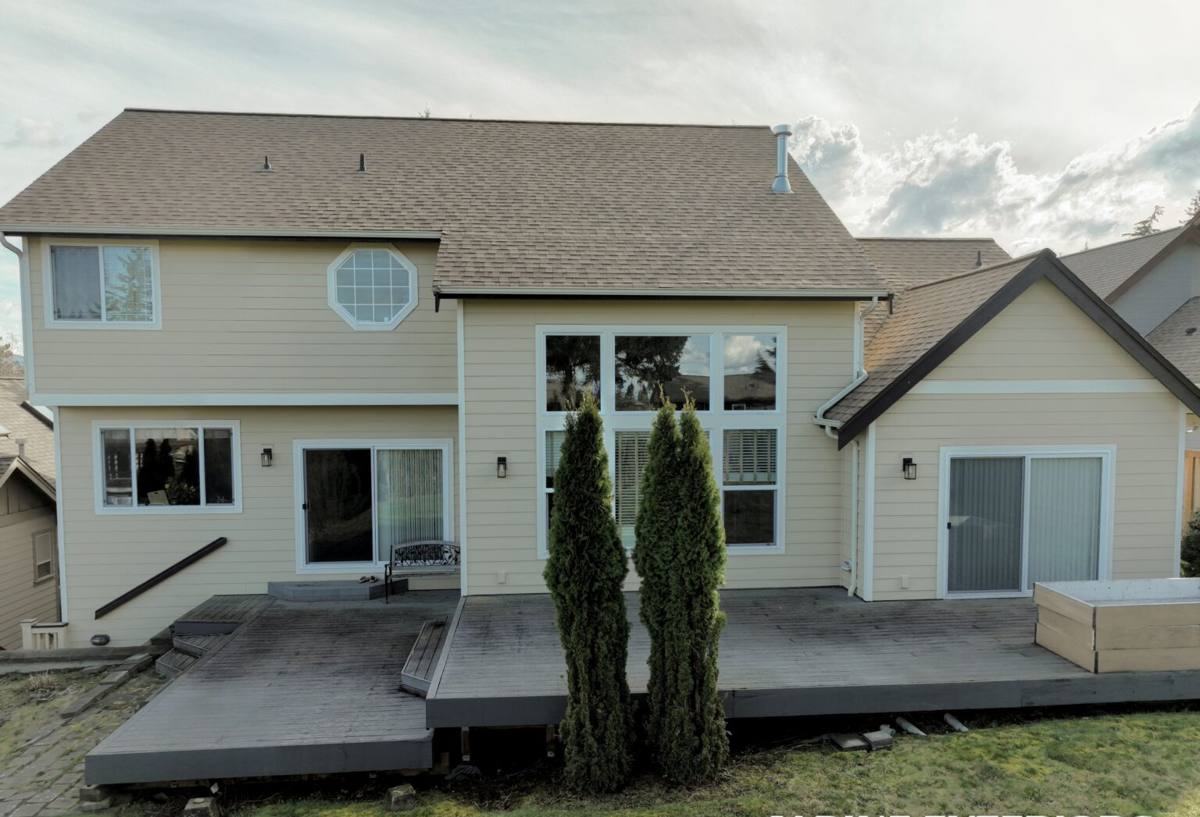
What Skagit County's Climate Does to a Deck Over Time
Three things drive almost every deck problem we see in this region:
- Sustained moisture exposure. Unlike drier climates where wood gets a chance to fully dry between storms, decks here can stay damp for days at a stretch during the winter months. Any material or fastener that isn't rated for that will fail faster than the manufacturer's spec sheet suggests.
- Moss and algae growth. Shaded decks, or those under mature trees common to Sedro-Woolley's older residential lots, develop moss on horizontal surfaces within a season or two if the boards don't shed water and dry properly.
- Freeze-thaw cycling. It's milder here than east of the mountains, but Skagit County still sees enough cold snaps to stress footings and connections that trap water, especially on north-facing decks that stay shaded most of the day.
None of this means a deck can't last for decades here — it means the build has to account for these conditions rather than ignore them.
Choosing the Right Decking Material
There's no single "best" decking material — the right choice depends on your budget, how much upkeep you want to do, and how much sun or shade the deck gets. Here's how the common options actually perform in a climate like this one.
| Material | Moisture Performance Here | Maintenance | Typical Lifespan |
|---|---|---|---|
| Pressure-treated pine/fir | Good if properly sealed; absorbs and releases moisture readily | Re-seal or stain every 1-2 years; regular moss removal on shaded areas | 15-20 years with upkeep |
| Cedar | Naturally rot- and insect-resistant, but still needs sealing against constant wet | Annual cleaning and periodic oil/sealant | 20-25 years with upkeep |
| Composite decking | Doesn't absorb water or rot; some boards can still stay slick when mossy | Periodic washing to prevent surface algae/moss buildup; no staining or sealing | 25-30+ years, manufacturer-backed |
| PVC decking | Fully moisture-resistant, most consistent performance in constant wet | Low — occasional washing | 25-30+ years, manufacturer-backed |
We don't push one product on every job. A cedar deck on a sunny, open lot in Sedro-Woolley can look great for decades with basic care. That same species on a shaded, north-facing site that never fully dries out is a harder sell — we'll tell you that up front rather than let you find out the hard way.
Fasteners and Hardware Matter as Much as the Boards
A lot of deck failures we get called out to inspect aren't actually a decking problem — they're a hardware problem. Standard fasteners corrode faster in a climate that stays damp this much of the year, streaking the boards and weakening over time. We use stainless or coated fasteners rated for ground contact and sustained moisture exposure, and we match connectors to whatever decking material you choose, since composite and PVC boards often require different fastening systems than wood.
Framing and Footings: What's Underneath Matters Most
The part of a deck nobody sees is usually the part that determines how long it lasts. In this climate, that means:
- Footings set below frost depth and on solid, well-drained soil — Skagit County's mix of clay and loam soils can hold water longer than sandier ground, so drainage around footings gets extra attention.
- Proper ledger board flashing where the deck attaches to the house, so water is directed away from the structure instead of wicking into the rim joist — this is one of the most common failure points on older decks in our area.
- Joist spacing and gapping that accounts for board expansion and airflow underneath, so the frame can actually dry out between storms instead of staying saturated.
- Ventilation under low-clearance decks, which is a common issue on older Sedro-Woolley homes built close to grade.
A deck that looks fine on top but was framed without these details in mind is often the one that needs structural repair five to seven years in — well before the decking itself would have needed replacing.
Moss and Long-Term Surface Care
Even a well-built deck needs some seasonal attention in a climate like this one. Moss doesn't mean the deck was built wrong — it means organic material and moisture had somewhere to sit. Board spacing, surface drainage, and material choice all affect how much of a problem this becomes, but no decking product is fully immune to it if a deck sits in heavy shade year-round.
We design for drainage and airflow specifically to reduce how often you have to deal with this, and we'll walk you through a realistic maintenance schedule for whatever material you choose — most homeowners in this area are looking at a wash-down once or twice a year, more often on shaded decks.
Our Process, Start to Finish
1. On-Site Consultation
We walk the property, look at sun/shade exposure, existing drainage, and how the deck will connect to the house. This is also where we talk through material options honestly, based on what your specific site will demand — not just what looks good in a showroom.
2. Design and Material Selection
We put together a layout and material plan sized to your budget, with clear tradeoffs explained for each decking option rather than a single "recommended" package.
3. Permitting
Most new decks and significant deck replacements in Skagit County require a building permit, particularly for structures over a certain height or attached to the home. We handle the permitting process as part of the job so you're not navigating it on your own.
4. Construction
Footings, framing, flashing, and decking are installed in sequence with inspections at the structural stages, not just a final walkthrough at the end.
5. Final Walkthrough
We go over the finished deck with you, including care instructions specific to the material you chose and what to watch for as the seasons change.
Permits and Local Code Considerations
Deck permitting requirements vary depending on height, attachment to the structure, and guardrail requirements, and Skagit County and the City of Burlington/Sedro-Woolley jurisdictions each have their own review process. Rather than give you general guidance that may not apply to your specific lot, we pull the actual requirements for your address before finalizing a design, so there are no surprises during inspection.
Why Local Build Experience Matters in Sedro-Woolley
A deck design that works well in a drier climate can be the wrong call here — and a crew that hasn't spent real time building through Skagit County winters won't always catch that. We've built and repaired decks throughout the Burlington and Sedro-Woolley area long enough to know which details actually matter for this specific mix of rain, shade, and soil, and which ones are just upsells. That local track record is also what lets us give you a straight answer about maintenance expectations instead of a sales pitch.
Questions Worth Asking Before You Hire Anyone
- Do they pull permits themselves, or leave that to the homeowner?
- Do they specify stainless or coated fasteners for ground-contact and wet conditions?
- Will they explain drainage and ledger flashing details, not just show you decking samples?
- Can they speak to how a specific material performs on a shaded vs. sunny site in this climate?
- Do they offer a clear maintenance schedule for whatever material you choose?
- Are they familiar with Skagit County and local jurisdiction permitting requirements?
If you're planning a new deck or replacing one that's showing its age, we're happy to take a look and talk through what makes sense for your property — no pressure, no obligation. Fill out the form below and we'll set up a time to walk the site with you.