 Burlington
 Building New in Bow? Get the Windows Right the First Time
New construction is the one chance to install windows correctly from the studs out — no old flashing to work around, no siding to patch back in, no guessing what's hiding behind the existing trim. If you're framing a new home in Bow, the window installation happening right now will determine whether that house stays dry and comfortable for the next 30-plus years, or whether you're chasing leaks and rot repairs a decade from now. Bow's mix of open farmland, tidal flats along Samish Bay, and wooded lots means homes here take a real beating from wind-driven rain and salt-laden air. Getting the window opening, flashing, and unit selection right during the build is far cheaper and far more effective than any retrofit later.
We install new-construction windows on new builds throughout Skagit County, and Bow is squarely in our service area. This page covers what a correct new-construction window installation actually involves here, what the local climate demands from the window itself, and how our process protects the work for the long haul.
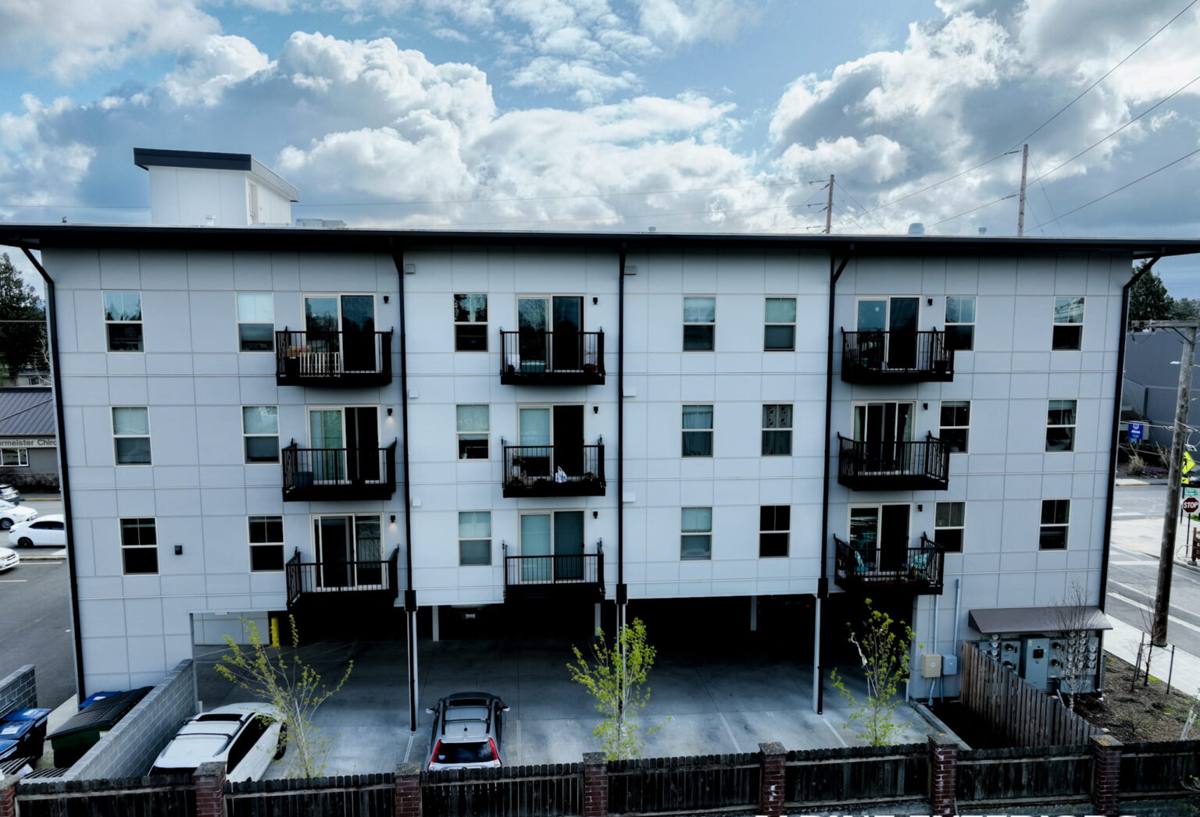
Why Bow's Climate Changes the Window Conversation
Bow sits close enough to Samish Bay and Padilla Bay that salt air is a real factor, not a theoretical one. Combine that with Skagit County's long, wet fall-through-spring stretch — steady drizzle, occasional driving rain off Puget Sound storms, and enough shade and humidity on tree-lined lots to grow moss on almost anything that stays damp — and you've got three separate stresses working on a window assembly at once:
- Salt air corrosion — accelerates the breakdown of lower-grade fasteners, hardware, and unprotected metal flashing over time.
- Wind-driven rain — pushes water sideways and upward against the building, which is exactly the direction most cheap flashing details fail to handle.
- Sustained damp and moss growth — feeds rot at any point where water gets trapped against wood framing or sill plates and doesn't dry out.
None of this means a Bow home needs exotic materials. It means the flashing sequence, the sill pan, and the fastener and hardware choices need to be treated as load-bearing decisions, not afterthoughts — because on a new build, the drywall and siding will cover up whatever was done, right or wrong, for decades.
What "Correct" Actually Means at the Rough Opening
A new-construction window is only as good as the opening it sits in. On every install we do in Bow, that means:
- A sloped sill pan flashing so any water that gets past the window sheds outward, not into the framing.
- Weather-resistive barrier (house wrap) integrated with the flashing in proper shingle-lap order — each layer overlapping the one below so water is always directed down and out.
- Corrosion-resistant flashing tape and fasteners suited to a marine-influenced climate, not generic hardware picked for cost alone.
- Proper shimming and squaring so the window operates smoothly and the seal around the frame stays uniform — an out-of-square opening stresses the frame and can compromise weatherstripping over time.
- Air-sealing at the interior with backer rod and low-expansion foam or sealant, separate from the exterior weatherproofing — these are two different jobs that both need to be done, not one job done twice.
Choosing the Right Window for a Bow New Build
New construction gives you a real choice of window frame material, and that choice matters more here than in a drier inland climate. We walk new-build clients through the trade-offs honestly rather than pushing one product line:
| Frame Material | Strengths | Trade-offs in Bow's Climate |
|---|---|---|
| Vinyl | Cost-effective, no painting, good thermal performance, won't corrode | Quality varies a lot between manufacturers; we only install lines with proven weld and reinforcement quality |
| Fiberglass | Very stable dimensionally, holds paint well, strong resistance to moisture-driven warping | Higher upfront cost than vinyl |
| Wood-clad | Traditional interior appearance, warm look | Exterior cladding and joints need flawless flashing detail — any gap invites moisture into the wood core over years of Skagit County damp |
| Aluminum | Slim sightlines, strong for large openings | Poor thermal break unless a high-end thermally-broken profile is specified; more prone to condensation in cold, damp stretches |
For most Bow new builds, we recommend vinyl or fiberglass units with a proven track record in coastal Pacific Northwest conditions — good multi-point locking hardware, corrosion-resistant components, and glazing packages suited to our marine climate. We're glad to work with whatever the architect or builder has specified, and we'll flag it honestly if a chosen product has known installation-sensitivity issues so everyone's expectations are set before the windows go in.
Glazing and Performance Considerations
Western Washington's mild-but-damp climate means the biggest performance concern usually isn't extreme cold — it's condensation control and consistent comfort near large glass areas. Low-E coatings and argon-filled double or triple glazing help keep interior glass surfaces closer to room temperature, which cuts down on condensation and the interior moisture problems that follow it. On lots with more shade or lower airflow — common on wooded Bow parcels — this matters more than it would on an open, sun-exposed site.
Our New-Construction Window Process
Here's how a typical new-construction window install runs on a Bow project, start to finish:
- Plan review. We review the architectural plans and window schedule before framing is finalized, catching any rough-opening sizing issues early rather than after walls are up.
- Coordination with the builder. We schedule around the framing and house-wrap timeline so window openings are ready and dry when we arrive — installing into a wet or unfinished opening is where shortcuts happen.
- Flashing and sill pan installation. Sloped sill pans and shingle-lapped flashing go in before the window itself, following manufacturer instructions and best-practice building science for our climate.
- Window setting. Units are shimmed level, plumb, and square, then fastened per the manufacturer's specified schedule — not "close enough."
- Exterior weatherproofing. Head flashing integrates with the house wrap above the window so water is directed over and around the opening, never behind it.
- Interior air sealing. Backer rod and appropriate sealant close the interior gap for energy performance, separate from exterior weatherproofing.
- Final walkthrough. Every unit gets operated, checked for square, and inspected before we sign off — problems are far cheaper to fix before siding and trim go on.
Common Mistakes We See — and Avoid
Working new construction across Skagit County, we've walked in behind rushed installs more than once. The recurring problems are almost always the same:
- Skipped or flat sill pans that let water pool against the sill instead of draining out.
- Reversed flashing order (house wrap taped over the window flange instead of under the head flashing), which funnels water straight into the wall cavity.
- Fasteners driven through the wrong part of the nailing flange, or too few of them, leaving the unit under-secured for wind load.
- Foam-only air sealing with no backer rod, which can bulge or gap over time and let air and moisture through.
- No follow-up water test before siding covers the opening for good.
Every one of these is invisible once the house is finished — until a leak shows up years later, usually right when moss and staining are already telling you something's wrong.
A Quick Pre-Drywall Checklist for Homeowners
If you're building in Bow and want to sanity-check your window installation before drywall closes it up, ask your builder or window crew to confirm:
- Sill pan flashing is sloped and visible at each rough opening before the window went in.
- Flashing tape overlaps in proper shingle-lap order (bottom to top, like siding).
- Every window was shimmed, squared, and operated smoothly before final fastening.
- Interior gaps were sealed with backer rod plus sealant, not foam alone.
- A visual or water test was done on at least a sample of openings before siding installation began.
Why a Crew That Already Works Bow Matters
Skagit County covers a lot of ground and a lot of microclimates — the wind exposure on an open field lot near Bow's tidal flats is different from a sheltered, tree-covered lot a few miles inland. A crew that's worked new construction across this specific stretch of the county already knows which details need extra attention on a given site orientation and doesn't have to relearn it on your build. We also know the local building department's inspection expectations for flashing and weatherproofing, which keeps your project moving instead of waiting on a callback.
Because we're a Burlington-based crew, we're not driving in from out of the area for a service call if a question comes up mid-build or after move-in. That local presence is part of what you're paying for when you hire a contractor who already works this part of the county — not just the labor, but the accountability of being close by.
What This Typically Involves Cost-Wise
New-construction window pricing depends on unit count, size, frame material, and glazing package, so we won't quote a number here that wouldn't hold up once we've seen your plans. In general, expect the frame material and glazing upgrades (moving from standard vinyl to fiberglass, or adding upgraded Low-E glass) to move the price more than the installation labor itself. We'll give you a clear, itemized estimate once we've reviewed your window schedule — no surprises once framing is underway.
Let's Talk About Your Build
If you're framing a new home in Bow or planning one, get us involved before the windows are ordered. We'll review your plans, talk through frame material and glazing options suited to Skagit County's salt air and wet-season demands, and give you a straightforward, no-pressure estimate for the installation. Fill out the form below to get started.