 Burlington
 Why Bow Homes Need More From Their Windows
Bow sits close enough to Samish Bay and the open water of Skagit County that its houses take a different kind of beating than homes further inland. Salt-laden air corrodes hardware and finishes faster than dry inland air does. Driving rain off the water finds every gap in old flashing and trim. And the long, damp moss season that defines this part of Washington doesn't stop at your roofline — it creeps into window sills, tracks, and any wood trim that stays wet too long. Windows here aren't just a comfort upgrade. They're a maintenance and moisture-management decision as much as an energy one.
A lot of the window problems we get called out for in Bow aren't really about the glass at all. They're about what's happening around the glass — failed seals, rotted sills, corroded hardware, and gaps that let both cold air and moisture into the wall cavity. Fixing that properly, not just swapping in new sashes, is what this page is about.
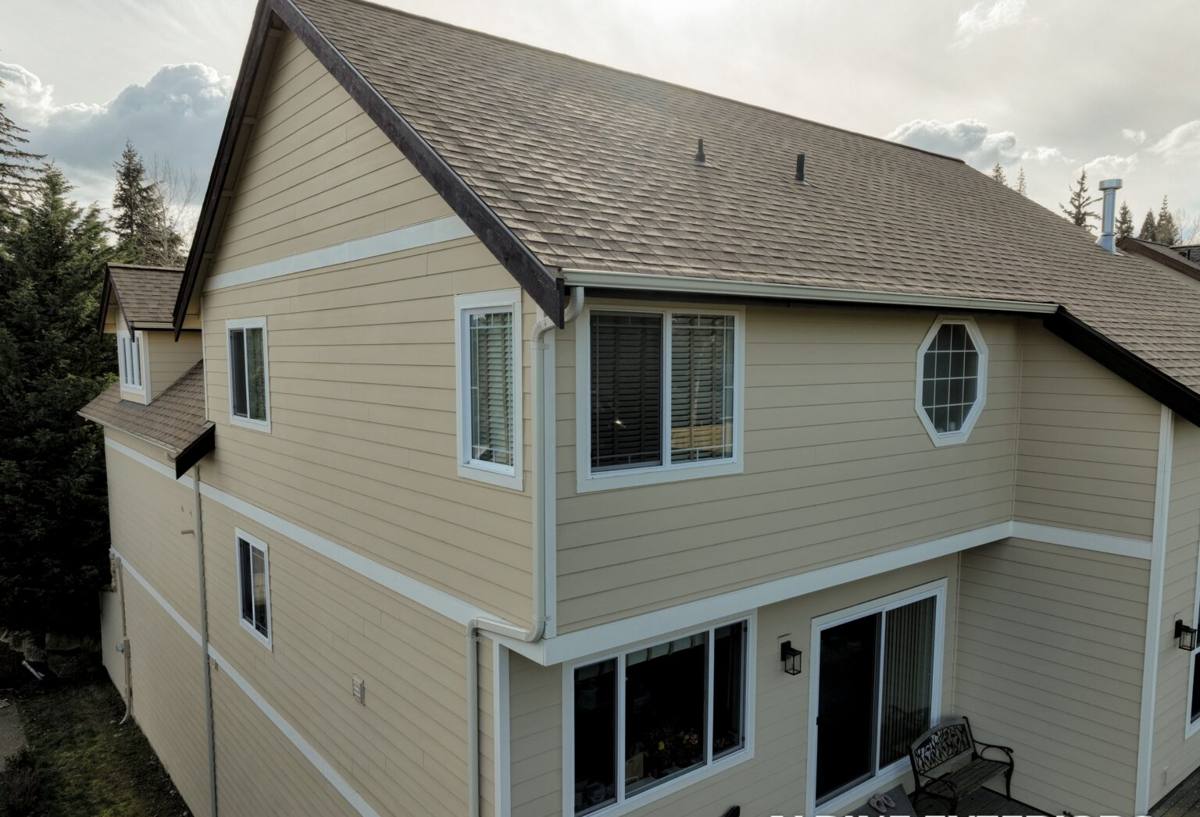
What "Energy-Efficient" Actually Means for a Skagit County Home
"Energy-efficient windows" gets used as a marketing phrase, but the actual performance comes down to a handful of measurable factors: the frame material, the glass package, and how well the unit is sealed into the wall once it's installed. Get any one of those wrong and the energy savings on the label don't show up on your utility bill.
Frame Material Options
For a Bow home dealing with salt air and consistent moisture, frame material matters more than in a lot of other climates:
- Vinyl — Won't rot or corrode, low maintenance, and generally the best value. Quality varies a lot between manufacturers, so we're picky about which lines we install.
- Fiberglass — Very stable in temperature swings and holds up well to coastal conditions, at a higher price point than vinyl.
- Wood and wood-clad — Attractive and traditional, but wood needs consistent upkeep to survive a marine-influenced, moss-prone climate. We'll install it if that's what a homeowner wants for a historic or architectural reason, but we're upfront that it's a higher-maintenance choice here specifically because of the moisture exposure.
- Aluminum — Durable but a poor insulator unless thermally broken, and bare aluminum is more prone to corrosion in salt air. We generally steer away from it for this area unless it's a thermally broken product suited to the application.
Glass Packages
Double-pane, low-E, argon-filled glass is the practical standard for this region now. Triple-pane exists and adds marginal extra insulation, but for most Bow homes the bigger performance jump comes from correct installation and air sealing, not from paying extra for a third pane of glass. We'll walk through the tradeoff honestly rather than upselling glass you don't need.
Frame Materials Against Coastal Skagit County Conditions
| Frame Material | Salt Air / Moisture Resistance | Maintenance Needed | Typical Lifespan |
|---|---|---|---|
| Vinyl | Very good — won't rot or corrode | Low — occasional cleaning | 20–30+ years |
| Fiberglass | Excellent | Low | 30+ years |
| Wood-clad | Good if cladding is intact; wood interior needs monitoring | Moderate to high | Varies with upkeep |
| Bare aluminum | Fair — can corrode/pit over time in salt air | Moderate | 15–25 years |
None of these are "bad" products in the abstract — they're just better or worse fits for a property that sits in salt air and heavy rain for months at a time. Part of our job is matching the material to the actual site conditions, not just the homeowner's aesthetic preference, and being honest when those two things pull in different directions.
Signs Your Current Windows Are Costing You Money
Before we talk about replacement, it's worth knowing what to actually look for. Not every drafty-feeling window needs full replacement — sometimes it's a repair, sometimes it's a caulking or weatherstripping fix. Here's what we check for on a Bow home:
- Visible condensation or fogging between the panes (a sign the seal has failed and the insulating gas is gone)
- Soft or discolored wood at the sill or bottom corners — a common moss-season moisture entry point
- Hardware that's stiff, corroded, or won't latch tightly anymore
- A noticeable draft you can feel by hand along the frame edge on a windy day
- Visible daylight gaps around the frame from outside
- Paint or finish that's peeling specifically around the window opening, not the wall generally
- Rooms near windows that feel noticeably colder than the rest of the house in winter
If you're seeing two or more of these, it's worth having someone look at the actual installation, not just the glass.
Our Installation Process
Correct window installation is mostly about what happens before and after the window itself goes in. The window is a manufactured product built to spec — the part that determines whether it performs for the next 20 years is the flashing, sealing, and insulation work around it.
- Assessment — We look at the existing window, the surrounding trim, and the sheathing/framing condition once the old unit is out. In a Bow home, we're specifically checking for moisture damage that's been hidden behind trim.
- Removal — Old units come out carefully to avoid unnecessary damage to siding or trim we're keeping.
- Flashing and moisture barrier work — This is the step that gets skipped or rushed on a lot of jobs we're asked to fix later. Proper flashing tape and drainage planes matter more here than in a dry climate, because there's more water trying to find a way in over the life of the window.
- Setting and shimming the new window — Level, plumb, and square, with proper shim placement so the frame doesn't twist or bind over time.
- Insulating the gap — Low-expansion foam or backer rod and sealant around the frame, sized correctly so it insulates without bowing the frame inward.
- Exterior sealing and trim — Weather-resistant sealant at all exterior joints, sized and tooled correctly so it actually sheds water instead of trapping it.
- Interior finish — Trim, casing, and touch-up work to match the surrounding wall.
- Final check — Operation, latching, and a visual seal check before we call it done.
Where We See Other Installs Go Wrong
When we're called to look at a window that's failing early — leaking, drafty, or fogged — it's rarely the window unit itself that's defective. It's almost always one of a few installation shortcuts:
- Skipped or minimal flashing — Caulk alone at the top of the window is not a substitute for proper flashing tape and a drainage path. In a climate with this much driving rain, that gap shows up as a leak eventually.
- Wrong fastening into rotted or damaged framing — If the substrate under the window was already compromised, setting a new window into it just delays the problem.
- Over-foaming the gap — Too much expanding foam can bow the frame inward, which throws off the seal and the operation of the sash.
- No back-check on drainage — Windows are designed to shed incidental water that gets past the outer seal. If that drainage path is blocked or wasn't built in, water sits and finds the framing.
We're not naming names here — this is about the standard we hold ourselves to, not a knock on any particular brand or crew. The point is that the window itself is rarely the weak link. The installation is.
What a Correct Job Costs
Pricing depends on window count, size, frame material, and how much of the surrounding trim and flashing needs to be redone — especially if we find hidden moisture damage once the old unit is out. Broad, honest ranges for planning purposes:
| Factor | Impact on Cost |
|---|---|
| Frame material (vinyl vs. fiberglass vs. wood-clad) | Vinyl is typically the most budget-friendly; fiberglass and wood-clad cost more upfront |
| Number of windows replaced at once | Per-window cost usually drops on larger multi-window jobs |
| Hidden sill or framing damage | Can add labor and material cost once discovered — we flag this before proceeding, not after |
| Window size and configuration | Larger units, bay windows, and custom shapes cost more than standard sizes |
| Trim and finish work | Matching existing trim profiles or repainting can add to the scope |
We give a firm number after an on-site look, not a phone estimate, because the condition behind the existing trim is the biggest unknown on any window job in this climate.
Why Local Experience in Bow Matters
A crew that only occasionally works this stretch of Skagit County will treat every window job the same way they'd treat one in a dry inland climate — standard flashing, standard sealant, standard timeline. A crew that regularly works Bow and the surrounding Burlington area knows to build in extra margin for moisture, to check for rot in specific spots before it's asked about, and to schedule around the wet months instead of fighting them. That local pattern recognition is the difference between a window that performs for two decades and one that needs attention again in five years.
We also know which products have held up well on homes in this specific environment over time, versus which ones look fine on paper but struggle once they're actually exposed to salt air and sustained rain. That's not something you can get from a spec sheet — it comes from doing the work here repeatedly.
Get a Straight Answer for Your Home
If your windows in Bow are drafty, fogged, or just past their prime, we're glad to take a look and give you a straightforward read on what's actually going on — no pressure, no inflated urgency. Fill out the form below for a free estimate, and we'll walk you through what we find and what your real options are.