 Burlington
 Roofing Built for Where Blanchard Actually Sits
Blanchard doesn't get the mildest version of Skagit County weather. Sitting close to the water with Blanchard Mountain rising right behind it, homes here take on a mix most inland Burlington properties don't deal with as heavily: salt-laden air moving in off the bay, wind-driven rain that gets pushed sideways under poorly sealed edges, and long stretches of shade and dampness that make moss a year-round concern instead of a seasonal one. An asphalt shingle roof that's installed correctly can handle all of that for decades. One that's installed to a generic spec, without accounting for this specific mix of conditions, tends to show problems early — granule loss, soft spots at the eaves, moss creeping under tabs, and flashing that gives out well before the shingles themselves are worn out.
This page is about doing asphalt shingle roofing right for a Blanchard property specifically — not roofing in general.
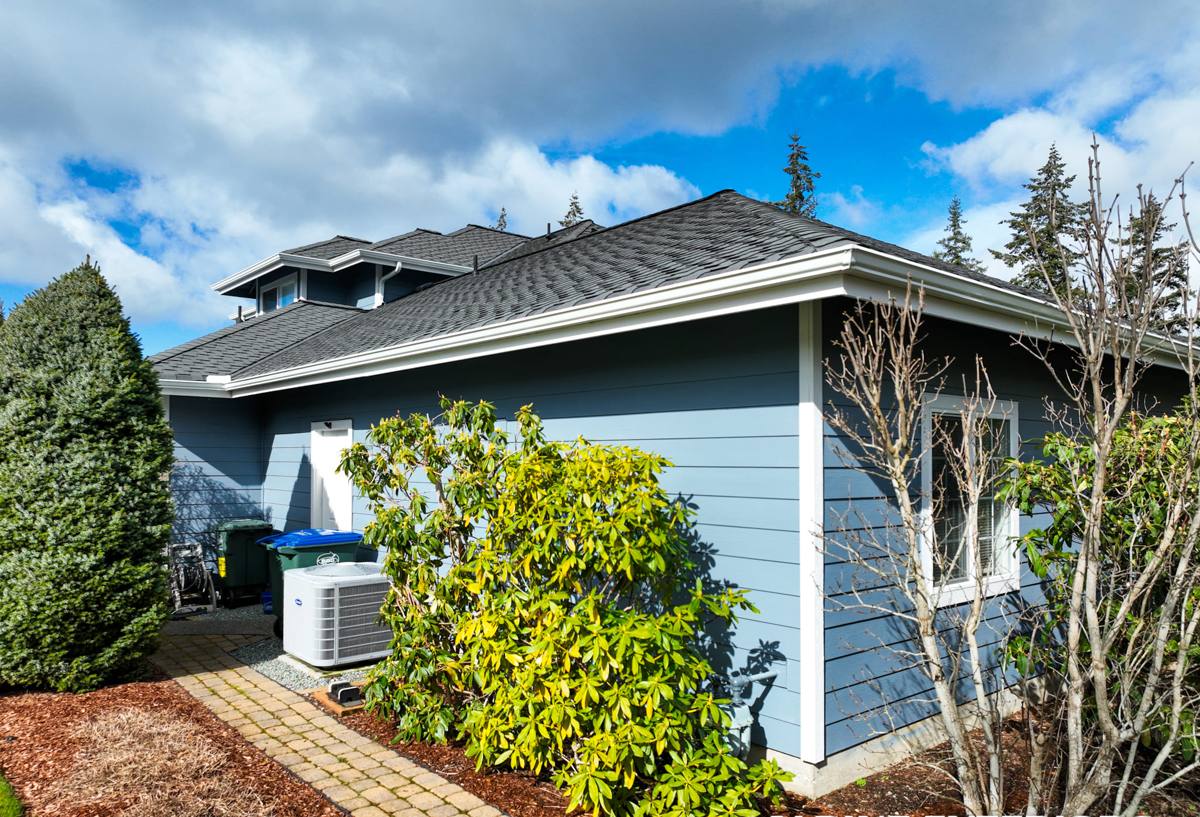
What Blanchard's Climate Actually Does to a Roof
Salt Air
Proximity to Samish Bay means airborne salt settles on and around the roof over time. It doesn't destroy asphalt shingles the way it corrodes bare metal, but it accelerates the breakdown of exposed metal flashing, fasteners, and vent components if they aren't rated for coastal exposure. A roof with the right metal choices at the flashing points will simply outlast one where standard fasteners were used because it was faster or cheaper.
Driving Rain
Storms coming off the water tend to arrive with wind behind them, which pushes rain sideways and up under shingle edges, ridge caps, and anywhere the underlayment or flashing isn't lapped correctly. On a flat, calm-weather roof this wouldn't matter much. In Blanchard, it's one of the more common reasons we find water staining in an attic even though the shingles themselves still look fine from the ground.
A Long Moss Season
Shaded roof sections, north-facing slopes, and the general dampness of a Puget Sound-adjacent property give moss a long runway to establish itself. Once moss gets a foothold under shingle tabs, it holds moisture against the roof deck and lifts shingles at the edges, which is exactly the kind of small, hidden failure that turns into a leak a year or two later.
What a Correctly Installed Roof Needs Here
None of this requires exotic materials — it requires attention to a handful of details that matter more in Blanchard than they would somewhere drier and less exposed.
- Ice-and-water shield at eaves and valleys — not just where code minimums require it, but wherever wind-driven rain is likely to find a way in.
- Corrosion-resistant flashing and fasteners — chosen with salt air exposure in mind, not the cheapest option that meets code.
- Proper attic ventilation — balanced intake and exhaust so moisture from inside the house doesn't condense against the underside of the deck and add to what the weather is already doing from outside.
- Algae-resistant shingle granules — most major manufacturers offer a line built for this, and it's worth the modest upgrade in a climate where moss and algae are a given, not a maybe.
- Tight ridge, hip, and valley detailing — the places where two roof planes meet are the most common failure points in driving rain, and they need to be done carefully, not fast.
Choosing the Right Shingle for This Climate
Not every asphalt shingle product is built the same way, and the differences matter more here than in a drier climate. The table below covers the main tiers homeowners choose between.
| Shingle Type | Typical Lifespan | Wind Rating | Best Fit For |
|---|---|---|---|
| 3-Tab | 15-20 years | Lower | Budget-driven projects, secondary structures |
| Architectural (Laminate) | 25-30 years | Higher | Most Blanchard homes — better wind and weather resistance |
| Premium/Designer | 30+ years | Highest | Homes prioritizing longevity and appearance, exposed sites |
For most Blanchard properties we recommend architectural shingles as the baseline, not the upgrade. The extra layer of material and heavier profile handles wind-driven rain and holds up to moss removal and general weathering noticeably better than a 3-tab product, and the cost difference over the life of the roof is modest compared to the difference in performance.
Our Asphalt Shingle Roofing Process
1. Inspection and Honest Assessment
We start on the roof, not just with a drone photo or a quick look from the ground. We check the deck for soft spots, look at existing flashing and ventilation, and tell you plainly whether you're looking at a repair, a partial re-roof, or a full replacement. If a repair is the honest answer, that's what we recommend.
2. Tear-Off and Deck Repair
Full replacement means a full tear-off, not a layer-over-layer shortcut. This is also when we find and fix any decking that's been softened by long-term moisture — something you can't see or price accurately until the old shingles are off.
3. Underlayment and Flashing
This is where a lot of the climate-specific work happens: ice-and-water shield at vulnerable areas, properly lapped underlayment, and flashing chosen and installed to handle salt air and driving rain, not just pass a quick visual check.
4. Shingle Installation
Installed to manufacturer spec for nail placement, exposure, and pattern — details that directly affect both the wind rating and the warranty, and that are easy to shortcut when a crew is moving fast.
5. Ventilation and Final Walkthrough
We confirm intake and exhaust ventilation is balanced, clean up the site completely, and walk the roof and the results with you before calling the job done.
Common Problems We Find on Existing Blanchard Roofs
When we're called out to look at an older roof in this area, a handful of issues show up again and again:
- Moss colonies at shaded valleys and north-facing slopes, lifting shingle edges and holding moisture against the deck.
- Granule loss from age and weather exposure, leaving the underlying asphalt vulnerable to UV and moisture damage.
- Nail pops and lifted tabs from wind events, especially near ridges and eaves.
- Corroded or failing flashing around chimneys, skylights, and roof-to-wall transitions — often the actual source of a leak that looks like it's coming from the shingles.
- Poor or blocked attic ventilation, leading to condensation damage that can look like a roof leak but isn't.
Maintenance Checklist for Blanchard Homeowners
A well-installed asphalt shingle roof still needs occasional attention in this climate. This is the short list we'd give any homeowner here:
- Have moss removed gently (not pressure-washed) as soon as it appears, rather than waiting for a heavy buildup
- Keep gutters and downspouts clear so water isn't backing up under the eaves during heavy rain
- Trim back overhanging branches to reduce shade, debris, and the moisture that moss needs to establish
- Have flashing points checked every few years, especially around chimneys and skylights
- Get a professional inspection after any major windstorm, even if nothing looks obviously wrong from the ground
What Affects the Cost of a Blanchard Roofing Project
| Factor | Why It Matters |
|---|---|
| Roof size and pitch | More surface area and steeper slopes mean more material and labor time |
| Number of existing layers | Tear-off of multiple old layers adds disposal and labor cost |
| Deck condition | Soft or rotted decking found during tear-off needs repair before shingles go on |
| Shingle tier chosen | 3-tab, architectural, and premium products carry different material costs |
| Ventilation upgrades | Adding or correcting intake/exhaust ventilation affects labor and materials |
| Roof complexity | Valleys, dormers, chimneys, and skylights all add flashing detail and time |
We don't quote a project sight unseen. Every estimate is based on an actual look at your roof, so you get a number that reflects your home, not a generic average.
Why Hiring a Crew That Already Works Blanchard Matters
A roofing crew that mostly works drier, inland climates can still install a technically correct roof — but "technically correct" and "correct for this location" aren't always the same thing. A crew that regularly works Blanchard and the surrounding Burlington and Skagit County area already knows which flashing materials hold up against salt air, where moss tends to establish first on a given roof orientation, and how much wind-driven rain protection is actually worth building in versus what's overkill. That local pattern recognition shows up in fewer callbacks and a roof that performs the way it's supposed to for its full expected life, instead of developing avoidable problems five or ten years in.
Get a Free, No-Pressure Estimate
If you're dealing with an aging roof, visible moss, or you just want an honest read on where your roof stands, we're happy to take a look. Fill out the form below to schedule a free estimate — no pressure, no obligation, just a straight assessment from a crew that works this area regularly.