 Burlington
 Siding Repair in Anacortes: Fixing a House That Sits Right on the Water
Anacortes sits out on Fidalgo Island, closer to open water than almost anywhere else in Skagit County — Guemes Channel on one side, Rosario Strait on the other, with the ferry terminal a reminder of just how much of daily life here happens next to salt water. That position gives the town its character, but it also means houses in Anacortes take a harder, more constant beating from the weather than homes a few miles inland in Burlington. Salt air, driving rain, and a long moss season all take their toll here, and siding repair calls in Anacortes tend to look a little different than the same calls a short drive up Highway 20.
We're based in Burlington, and Anacortes is regular territory for our crew — often enough that we've built a real sense of which walls fail first, which details get skipped on older installs, and what an honest repair actually requires once the old siding comes off. This page is about siding repair specifically: what causes it in Anacortes, what a correct repair job involves, and why we handle it the way we do.
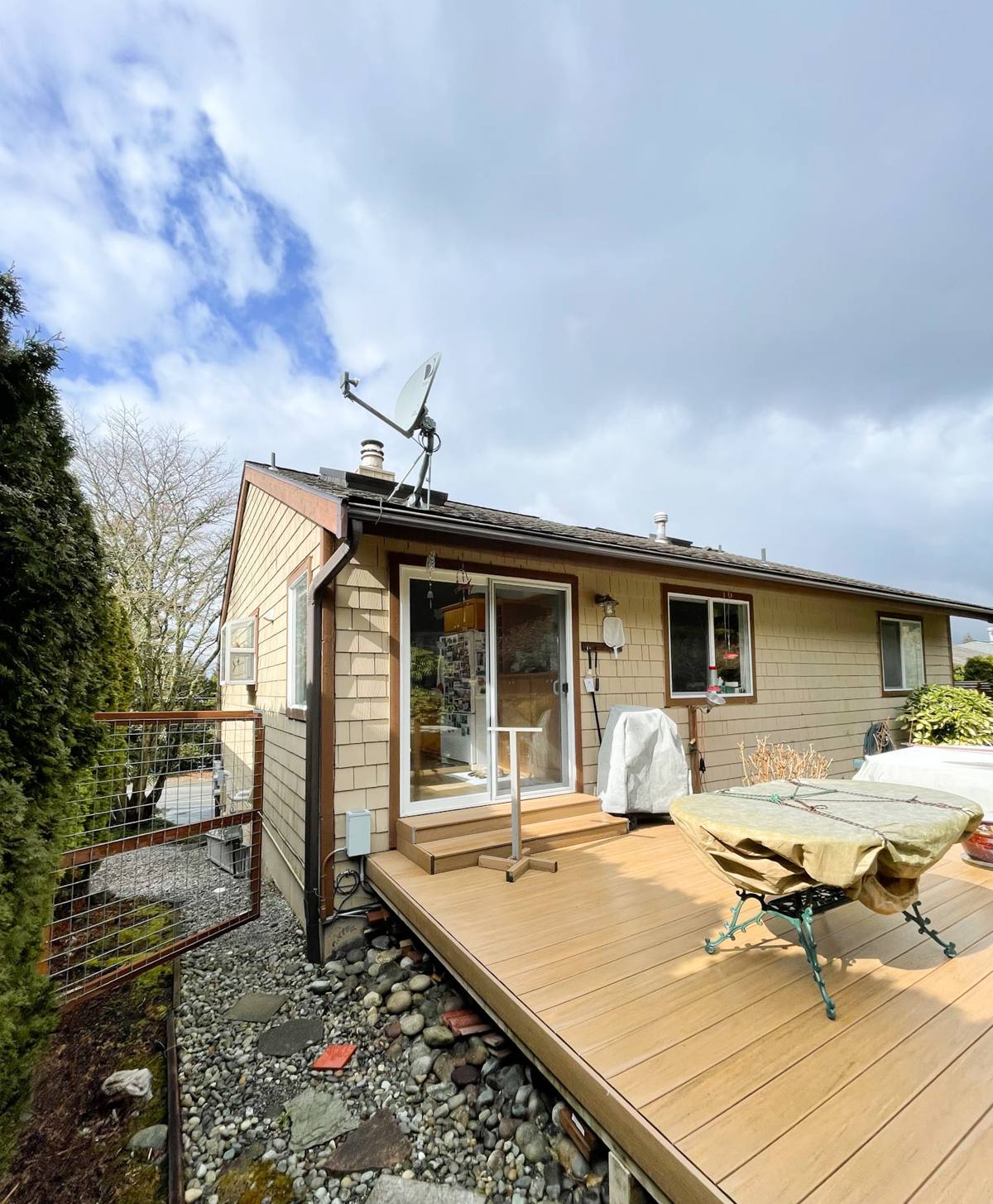
What Anacortes' Waterfront Position Does to Siding
Salt Air Off Guemes Channel and Rosario Strait
Homes closer to the water in Anacortes get a steadier dose of salt-laden air than houses set back from the shoreline. Salt speeds up corrosion on fasteners, flashing, and any exposed metal trim, and it breaks down lower-grade paint and caulk faster than a drier, more inland climate would. On a repair call, this shows up as fastener heads rusting through their caulk seal, trim corners with premature paint failure, and caulk joints that have gone brittle and cracked years before they should have.
Driving Rain and Wind Off the Water
Storms coming off the water rarely just fall straight down on an Anacortes house — wind pushes rain sideways into wall assemblies, window trim, and anywhere a roofline meets a wall. That sideways load finds weak points a calmer inland climate wouldn't expose nearly as fast: an under-lapped flashing detail, a caulk joint that was never quite sealed, a butt joint that opened up as the siding aged. Most of the repair work we see traces back to one of those small gaps letting water in, not to the siding material simply wearing out on its own.
A Moss Season That Runs Long
Mild temperatures and near-constant moisture give moss a growing season that can run most of the year on shaded, north-facing walls and tree-covered lots around Anacortes. Moss itself doesn't damage fiber cement, but it holds moisture against a wall surface for extended stretches, and if that moisture finds a gap or an under-sealed joint, it has plenty of time to work its way in before the wall ever gets a chance to dry out.
Signs an Anacortes Home Needs Siding Repair, Not Just a Repaint
A lot of homeowners reach for a pressure wash or a fresh coat of paint when what's actually needed is a repair to the siding or the flashing behind it. Painting over an active moisture problem doesn't fix it — it just hides it for another season. Some signs worth taking seriously:
- Soft or spongy spots on the siding, especially near the bottom of walls or around window and door trim
- Paint or ColorPlus finish that's failing in one specific spot rather than evenly across the whole wall
- Visible gaps, cracks, or separation at butt joints and corner trim
- Rust staining below fasteners or trim, more common on walls closer to the water
- Moss or dark staining that returns quickly after cleaning, especially on shaded walls
- Bubbling, warping, or a hollow sound when tapping a section of siding
- Water stains or soft trim on the interior side of an exterior wall near a window
Any one of these on its own might be minor. Several showing up in the same area, or a problem that keeps coming back after being patched, usually means there's a flashing or moisture issue behind the siding that a surface fix won't solve.
Repair, Section Replacement, or Full Re-Side: How We Make the Call
Not every siding problem in Anacortes needs a full tear-off, and not every problem is fixed by patching the one board that's visibly damaged. We look at how contained the damage is, whether the wall sheathing behind it has taken on moisture, and how the rest of the siding on that elevation is holding up before recommending a scope.
| Scope | When It Fits | What to Watch For |
|---|---|---|
| Spot repair | Isolated damage — a cracked board, a failed joint, minor impact damage — with dry sheathing underneath | Matching the existing ColorPlus finish and profile so the repair doesn't stand out |
| Section or elevation replacement | Damage concentrated on one wall face, often the side that takes the most wind-driven rain or shade | Whether the flashing and house wrap behind that section need correcting, not just the siding itself |
| Full re-side | Widespread failure, aging siding nearing the end of its service life, or moisture damage found in multiple areas once the siding is opened up | Hidden sheathing or framing repair adding to the scope once the old material is off |
We won't push a full re-side when a contained repair genuinely solves the problem, and we won't patch over something that's going to fail again in a year. The honest answer usually becomes clear once we've actually pulled the damaged section and looked at what's behind it.
What a Correct Siding Repair Actually Involves
Diagnosing the Cause, Not Just the Symptom
Replacing a damaged board without figuring out why it failed just sets up the same failure again. Before any repair, we trace the problem back to its source — a flashing gap, a caulk joint that opened up, a fastener that backed out, or moisture that's been tracking down from a window above. A repair that doesn't address the actual cause is a temporary fix dressed up as a permanent one.
Matching Existing Hardie ColorPlus Finish
One of the practical challenges of repairing James Hardie siding is matching the factory-applied ColorPlus finish on an existing house, especially if the siding has weathered for several years since the original install. We work with current Hardie color and product lines to get as close a match as the manufacturer's lineup allows, and we're upfront with homeowners about where a perfect match isn't realistic — usually on older or discontinued colors — so there are no surprises once the repair is finished.
Flashing and Fastener Corrections
Because most of the repair calls we see in Anacortes trace back to a flashing or fastener issue rather than the fiber cement itself failing, correcting those details is usually the real work of the repair. That means re-lapping house wrap and flashing so water sheds downward and outward, replacing corroded fasteners with corrosion-resistant ones suited to a salt-air environment, and resealing joints with the correct sealant rather than just caulking over the visible crack.
Why We Repair — and Install — Only James Hardie Fiber Cement
We install one siding system across every job we take on, new construction and repair alike: James Hardie fiber cement. We don't install or repair-in vinyl, LP SmartSide, Cemplank, Allura, primed spruce, or cedar as replacement material, even as a patch. That's a professional standard we hold to, not a limited product list, and it comes from what repeated repair calls in a place like Anacortes have shown us about how different materials age near the water.
- Non-combustible core: Fiber cement doesn't feed a fire the way wood-based siding products can.
- Factory-applied ColorPlus finish: Baked on under controlled conditions rather than field-painted, so it holds its color and resists cracking longer in a wet, salt-air climate.
- Climate-engineered HZ product lines: Built around sustained moisture and coastal exposure, which describes Anacortes about as well as any town in the county.
- No organic substrate: There's no wood core for moisture to work into once a joint or flashing detail fails, which limits how far a small problem can spread before it's caught.
- Strong transferable warranty: Backed by Hardie when installation and repair follow their spec, which matters if the home changes hands down the road.
Each of the products we don't install gets something right for the right homeowner and the right climate. But when we're the ones opening up a wall to fix a problem, we'd rather put back a system we fully stand behind than patch in something that shifts the same maintenance risk a few years further down the road.
Our Repair Process for Anacortes Homes
- On-site inspection: We look at the visible damage and the surrounding wall, checking for soft spots, moisture staining, and how far the problem may extend beyond what's easy to see.
- Diagnosis: We trace the damage back to its cause — flashing, fastening, a joint, or a window detail — before scoping any repair work.
- Honest scope and estimate: We explain what we found, what it will take to fix it correctly, and where the line falls between a contained repair and a larger replacement.
- Repair work: Damaged material comes out, the underlying cause gets corrected, and new Hardie material goes back in to manufacturer spec — not just cosmetically patched over.
- Final check: We walk the repair with the homeowner, confirm the finish match and joint work, and flag anything worth keeping an eye on going forward.
Cost Factors for Anacortes Siding Repair
We don't publish blanket repair pricing because the real cost drivers vary house to house, but the factors that move a repair estimate up or down are consistent.
| Factor | How It Affects Cost |
|---|---|
| Extent of hidden moisture damage | Rot found in sheathing or framing behind the siding adds real scope beyond the visible repair |
| Color and profile matching | Older or discontinued ColorPlus colors can be harder to match than a current product line |
| Access and wall height | Second-story or hard-to-reach sections take more time and equipment than ground-level repairs |
| Flashing and window integration | Repairs that involve re-flashing a window or roofline transition take more labor than a standalone board swap |
| Number of affected areas | Damage isolated to one spot costs less than the same issue showing up on multiple elevations |
These are general drivers, not a quote — we walk the property and, where needed, open up the damaged section before putting a real number on the work, since what's visible from the ground rarely tells the whole story.
Why a Burlington-Based Crew That Already Works Anacortes Matters
A crew that repairs siding across Skagit County regularly, rather than treating Anacortes as an occasional out-of-town call, has a better sense of which walls fail first, how far salt air and wind-driven rain have worked into a given install, and which repair shortcuts show up again a year or two later. That local pattern recognition shapes real decisions on a repair call — where to look beyond the obviously damaged board, which fastener and flashing choices are worth the extra time this close to the water, and when a homeowner is better served by a contained repair than an unnecessary full re-side. It also means someone local is reachable afterward if a question comes up, rather than chasing down a contractor who only shows up in Anacortes once in a while.
If you're dealing with damaged, soft, or failing siding on an Anacortes home, we're glad to come take a look and give you a straightforward, honest assessment of what it will take to fix it right. Reach out using the form below to schedule a free, no-pressure estimate.