 Burlington
 Why Anacortes Roofs Wear Differently
Anacortes sits out on Fidalgo Island, surrounded by the marine waters of Skagit County, and that location shapes everything about how a roof ages there. Homes get a steady mix of salt-laden air off the water, wind-driven rain that finds its way under poorly lapped materials, and a long, damp shoulder season that gives moss and algae months to take hold on north-facing slopes. A roof that would hold up fine forty miles inland can show granule loss, fastener corrosion, and moss colonization years earlier out here.
None of that means Anacortes homes need exotic materials or gimmicks. It means the installation details that get skipped on an easy job — flashing laps, fastener choice, ventilation balance, underlayment coverage — cannot be skipped here. We've built our replacement process around that reality, not around a generic checklist.
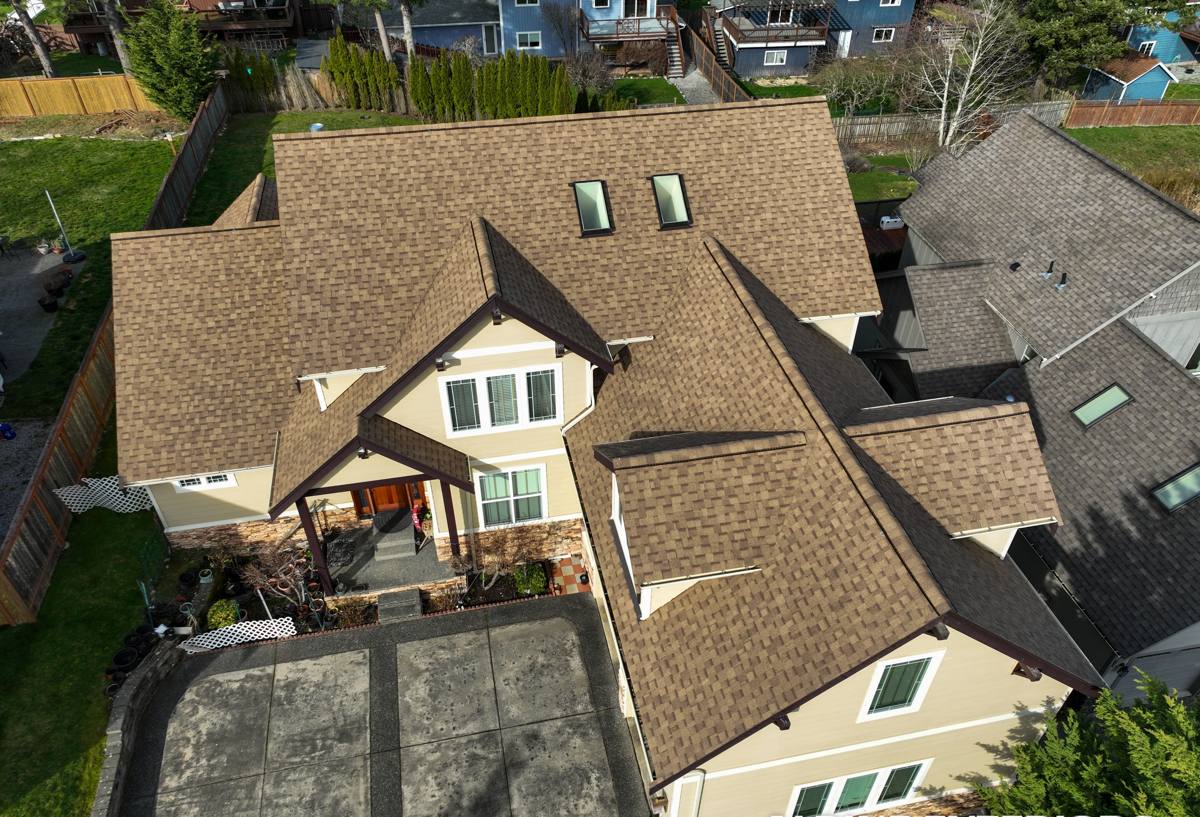
Signs Your Roof Has Reached the End of Its Service Life
Roofs rarely fail all at once. They give warning signs for a season or two before a leak shows up inside the house. Watch for:
- Granules collecting in gutters or at downspout outlets, especially after a windy rain
- Shingles that are cupping, curling at the edges, or cracking when you look closely from the ground
- Thick moss mats on north- or shade-facing slopes, not just light green staining
- Rusting or lifting flashing around chimneys, skylights, and roof-to-wall transitions
- Daylight visible through the roof deck from inside an unfinished attic
- Soft or spongy spots when walked, or sagging visible along a ridge or valley line
- Repeated repairs to the same area within a year or two
One or two of these on their own might mean a repair is enough. Several at once, especially on a roof already past 18–20 years old, usually means repair costs will start outpacing what a full replacement would have cost.
What a Correct Roof Replacement Actually Involves
Full Tear-Off, Not a Layover
We remove the existing roofing down to the deck rather than installing over old layers. Layering over an existing roof traps moisture, hides deck damage, and voids most manufacturer warranties. It also means we never actually see the condition of the plywood or plank decking underneath — and on a coastal roof, that's exactly where problems hide.
Deck Inspection and Repair
Once the old roofing is off, we inspect every section of decking for soft spots, delamination, or rot, particularly around old flashing points and roof penetrations where slow leaks tend to concentrate over the years. Any compromised sheathing gets replaced before anything new goes down — installing new roofing over a weak deck just guarantees a shorter lifespan.
Underlayment and Water Protection
Given how much wind-driven rain this area sees, underlayment choice matters more here than in drier parts of the state. We use synthetic underlayment across the full roof and self-adhering ice-and-water shield membrane at the eaves, valleys, and any low-slope transitions — the spots where wind can push water backward under standard shingle laps.
Flashing Done Right
Flashing failure, not shingle failure, is the most common reason coastal roofs leak. We install new step flashing, counterflashing, and valley metal rather than reusing old pieces, and we pay particular attention to chimney and skylight transitions, where salt air accelerates corrosion on lower-grade metal.
Ventilation Balance
Intake and exhaust ventilation have to work together. Too little airflow traps moisture in the attic, which feeds mold and speeds up deck rot from underneath — a real risk given the humidity here. We balance soffit intake with ridge or box venting so the attic can actually dry out between wet spells instead of staying damp all winter.
Choosing a Roofing Material for a Marine Climate
There's no single "best" roofing material for every home — it depends on your budget, your roof's pitch and exposure, and how much long-term maintenance you're willing to do. Here's how the common options actually perform under Anacortes conditions:
| Material | Moss & Algae Resistance | Salt Air Performance | Typical Lifespan Here | Trade-Offs |
|---|---|---|---|---|
| Architectural asphalt shingle | Good with algae-resistant granules; needs periodic cleaning on shaded slopes | Solid with corrosion-resistant fasteners and flashing | 20–30 years | Most affordable; widest color/style range; requires proper ventilation to hit full lifespan |
| Standing seam metal | Excellent — sheds moss and debris well on adequate pitch | Very good with coastal-rated coatings and stainless fasteners | 40–50+ years | Higher upfront cost; needs a qualified installer for seams and expansion detailing |
| Composite/synthetic shake | Good, varies by product | Good, check manufacturer coastal warranty terms | 30–50 years | Mid-to-high cost; installation quality varies more between crews |
| Wood shake | Poor without diligent upkeep — moss and rot risk is real in this climate | Fair; needs regular treatment | 15–25 years with maintenance | High maintenance burden here; we're honest that it's a tougher fit for this specific climate |
For most Anacortes homes, a quality architectural asphalt shingle with algae-resistant granules strikes the right balance of cost and durability. For homes with heavy tree cover, constant shade, or owners who want to minimize moss maintenance long-term, metal is worth the conversation even with the higher price tag.
Our Anacortes Roof Replacement Process
1. On-Site Inspection and Honest Assessment
We start by getting on the roof, not just looking at it from the driveway. We check the deck condition where accessible, flashing points, ventilation, and the overall slope and exposure of the home so the estimate reflects what your roof actually needs — not a generic package.
2. A Clear, Written Estimate
You'll get a written scope covering materials, underlayment type, flashing work, ventilation changes if needed, and a firm price before any work starts. No surprise change orders for things we should have caught during inspection.
3. Scheduling Around Weather
Skagit County weather windows matter. We schedule tear-offs so the deck isn't left exposed overnight when rain is likely, and we keep an eye on the forecast throughout the job rather than working around it after the fact.
4. Tear-Off, Deck Repair, and Installation
Full removal, deck inspection and repair, underlayment, flashing, and material installation, in that order, with attention paid at every transition point — valleys, penetrations, wall intersections — where coastal roofs are most likely to eventually leak.
5. Cleanup and Walkthrough
We clear debris, run a magnetic sweep for stray nails around the property, and walk the finished roof with you so you know what was done and what to watch for going forward.
Why Local Experience in This Climate Matters
A crew that mostly works drier, inland jobs can still do competent work, but they're often making judgment calls about wind exposure, moisture behavior, and moss-prone shading for the first time on your roof. A crew that regularly works Anacortes and the surrounding Skagit County coastline has already made those calls dozens of times — which fastener spacing holds up in sustained wind off the water, which valleys need extra membrane width, which north-facing slopes are going to need moss treatment sooner rather than later.
That experience shows up in details you won't notice until years later: flashing that's still tight, a deck that's still dry, an attic that isn't holding moisture. It's the difference between a roof that looks right at handoff and one that actually performs for its full expected lifespan in this specific climate.
Timeline and What to Expect During the Job
Most single-family roof replacements in this area take one to three days on-site, depending on roof size, pitch, and how much deck repair is needed once the old material comes off. Larger or more complex roofs, or jobs that hit unexpected deck damage, can run longer. We'll give you a realistic window up front and keep you updated if conditions change the schedule — better to adjust a timeline than rush a step that affects how the roof holds up over the next twenty years.
Expect some noise and vibration during tear-off, a dumpster or trailer staged on the property for debris, and crew vehicles in the driveway for the duration. We keep the work area contained and do a full cleanup pass at the end of each day, not just at project completion.
Protecting the Investment After Installation
A correctly installed roof still benefits from basic upkeep, especially in a climate that grows moss on schedule every year. A little regular attention goes a lot further than waiting for a problem to show up inside the house:
- Clear gutters and downspouts at least twice a year so water isn't backing up under the eave edge
- Trim back overhanging branches to cut down on shade, debris buildup, and moss growth
- Have moss treated or gently removed before it thickens into mats that hold moisture against the shingles
- Schedule a visual inspection after any major windstorm to check for lifted or displaced material
- Address any small flashing or sealant issues promptly rather than waiting for a visible leak
If you're seeing early wear signs on your current roof or you're just planning ahead, we're glad to take a look and give you a straight answer about repair versus replacement — no pressure, no upsell. Reach out for a free estimate using the form below and we'll get a time on the calendar to inspect your roof in person.