 Burlington
 Window Installation Built for Alger's Climate
Alger sits in a stretch of Skagit County where marine air off Samish Bay meets thick evergreen cover, and that combination is hard on windows. Homes here deal with a longer wet season than most people expect, wind-driven rain that finds gaps a calm-weather installer might miss, and a near-constant film of moisture that keeps moss and algae established on north-facing walls and trim for much of the year. Salt-tinged air off the water accelerates corrosion on hardware and fasteners that would last much longer a few hours inland. None of this means Alger homes need exotic products — it means the installation has to be done with this specific climate in mind, not a generic checklist.
Window installation is one of those jobs that looks the same whether it's done right or wrong for the first year or two. The difference shows up later, in water stains below the sill, soft trim, fogged glass, or a window that won't latch square anymore. Getting it right the first time matters more here than in drier parts of the state.
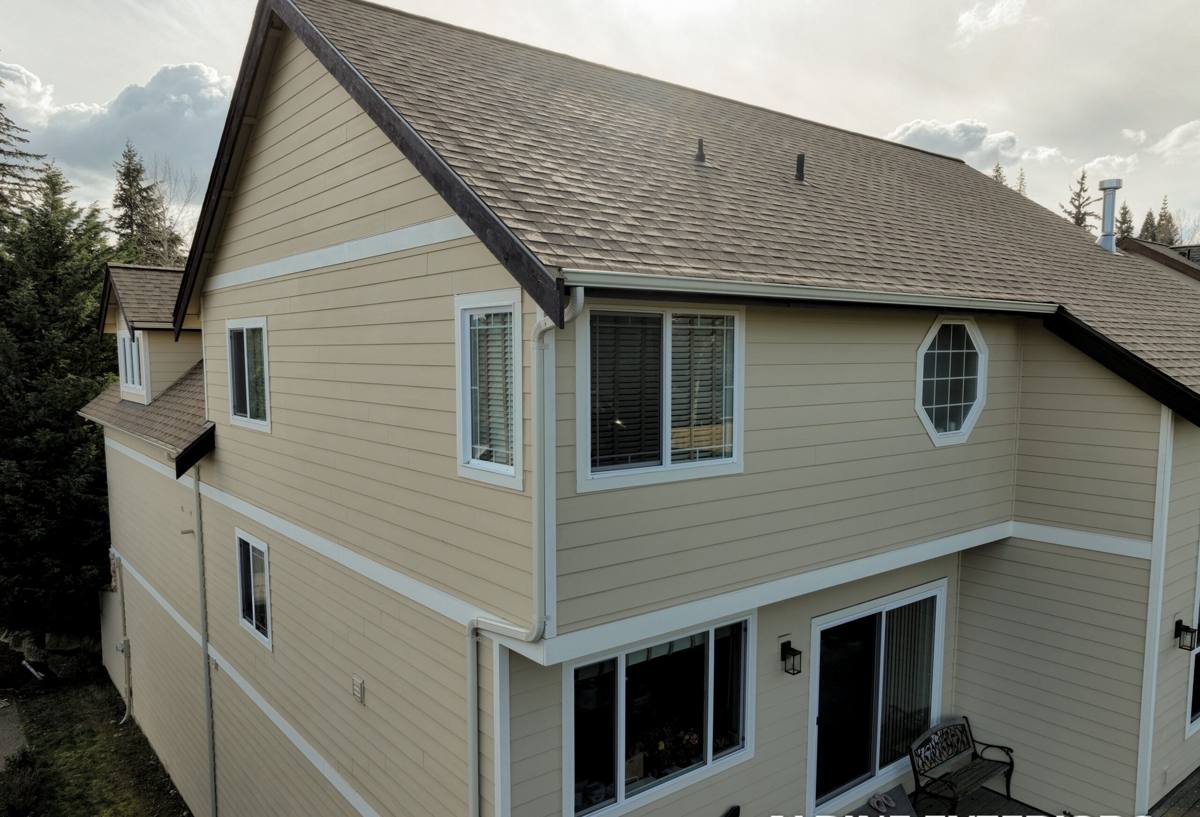
What Salt Air, Driving Rain, and Moss Season Actually Do to Windows
Driving rain and wind-loaded moisture
Skagit County storms often come with real horizontal push behind the rain, not just straight-down drizzle. That wind loading forces water sideways against the building envelope, testing every seam around a window opening — the flashing, the sealant joints, the way the housewrap laps over the nailing fin. A window that's technically watertight in still weather can still leak under wind-driven rain if those details weren't built for it.
Salt air and corrosion
Proximity to Samish Bay means airborne salt reaches Alger more than it does further inland. Over years, that salt attacks unprotected steel fasteners, cheap hinge hardware, and aluminum components that aren't properly finished. It's a slow process, but it's cumulative — a window installed with the wrong hardware or fastener grade will show pitting, staining, and stiff operation well before its glass or frame give out.
The long moss and algae season
Shaded, moisture-retentive spots around window trim and sills stay damp for extended stretches through fall, winter, and spring. That's exactly the environment moss, algae, and mildew need to take hold. Once organic growth establishes on wood trim or gets into a compromised sealant joint, it holds moisture against the surface and speeds up rot — a slow, easy-to-miss failure that starts small and gets expensive if ignored.
Signs an Alger Home's Windows Need Attention
- Soft, discolored, or moss-covered trim around the window frame
- Peeling paint or bubbling finish on the interior sill or jamb
- Drafts or a cold band of air near the window even when it's latched shut
- Fog or moisture trapped between panes on double- or triple-glazed units
- Windows that stick, won't latch flush, or have visibly warped sashes
- Visible daylight or gaps around the frame from outside
- A musty smell near the window that doesn't clear with ventilation
Any one of these is worth a look. Several at once usually means water has been getting past the exterior seal for a while, not just condensation on the glass.
Full-Frame Replacement vs. Insert Replacement
Most window jobs come down to one of two approaches, and the right one depends on the condition of the existing frame and rough opening — not just budget.
| Factor | Full-Frame Replacement | Insert (Pocket) Replacement |
|---|---|---|
| Best used when | Frame, sill, or sheathing shows rot, water damage, or was never flashed correctly | Existing frame is sound, square, and dry |
| Access to flashing and sheathing | Full access — old flashing removed and replaced, sheathing inspected and repaired if needed | Limited — existing flashing and frame stay in place |
| Labor and cost | Higher — more demolition, more trim and siding work at the opening | Lower — faster install, less disruption to surrounding siding |
| Long-term risk if the old opening had hidden damage | Low — the problem gets found and fixed during the job | Higher — hidden rot or old leaks stay hidden behind the new insert |
| Change in glass size / sightlines | None — new frame fills the original opening | Slightly smaller glass area, since the new frame nests inside the old one |
In a climate like Alger's, we lean toward opening the wall and checking the sheathing and flashing on any home more than a couple decades old, or any window that's shown signs of past water intrusion. Installing a new window into a rotted or poorly flashed opening just buries the real problem for a few more years.
What a Correct Installation Actually Involves
The window unit itself is only part of the job. The waterproofing details around it are what keep wind-driven rain and long-term dampness out of the wall assembly.
- Opening inspection — checking the rough opening, sill, and sheathing for existing damage before anything new goes in.
- Sill pan flashing — a sloped, sealed pan under the window that directs any water that does get past the frame back outside, rather than into the wall.
- Proper flashing sequence — housewrap and flashing tape lapped in the correct order (bottom to top, like shingles) so water is always shed downward and outward, never trapped behind a layer.
- Correct fastening and shimming — the unit set plumb, level, and square, with shims at the right points so the frame doesn't rack or bind over time.
- Sealant at the right joints only — perimeter sealed on the exterior face, but with a gap left at the bottom of the frame so any water that gets in can still drain out instead of pooling.
- Interior air sealing — insulation and air-sealing around the frame gap to stop drafts and reduce condensation risk on the interior.
- Trim and finish work — exterior trim and siding integration finished so water sheds away from the new joints, not into them.
Skip the sill pan or get the flashing lap sequence backward, and a brand-new window can still leak in a hard Skagit County storm. This is the part of the job that doesn't show in a walkthrough but decides whether the installation holds up.
Choosing Windows for Alger's Conditions
Frame material
Vinyl and fiberglass frames handle this region's moisture and temperature swings well and don't need repainting to stay protected. Wood-frame windows can still work but require a real maintenance commitment — repainting or resealing on a schedule — to keep moisture from working into end grain and joints over the years. We'll walk through the trade-offs honestly rather than push one material for every home.
Hardware and fasteners
Given the salt air off Samish Bay, we use corrosion-resistant hardware and fasteners rated for coastal or marine-influenced exposure rather than standard-grade parts. It costs a little more up front and saves a stuck, pitted, or discolored window years sooner than it should have.
Glazing and performance
Double-pane, low-E, argon-filled glass is a sensible baseline for this climate — it manages heat loss through our cool, wet winters and cuts condensation risk on the interior glass surface, which matters when humidity stays high for weeks at a stretch. Triple-pane is worth discussing for exposed elevations that take the brunt of the weather, but it's not automatically necessary on every window of every home.
Our Process
- On-site assessment — we look at the existing windows, trim, and any visible water or moss damage before recommending anything.
- Honest scope — we'll tell you plainly if a window needs full-frame replacement versus an insert, and why.
- Written estimate — clear pricing and a materials list, no vague allowances.
- Careful removal — old units and any compromised trim or sheathing removed without unnecessary damage to surrounding siding.
- Correct flashing and installation — following the sequence above on every opening, not just the visible ones.
- Cleanup and walkthrough — job site cleaned up, windows operated and checked with you before we call it done.
Why a Crew That Already Works Alger Matters
Window installation done wrong doesn't usually fail on day one — it fails two or three winters later, after enough driving rain and moss-season dampness have worked into a bad seal. A crew that already works Skagit County knows to check for sill pan flashing, knows which corner details tend to get skipped in production-grade installs, and knows this area's storms come with wind behind them, not just straight rain. That local knowledge shows up in the parts of the job you can't see once the trim goes back on — which is exactly where it matters most.
Keeping New Windows Performing in This Climate
- Rinse exterior frames and trim periodically to keep salt residue and organic buildup from settling in
- Check exterior caulk lines yearly, especially after winter storms, and re-seal any cracked joints
- Keep gutters and downspouts clear so runoff isn't sheeting directly down over window heads
- Trim back vegetation that keeps trim and sills shaded and damp longer than necessary
- Operate and lubricate hardware a few times a year so hinges and latches don't seize from disuse and moisture
- Watch for condensation between panes — it signals a failed seal, not something a cleaning will fix
If you're weighing whether your Alger home's windows need a repair, an insert replacement, or a full-frame job, we're happy to take a look and give you a straight answer — no pressure, no upsell. Reach out for a free estimate using the form below.