 Burlington
 Why Alger Siding Takes a Different Kind of Beating
Alger sits in that stretch of Skagit County between Burlington and Bellingham, close enough to the water that homes here deal with a mix of weather most inland siding never sees. Salt-tinged air off the bay works into seams and fasteners. Driving rain off Puget Sound comes in sideways during fall and winter storms, testing every lap and joint on a wall. And the tree cover and damp shade that make this area a nice place to live also make it a very good place for moss and algae to grow on anything that stays wet more than a day or two.
None of that means Alger homes are doomed to constant siding trouble. It means siding here needs to be installed and repaired with those specific conditions in mind, not treated the same as a dry, sun-exposed lot forty miles east. When we get called out to a home in Alger, we're not guessing at what's causing the damage — we've seen the same patterns on enough houses in this pocket of Skagit County to know where to look first.
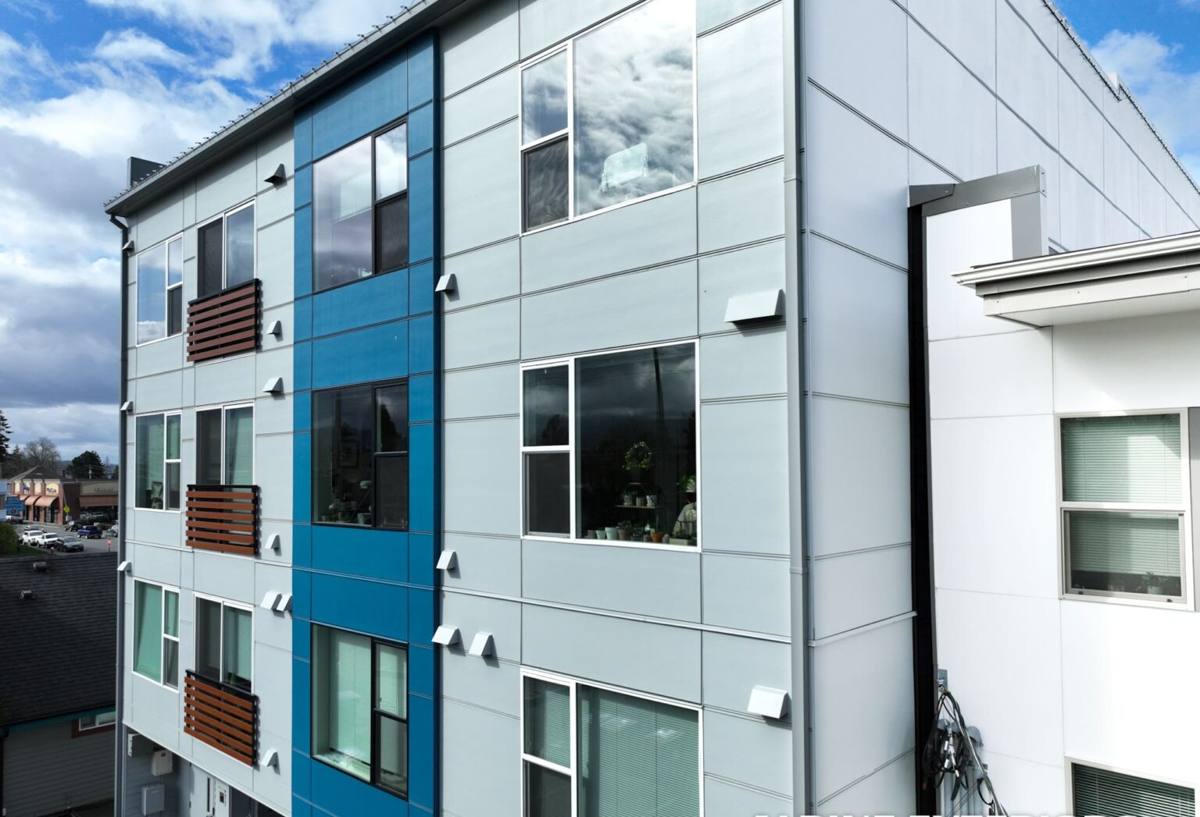
The Damage Patterns We See Most in Alger
Moisture Intrusion at Seams and Penetrations
Wind-driven rain doesn't fall straight down — it gets pushed sideways and upward into laps, corner boards, and anywhere siding meets a window, door, or utility penetration. Over time, gaps that were never sealed properly (or sealant that's failed) let water behind the siding. That's when you start seeing soft trim, staining, or in worse cases, rot in the sheathing underneath.
Moss, Algae, and Trapped Moisture
A long moss season means anything horizontal or shaded holds moisture longer. On wood-based products especially, that constant damp cycle softens the material and accelerates rot from the surface inward. Even where moss growth itself isn't structural damage, it's a signal that a section of wall isn't drying out the way it should.
Salt Air and Fastener Corrosion
Homes closer to the water deal with slow corrosion on fasteners, flashing, and metal trim. Once a fastener corrodes and loosens, the siding around it starts to move, which opens up new paths for water — a small metal problem becomes a siding problem.
Impact and Age Damage
Alongside the climate issues, we still see the ordinary stuff — cracked boards from debris or settling, siding that's simply reached the end of its useful life, and repairs from other trades (electricians, plumbers, satellite installers) that were never properly re-sealed.
Signs Your Siding Needs Repair
Most siding failures don't happen overnight. They show up as small warning signs first. Worth checking for, especially heading into the wet months:
- Soft or spongy spots when you press on the siding, especially near the bottom of walls
- Visible cracking, splitting, or buckled boards
- Paint that's peeling, bubbling, or failing faster than it should
- Persistent moss or algae staining that comes back soon after cleaning
- Gaps opening up at seams, corners, or where siding meets trim
- Staining or discoloration on interior walls near exterior corners
- A musty smell in a room along an exterior wall
- Loose or rattling sections in wind
Any one of these on its own might be minor. Several together, or anything paired with interior staining, usually means water has already gotten past the surface and it's worth having someone look before the next round of storms.
Repair or Replace? How We Make That Call
Not every problem area needs a full re-side, and we're not going to tell you it does. But repair only makes sense when the damage is truly isolated and the material underneath is sound. Here's roughly how we think through it:
| Situation | Usually Repair | Usually Replace |
|---|---|---|
| Damage extent | One or two boards, a single wall section | Scattered damage across multiple walls |
| Underlying sheathing | Dry, solid when probed | Soft, spongy, or visibly rotted |
| Cause | Isolated impact or a failed seal, now fixed | Ongoing moisture intrusion, systemic gaps |
| Material condition | Rest of the siding is sound and matches available stock | Siding is at or near end of service life overall |
| Age of original install | Newer siding with a localized issue | Original siding decades old, failing broadly |
We'll always tell you honestly which category your home falls into. If a targeted repair will hold up through another Skagit County winter, that's what we recommend — there's no reason to pay for a full re-side when it isn't needed.
What a Correct Repair Job Actually Involves
A siding repair is more than swapping out a cracked board. Done right, it should address why the damage happened in the first place, not just how it looks afterward. Our process on a typical repair includes:
- Full assessment beyond the visible damage — checking adjacent boards, corner trim, flashing, and the sheathing behind the affected area for hidden moisture or soft spots.
- Identifying the water path — figuring out how moisture got in, whether that's a failed sealant joint, missing flashing, or a fastener issue, so the same spot doesn't fail again next season.
- Removing damaged material cleanly — cutting back to sound material rather than patching over a compromised area.
- Repairing or replacing sheathing if needed — if rot has reached the wall structure, that gets addressed before any new siding goes back on.
- Correct flashing and sealing — proper weather barrier detailing at seams, corners, and penetrations, not just caulk over a gap.
- Matching material and finish — installing replacement siding that matches the existing profile and color as closely as possible, so the repair doesn't stand out as a patch.
Skip any of those steps and you get a repair that looks fine for a season or two and then fails again — usually in the same spot, because the actual cause was never fixed.
Our Process on an Alger Repair Call
When we come out to a home in Alger, we start with a straightforward walk-around and, where the homeowner allows it, a closer probe of areas showing signs of moisture. We explain what we're seeing in plain terms — no pressure toward a bigger job than what's actually needed. If it's a genuine repair situation, we give you a clear scope and a straight answer on cost before any work starts. If we find the damage is more extensive than a repair can reasonably solve, we'll tell you that too, along with why, so you can make an informed decision rather than a rushed one.
Because siding repair often uncovers water damage the homeowner didn't know was there, we try to be upfront early about what we find during the assessment stage, before it becomes a surprise on an invoice.
Why Local Experience in Alger Matters
A crew that mostly works drier, more sheltered parts of Skagit County can still do competent siding work — but they haven't necessarily seen how a specific microclimate behaves over years. Working homes around Alger and the Burlington area regularly means we already know which wall orientations take the worst of the driving rain, which shaded areas hold moss longest, and which older installation details tend to fail first in this kind of weather. That local pattern recognition is the difference between a repair that's cosmetic and one that actually holds.
It also means we're not guessing at permitting, typical construction in the area, or how local homes were originally built — we're working within a context we already understand.
Material Matters: What We Use for Repairs
Our company installs and repairs James Hardie fiber cement siding exclusively — we don't install vinyl, LP SmartSide, or wood-based products, and that shapes how we approach repair work too. Fiber cement doesn't rot, and it holds paint and factory finish far longer than wood-based siding, which matters directly for the moisture and moss issues common in Alger. When we're repairing an existing home with a different siding material, we'll do the repair honestly and correctly with that material — but if the underlying siding is old enough or damaged enough that you're weighing a larger replacement down the road, we'll always tell you why Hardie is what we'd put on the home instead: it's engineered for exactly the wet, moss-prone conditions this area produces, and it comes with a strong transferable warranty backing that up.
That's not a sales pitch tacked onto a repair page — it's the honest answer to "what would hold up better here," and we think homeowners deserve that answer even when they're just asking about a patch job today.
If you're seeing signs of siding trouble on an Alger home — soft spots, recurring moss staining, cracked boards, or anything that's been nagging at you before the next stretch of Skagit County rain — we're glad to take a look. Reach out for a free, no-pressure estimate using the form below, and we'll give you a straight read on what's going on and what it'll take to fix it right.