 Burlington
 Why Siding in Stanwood Takes More Punishment Than Most
Stanwood sits close enough to Puget Sound and the Port Susan tideflats that homes here deal with a combination most inland Washington towns don't: salt-laden air moving in off the water, long stretches of driving rain pushed sideways by wind, and shaded, damp yards where moss and algae get a foothold and never really leave. Any one of those on its own is manageable. Together, over years, they find every weak point in a home's siding system — a hairline gap at a trim joint, a fastener that's starting to corrode, a caulk line that's lost its flexibility.
This is a page about one job, done right, in this one area: repairing siding on Stanwood homes. Not a general overview of siding, not a sales pitch for a full re-side you may not need. If your siding is fundamentally sound and the damage is localized, a proper repair should extend its life for years. Our job is to tell you honestly which situation you're in.
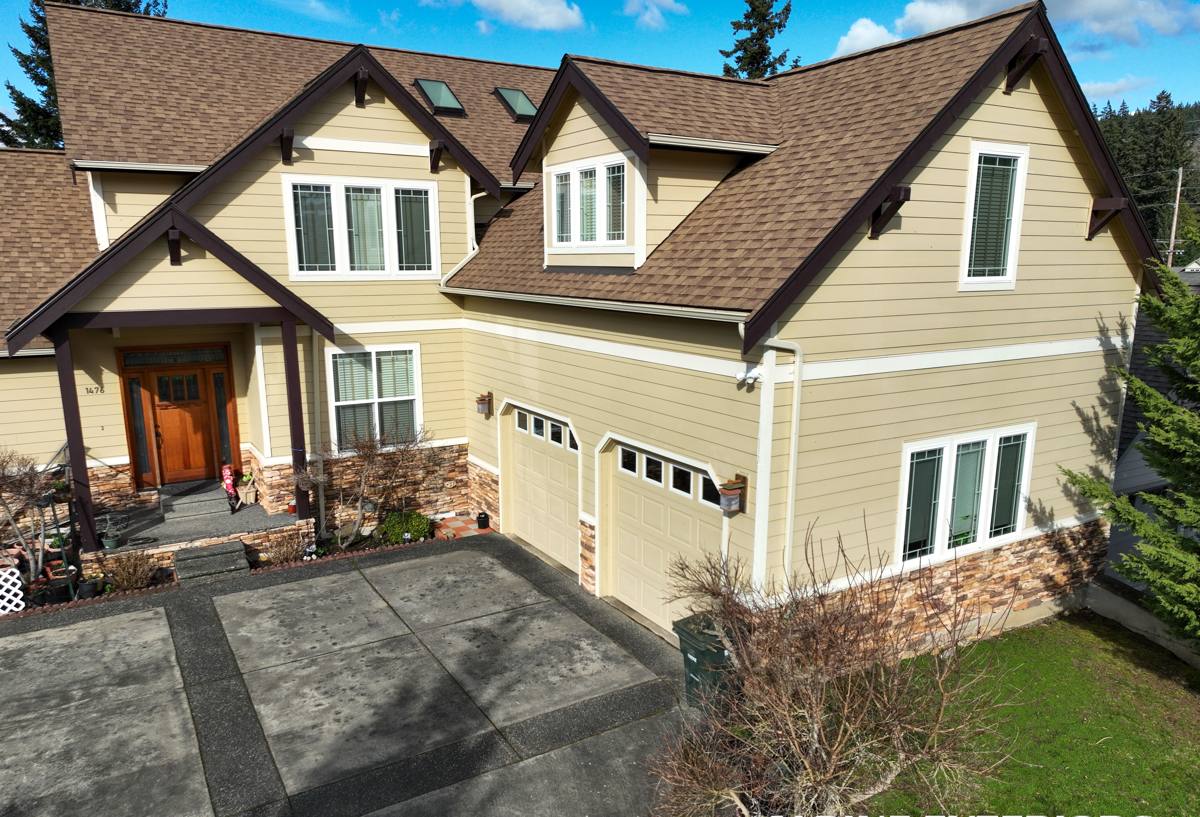
What the Local Climate Actually Does to Siding
Salt Air and Metal Fasteners
Homes within a few miles of the Sound and the tideflats around Stanwood are exposed to airborne salt in a way that inland Skagit and Snohomish County properties simply aren't. Salt accelerates corrosion in exposed or improperly coated fasteners, flashing, and trim hardware. A nail head that rusts and weeps a rust streak down the face of a board isn't just cosmetic — it's often a sign the fastener has lost holding strength, and water can follow that same path inward.
Wind-Driven Rain
Stanwood gets plenty of straight-down rain, but it's the sideways, wind-driven rain off open water that causes the real damage. It gets pushed into laps, seams, and trim joints that would shed water fine in a calm rain. Over time this finds any gap in caulking, any butt joint that wasn't flashed, any corner trim that's pulled slightly away from the wall.
Moss, Algae, and Prolonged Moisture
Stanwood's tree cover and marine-influenced humidity mean a long moss and algae season — longer than drier parts of the state see. Moss holds moisture directly against the siding surface for extended periods. On the wrong material, that constant dampness softens the substrate, degrades paint film, and creates conditions for rot underneath. Even on the right material, moss buildup at butt joints and behind trim needs to be cleared before it causes staining or traps water against fasteners.
Signs Your Stanwood Home Needs a Siding Repair, Not a Full Re-Side
Most siding problems we see on repair calls in this area fall into a predictable set of categories. If you're seeing one or two of these, isolated to a specific area of the home, that's usually a repair situation rather than a full replacement.
- Rust streaking below individual nail heads or trim fasteners
- A cracked or split board near a corner, window, or downspout
- Soft, spongy siding at the bottom courses or near grade level
- Bubbling, peeling, or chalking paint concentrated in one area rather than across the whole house
- Moss or dark staining that keeps returning at the same joint or seam
- Gaps at trim corners or butt joints where you can see daylight or feel air movement
- Warped or bowed panels near a downspout, gutter overflow point, or roof-to-wall intersection
- Visible caulk that's cracked, shrunk, or pulled away from the joint it's supposed to seal
If instead you're seeing widespread soft spots across multiple walls, siding that's failing at the same rate everywhere, or damage that keeps recurring no matter how many times a spot has been patched, that's usually a sign the underlying material or the original installation is the real problem — and repair would just be delaying a bigger decision. We'll tell you straight which category your home is in.
Repair or Replace: How We Help You Decide
| Factor | Points Toward Repair | Points Toward Replacement |
|---|---|---|
| Extent of damage | Isolated to one wall, corner, or trim run | Present across most or all elevations |
| Underlying material condition | Substrate is sound where damage stops | Soft or delaminating well beyond the visible damage |
| Age of siding | Well within expected service life | Already near or past it, repeat failures |
| Cause of damage | A specific, fixable source (bad flashing, one failed board) | Systemic — original material or install method is the issue |
| Paint/finish condition | Localized failure, rest of the finish is holding | Chalking, fading, or peeling broadly across the house |
This decision matters more in a climate like Stanwood's than in drier parts of the state, because moisture that gets past a repair here doesn't dry out quickly — it sits. That's why we always check a wider radius around visible damage before quoting a repair, not just the board that's obviously cracked.
What a Correct Repair Actually Involves
A siding repair done right is not just pulling off a bad board and nailing up a new one. It's diagnosing why that board failed in the first place, because in a wet, salt-influenced climate, the same failure will come back if the underlying cause isn't addressed.
- Diagnose the source, not just the symptom. We look at flashing, house wrap condition, fastener pattern, and drainage before we touch the visible damage. A cracked board next to a downspout that overflows in heavy rain isn't a siding problem — it's a drainage problem wearing a siding symptom.
- Check the water-resistive barrier. If the damage has been active for a while, water may have reached the house wrap or sheathing behind it. Replacing siding over a compromised barrier just resets the clock on the same failure.
- Match materials and profile correctly. Replacement boards need to match the existing reveal, thickness, and profile so the repair doesn't stand out and so water sheds the way the original design intended.
- Flash and fasten to spec. Every joint, corner, and penetration gets flashed and caulked the way it should have been the first time — corrosion-resistant fasteners, correct nailing pattern, proper gaps for expansion.
- Finish and blend. Paint or factory finish is matched as closely as possible so the repaired section doesn't age differently than the surrounding siding.
- Clear and address moss growth. Any moss or algae contributing to the original moisture problem gets cleared, and if drainage or shading is part of what's feeding it, we'll flag that too — a repair that ignores the moss just buys a few more years.
Our Process for Stanwood Repair Calls
We treat a repair estimate as a real inspection, not a drive-by guess. On a typical Stanwood repair call, we walk the full exterior, not just the area you called about — because the climate here means if one wall shows damage, it's worth checking whether neighboring areas are a few years behind it. We check trim, corners, butt joints, and anywhere water tends to concentrate: below rooflines, near downspouts, and at ground-level courses.
From there we give you a straight assessment: what needs to be repaired now, what's worth watching, and what — if anything — points to a bigger issue. If it's a repair, we quote the actual work involved, not a padded number. If we think a full re-side is the more honest recommendation, we'll say so and explain why, rather than patching something that's going to fail again in a season or two.
Why It Matters That We Already Work in This Area
Repair work rewards local familiarity in a way new construction doesn't. A crew that regularly works Skagit and Snohomish County exteriors knows which failure patterns show up near open water versus more sheltered inland lots, what moss and algae growth actually looks like a season or two before it becomes a moisture problem, and how wind-driven rain typically finds its way into a wall system on this side of the state. That's the difference between a repair that solves the actual problem and one that just covers it up for a year or two.
It also matters for scheduling and follow-through. A contractor who's regularly in Stanwood can get to a repair call faster, can check back on a repair without a special trip, and has a track record in the immediate area you can ask neighbors about — not just review screenshots from somewhere else in the state.
What We Repair With, and Why
We install and repair with James Hardie fiber cement siding exclusively — we don't install vinyl, LP SmartSide, cedar, primed spruce, or other fiber cement brands. For repair work specifically, that standard matters: fiber cement doesn't absorb water the way wood-based products can, it's non-combustible, and Hardie's ColorPlus factory finish is engineered to hold color and resist the fading and chalking that marine air accelerates on field-applied paint. When we're matching a repair into existing Hardie siding, we're working with a product system we know inside and out — the reveal, the fastening requirements, the finish options — rather than guessing at how an unfamiliar product will behave once it's back on the wall.
If your existing siding isn't Hardie, we'll still give you an honest repair assessment. But if the underlying material is contributing to the problem — the way untreated wood-based siding often does in this climate — we'll tell you that plainly, along with what a Hardie-based fix or eventual replacement would look like.
What Affects Repair Cost
| Cost Factor | Why It Matters |
|---|---|
| Extent of hidden damage | Water damage found behind the siding once boards are pulled adds scope |
| Access and height | Second-story or steep-roofline repairs require more setup and safety equipment |
| Material matching | Matching an older profile or discontinued color can require special ordering |
| Trim and flashing work | Repairs that involve re-flashing a window or corner take longer than a simple board swap |
| Number of repair locations | Multiple smaller repairs across the house versus one concentrated area |
We won't quote a number on this page because every repair is different — but we will give you a clear, itemized estimate before any work starts, and we'll explain what's driving the cost so there are no surprises.
Get an Honest Look at Your Siding
If you're seeing rust streaks, cracked boards, recurring moss staining, or gaps at your trim, it's worth having someone who works this area regularly take a look before the next wet season makes it worse. We'll give you a straight answer on whether it's a repair or something bigger — no pressure, no upsell. Request a free estimate below and we'll get out to your Stanwood property to take a real look.