 Burlington
 Metal Roofing for Stanwood Homes: Built for This Coastline, Not Just Any Roof
Stanwood sits close enough to Puget Sound and the Stillaguamish delta that homes here deal with a different roofing environment than houses ten miles inland in Skagit County. Salt-laden air off the water, long stretches of driving rain, and a moss season that can run eight or nine months out of the year all put specific demands on a roof. A metal roof handles that combination better than almost anything else on the market, but only if it's specified and installed correctly for this exact climate. That's the part that gets skipped by crews who don't work here regularly.
This page covers what a correct metal roof install looks like for a Stanwood property, what tends to go wrong when it's done by someone unfamiliar with the area, and how our process is built around the realities of this stretch of Washington coastline.
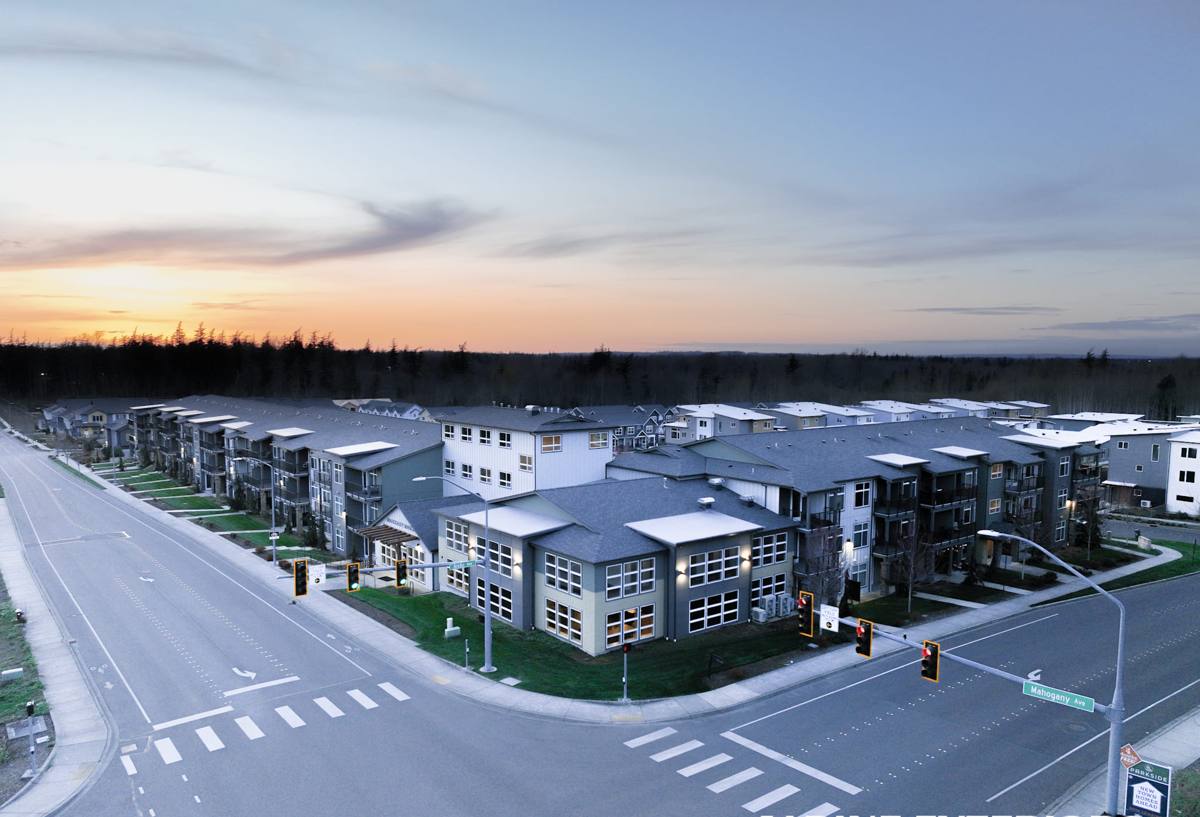
Why Stanwood's Climate Changes the Roofing Math
Salt Air and Metal Fatigue
Homes closer to the water take on airborne salt that settles on roofing surfaces and works its way into fasteners, flashing seams, and any exposed cut edges. Bare or poorly coated steel will show surface corrosion faster here than it would twenty miles inland. This doesn't mean metal roofing is a bad choice for Stanwood — quite the opposite — but it does mean the coating system and fastener grade matter more here than they would in a drier, inland part of the county.
Driving Rain and Wind-Driven Water
Storms coming off the Sound tend to push rain sideways, not straight down. That matters at every penetration, valley, and panel overlap on a metal roof. A install that would keep water out under calm vertical rain can still leak under wind-driven rain if laps, sealant beads, and underlayment details aren't sized for it.
Moss and Moisture Retention
The long wet season in western Skagit County keeps roof surfaces damp for months at a stretch, which is exactly what moss needs to take hold. Moss doesn't damage metal panels the way it damages shingles, but it does trap moisture against seams and fasteners, and on shaded, north-facing sections it can build up enough to hold water where it doesn't belong.
What a Correct Metal Roof Install Actually Involves
A lot of "metal roofing" jobs cut corners in places a homeowner can't see once the roof is finished. Here's what we consider non-negotiable on a Stanwood job:
- Proper underlayment: A high-temp, self-adhered synthetic underlayment at eaves, valleys, and penetrations — not just felt paper — to back up the metal against wind-driven rain.
- Corrosion-appropriate fasteners: Matched fastener coatings so you don't get galvanic reaction between the fastener and the panel, which accelerates corrosion in salt-air environments.
- Real ventilation: Ridge and soffit venting sized to the attic, not just installed for looks — this controls the condensation that forms on the underside of metal panels when warm interior air meets a cold roof deck.
- Flashing detail at every transition: Chimneys, skylights, dormers, and wall intersections get custom-formed flashing, not generic trim pieces bent to "close enough."
- Panel overlap and sealant matched to pitch: Lower-pitch sections need more overlap and different sealant strategy than steep sections — this gets missed constantly.
Panel Types and What They're Actually Good For
Not every metal roofing product performs the same way in this climate. Here's an honest breakdown of what we typically discuss with Stanwood homeowners:
| Panel Type | Best Fit | Trade-Offs |
|---|---|---|
| Standing seam (concealed fastener) | Full re-roofs, homes closer to the water, long-term low-maintenance goals | Higher upfront cost; requires more precise installation |
| Exposed-fastener panels | Outbuildings, shops, budget-conscious re-roofs | Fasteners need periodic inspection and occasional re-torquing over the roof's life |
| Stone-coated steel | Homeowners wanting a shingle or shake look with metal's durability | More installation steps; not always necessary if appearance isn't the priority |
| Corrugated/ag-panel steel | Barns, sheds, secondary structures | Not typically recommended for primary residences in salt-air zones |
For most primary homes in Stanwood, especially anything within a few miles of the water, we lean toward standing seam with a marine-grade coating package. It costs more upfront, but the concealed fastener system removes the single biggest long-term maintenance item — exposed screws working loose or corroding — which matters more here than in a drier climate.
Our Process for a Stanwood Metal Roof
1. On-Site Assessment
We look at the existing roof deck, attic ventilation, proximity to water, tree cover, and roof pitch before recommending a panel type or coating. A house tucked into trees a mile from the water gets a different moss-prevention conversation than a house sitting open to wind off the Sound.
2. Deck and Structure Check
Metal roofing is unforgiving of a soft or uneven deck — panels will telegraph waves and inconsistencies that shingles would hide. We check for water damage, rot, and deck flatness before any panel goes down, and we replace bad sheathing rather than roofing over it.
3. Ventilation and Underlayment
This is where a lot of the long-term performance is decided. We install underlayment rated for the exposure and set up intake and exhaust ventilation sized to the actual attic volume, not a generic ridge vent slapped on regardless of fit.
4. Panel Installation and Flashing
Panels are run, seamed, and fastened to manufacturer spec for our wind and rain exposure, with custom flashing formed on-site for valleys, walls, and penetrations rather than relying on stock trim.
5. Final Walkthrough
We walk the roof and the attic with the homeowner, point out what maintenance (if any) is needed, and explain the warranty structure on both material and workmanship.
Maintenance: What Metal Roofing Actually Needs in This Climate
One reason homeowners move to metal in Stanwood is lower maintenance compared to composition shingles, but "lower" isn't "zero." A few things are worth doing:
- Rinse off accumulated debris and organic buildup once or twice a year, especially on shaded roof sections where moss and moisture linger.
- Have gutters and downspouts checked — metal roofs shed water fast, and undersized or clogged gutters overflow more visibly than they would under a shingle roof.
- Inspect exposed-fastener panels (if you have them) every couple of years for loosening or minor corrosion at the fastener heads.
- Keep an eye on flashing at chimneys and skylights after major windstorms — that's the most common place for a leak to start on an otherwise sound metal roof.
Cost Factors for a Stanwood Metal Roof
| Factor | Why It Affects Price |
|---|---|
| Panel type | Standing seam runs higher than exposed-fastener panel due to material and labor complexity |
| Roof complexity | More valleys, dormers, and penetrations mean more custom flashing labor |
| Deck condition | Rot or soft sheathing found during tear-off adds repair cost before panels go on |
| Coating package | Marine-grade or premium coatings cost more but hold up better this close to salt air |
| Tear-off vs. overlay | Full tear-off costs more upfront but lets us fix the deck and ventilation properly |
We give a straightforward, itemized quote so you can see where the money goes rather than a single lump number.
Why It Matters That We Already Work in Stanwood
A contractor who only occasionally works this part of Skagit County can still install a technically fine metal roof — but they're less likely to default to marine-grade fasteners without being asked, less likely to catch a moss-prone north slope that needs extra attention, and less likely to know how the wind actually behaves on an open lot near the water versus one tucked into trees. We work throughout the Burlington and greater Skagit County area regularly, and Stanwood's coastal exposure is a known quantity for us going into every job, not something we're figuring out as we go.
Signs Your Current Roof Needs Attention
- Visible rust streaks or corrosion spots on an existing metal roof, especially near fasteners or cut edges
- Heavy moss buildup on shaded slopes that hasn't been cleared in a year or more
- Water staining on interior ceilings after wind-driven rain events
- Loose or lifted panels at ridges or eaves after storm season
- An aging shingle roof nearing the end of its service life where you're weighing a switch to metal
If you're seeing any of this, it's worth getting a professional look before small issues turn into deck damage.
If you're considering a metal roof for your Stanwood home, we're happy to come take a look, walk you through what your specific roof needs given its exposure and condition, and give you a straightforward, no-pressure estimate. Use the form below to get started.