 Burlington
 Blanchard's Coastal-Adjacent Climate and What It Does to a Roof
Blanchard sits close enough to the water and to the base of Chuckanut Mountain that homes here take a different kind of weathering than roofs further inland in Skagit County. It isn't one dramatic storm that wears a roof out — it's the steady combination of salt-carrying air, wind-driven rain, and a moss season that can run six months or longer. A roof that's correctly built for this stretch of the county looks almost identical to one built for a drier climate, but the details underneath are not the same.
Salt Air and Metal Fastener Corrosion
Even a few miles from saltwater, airborne salt accelerates corrosion on exposed metal — nails, flashing, vent stacks, and gutter hardware. Standard electro-galvanized fasteners can start rusting years before the shingles above them fail. Roofs installed with the wrong fastener spec often show streaking and staining at flashing points long before any structural problem shows up.
Driving Rain and Wind-Driven Water Intrusion
Blanchard gets its share of sideways rain off weather systems moving through the Sound. Wind-driven rain doesn't just run down a roof — it pushes up under shingle tabs, around chimneys, and into valleys. A roof designed only for straight-down rainfall will eventually let water find its way through laps and seams that would hold fine in calmer conditions.
Moss Season and Its Toll on Shingles
The shaded, damp conditions common on north-facing slopes and tree-covered lots around Blanchard give moss a long growing window. Moss holds moisture against the shingle surface, lifts tabs as it grows, and works its way under the granule layer over time. Left unaddressed for a few seasons, moss can shorten the usable life of an otherwise sound roof by years.
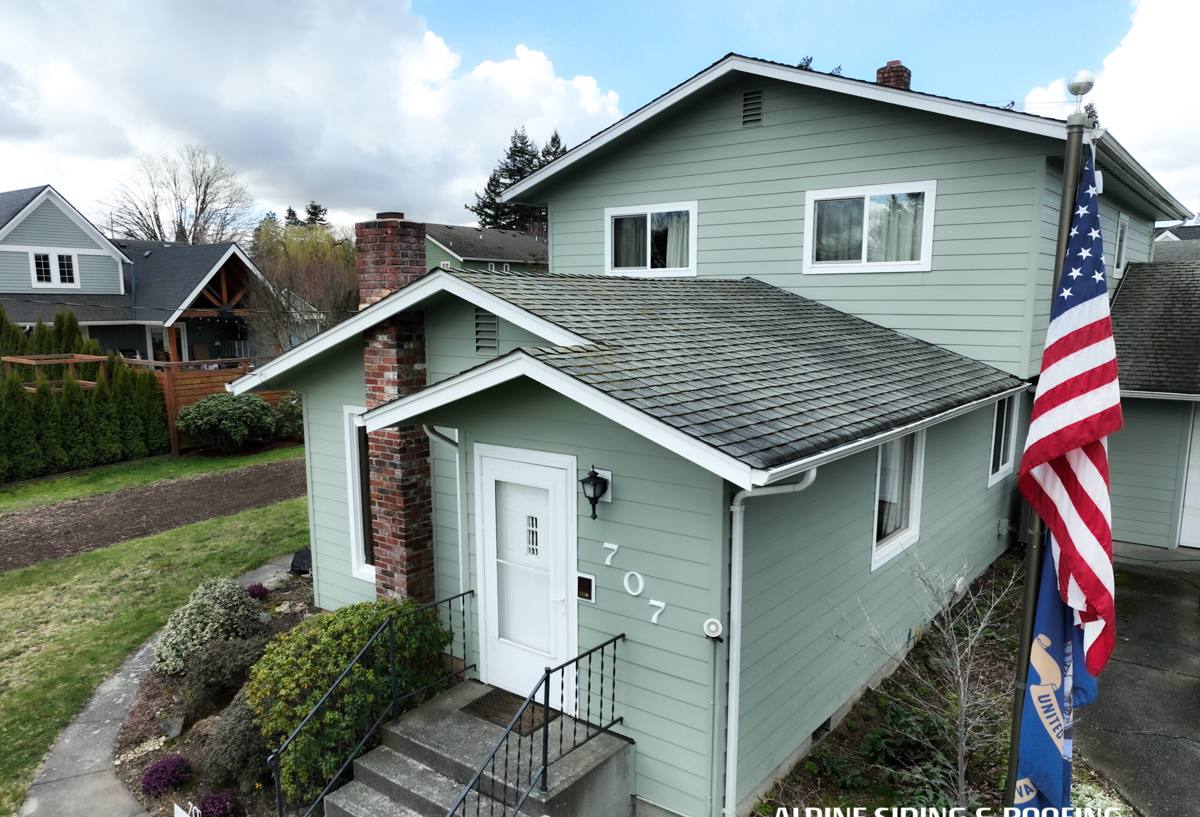
What a Correctly Installed New Roof Includes
"New roof" covers a wide range of actual workmanship. A roof that's built to hold up in Skagit County's conditions includes several layers most homeowners never see once the job is done.
Tear-Off and Deck Inspection
We remove the old roofing down to the deck rather than layering over it. This lets us actually see the plywood or plank sheathing underneath — soft spots, old water staining, and delamination only show up once the old material is off. Any damaged decking gets replaced before anything new goes down; installing new roofing over a compromised deck just hides the problem.
Underlayment and Ice & Water Barrier
A synthetic underlayment goes down across the full deck as the primary water barrier beneath the roofing material. In vulnerable areas — eaves, valleys, around penetrations — we add a self-adhering ice and water shield membrane, which seals around nail penetrations and resists the kind of wind-driven rain intrusion Blanchard sees regularly.
Flashing Details That Actually Matter
Flashing at chimneys, skylights, sidewalls, and valleys is where most roof leaks actually start — not in the open field of shingles. Step flashing, counter-flashing, and valley metal need to be installed in the correct sequence with the roofing material, not just caulked in afterward. We use corrosion-resistant flashing metal given the salt-air exposure in this area.
Ventilation
Balanced intake and exhaust ventilation keeps the attic temperature and moisture level in check. Without it, moisture from daily living gets trapped under the roof deck, which can lead to rot, mold, and premature failure of the roofing material from underneath — a problem that has nothing to do with the shingles themselves.
Choosing the Right Roofing Material for Blanchard Homes
There isn't one "best" roofing material for every home — the right choice depends on the home's exposure, roof pitch, tree cover, and budget. Here's how the common options hold up against Blanchard's specific conditions.
| Material | Moss Resistance | Wind-Driven Rain Performance | Salt Air Durability | Typical Lifespan |
|---|---|---|---|---|
| Architectural asphalt shingle | Moderate (better with algae-resistant granules) | Good with proper underlayment | Good with corrosion-resistant fasteners | 25–30 years |
| Standing seam metal | High — sheds moss and debris well | Excellent | Good with coated/marine-grade fasteners | 40–60 years |
| Cedar shake | Low without regular maintenance | Moderate | Moderate — needs treatment | 20–30 years with upkeep |
| Synthetic composite shake/slate | High | Good | High | 40–50 years |
For heavily shaded lots or homes closer to the water, we generally steer clients toward algae-resistant asphalt shingle or metal roofing, simply because both shed moisture and moss growth better with less ongoing maintenance. Cedar shake can still be the right call for a homeowner who wants that look and is committed to regular cleaning and treatment — we'll walk through the honest maintenance trade-offs before you commit to it.
Our New Roof Installation Process, Step by Step
- On-site assessment — we inspect the existing roof, attic ventilation, and deck condition, and check the roof's exposure to prevailing wind and shade.
- Material and scope review — we go over material options, underlayment upgrades, and any ventilation or flashing corrections the roof needs.
- Written estimate — a clear scope of work and price, with no vague allowances hidden in the fine print.
- Tear-off and deck repair — full removal of old roofing, deck inspection, and replacement of any damaged sheathing.
- Underlayment and flashing installation — synthetic underlayment, ice and water shield at vulnerable areas, and new flashing throughout.
- Roofing material installation — installed to manufacturer spec, with attention to nailing pattern and fastener type appropriate for the coastal-adjacent exposure.
- Ventilation check and final walkthrough — confirming intake/exhaust balance and reviewing the completed work with the homeowner.
- Cleanup — magnetic sweep for nails and full removal of old materials and debris.
Moss Prevention and Long-Term Roof Care
A new roof installed correctly will resist moss far better than an aging one, but no roof in this part of Skagit County is entirely maintenance-free. A short annual routine goes a long way.
- Keep overhanging branches trimmed back to reduce shade and let the roof surface dry between rains.
- Clean gutters at least twice a year — clogged gutters hold water against the roof edge and encourage moss growth.
- Have moss physically removed (not scraped aggressively) rather than left to spread, especially on north-facing slopes.
- Avoid pressure washing shingle roofs — it strips granules and shortens the roof's life.
- Schedule a visual inspection every year or two, particularly after a hard windstorm.
Cost Factors for a New Roof in Blanchard
Every roof is priced on its own specifics, but a few factors consistently move the number up or down. Rather than quote a single figure that won't apply to your home, here's what actually drives the cost.
| Factor | Why It Matters |
|---|---|
| Roof size and number of facets | More square footage and more cuts/valleys mean more material and labor time. |
| Roof pitch and access | Steep or hard-to-access roofs require more safety setup and slow the work down. |
| Number of existing layers | Tearing off multiple layers of old roofing adds disposal and labor cost. |
| Material choice | Asphalt shingle, metal, and cedar sit at different price points and installation labor requirements. |
| Deck condition | Rotted or delaminated sheathing found during tear-off adds repair cost, but skipping it isn't an option. |
| Ventilation and flashing upgrades | Bringing older ventilation or flashing up to current standards adds some cost but protects the new roof's lifespan. |
Permits and Code Considerations in Skagit County
Most re-roofing work in Skagit County and the Burlington area requires a permit, and inspections check things like ice-and-water-shield placement, ventilation, and fire-rating of the roofing material. We handle the permitting process as part of the job rather than leaving it on the homeowner's plate, and we build to current code rather than just matching whatever was there before — that matters most on older homes where the original roof predates current ventilation and moisture-barrier requirements.
Why Hiring a Crew That Already Works Blanchard Matters
A roofing crew that regularly works this part of Skagit County already knows which fastener coatings hold up, which north-facing lots need extra moss-resistant material, and where wind-driven rain tends to cause problems on local roof designs. That local pattern recognition shows up in the small decisions — flashing details, underlayment placement, material choice — that determine whether a roof performs for 30 years or starts showing problems in five. It also means a crew that's easy to reach if a question comes up after the job is done, rather than one that installed the roof and moved on to a different region entirely.
If you're weighing a new roof for a home in Blanchard or elsewhere around Burlington, we're happy to take a look and give you a straight, no-pressure estimate — just fill out the form below.