 Burlington
 Why Decks Near Stanwood Wear Out Faster Than the Brochure Says
Stanwood sits close enough to Puget Sound and its tide flats that salt-laden air is a daily fact of life, not an occasional storm event. Combine that with driving rain that comes in sideways off the water during fall and winter, and you have two of the fastest ways to age an outdoor structure. Add the deep shade thrown by mature fir and cedar trees on many area lots, and you get decks that stay damp for days after a storm instead of drying out in an afternoon. That's the recipe for moss, algae, and slow, hidden rot.
None of this means a deck near Stanwood is doomed. It means the repair work has to account for how this specific stretch of the Puget Sound coast behaves, not just follow a generic checklist written for a dry climate. We've done deck repair work throughout the Burlington area long enough to know which failure points show up first here, and we build every repair around preventing the same failure from coming back.
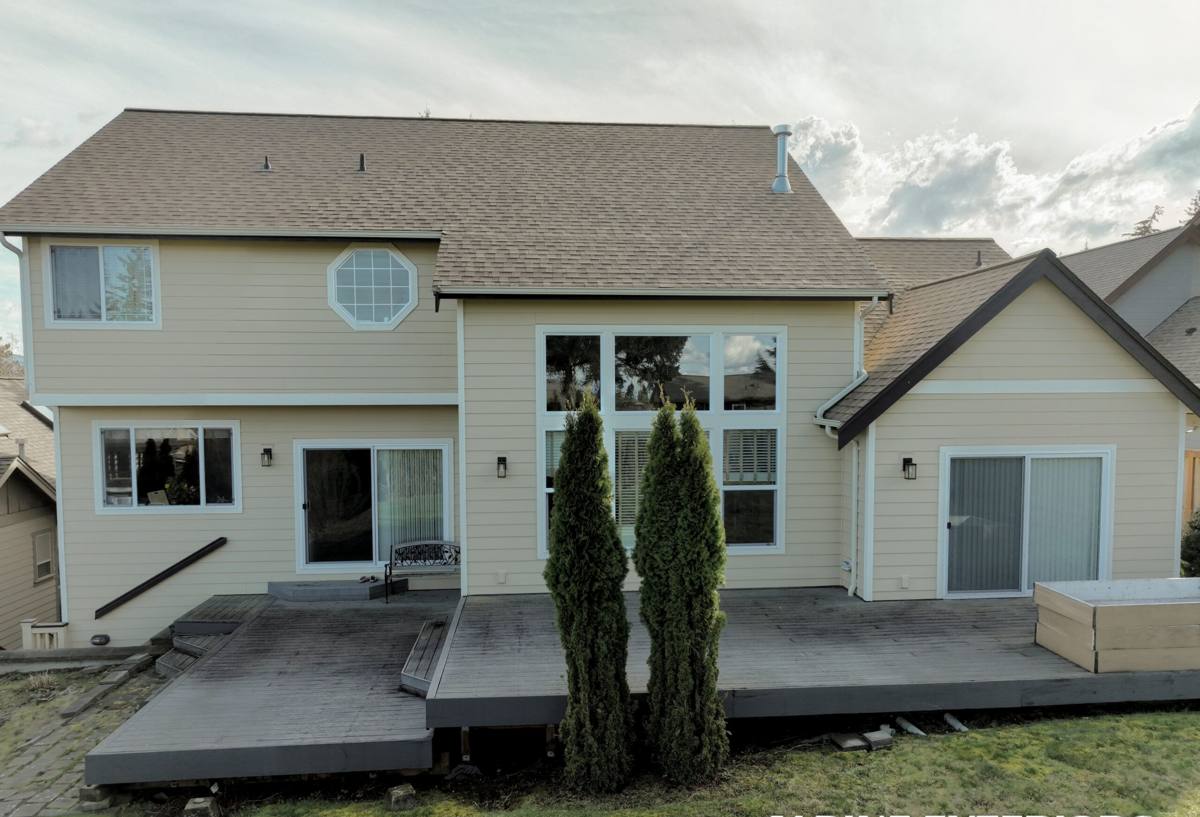
The Damage Patterns We See Most Often
Ledger Board and Ledger Flashing Failure
The ledger board — where the deck attaches to the house — is the single most important structural connection on most decks, and it's also the one most exposed to water intrusion if flashing was skipped or installed wrong. In a wet climate like this, a poorly flashed ledger can trap moisture against the house framing for years before anyone notices a soft spot or a stain on the siding below.
Post Bases and Footing Contact Points
Wherever a wood post sits on or near concrete, moisture wicks upward. Salt air accelerates corrosion on any exposed metal hardware at these connections, so post bases and anchor bolts are a common place to find rust and weakened wood side by side.
Joist Ends and Beam Pockets
Joist ends tucked into beam pockets or hangers don't get much airflow, which means they stay wet longer after rain. Combined with years of moss holding moisture against the wood, this is where we most often find rot that isn't visible from the top of the deck.
Surface Boards and Moss Growth
Moss on decking isn't just cosmetic — it holds moisture against the board surface and turns the deck into a slip hazard for a good chunk of the year in this region. Long moss season here means decks need either a material and finish that resist it or a maintenance routine that keeps up with it.
Signs Your Deck Needs Repair, Not Just a Wash
Pressure washing and a fresh coat of stain can make a tired deck look better for a season, but it won't fix structural problems underneath. Before recommending cosmetic work, we check for the signs that point to something more serious:
- Boards that feel spongy, springy, or noticeably softer underfoot in one area
- Visible gaps, cracking, or dark staining where the deck meets the house
- Rust streaks running down from post bases, hangers, or fastener heads
- Railings or stair stringers that wobble or flex more than they used to
- Persistent moss or algae that regrows within weeks of cleaning
- A musty smell coming from underneath the deck, especially after rain
- Fasteners backing out or leaving dark rust rings around the screw heads
Any one of these is worth a look before it gets worse. Structural issues in a wet climate rarely stay small — moisture finds the weak point and keeps working on it.
What a Correct Deck Repair Actually Involves
A repair that only replaces the boards you can see is a cosmetic fix, not a structural one. Our process always starts from the framing outward:
- Structural inspection first. We check the ledger connection, posts, beams, joists, and all hardware before touching a single deck board. A repair built on top of a compromised frame doesn't last.
- Isolate and confirm rot extent. We probe suspect wood to find where sound material starts, rather than guessing. Cutting out too little means the rot comes back; cutting out too much wastes your money.
- Fix the moisture source, not just the damage. If a repair is needed because of missing or failed flashing, poor drainage, or a post sitting in standing water, we correct that condition as part of the repair — otherwise the new wood fails the same way the old wood did.
- Replace with appropriately rated materials and fasteners. Ground-contact rated lumber, corrosion-resistant hardware, and proper flashing tape aren't upgrades in this climate — they're the minimum for a repair that's meant to last.
- Reassemble and finish. Boards are refastened to spec, edges sealed where end grain is exposed, and the finished repair is checked for level, drainage slope, and secure attachment before we call it done.
Repair or Replace? What Actually Drives That Decision
Homeowners often assume any rot means a full deck replacement. Often that's not true — but sometimes it is, and the honest answer depends on how much of the structure is affected and how old the deck already is.
| Situation | Typical Scope | What Drives the Decision |
|---|---|---|
| Isolated rot at one post base or joist end | Targeted structural repair | Localized damage with sound framing elsewhere; usually the most cost-effective path |
| Ledger board or flashing failure | Ledger repair/reflash, partial board removal for access | Depends on how far moisture traveled into the house framing |
| Widespread surface board rot, sound frame | Full deck board and railing replacement, frame reused | Frame is structurally solid; boards have simply reached end of life |
| Multiple structural members compromised | Full or near-full rebuild | Cost and risk of chasing repairs across an aging frame outweighs rebuilding |
| Deck built without proper flashing or code-compliant connections | Rebuild recommended | Underlying design flaw will keep producing the same failures regardless of repairs |
We'll always tell you plainly which category your deck falls into and why, including when a repair is genuinely the right call and a full rebuild would be overkill.
Materials: What We Use and Why
For repairs, we match materials to how the specific deck is used and how exposed it is to weather. Pressure-treated lumber remains the standard for framing repairs because it's rated for ground and moisture contact. For decking surfaces, we'll walk you through the trade-offs honestly: cedar has a look many homeowners want but needs regular refinishing to hold up to this much rain; composite decking costs more upfront but resists moss and moisture damage with far less maintenance. Neither is wrong — it depends on how much upkeep you want to do and what look you're after. All fasteners and structural hardware we install are corrosion-resistant, which matters more here than in a drier inland climate because salt air accelerates ordinary steel corrosion.
Our Process for Stanwood-Area Deck Repairs
We keep the process straightforward because most homeowners just want an honest answer and a job done right the first time:
- On-site inspection. We walk the deck, check the framing from underneath where possible, and probe any suspect areas.
- Plain-language assessment. You get a clear explanation of what's failing, why, and what it will take to fix — no pressure toward the more expensive option if a targeted repair will genuinely hold up.
- Written scope and estimate. You know what's included before work starts.
- Repair work. Structural fixes first, then surface and finish work, using materials rated for this climate.
- Final walkthrough. We check the repair with you before we consider the job finished.
Keeping a Repaired Deck From Needing the Same Fix Again
A good repair should buy you years, not a single dry season. A few habits make a real difference in a climate with this much rain and this long a moss season:
- Sweep leaves and debris off the deck surface regularly, especially in fall — trapped organic matter holds moisture and feeds moss
- Keep gutters and downspouts clear so runoff isn't draining directly onto or under the deck
- Reapply sealant or stain on wood decking on the schedule the product actually requires, not just when it looks faded
- Trim back overhanging branches where practical to let more light and air reach the deck surface
- Have the structure looked at every few years, not just when something visibly fails — catching a small issue early is always cheaper than catching it late
Why It Matters That We Already Work in This Area
Deck repair advice that works in a dry climate can be the wrong advice here. A crew that's worked on homes near Stanwood and throughout the Burlington area already knows which connections tend to fail first in this level of rain and salt air, which materials actually hold up, and which shortcuts show up as callbacks two winters later. That local track record shapes how we scope every repair — we're not learning this climate on your deck.
Get a Straight Answer on Your Deck
If your deck near Stanwood has soft spots, rust stains, persistent moss, or just feels less solid than it used to, we're glad to take a look and give you an honest read on what it needs. There's no pressure and no obligation — just a straightforward assessment and, if repair work makes sense, a clear estimate. Use the form below to request your free estimate.