 Burlington
 James Hardie Siding for Blanchard Homes
Blanchard sits in a quieter stretch of Skagit County just south of Burlington, where wooded hillside gives way to the flatter, tidal-influenced land near Samish Bay. It's a more spread-out, rural corner of the area than Burlington's commercial core — larger lots, more tree cover close to the house, and homes that sit exposed to weather coming off the water in a way a denser neighborhood further inland wouldn't. That mix of shade and salt air puts real, specific demands on a home's siding, and it's a big part of why we install one product, James Hardie fiber cement, on every job we take on in Blanchard rather than offering a menu of options and letting price decide.
This page covers what Blanchard's setting actually does to exterior siding over time, what a correctly installed Hardie system looks like on a home here, and how our process works from first walkthrough to final inspection.
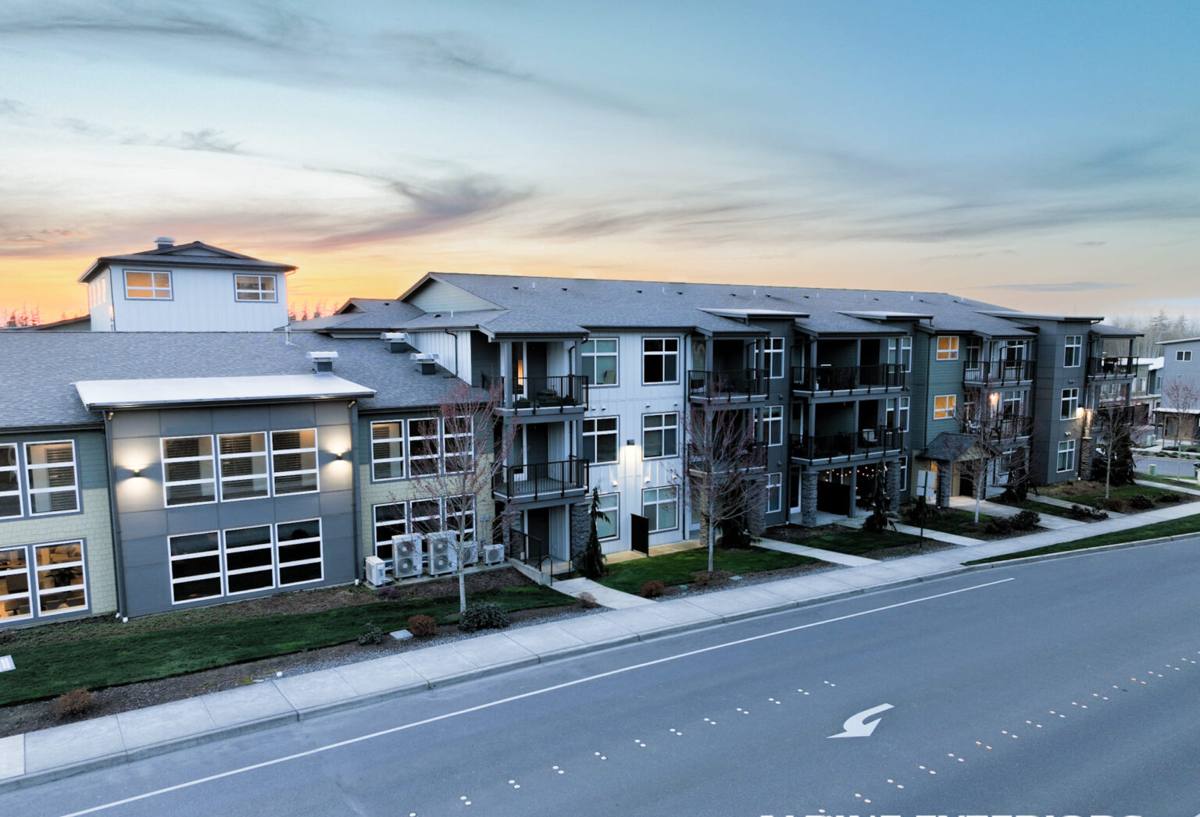
What Blanchard's Climate Does to Siding Over Time
No single storm or season causes the damage we see on older siding in this area. It's cumulative — years of salt exposure, wind-driven rain, and shaded, damp wall surfaces working on the same joints and finishes long after the house was built.
Salt Air Off Samish Bay
Homes in Blanchard sit close enough to Samish Bay and the broader Puget Sound system that salt-laden air is a regular condition, not an occasional one. Salt exposure accelerates corrosion on exposed fasteners and speeds up the breakdown of lower-grade paint and coatings. It's a slow process, which is exactly why it gets missed — by the time corrosion or finish failure is visible from the ground, it's often been building for years.
Driving Rain, Not Just Rainfall
Wind off the water regularly pushes rain sideways into wall assemblies instead of letting it fall straight down onto rooflines the way a still-air rain would. That matters because siding, flashing, and trim are engineered to shed water moving in a fairly predictable direction. Wind-driven rain finds the gaps and seams that a straight-down rain never would have reached, which is why installation detail at every joint matters more here than it would in a calmer inland climate.
A Moss Season That Doesn't Take a Break
Tree cover is common on Blanchard lots, and shaded, north-facing walls here stay damp long after a storm has passed. Moss thrives in exactly that condition, and once it takes hold on a wall surface it holds moisture against that surface for extended stretches — keeping shaded sections of a house wetter, longer, than sun-exposed walls two lots over ever get.
Why We Only Install James Hardie in Blanchard
We get asked fairly often about vinyl, LP SmartSide, Cemplank, Allura, primed spruce, and cedar, usually because a homeowner has seen one of them elsewhere or heard it costs less up front. Each of those products gets something right — vinyl is inexpensive, engineered wood takes paint well and installs quickly, cedar has real natural character — but each one carries a trade-off that we think matters too much in a climate like this one to put our name behind. That's a professional standard we hold to on every job, not a limited lineup we'd expand if a customer asked.
| Material | How It Behaves in This Climate | Ongoing Maintenance | Realistic Lifespan |
|---|---|---|---|
| James Hardie fiber cement | Non-combustible, dimensionally stable, doesn't feed moss growth | Low; factory finish resists fading and moisture | 30+ years with correct install |
| Vinyl | Can warp, fade, or grow brittle under sun and salt exposure over time | Low upfront, but hidden moisture behind panels is hard to catch | 20-30 years, variable |
| LP SmartSide (engineered wood) | Wood-strand core vulnerable at cut edges and fastener holes if moisture gets in | Moderate; edge sealing and caulk need regular upkeep | 15-25 years, climate-dependent |
| Cedar | Genuine natural material, but organic and absorbs moisture at every exposed surface | High; recoating, sealing, and moss treatment on a recurring cycle | 15-25 years with consistent upkeep |
Fiber cement handles the core problem differently because there's no organic substrate for moisture to work into, and it doesn't feed mildew or moss growth the way wood-based products can. James Hardie also builds its HZ product lines around specific regional exposure — sustained moisture and coastal air, in this case — rather than selling one generic formulation for the entire country. Paired with a factory-applied ColorPlus finish, cured under controlled conditions instead of painted on-site in whatever weather shows up that week, it holds color and resists cracking longer than a field-applied finish typically manages here.
What Correct Installation Involves
A good product installed carelessly performs like a mediocre one, and that gap shows up faster in a climate that punishes shortcuts. On a Blanchard home, a correct James Hardie install means every flashing lap, fastener, and joint is sized to what this specific site — shaded or sun-exposed, sheltered or open to the water — actually experiences, not to a generic national spec.
- House wrap or weather-resistive barrier installed and properly lapped before any siding goes up
- Flashing correctly integrated at every window, door, roofline, and penetration — not caulked over as an afterthought
- Proper clearance from grade, decks, and patios so the bottom edge of the siding stays out of standing moisture
- Fastener pattern and spacing matched to the specific Hardie product and this site's wind exposure
- Joint and seam treatment that accounts for each wall's actual sun and shade exposure, not a single blanket approach
- Factory-finished color preserved by priming cut edges before install rather than repainting the whole wall afterward
Skip any one of these on a Blanchard home and the wall may look fine for a year or two. The problems that follow — staining at seams, soft trim, premature finish failure on a shaded wall — take a few wet seasons to surface, which is exactly why they're easy for a rushed install to get away with until the homeowner is the one living with it.
The Hardie Product System We Install
James Hardie builds several siding profiles — traditional lap, vertical panel, board and batten, and shingle-style — and we help homeowners choose based on the look they want and how each profile performs on their specific walls. What doesn't change is the underlying system: fiber cement engineered for climate zone, ColorPlus factory finish available in a range of colors designed to hold up outdoors without repainting, and a transferable limited warranty that follows the house rather than just the original owner. For homes in Blanchard's marine-influenced setting, we specify Hardie's HZ5 product line, engineered specifically for regions with sustained moisture and freeze-thaw cycles, rather than a formulation built for a drier part of the country.
Color selection matters more here than homeowners sometimes expect. A factory-baked finish holds up against UV and salt exposure in a way that a field-applied coat generally doesn't, which is part of why we lean on ColorPlus options rather than treating paint color as an afterthought to be handled after installation.
Our Process for a Blanchard Siding Project
Walkthrough and Assessment
We start by looking at your specific walls — which ones take direct weather off the water, which sit shaded under tree cover, and whether the existing wall assembly already has moisture or rot issues that need addressing before new siding goes up. Installing over a hidden problem just buries it under new material.
Planning the Detail Work
Before any material is cut, we plan out flashing details, corner treatments, and how the siding will meet windows, trim, and rooflines. Working this out on paper first avoids field improvisation, which is where corners tend to get cut on a rushed job.
Installation to Manufacturer Spec
Every fastener, gap, and flashing lap follows James Hardie's published installation requirements for this climate zone. That's what keeps the manufacturer's warranty intact, and it's also what determines whether the wall performs for decades rather than years.
Final Walkthrough
We walk the finished job with you, cover what little maintenance Hardie siding actually needs, and make sure you know what to look for if you ever want to check the wall yourself down the road.
Cost Factors for James Hardie Siding in Blanchard
We don't publish blanket per-square-foot pricing because it wouldn't be an honest number — two homes with similar square footage can land in very different places depending on their condition and layout. The factors that actually move the number are consistent enough to lay out plainly.
| Factor | How It Affects Cost |
|---|---|
| Existing wall condition | Hidden moisture or rot found during tear-off adds repair scope before new siding can go on |
| Home size and wall complexity | More corners, gables, and penetrations mean more flashing and labor time |
| Siding profile chosen | Board-and-batten or heavier trim packages run higher than standard lap siding |
| Site access | Tree cover, sloped lots, or tight access common in this area can add labor time |
| Color and finish package | Standard ColorPlus colors versus premium or custom-matched finishes affect material cost |
Why Hire a Crew That Already Works Blanchard
A crew that installs siding across Blanchard and the surrounding Burlington area regularly sees how differently a shaded, tree-covered wall ages compared to an open wall facing the water two lots over — and adjusts flashing, joint treatment, and fastener choice accordingly. That kind of judgment comes from doing this work repeatedly in this specific setting, not from reading a general installation guide written for the whole country. It also means someone local is reachable years down the road if a warranty question or a flashing detail needs a second look, rather than a crew that's moved on to another region entirely.
Before hiring anyone for Hardie siding work here, it's worth confirming a few basics: current licensing, bonding, and insurance; manufacturer training on James Hardie products specifically; a clear explanation of how they'll handle flashing at every window and door; and a written scope of work you can actually read and understand before signing anything.
Get a Free, No-Pressure Estimate
If you're weighing James Hardie siding for a home in Blanchard, we're happy to walk the property, look at how your specific walls are exposed to sun, shade, and weather off the water, and give you a straightforward, no-pressure estimate. There's a form below — reach out and we'll set up a time to take a look.