 Burlington
 Building Decks for Stanwood's Coastal Climate
A deck built to a generic spec doesn't hold up the same way in Stanwood as it would somewhere inland. This stretch of Skagit County sees salt-laden air off the water, long stretches of driving rain, and a moss season that can run most of the year in shaded spots. Wood swells and dries out repeatedly through the wet months, fasteners corrode faster near the coast, and anything with poor drainage stays damp long enough to start growing something green. None of that means a deck can't last decades here — it means the details that get skipped in a fair-weather climate can't get skipped in this one.
We build decks for homes in and around Stanwood the same way we'd want one built for our own house: correct framing, hardware rated for the exposure, and drainage that actually moves water off the structure instead of letting it sit. That's a different job than framing a deck in a dry climate and hoping the finish coat does all the work.
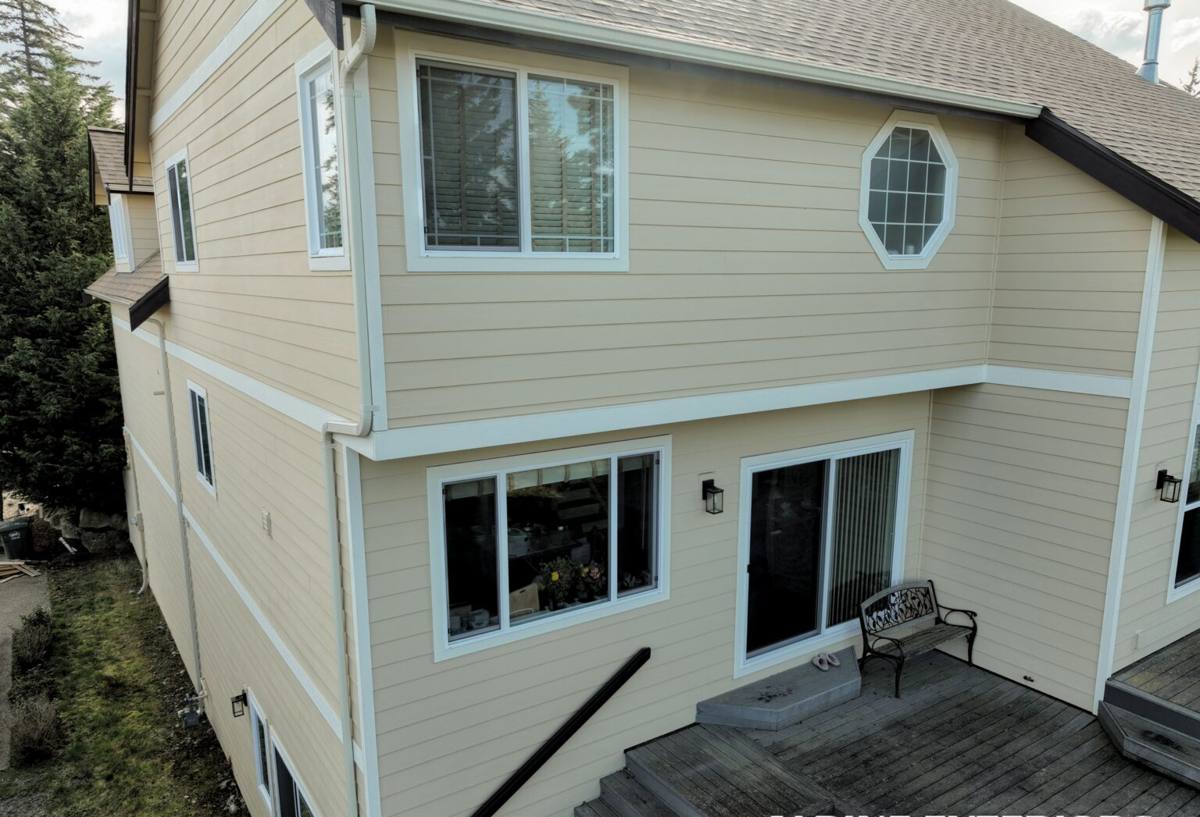
What a Deck Actually Needs to Hold Up Here
Framing and Fasteners That Won't Corrode
Salt air accelerates corrosion on anything less than fully rated hardware. Standard electro-galvanized screws and joist hangers can start showing rust streaks within a season or two this close to the water — and once hardware starts corroding, it weakens exactly the connections holding the deck to the house and the posts to the footings. We frame with pressure-treated lumber rated for ground contact where it touches masonry or soil, and we fasten with stainless steel or heavy hot-dip galvanized hardware sized for coastal exposure, not the minimum the lumber tag allows.
Ledger Attachment and Water Management
Most deck failures don't start in the decking boards — they start at the ledger board, where the deck attaches to the house. If that connection isn't flashed correctly, driving rain gets pushed sideways by wind and works its way behind the ledger, into the rim joist, and eventually into the wall framing. In a climate with this much sustained rainfall, that's not a slow problem — it shows up as rot within a few years. We flash every ledger connection with proper step flashing and a drainage gap, so water sheds away from the house instead of pooling against it.
Choosing the Right Decking Material
There's no single "best" decking material — there's the right material for how the deck will be used, how much upkeep the owner wants to do, and how exposed the deck is to sun, shade, and moisture. Here's how the common options actually perform in this climate:
| Material | How it handles salt air & rain | Maintenance | Cost tier |
|---|---|---|---|
| Pressure-treated wood | Handles moisture well if properly sealed; needs re-coating to resist splitting and graying | Annual cleaning and re-sealing recommended | $ |
| Cedar | Naturally rot-resistant but softer; can cup or check if left unsealed in constant wet-dry cycles | Sealing every 1-2 years | $$ |
| Capped composite | Resists moisture absorption well; the cap layer sheds algae growth better than raw wood | Periodic washing, no sealing or staining | $$ |
| PVC / cellular decking | Fully moisture-resistant; performs consistently through wet and dry cycles | Occasional washing | $$$ |
For homeowners who want the lowest ongoing maintenance and don't mind the higher upfront cost, composite or PVC decking tends to be the better long-term match for this climate. For homeowners who like the look and feel of real wood and are willing to keep up with sealing, treated lumber or cedar can still perform well — it just requires more discipline about maintenance than it would in a drier region.
Railings, Stairs, and Hardware Exposed to Salt Air
Railings and stair stringers take more direct weather exposure than the deck surface itself, and they're structural — a railing that's failing is a safety issue, not just a cosmetic one. We use fasteners and connectors rated for the same exposure as the framing, and we pay attention to end grain and post-base connections, since those are where moisture collects first. Metal railing components get specified for coastal-grade corrosion resistance rather than standard interior-rated hardware, which isn't built for this kind of sustained exposure.
Moss, Algae, and Long-Term Maintenance
Shaded decks, north-facing decks, and decks under tree cover in this area deal with moss and algae for a good part of the year, not just a few weeks in spring. Moss holds moisture against the decking surface, which is exactly the condition that shortens the life of both wood and composite boards. A few things make a real difference over the life of the deck:
- Building in enough gap spacing between boards so water and debris don't sit trapped between them
- Keeping the underside of the deck ventilated rather than fully enclosed, so moisture has somewhere to go
- Choosing a surface finish or material that doesn't hold a film of moisture where moss can take hold
- Simple seasonal upkeep — sweeping off debris and washing down the surface before moss gets established, rather than after
None of this is complicated, but it has to be planned into the build. A deck with tight board spacing and no airflow underneath will grow moss no matter what material it's built from.
Our Process, Start to Finish
We keep the process straightforward because a deck project shouldn't feel like a mystery to the homeowner paying for it.
- On-site assessment — we look at the ledger location, grade, drainage, sun exposure, and how the deck will actually be used before recommending anything.
- Material and layout discussion — we walk through decking options, railing style, and layout based on the site conditions, not a one-size template.
- Permitting — we handle the permit application and inspections required for the jurisdiction the home falls under.
- Framing and structural work — footings, posts, beams, and joists get built to the load and span requirements for the deck's size and use.
- Decking, railing, and finish work — surface material and railings are installed with attention to drainage, spacing, and fastening detail.
- Final walkthrough — we go over the finished deck with the homeowner and cover basic care for whatever material was installed.
Permits, Footings, and Code Basics for This Area
Most decks attached to a house and elevated above a certain height require a building permit, inspection of the footings before they're poured, and a guardrail once the walking surface reaches a certain height above grade — the exact thresholds depend on the local jurisdiction and current code cycle. Footings also need to be sized and set to the correct depth for the soil conditions on site, which can vary block to block in this area depending on drainage and grade. We pull the permits and schedule the inspections as part of the job, so the homeowner isn't left tracking down paperwork or wondering whether an inspector is going to flag something after the deck is already built.
Why It Matters to Hire a Crew That Already Works in Stanwood
A contractor who mostly builds decks in drier inland climates isn't necessarily going to over-spec the hardware, flash the ledger the same way, or think about moss and drainage the same way a crew working the Skagit County coastline does every week. It's not a matter of skill — it's a matter of what problems you've actually seen show up two or three years after the fact. We've seen what happens when a ledger isn't flashed right in this rain, and we've seen which decking materials actually hold up to the moss and salt air here versus which ones just look good on install day. That's the difference between a deck built to a spec sheet and a deck built for this specific climate.
Checklist: What to Ask Before You Hire a Deck Builder
- Will the ledger board be step-flashed, and how will water be kept from getting behind it?
- What grade of fastener and hardware will be used, and is it rated for coastal exposure?
- How is footing depth being determined for this specific site?
- What board spacing and underside ventilation will be built in to manage moisture and moss?
- Who is pulling the permit, and who is present for the inspections?
- What maintenance will this material actually require once it's installed?
If a contractor can't answer these clearly, that's worth noticing before any work starts.
If you're planning a new deck or replacing one that's showing its age, we're happy to take a look and put together a straightforward, no-pressure estimate — just fill out the form below and we'll go from there.