 Burlington
 Metal Roofing Built for Sedro-Woolley's Climate
Sedro-Woolley sits in a part of Skagit County that asks a lot of a roof. Moist marine air moves in off the Puget Sound lowlands and settles into the valley, tree cover from the surrounding foothills keeps roof surfaces shaded and damp for long stretches of the year, and the rain here isn't the gentle kind — it's driving, sideways, week-after-week rain that finds every weak seam and worn-out flashing detail. A roof that's merely "installed" is not the same as a roof that's installed correctly for this environment. That difference shows up five, ten, and twenty years down the road, usually right around the time a homeowner is dealing with a leak they didn't see coming.
Metal roofing has become a popular answer for homes in this area because, done right, it holds up to exactly the conditions that wear out other roofing materials fastest here: standing water, moss colonization, and the freeze-thaw and expansion cycles that come with a marine climate. But "metal roof" isn't one product — it's a category with real differences in panel type, fastening method, coating, and gauge, and the wrong combination for a Sedro-Woolley property can underperform just as badly as any other roofing material installed without local judgment.
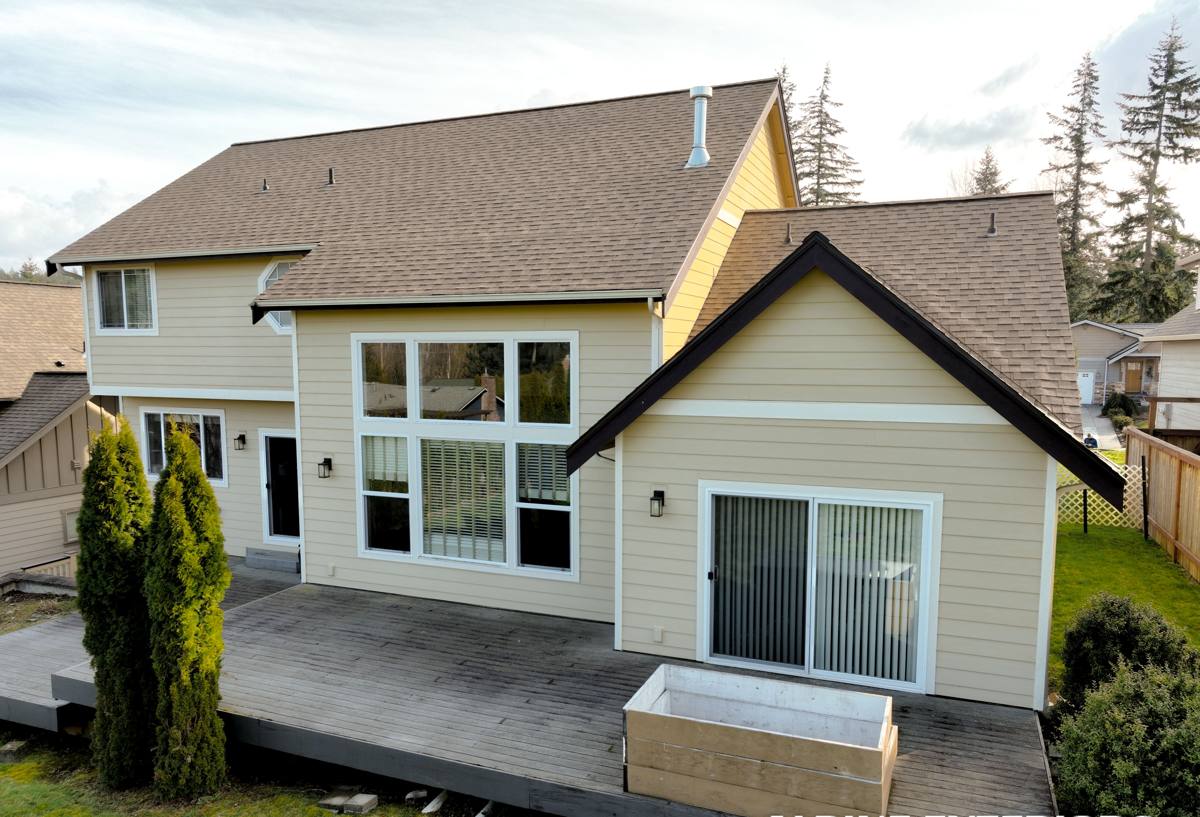
What the Local Climate Actually Does to a Roof
Moss and Organic Growth
Sedro-Woolley's tree cover and consistent shade in many neighborhoods mean roof surfaces often stay damp long after a storm has passed elsewhere. On asphalt shingles, that moisture sits in the granule surface and gives moss spores exactly what they need to take hold. Once moss establishes, it holds water against the roofing material continuously, which accelerates rot in the roof deck underneath. Metal sheds water fast and offers almost nothing for moss to grip onto, which is the single biggest reason it performs better long-term in shaded, damp lots.
Driving, Sustained Rain
Skagit County doesn't just get rain — it gets long stretches of it, often wind-driven, which pushes water up under laps, around penetrations, and into any gap in flashing that a fair-weather installation might get away with. Every seam, fastener, and transition on a metal roof has to be detailed to shed water under pressure, not just under a straight vertical drip.
Marine and Salt-Influenced Air
Even away from the immediate waterfront, the lowlands around Burlington and Sedro-Woolley sit within reach of moist, salt-influenced air moving in from the Puget Sound region. Over years, that air accelerates corrosion on unprotected steel — fasteners, cut edges, and lower-grade coatings are where it shows up first. It's a slow process, which is exactly why it's easy to under-spec a roof that looks fine for the first several years and then starts showing rust streaks at every screw head.
Standing Seam vs. Exposed-Fastener Panels
The first real decision on a metal roof project is panel type. Both have a legitimate place in Skagit County — the right choice depends on the roof's pitch, budget, and how long the homeowner plans to own the property.
| Feature | Standing Seam | Exposed-Fastener Panel |
|---|---|---|
| How it's fastened | Hidden clips under the seam, no exposed screws on the field of the panel | Screws driven through the panel face into the deck or purlins |
| Long-term weak point | Very few — seams are mechanically locked and sealed | Screw gaskets compress and harden over time and need eventual re-tightening or replacement |
| Typical service life | 40–60+ years with proper install | 25–40 years, largely dependent on fastener maintenance |
| Upfront cost | Higher material and labor cost | More budget-friendly per square |
| Best fit | Primary residences, steeper or more visible rooflines, long-term owners | Shops, outbuildings, additions, budget-conscious re-roofs |
Neither option is wrong — it's about matching the panel system to the building and the homeowner's plans. We'll walk through both honestly during an estimate rather than defaulting to whichever one carries a better margin.
What a Correct Metal Roof Installation Actually Involves
Underlayment and Ice-and-Water Protection
A proper metal roof isn't just panels on plywood. Eaves, valleys, and any low-slope transitions get a self-adhering ice-and-water membrane underneath, with a high-temperature synthetic underlayment across the rest of the field. In a climate that stays wet for months at a time, this layer is what protects the deck if wind ever drives water past the panel laps — it's not optional, and it's one of the first places a corner-cutting install shows itself later.
Ventilation
Metal roofs need the roof cavity below them to breathe. Without balanced intake and exhaust ventilation, condensation can form on the underside of the panels from temperature swings between a cold roof surface and warm, moist attic air — a problem that has nothing to do with rain getting in from outside and everything to do with trapped moisture from inside. We check and correct ventilation as part of every metal roof project, not as an add-on.
Flashing, Fasteners, and Closures
Valleys, chimneys, skylights, and wall transitions are where roofs actually fail — the open field of panels rarely is. Flashing has to be formed to match the panel profile, closure strips seal the ridge and eave gaps against wind-driven rain and pests, and fasteners need to be corrosion-rated to match the panel material so two dissimilar metals aren't sitting against each other and accelerating rust at every contact point.
Snow and Ice Management at Entries
Metal sheds snow and ice in sheets rather than holding it, which is good for the roof but can be a hazard right over a walkway, porch, or driveway. Where that matters, snow retention hardware gets planned into the layout before panels ever go up — not bolted on as an afterthought.
Choosing the Right Gauge, Coating, and Finish
Two roofs can look identical from the ground and perform very differently ten years in. The metal's gauge (thickness), base coating, and paint finish are what determine how it holds up to this specific climate.
- Gauge: Heavier gauge (26 or 24) resists denting and oil canning better and is worth the upgrade on visible, steep-slope roofs.
- Base metal coating: Galvalume or heavier-galvanized steel resists corrosion far better than lighter mill-run coatings, which matters given the region's moist, salt-influenced air.
- Paint system: A PVDF-based (Kynar-type) finish holds color and chalk-resistance far longer under constant UV and rain cycling than a basic polyester finish.
- Color and profile: Darker colors and certain profiles can accentuate oil canning (a wavy, cosmetic panel distortion) — panel layout and clip spacing are planned to minimize it, especially on longer runs.
We spec every roof to the specific building rather than offering one default package — a detached shop and a primary residence in the same yard often call for different specifications.
Our Process, Start to Finish
- On-site evaluation: We walk the existing roof, check the deck condition, note tree overhang and shading, existing ventilation, and any trouble spots like valleys or past leak history.
- Honest system recommendation: Based on the roof's pitch, exposure, and your plans for the home, we recommend a panel type and spec — including the trade-offs — rather than a one-size answer.
- Written estimate: A clear, itemized proposal covering tear-off (if needed), underlayment, panels, flashing, ventilation work, and cleanup.
- Deck prep and underlayment: Any soft or damaged decking is addressed before a single panel goes on — covering over a bad deck is how good metal roofs fail early.
- Panel installation: Panels, flashing, and closures installed to manufacturer spec and matched to the local wind and rain exposure of your specific site.
- Final walkthrough and cleanup: Magnetic sweep for stray fasteners, full site cleanup, and a walkthrough so you know what was done and what to expect going forward.
Maintenance and What to Expect Over the Years
One of the real advantages of metal roofing in this climate is how little ongoing maintenance it needs compared to shingles — but "little" isn't "none." A short annual check keeps small issues from becoming deck-level problems.
- Clear needles, leaves, and debris from valleys and around penetrations, especially on lots with heavy tree cover.
- Check and clean gutters so water isn't backing up under the eave edge during heavy rain events.
- Look for any panel fasteners (on exposed-fastener systems) that have backed out or show early rust staining.
- Watch for scuffed paint finish around any foot traffic areas, such as near satellite mounts or solar attachments.
- Confirm attic ventilation isn't blocked by insulation or storage, especially after any attic work.
Beyond that, most standing seam roofs in this region go decades between any real service call — which is a big part of the cost case for choosing metal in the first place.
Why a Crew That Already Works Sedro-Woolley Matters
A metal roof spec that works fine in a dry inland climate can be the wrong spec here. Knowing which neighborhoods sit under heavier tree canopy, how local wind exposure behaves across a given roofline, and which flashing details actually hold up through a full Skagit County wet season isn't something that comes from a manufacturer's install manual alone — it comes from having done the work here, roof after roof, through actual winters. That local track record shapes real decisions: how much ice-and-water membrane goes down at the eaves, how ventilation gets balanced on a shaded lot, and which fastener and coating combination is worth the upgrade for this specific property rather than a generic one.
It also matters for the practical side of the job — knowing local permitting expectations, being available for a warranty check or a quick question after the job is done, and not disappearing once the final invoice is paid. A roof is a long-term investment; the contractor behind it should be a long-term local presence too.
Cost Factors to Expect
Metal roofing costs more upfront than asphalt shingles, and the exact number depends on several factors specific to your roof and site. Rather than quoting a number that doesn't apply to your home, here's what actually moves the price:
| Factor | Why It Affects Cost |
|---|---|
| Panel type | Standing seam runs higher in material and labor than exposed-fastener panel systems |
| Roof complexity | Valleys, dormers, and multiple roof planes require more flashing and labor time |
| Tear-off vs. overlay | Removing an old roof and repairing the deck adds cost but is often the honest recommendation on older homes |
| Gauge and coating | Heavier gauge steel and premium PVDF finishes cost more but extend service life significantly |
| Access and pitch | Steep or hard-to-access rooflines require more safety setup and time |
We break all of this down in plain language during your estimate, so you understand exactly what you're paying for and why — not just a bottom-line number.
If you're weighing a metal roof for a Sedro-Woolley property, we're glad to come take a look and give you an honest read on what your roof actually needs. Use the form below to request a free, no-pressure estimate.