 Burlington
 Storm Damage Roof Repair for Samish Island's Waterfront Exposure
Samish Island sits out on the water, a low-lying peninsula reached by a narrow causeway across the tide flats of Samish Bay, and that geography means the roofs out there take a different kind of beating than a roof a few miles inland in Burlington. There's very little standing between an island roof and whatever a Pacific storm is doing that day — no ridge of hills to slow the wind down first, no buffer of other rooftops to break up gusts before they arrive. When a storm rolls through Skagit County, homes on Samish Island are usually first in line and last to catch a break.
This page covers one specific job: repairing storm damage on roofs out on Samish Island, done correctly, by a crew that already understands what this stretch of water does to a roof over time. Not a generic storm-repair page — the details below reflect what we actually see out here, storm after storm.
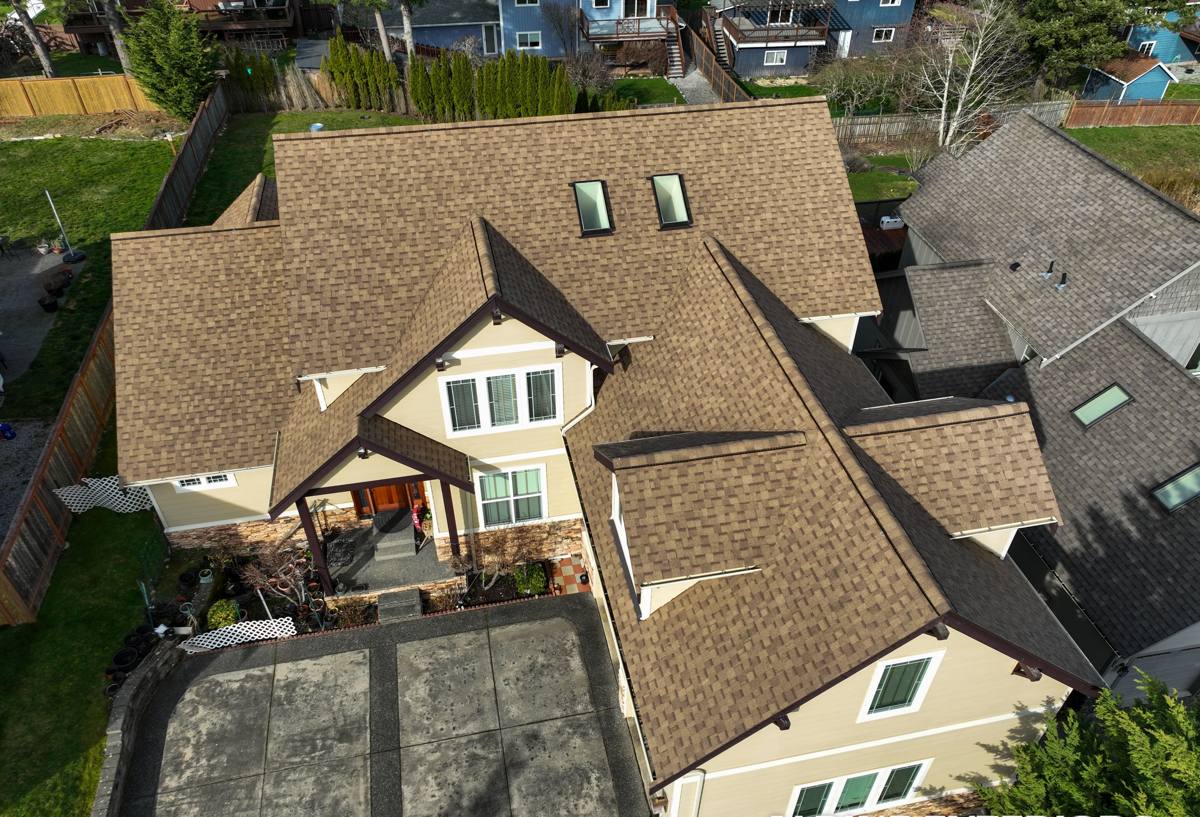
What This Corner of Skagit County's Weather Does to a Roof
Every roofing material has a service life on paper, and then there's what actually happens to it on an exposed, waterfront property in this part of Washington. Three things drive most of the storm-related repair calls we get on Samish Island.
Salt Air and Corrosion
Salt-laden air moving off Samish Bay accelerates corrosion on anything metal on a roof — nails, flashing, vent caps, gutter hardware. A fastener or flashing detail that would hold up for decades a few miles inland can start pitting and weakening years sooner out here, and once fasteners lose their grip or flashing metal thins out, a roof that looks fine from the ground becomes far more vulnerable the next time real wind hits it.
Wind-Driven Rain Off the Water
Rain out here rarely falls straight down. Storms moving in off open water push rain sideways and upward, under shingle edges, ridge caps, and flashing laps that were only ever designed to shed water falling straight down. That's exactly the kind of driving rain that finds the one lifted shingle tab or the one flashing seam that isn't sealed quite right, and turns a small, invisible gap into a leak inside the house.
A Long Moss Season
Between marine humidity and the tree cover common around island properties, moss has a long season to work with here — often most of the year on shaded, north-facing slopes. Moss holds moisture against the roofing material long after a storm has passed, which is part of why storm damage on an older, moss-covered slope tends to run worse than the same wind event would do to a newer, cleaner roof.
The Storm Damage We See Most Often Out Here
Wind-Lifted, Torn, and Missing Shingles
Sustained wind and gusts off open water lift shingle tabs and, in the worst cases, tear whole shingles loose or off the roof entirely. Even shingles that survive a storm intact often come out of it with broken seals, meaning they're no longer bonded flat and are primed to lift again in the next blow even if nothing looks obviously wrong from the ground today.
Flashing, Vent, and Penetration Failures
Flashing around chimneys, skylights, plumbing vents, and roof-to-wall transitions is where storm leaks usually start, because flashing is metal, it's a seam, and it's exactly the kind of detail that both salt air and wind-driven rain go after first. A flashing failure rarely announces itself with an obvious hole — it usually shows up as a slow stain on a ceiling weeks after the storm that actually caused it.
Fallen-Limb and Wind-Borne Debris Damage
Mature evergreens are common on and around island properties, and a big wind event brings limbs and debris down with it. Impact damage can punch through shingles and underlayment, crack decking, and knock flashing out of position, and it's sometimes worse than it looks from the ground until someone actually gets up on the roof to check the decking underneath.
Emergency Stabilization vs. a Full Repair
Right after a storm, the goal is simple: stop water from getting into the house. That usually means a tarp or temporary board-up over the damaged area, installed safely and correctly so it actually holds through the next round of wind instead of becoming its own hazard. Emergency stabilization is not the repair itself — it buys time so the full repair can be scoped and done correctly instead of rushed in the middle of bad weather. We're upfront about that distinction on every storm call: a tarp gets you through the week; it doesn't replace a proper assessment and repair.
What a Correct Storm Repair Actually Involves
A storm-damage repair that's done right goes well beyond patching the one spot that's obviously damaged.
- Full-roof assessment, not just the damaged spot: Wind damage is rarely limited to one visible area — we check the whole roof, because a storm that lifted one section usually stressed seals and flashing elsewhere too.
- Decking check: Any area with a suspected leak or impact gets checked for soft, wet, or rotted decking underneath, since covering damaged decking with new shingles just hides a problem that keeps getting worse out of sight.
- Matching materials: Where shingles need replacing, we match the existing product as closely as we can, so the repair blends in and performs consistently with the surrounding roof rather than creating a patchwork of mismatched ages and materials.
- Flashing rebuilt, not just re-caulked: Failed flashing gets replaced and properly integrated, not smeared over with sealant as a shortcut — caulk is a short-term fix, correctly lapped flashing is the actual repair.
- Ridge and hip check: Ridge caps take the most direct wind exposure on the whole roof and are often the first thing to lift in a storm; every repair includes checking that ridge and hip lines are fully sealed and fastened.
Comparing Your Repair Options
Not every storm-damaged roof needs the same response. What's right depends on the age of the roof, how widespread the damage is, and what we find underneath once we actually get a look.
| Option | What It Addresses | Typical Timeline | When It's the Right Call |
|---|---|---|---|
| Emergency tarp / board-up | Stops active water intrusion immediately | Same day to next day | Right after a storm, before a full assessment can happen |
| Localized shingle & flashing repair | Isolated wind or impact damage, sound decking | About a day, once materials are matched | Damage is contained to one area and the rest of the roof is in good shape |
| Partial slope / section replacement | Wider wind damage, or a slope with shingles already worn beyond the storm damage itself | 1-3 days | Damage or shingle age is concentrated on one or two exposed slopes |
| Full roof replacement | Storm damage on a roof that was already near the end of its service life | Several days to about a week | The storm exposed that the whole roof, not just one spot, is due |
We'll always tell you honestly which category your roof falls into, including the times when a smaller repair really is the right call rather than pushing a full replacement you don't need yet.
Signs Your Roof Needs Storm Damage Repair Now
- Shingles you can see are curled, cracked, lifted, or missing after a windstorm
- Granules collecting in gutters or at downspout outlets after heavy wind or rain
- A new water stain on a ceiling or in the attic following a storm
- Visible daylight coming through the roof deck when you look up from inside the attic
- Flashing around a chimney, skylight, or vent that looks bent, lifted, or separated
- Moss buildup on a slope that's also showing soft or discolored shingles underneath it
- Debris or limb strikes on the roof surface, even if no leak has shown up yet
Working With Your Insurance Adjuster
Most storm damage repairs on Samish Island involve a homeowner's insurance claim, and we treat that process as part of the job, not an afterthought. We document the damage thoroughly — photos, notes on what we find at the decking and flashing, not just the visible shingles — so you have a clear, honest record to bring to your adjuster. We're glad to meet an adjuster on-site and walk them through exactly what we found. What we won't do is inflate a scope of work to chase a bigger claim number; our job is to give you an accurate, defensible picture of what the storm actually did, and let that stand on its own.
Our Process, and Why Hiring a Crew That Already Works Samish Island Matters
How We Handle a Storm Call, Start to Finish
- You call, we prioritize active leaks: Active water intrusion gets scheduled ahead of cosmetic-only damage.
- Emergency stabilization if needed: A tarp or board-up goes on quickly and correctly if the damage is actively letting water in.
- Full inspection and documentation: We get up on the roof, check the whole surface and the decking underneath, and document what we find.
- Written scope and honest options: You get a clear explanation of what's damaged, what it will take to fix it, and which repair option above actually fits your roof.
- The repair itself: Matched materials, rebuilt flashing, and a check of the ridge and hip lines, done to hold up through the next storm, not just look fine until then.
- Final walkthrough: We show you what was done and answer questions before we consider the job finished.
Why Local Experience Matters on an Island Roof
A crew that already works Samish Island has already seen how fast salt air pits an underspecified fastener, which flashing details fail first when wind comes straight off the bay, and how much worse moss-related damage gets on a shaded slope that never fully dries out between storms. That's the kind of knowledge that shows up in small decisions during a repair — which details get extra attention, which shortcuts we won't take — and it's not something a crew unfamiliar with this specific stretch of water necessarily picks up on the first visit. It also means being reachable if a question comes up after next storm season, not just after this one.
If a recent storm left your Samish Island roof with damage, or you're just not sure whether what you're seeing needs attention, we're glad to take a look and put together a free, no-pressure estimate. Use the form below to get in touch.