 Burlington
 Why Samish Island Siding Wears Differently
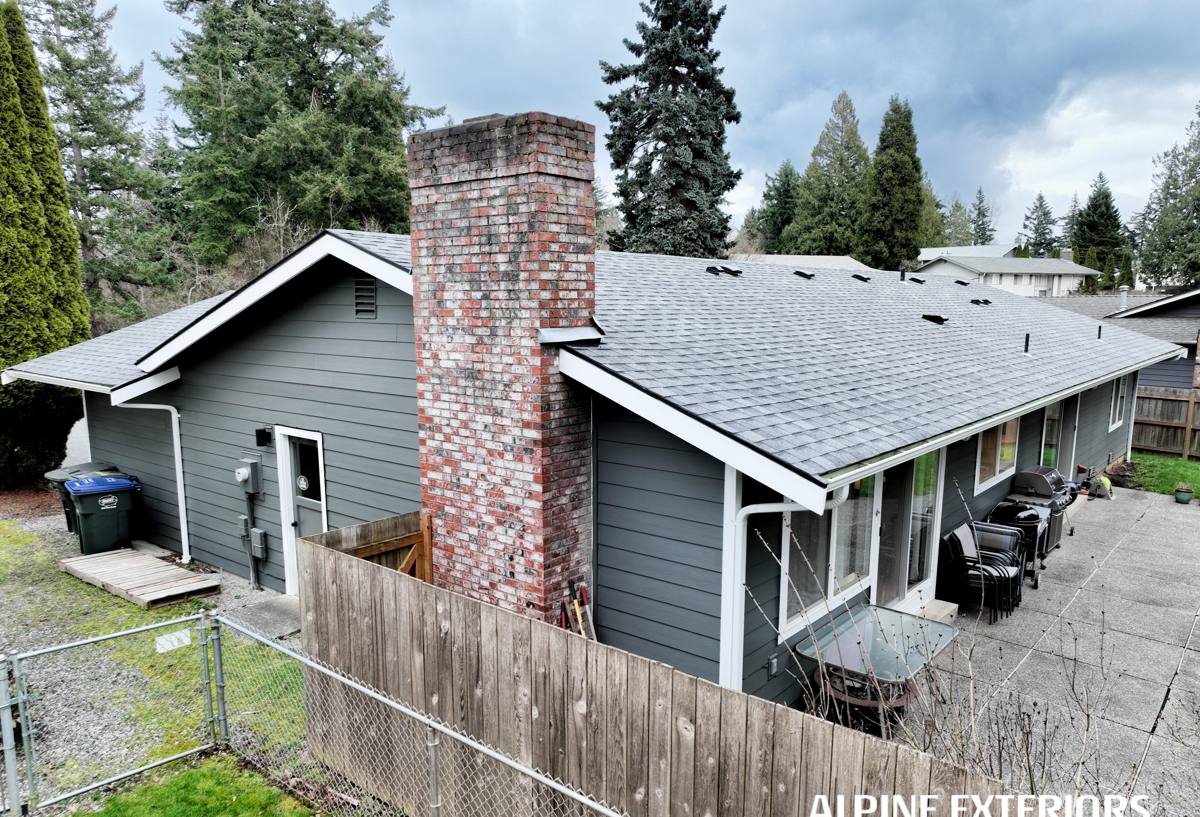
Samish Island sits out where Skagit County meets the water, and that location changes how siding ages. Homes here take on a combination most inland Burlington properties never see: salt-laden air off the bay, wind-driven rain that hits walls at an angle instead of falling straight down, and a moss season that can run most of the year in the Pacific Northwest's wet, shaded conditions. Any one of those is manageable. All three together, applied to the same wall assembly year after year, is what actually breaks siding down.
Salt air is corrosive to fasteners and trim hardware, and it also holds moisture against surfaces longer than dry inland air does. Driving rain doesn't just wet the siding face — it gets pushed up under laps, around trim, and into any gap that ordinary vertical rain would never reach. And moss, once established on a north-facing or shaded wall, holds water against the material continuously, which is a different kind of exposure than intermittent rain. Repairing siding on Samish Island means understanding that combination, not just patching whatever's visibly damaged.
What Actually Fails First
Before we talk about repair, it helps to know what typically goes wrong on this kind of site. Most failures aren't random — they follow a pattern tied to the local exposure.
- Fastener corrosion: nails or staples that rust and lose grip, letting boards work loose or sag over time
- Caulk and sealant breakdown: joints and trim seams that dry out, crack, or separate faster near the water
- Moss and algae colonization: shaded, north- or west-facing walls where moisture never fully evaporates between rains
- Swollen or delaminating boards: common on moisture-sensitive materials once water gets behind the face
- Trim and butt-joint gaps: small openings that let driving rain track behind the cladding instead of running off it
- Paint or finish failure: field-applied coatings that chalk, peel, or fade faster under salt exposure than a factory finish does
Why This Matters for a Repair Decision
A siding repair that only addresses the visible symptom — replacing one cracked or stained board — without checking why that board failed usually needs to be redone within a few years. On a site like this, the underlying cause is almost always moisture intrusion or fastener failure, and if that's not corrected, the replacement board fails the same way the original did.
What a Correct Repair Actually Involves
A repair done right on Samish Island isn't just swapping a damaged plank for a new one. It's a short diagnostic process followed by a fix that addresses the cause, not just the symptom.
1. Diagnose Before Touching Anything
We look at the damaged area and the wall assembly around it — house wrap or building paper condition, flashing at windows and trim, fastener pattern, and whether water has tracked sideways from the visible damage point. On a coastal site, damage often shows up several feet from where the actual entry point is, because water travels behind the cladding before it finds a path out.
2. Confirm the Cause, Not Just the Symptom
If the underlying house wrap or flashing detail is compromised, replacing the siding alone won't hold. We address the water management layer first — that's the part that actually determines whether the repair lasts through another wet Skagit County winter.
3. Match or Replace Correctly
Where siding is sound overall and only a section is damaged, we match the existing profile and finish as closely as possible. Where the surrounding material shows the same early-stage moisture or fastener issues as the failed section, patching one spot and leaving the rest to fail on its own schedule isn't a service we'll recommend — we'll tell you honestly whether a broader repair or a full section replacement makes more sense.
4. Reseal and Reinforce Vulnerable Points
Trim joints, butt seams, and penetrations get proper sealant and flashing detail, not just a bead of caulk over the gap. On a site exposed to driving rain, these details matter more than they would on a sheltered inland wall.
Repair vs. Replace: How We Help You Decide
Not every damaged wall needs full replacement, and not every repair is worth doing instead of replacing. Here's how we typically walk through that decision with homeowners.
| Situation | Usually Repair | Usually Replace |
|---|---|---|
| Isolated impact damage (one or two boards) | Yes, if surrounding material is sound | Only if matching material is unavailable |
| Moisture damage confined to one wall section | Yes, with water management fix | If damage extends behind multiple courses |
| Widespread swelling, delamination, or fastener failure | Rarely a lasting fix | Yes |
| Siding is 20+ years old and failing in multiple spots | Short-term only | Yes, better long-term value |
| Moss staining without material failure | Yes — cleaning and resealing | No |
When a home has failed in several unrelated spots at once, that's usually a sign the material or original installation wasn't suited to this exposure in the first place — not that the house has been unlucky.
Why Material Choice Affects the Repair Itself
What the existing siding is made of changes what a repair can realistically accomplish. Wood-based and some engineered wood products absorb moisture at cut edges and fastener penetrations, which is exactly where salt air and driving rain do the most damage on a site like Samish Island — once water gets into an edge or seam, the board swells and softens from the inside, and a surface-level repair won't reverse that. Vinyl siding can crack or become brittle with age and UV/salt exposure, and matching an older run's color and profile gets harder every year as products are discontinued.
This is part of why we standardized on James Hardie fiber cement for every installation and replacement we do. It's non-combustible, dimensionally stable in wet climates, and finished at the factory with ColorPlus technology rather than relying on a field-applied coat that has to hold up on its own against salt air. When a repair on an existing home turns into a larger replacement — because the damage is too widespread to patch — Hardie's HZ5 product line is engineered specifically for the kind of moisture exposure this stretch of Skagit County deals with.
What We Won't Do
We don't install LP SmartSide, vinyl, Cemplank, Allura, or unfinished cedar or spruce siding, even for smaller repair-driven replacements. That's not a knock on every homeowner's existing siding — plenty of it was a reasonable choice when it went up. It's simply that once we're recommending new material for a coastal, high-moisture site, we only stand behind the one product system built for this exposure and backed by a strong transferable warranty when installed to spec.
Our Repair Process on Samish Island
- On-site inspection: we walk the exterior, check the damaged area and the wall assembly behind it, and look for related issues elsewhere on the home
- Honest scope and options: we tell you plainly whether this is a spot repair, a section replacement, or something larger — and why
- Written estimate: clear pricing for the actual scope, no pressure to upsell beyond what the home needs
- Correct repair execution: water management first, then matching or replacement material, then proper sealing at every seam and penetration
- Clean finish: repaired sections blended as closely as possible with existing siding, site cleaned up before we leave
Why a Crew That Already Works This Area Matters
Samish Island isn't like repairing siding on a sheltered inland lot in Burlington proper. Access can be tighter, wind exposure is higher, and the specific failure patterns — fastener corrosion, moss on shaded walls, driving-rain intrusion at trim — show up more consistently here than elsewhere in Skagit County. A crew that's worked this stretch of coastline knows to check those spots first instead of treating every job like a generic repair. That familiarity is what keeps a repair estimate accurate and keeps us from missing a moisture problem that isn't obvious from the ground.
Maintenance That Extends a Repair's Life
Once a repair is done correctly, a little seasonal attention keeps it from becoming a repeat call.
- Rinse salt residue and organic buildup off siding a couple times a year, especially on walls facing the water
- Keep gutters clear so overflow doesn't run directly down siding faces during heavy rain
- Trim back vegetation and branches that shade walls and slow drying after rain
- Address moss with a gentle wash before it thickens — established moss holds moisture longer and is harder to remove without damaging the finish
- Have caulking and trim seams checked every couple of years, since this is usually where new moisture intrusion starts
What Affects Repair Cost
| Factor | Why It Matters |
|---|---|
| Extent of hidden moisture damage | Water management layer repair adds scope beyond the visible board |
| Material matching availability | Older profiles or discontinued colors can require broader replacement |
| Number and location of damaged sections | Scattered damage across multiple walls costs more than one contained area |
| Access and wall height | Second-story or hard-to-reach sections take more time and equipment |
| Trim and flashing work needed | Proper resealing at penetrations adds labor but prevents repeat failure |
Because every home's exposure and damage pattern is a little different, we don't quote repair costs without seeing the wall in person — an estimate based on a phone description alone tends to miss the moisture issues that actually drive the price.
Getting an Honest Look at Your Siding
If you're seeing staining, soft spots, moss buildup, or loose boards on a Samish Island home, it's worth having someone look before the damage spreads to the framing or sheathing behind it. We'll give you a straight answer on whether it's a repair or something bigger, explain why, and give you a written estimate with no pressure either way. Reach out below for a free, no-pressure estimate.