 Burlington
 Why Roofs Age Faster Near Stanwood
Stanwood sits in the part of the Skagit Valley where marine weather off the Puget Sound meets open, low-lying farmland, and that combination is hard on a roof. Salt-laden air corrodes exposed fasteners, flashing, and vent caps faster than it does further inland. Driving rain, pushed sideways by wind off the water, finds every gap in flashing and underlayment that a calmer climate would never expose. And the region's long, damp shoulder seasons give moss months to take root on north-facing slopes and shaded valleys, where shingles rarely get a full chance to dry out between storms.
None of that means a roof in Stanwood is doomed to fail early. It means the materials, ventilation, and install details need to be chosen for this specific climate, not a generic spec sheet built for a drier part of the country.
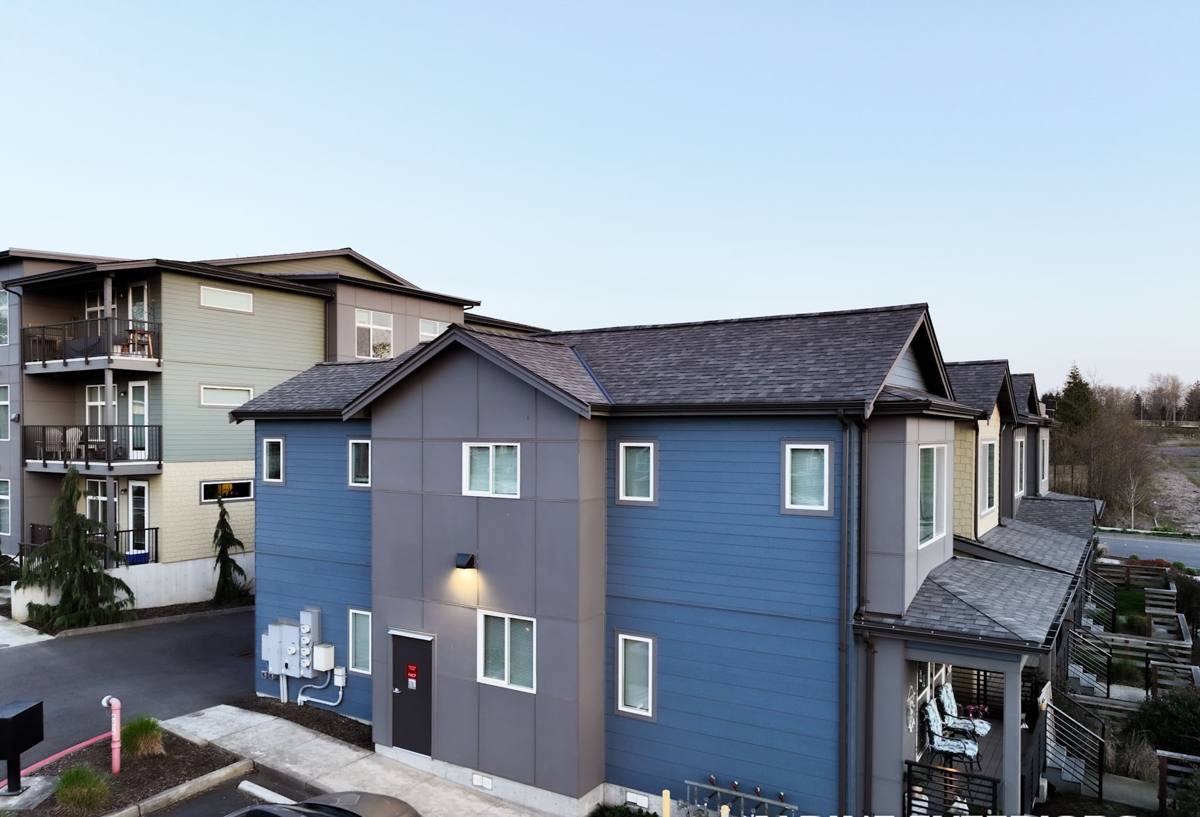
Signs a Stanwood Roof Has Reached Replacement, Not Repair, Territory
Most roofs give warning signs well before they fail outright. The trick is telling the difference between a problem a repair can solve and one that means the whole system is past its service life.
- Granule loss heavy enough that you're finding grit in gutters and downspouts every time it rains
- Shingles that are cupping, curling, or cracking across multiple slopes, not just one isolated area
- Moss or dark algae staining that keeps returning within a season or two of cleaning
- Soft spots or sagging when you walk the attic deck, or visible sheathing stains from above
- Flashing around chimneys, skylights, or vent pipes that's rusted, lifted, or was patched with sealant instead of properly reworked
- Interior water stains, especially ones that show up during wind-driven storms rather than steady rain
A roof with one or two of these issues in a contained area is often a legitimate repair. A roof with several of them spread across the field, or a roof already past 20-25 years on asphalt shingle, is usually cheaper to replace correctly than to keep patching.
What a Correct Roof Replacement Involves
A reroof is more than swapping old shingles for new ones. In a climate that sees this much wind-driven rain and moss pressure, the details underneath the surface layer matter as much as the shingle itself.
Tear-Off and Deck Inspection
We remove the old roofing down to the deck rather than layering over it. That's the only way to actually see the plywood or OSB underneath, check for soft or delaminated spots, and replace only what's damaged instead of guessing. Layering over an old roof traps moisture and hides problems that will eventually show up as a leak or a soft spot underfoot.
Underlayment for a Wet Climate
Underlayment is the roof's backup layer, and in an area with this much annual rainfall, it earns its keep. We use a synthetic underlayment across the field and self-adhered ice-and-water membrane at the vulnerable spots: eaves, valleys, and around every penetration. That membrane matters more here than it would in a dry climate, because it's the last line of defense when wind-driven rain gets under a shingle tab during a storm.
Flashing, Edges, and Penetrations
Most roof leaks trace back to flashing, not the shingles themselves. Chimneys, skylights, sidewalls, and vent pipes all need properly formed and step-flashed metal, not a bead of caulk over old material. We also pay attention to drip edge along the eaves and rakes, since a roof that's constantly shedding driving rain needs that water directed cleanly into the gutters instead of running back under the shingle edge.
Ventilation That Actually Works
A roof deck that can't breathe stays damp longer, and a damp deck is exactly what moss and algae need to get established. Balanced intake at the soffits and exhaust at the ridge keeps air moving through the attic space, which helps the deck dry out between storms and reduces the moisture that feeds growth on the shingles above it.
Choosing a Roofing Material for This Climate
There's no single "best" roofing material — the right choice depends on budget, roof pitch, and how much long-term maintenance a homeowner wants to take on. Here's how the common options perform under the salt air, rain, and moss conditions typical around Stanwood.
| Material | How It Handles This Climate | Maintenance Burden |
|---|---|---|
| Architectural asphalt shingle | Good balance of cost and performance; algae-resistant shingle lines reduce staining on shaded slopes | Moderate — periodic moss and debris removal |
| Standing seam metal | Sheds rain fast, handles wind well, minimal surface for moss to grip on a clean-swept roof | Low — occasional fastener and sealant checks |
| Synthetic composite (shake-look) | Resists moisture absorption better than natural wood while keeping a similar appearance | Low to moderate |
| Cedar shake | Attractive but absorbs moisture and is more prone to moss and rot in a wet, shaded climate without diligent upkeep | High — regular treatment and moss control needed |
We don't push cedar shake as a default recommendation for this area, not because it's a bad product, but because it demands a level of ongoing maintenance and moisture management that most homeowners underestimate when they're comparing it to asphalt or metal on price alone. If a homeowner wants the look and is prepared for the upkeep, we'll install it correctly — but we'll be upfront about what that upkeep involves before the contract is signed.
Moss: Prevention Built Into the Install, Not an Afterthought
Moss doesn't show up because a roof is old — it shows up because a roof stays damp long enough for spores to establish, and Stanwood's tree cover and marine humidity make that easy. The best defense starts during the replacement itself: choosing an algae-resistant shingle where asphalt is used, making sure ventilation is actually balanced instead of just present, and keeping overhanging branches trimmed back so shaded slopes get some airflow and sun exposure.
Copper or zinc strips at the ridge are worth considering on slopes that stay shaded most of the day; rainwater washing over them releases trace metal that discourages new growth lower on the roof. It's not a substitute for keeping the roof clear, but it reduces how often that maintenance is needed.
How We Approach a Stanwood Roof Replacement
- On-site inspection of the current roof, deck, attic ventilation, and any interior signs of past leaks
- A written estimate that spells out material options, tear-off scope, and what's included — no vague allowances
- Scheduling around the weather window, since a tear-off left exposed overnight in this climate is not something we risk
- Full tear-off, deck repair where needed, and installation of underlayment, flashing, ventilation, and the finish material
- Job-site cleanup, including a magnetic sweep for nails and a final walk-through before we call it done
Most straightforward residential reroofs are completed in one to three days once work begins, weather permitting. We don't tarp a half-finished roof and come back next week — once we start, the job runs through to a dried-in, weathertight roof before we leave.
What Affects the Cost of a Stanwood Roof Replacement
Every roof is priced on its own specifics, but a few factors consistently move the number more than homeowners expect.
- Roof size and the number of facets, valleys, and penetrations — more cuts and flashing points mean more labor
- Pitch and accessibility, since steep or hard-to-access roofs take longer and require more safety setup
- Deck condition found once tear-off starts — plywood replacement is priced by the sheet, not guessed at
- Material choice, from standard architectural shingle up through metal or synthetic composite
- Layers being removed — a roof with an old layer already underneath the current one adds tear-off time
We'd rather walk a roof and give an honest number than quote a range over the phone that doesn't hold up once we're actually up there.
Why a Crew That Already Works Stanwood Matters
A roofer who mainly works drier, inland areas can still do competent work, but they're often making climate decisions on the fly instead of from experience. A crew that regularly works this stretch of Skagit County knows which slopes in a given neighborhood tend to hold moss longest, which flashing details get skipped by crews used to a milder climate, and how to sequence a tear-off so the deck isn't sitting exposed when a system moves in off the water. That local pattern recognition shows up in fewer callbacks and a roof that's actually built for the weather it has to survive, not the weather a national install guide assumes.
After the Install: Keeping a New Roof Performing
A correctly installed roof still benefits from basic upkeep, especially in a climate this wet. A short annual routine goes a long way toward hitting the full service life of the material.
- Clear gutters and downspouts at least twice a year so water isn't backing up under the eaves
- Trim back branches that overhang the roof to cut down on shade, debris, and moss pressure
- Do a visual check after major windstorms for lifted shingles or displaced flashing
- Have moss or algae growth removed properly rather than pressure-washed, which can strip granules
- Schedule a professional inspection every few years, even without an obvious problem
If you're weighing a repair against a full replacement, or just want an honest read on where your current roof stands, we're happy to take a look. Fill out the form below for a free, no-pressure estimate.