 Burlington
 Why Alger Roofs Wear Differently Than Roofs Inland
Alger sits in that stretch of Skagit County where the roofing job is genuinely harder than it looks from the road. You've got moist air moving off the water, heavy tree cover on a lot of properties, and a rain season that doesn't really end so much as pause. None of that shows up on a spec sheet, but it shows up on a roof — usually as moss in the shaded valleys first, then as soft decking under a roofer's boot a few years later.
A roof replacement done right for this area accounts for three things most generic jobs skip: constant low-grade moisture exposure, biological growth (moss, lichen, algae) that thrives in shade and needle litter, and salt-tinged air that's harder on fasteners, flashing, and exposed metal than people expect. Get those three right and a roof in Alger will genuinely outlast the manufacturer's paper warranty. Get them wrong and you're looking at leaks and soft sheathing well before the shingles themselves are worn out.
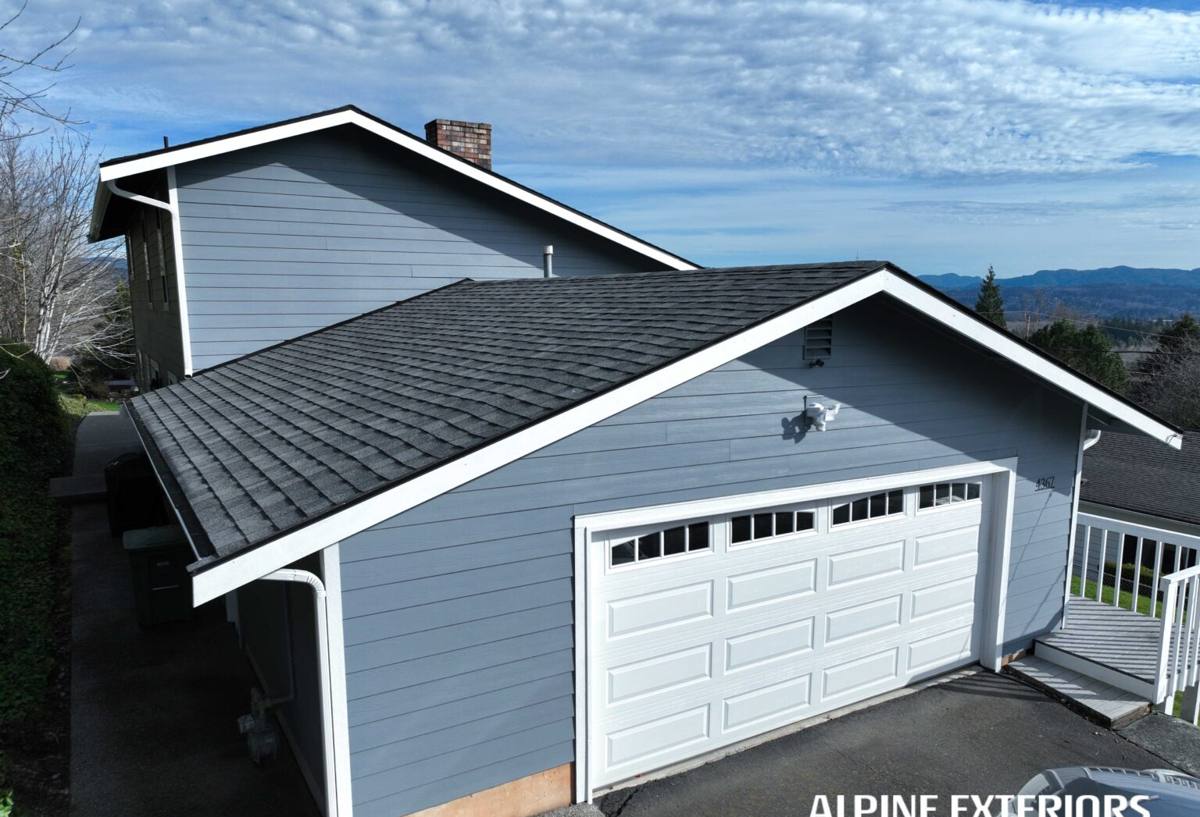
Signs an Alger Roof Is Telling You It's Done
Most roof failures out here aren't sudden — they're slow, and homeowners usually notice the cosmetic stuff (moss, dark streaking) long before the structural stuff (soft spots, sagging lines). Here's what we actually look for on an inspection:
- Moss or thick algae growth on north-facing slopes or anywhere shaded by trees, especially where it's built up enough to hold water against the shingle
- Granule loss showing up in gutters or downspouts — a sign the shingle's protective layer is wearing thin
- Curling, cupping, or cracked shingle edges, especially on slopes that get direct afternoon sun
- Soft or spongy decking felt underfoot during an inspection, usually near valleys, chimneys, or old skylight flashing
- Rust staining or corrosion on flashing, vent caps, or exposed fasteners
- Daylight visible through the attic roof deck, or damp insulation below a specific spot
- Gutters that overflow during heavy rain even when they're clear of debris — often a sign water is finding a path under the shingles instead of into the gutter
If you're seeing two or more of these, it's worth a look before the next wet season, not after.
Materials That Actually Hold Up in This Climate
There's no single "best" roofing material for Skagit County — there's a right choice for a given roof pitch, tree cover, and budget. Here's how the common options actually perform under Alger conditions specifically, not just in general marketing terms.
| Material | Moss / Moisture Behavior | Salt Air Durability | Typical Lifespan Here |
|---|---|---|---|
| Architectural asphalt shingle | Good with proper algae-resistant granules and airflow; needs periodic cleaning under heavy shade | Solid — the biggest wear factor is UV and moisture cycling, not salt | 20–30 years |
| Standing seam metal | Excellent — sheds moss and moisture fast, minimal surface for growth to grab onto | Needs a quality coated or coastal-rated panel and fastener system to avoid premature corrosion | 40–50+ years |
| Cedar shake | Poor without diligent maintenance — the most moss and moisture-prone option in shaded, wooded lots like many in Alger | Moderate; salt itself isn't the main issue, sustained dampness is | 15–25 years, shorter under heavy tree cover |
| Synthetic composite shingle | Good — resists moisture absorption better than wood, holds up under damp shade | Good, especially with stainless or coated fasteners | 30–40 years |
For heavily treed Alger lots, we lean toward architectural asphalt with algae-resistant granules or metal roofing over cedar, simply because cedar's maintenance burden in constant shade is a lot to keep up with year after year. That's a professional judgment call based on how these materials actually behave in wet, shaded conditions — not a knock on any manufacturer.
Fasteners and Flashing Metal
This is the detail that gets skipped on cut-rate jobs and causes the most callbacks. Anywhere within reach of salt-tinged coastal air, we use corrosion-resistant fasteners and flashing — galvanized at minimum, stainless or coated where budget allows on the most exposed slopes. Cheap electroplated fasteners will rust and stain a roof from the inside out within a few years out here.
What a Correct Roof Replacement Involves
Full Tear-Off and Deck Inspection
We don't install new roofing over old — a layover job hides exactly the moisture damage this climate is most likely to cause. A full tear-off lets us actually see the decking, catch soft or delaminated plywood before it becomes a bigger repair, and confirm the framing underneath is sound.
Ice and Water Protection at the Vulnerable Spots
Valleys, eaves, and roof-to-wall intersections get self-adhering waterproof membrane, not just felt paper. In a climate with sustained wind-driven rain, these are the spots where water gets pushed uphill under a shingle edge instead of running off — the membrane is what stops that from turning into a leak.
Underlayment Across the Full Deck
A synthetic underlayment layer goes down across the entire roof as a second line of defense, so a single damaged or wind-lifted shingle doesn't mean an immediate leak into the attic.
Flashing at Every Penetration
Chimneys, vent stacks, skylights, and wall intersections are where the vast majority of roof leaks actually start — not in the open field of shingles. New step flashing, counter-flashing, and pipe boots at every one of these, correctly layered with the underlayment (not just caulked over old flashing), is non-negotiable on our jobs.
Attic Ventilation
Proper intake and exhaust ventilation keeps moist air from condensing on the underside of the deck — a slow, hidden way roofs rot from the inside in this climate. We check existing ventilation on every replacement and correct it when it's inadequate, since a new roof won't fix a moisture problem that's actually coming from below.
Our Process, Start to Finish
- On-site inspection and estimate — we walk the roof (or use a drone where pitch or access makes that unsafe), check the attic from inside, and give you a written estimate with material options, not just a single number.
- Material selection — we walk through the trade-offs above based on your roof's shade exposure, pitch, and budget, so you're picking with real information.
- Scheduling around the weather — Skagit County's wet season isn't a surprise to us; we plan tear-off days around forecasts and always have the roof dried in before leaving it exposed overnight.
- Tear-off and deck repair — old roofing removed, decking inspected board by board, any soft or damaged sections replaced before anything new goes down.
- Underlayment, flashing, and material installation — done in the order above, with attention to every penetration and valley.
- Cleanup and final walkthrough — magnetic sweep for stray fasteners, full site cleanup, and a walkthrough so you can see the finished work and ask questions before we consider the job done.
Moss, Trees, and Keeping a New Roof Looking New
Alger's tree cover is part of what makes it a nice place to live, but it means moss and needle debris are an ongoing reality for most roofs here, not a one-time problem. A new roof buys you time, not immunity. A few habits make a real difference in how long a new roof stays clean and performs well:
- Keep gutters and valleys clear of needle and leaf litter, especially heading into fall and winter
- Trim back branches that overhang the roofline to reduce shade and debris buildup
- Have moss treated (not power-washed, which can strip granules) as soon as it appears rather than waiting for it to spread
- Schedule a roof check every couple of years, particularly after any major windstorm
None of this replaces a correctly installed roof, but it's what keeps a correctly installed roof performing for its full lifespan instead of ten years less than it should.
Cost Factors for an Alger Roof Replacement
Every roof is priced on its own specifics, but these are the factors that actually move the number here:
| Factor | Why It Matters Locally |
|---|---|
| Roof pitch and access | Steeper pitches and tree-crowded lots (common around Alger) take longer and require more safety setup |
| Decking condition | Moisture-related sheathing damage is more common here than in drier climates and adds material and labor if discovered during tear-off |
| Material choice | Asphalt vs. metal vs. composite carries a real cost spread, discussed above |
| Number of penetrations | Chimneys, skylights, and multiple vent stacks each add flashing labor |
| Ventilation upgrades | Adding or correcting intake/exhaust vents is sometimes needed and worth doing at replacement time |
| Tear-off layers | Removing multiple old layers of roofing costs more than a single-layer tear-off |
We'll walk through which of these apply to your roof specifically during the estimate — no one should be quoting a whole-roof price over the phone without seeing the actual roof.
Why It Matters That We Already Work Alger
A crew that's replaced roofs elsewhere in the region but doesn't specifically know Alger's mix of tree cover, shade patterns, and coastal-influenced moisture is going to make generic decisions — generic ventilation, generic material picks, generic scheduling around weather that behaves differently here than it does thirty miles inland. Working this specific area regularly means we already know which slopes tend to hold moss, which lot types need extra ventilation attention, and how to schedule tear-off days around Skagit County's actual rain patterns instead of a general Pacific Northwest assumption.
It also means a faster response if something comes up after the job — we're not driving in from across the state for a follow-up check.
Get a Straightforward Estimate
If your Alger roof is showing moss, granule loss, or you just know it's getting up there in years, we're happy to take a look and give you a straightforward, no-pressure estimate — including honest input on whether replacement or a targeted repair makes more sense right now. Fill out the form below to get started.