 Burlington
 Roof Repair in Lyman: What the Climate Actually Demands
Lyman sits up the Skagit River valley, tucked against forested hillsides east of Burlington, and that setting shapes what a roof goes through here. The tree cover that makes the area feel quiet and green also means roofs stay shaded and damp longer after a storm than roofs out in the open. Add the marine-influenced weather that rolls through all of Skagit County — long stretches of drizzle, occasional heavier driving rain off the Salish Sea, and the salt-tinged air that reaches inland on stronger weather systems — and you get roofing conditions that are harder on a home than most manufacturers' warranty language accounts for.
None of this means a Lyman roof needs to fail early. It means the repair work has to be done with the actual local conditions in mind: moss and moisture management, careful flashing work, and materials that can handle sustained dampness without trapping it against the deck. That's the difference between a repair that holds and one you're paying for again in two winters.
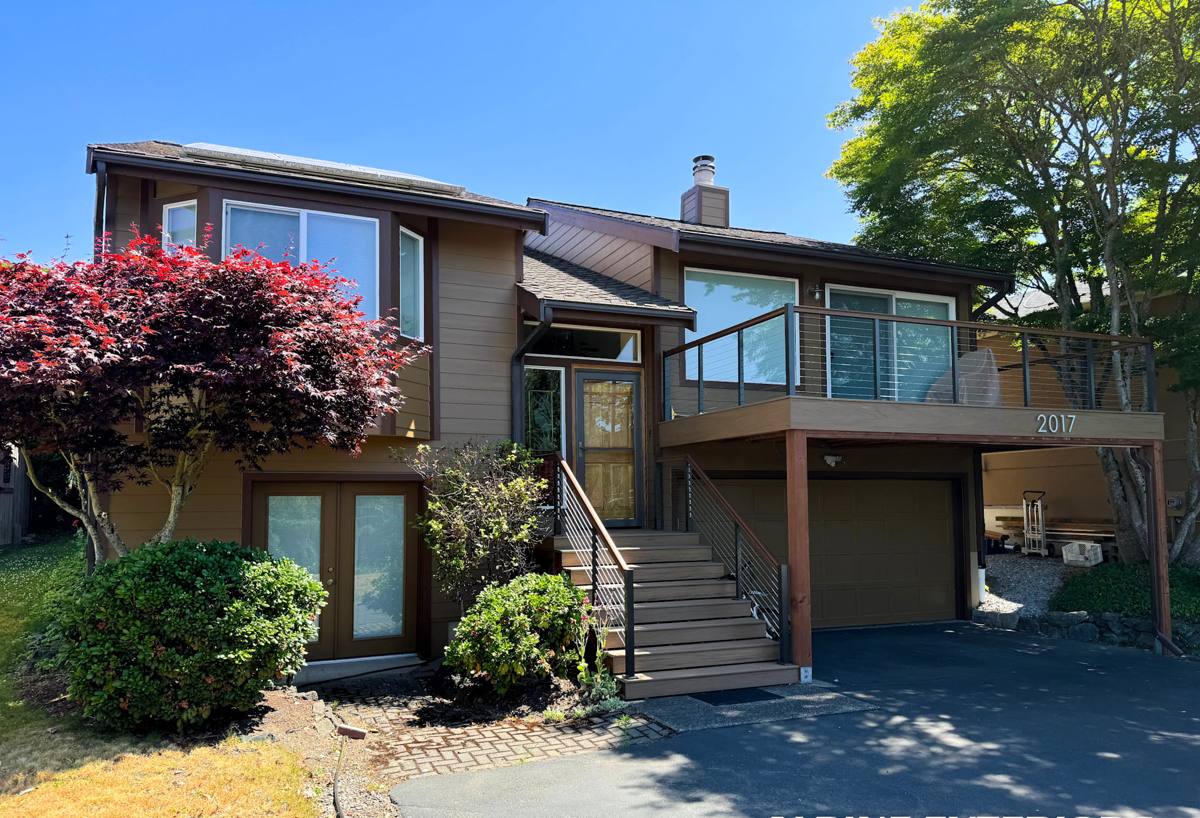
Common Roof Problems We See in Lyman Homes
Moss and Organic Growth
Shaded, tree-lined lots like the ones common around Lyman hold moisture on the roof surface longer than open, sun-exposed roofs. Moss takes hold in that dampness, and once it's established it lifts shingle edges, holds water against the roofing material, and works its way under flashing. A roof that looks fine from the ground can already have moss doing damage underneath.
Flashing and Valley Leaks
Most of the leaks we get called out for aren't a failed field of shingles — they're a flashing detail that's worked loose or corroded at a chimney, skylight, valley, or wall intersection. Long wet seasons find these weak points fast, and driving rain pushes water sideways into gaps that would never leak in a light shower.
Gutter and Drainage Backup
Roofs surrounded by trees deal with more debris in the gutters and valleys. When water can't shed properly, it backs up under the roofing material at the eaves — a slow leak that often shows up as a stain on an interior ceiling long after the actual cause started.
Wind and Storm Wear
Skagit County gets its share of gusty fall and winter storms. Lifted or cracked shingles, torn ridge caps, and dislodged flashing after a windstorm are common calls, and they're worth addressing quickly — an opened seam is an open invitation for the next rain.
What a Correct Roof Repair Actually Involves
A repair that actually solves the problem starts with figuring out what's really going on, not just patching the spot where water is showing up inside. Water travels before it drips, so a stain on a ceiling doesn't always sit directly below the failure point.
- Inspect the full roof plane, not just the area over the reported leak
- Check flashing at every penetration — chimneys, vents, skylights, and wall transitions
- Assess moss and debris buildup, including underneath shingle edges
- Check decking condition where leaks have been active, since damp plywood needs to be addressed, not covered over
- Confirm the repair material and fastening method match the existing roofing system
- Verify drainage — gutters, valleys, and downspouts — is actually moving water off the roof
Skipping any of these steps is how a "repair" ends up being redone within a year. We treat the inspection as half the job, because a repair is only as good as the diagnosis behind it.
Repair vs. Replacement: How We Decide
Not every roof problem needs a full replacement, and we're not going to tell a Lyman homeowner they need a new roof when a targeted repair will hold up. At the same time, a repair on a roof that's genuinely past its useful life is money spent without a real return. We look at a few honest factors before recommending either path.
Signs a Repair Makes Sense
Localized damage — a section of flashing, a handful of damaged shingles, a moss-related soft spot — on a roof that's otherwise structurally sound and reasonably within its expected service life is a good repair candidate.
Signs Replacement Is the Honest Answer
Widespread granule loss, multiple leak points across different roof planes, soft or spongy decking in several areas, or a roof already near the end of its material's expected lifespan usually means repairs are just delaying an inevitable full job — often at a higher combined cost than replacing it once.
Our Roof Repair Process
We keep the process straightforward because homeowners deserve to know what's actually happening on their roof, not vague reassurances.
- On-site inspection. We get on the roof (weather permitting) or use a close visual and photo-documented assessment to identify every contributing issue, not just the obvious one.
- Plain-language findings. We walk through what we found, what's causing it, and what it will take to fix it correctly — including if a repair isn't the right call.
- Written estimate. Scope, materials, and cost are laid out before any work starts. No surprise add-ons mid-job.
- The repair itself. Proper tear-out of damaged material, correct flashing and underlayment detailing, and matching materials where possible so the repair blends in and performs like the rest of the roof.
- Final check. We confirm drainage is clear and functioning and that the repaired area is fully sealed before we call the job done.
Materials We Repair — and How We Approach Each
Asphalt Composition Shingles
The most common roofing material on homes in and around Lyman. Repairs involve matching shingle profile and color as closely as possible, replacing damaged underlayment, and paying close attention to nail placement so the patch performs like factory-installed material, not a visible band-aid.
Metal Roofing
Increasingly common on newer builds and additions in this area because it sheds moss and moisture well. Repairs are more about fastener and seam integrity than surface wear — a loose panel or failed sealant at a penetration is usually the culprit.
Wood Shake and Shingle
Older homes in the area sometimes still carry cedar shake roofing. It requires more moisture-conscious maintenance in a climate like this one, and we're upfront that ongoing upkeep — moss control especially — is a real, recurring commitment with this material, not a one-time fix.
Flat and Low-Slope Roofing
Porches, additions, and outbuildings sometimes carry low-slope membrane roofing, which fails differently than pitched roofing — usually at seams and edge terminations rather than across the field. These repairs need membrane-specific materials and technique, not general roofing patches.
Cost Factors for Roof Repair
Every roof and every repair is different, but the table below covers the general factors that move a repair estimate up or down. These are broad ranges to set expectations, not a quote — actual pricing depends on what we find during inspection.
| Repair Type | Typical Scope | General Cost Range |
|---|---|---|
| Minor flashing repair | Single penetration (vent, small chimney) | $300 – $800 |
| Shingle section replacement | Storm or wind damage, limited area | $400 – $1,200 |
| Moss removal and treatment | Full roof, includes gutter clearing | $300 – $900 |
| Valley or multi-point leak repair | Several failure points, some decking work | $800 – $2,500 |
| Larger section repair with decking replacement | Water damage requiring plywood replacement | $1,500 – $4,000+ |
Roof pitch, roof height, material type, and access all affect labor time, and any hidden decking damage found once we open up the area will change the scope. We always confirm before proceeding past the original estimate.
Why a Local Skagit County Crew Matters for Lyman Homes
A crew that regularly works this part of Skagit County already knows how the local weather pattern behaves on a roof — which is different from how a generalized repair crew from outside the area might approach it. We know moss shows up faster under tree cover, that flashing takes more of a beating from sustained wet seasons than in drier climates, and that a repair done without accounting for that will fail again. Being local also means we can respond quickly when a leak needs attention now, not in two weeks, and we're not going anywhere if a repair needs a follow-up visit.
Roof Repair Checklist for Lyman Homeowners
A few things worth checking regularly, especially heading into the wetter months:
- Look for moss or dark streaking building up on shaded sections of the roof
- Check gutters and valleys for debris buildup, especially near overhanging trees
- Watch for ceiling stains or musty odors in attic spaces after heavy rain
- Inspect visible flashing around chimneys and vents for gaps or rust
- After any windstorm, do a visual check for lifted, cracked, or missing shingles
- Don't ignore a small leak — a slow drip in winter is often a bigger problem by spring
If you're seeing any of these signs on a home in Lyman or nearby, we're happy to take a look. Reach out for a free, no-pressure estimate — we'll tell you honestly what we find and what it would take to fix it right.