 Burlington
 Why Fir Island Roofs Wear Differently Than Roofs Farther Inland
Fir Island sits low and open in the Skagit River delta, surrounded by diked farmland with almost nothing to break the wind coming off Skagit Bay. That combination changes how a roof ages compared to a similar home tucked into a wooded lot closer to town. Homes here take on salt-laden air, wind-driven rain that gets pushed sideways into flashing and eaves, and long stretches of gray, damp weather that never quite lets a north-facing roof plane dry out. Skagit County's marine climate is tough on every roof, but the added salt exposure and lack of wind shelter on Fir Island push that wear along faster if the original install cut any corners.
When we talk about a "correct" roof for this area, we don't mean anything exotic. We mean a roofing system where every layer — deck, underlayment, flashing, fasteners, and ventilation — is chosen and installed with this specific exposure in mind, not just built to the minimum code spec that works fine in a more sheltered part of Burlington.
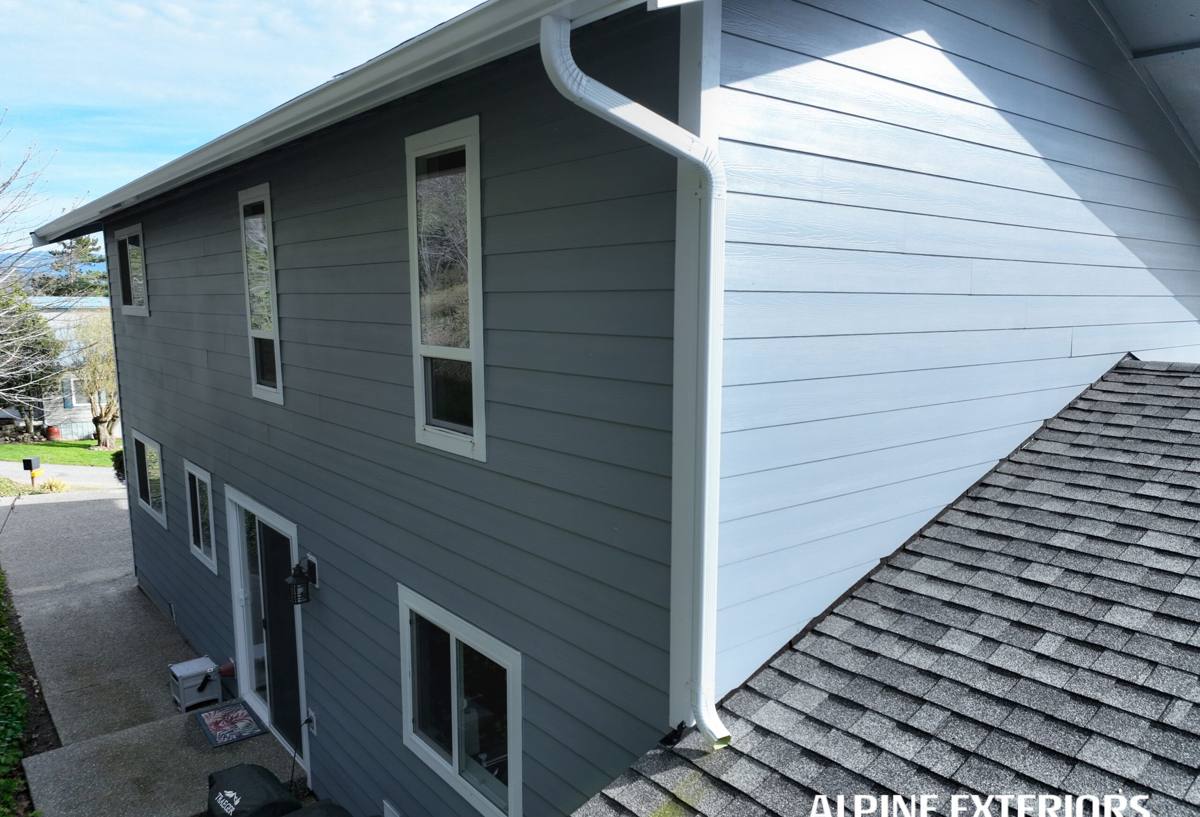
The Three Things That Age a Fir Island Roof Fastest
Salt Air
Airborne salt off the bay accelerates corrosion on anything metal — nail heads, flashing, valley metal, gutter fasteners. On a roof with standard galvanized hardware, that corrosion can show up as rust streaking and weakened fastener holding power years before it would on a home further from open water.
Driving Rain
Fir Island's open exposure means storms arrive with real wind behind them. Rain doesn't just fall on this roof, it gets driven sideways and upward under shingle tabs and around flashing edges. A roof detailed for calmer conditions can leak here even when every shingle looks intact, because the water is finding its way in sideways, not straight down.
A Long Moss Season
Cool, damp, low-sun months stretch long in this part of Skagit County, and shaded or north-facing roof sections stay wet longer as a result. Moss and algae take hold in that moisture, and once established they hold water against the roofing material and work into seams, shortening the life of shingles that would otherwise have years left.
What a Correctly Installed New Roof Includes
A roof built for this exposure isn't a different product, it's a more careful assembly. The parts that matter most:
- Full-coverage underlayment — synthetic or high-quality felt across the whole deck, not just the minimum required strip.
- Ice-and-water membrane at eaves, valleys, and around every penetration, giving the roof a sealed backup layer exactly where wind-driven rain tries hardest to get in.
- Step and counter-flashing at every wall intersection, chimney, and skylight, formed and lapped correctly rather than relying on caulk to do the flashing's job.
- Corrosion-resistant fasteners and metal — ring-shank nails and flashing rated for coastal or high-moisture exposure, not bargain-grade galvanized that starts rusting within a few seasons.
- Balanced attic ventilation so the deck can dry between storms instead of staying damp, which is what keeps moss and rot from getting a foothold from underneath.
None of this is unusual work. It's just work that has to be done deliberately here, because the climate doesn't forgive shortcuts the way a more sheltered lot might.
Choosing a Roofing Material for This Exposure
There's no single "right" material for Fir Island — it depends on your budget, your roof's exposure, and how much long-term maintenance you want to take on. Here's how the common options compare for this specific climate:
| Material | Salt-Air Durability | Moss Resistance | Wind-Driven Rain Performance | Typical Lifespan |
|---|---|---|---|---|
| Architectural asphalt shingle | Good, especially with corrosion-resistant fasteners and flashing | Moderate — benefits from periodic cleaning | Strong when properly underlaid and flashed | 25–30 years |
| Standing seam metal | Very good with a marine-rated coating and fastener system | Strong — smooth, sloped panels shed moss more easily | Excellent, fewer seams for wind to exploit | 40–50+ years |
| Synthetic/composite shake | Good, but check the specific product's coastal warranty terms | Moderate to good depending on texture | Good with correct underlayment detailing | 30–40 years |
Cost follows roughly the same order: asphalt shingle is the most affordable up front, standing seam metal costs more to install but spreads that cost over a much longer service life, and synthetic shake sits in between. We'll walk through the real trade-offs for your roof's slope, shading, and budget rather than pushing one product across the board.
A Note on Steep-Slope Wood Shake
Traditional wood shake has real curb appeal, but on a site with this much moisture and moss pressure, it demands more upkeep than most homeowners want to sign up for — regular treatment, cleaning, and closer monitoring for moisture retention under the shakes. We'll install it if that's what you want, but we'll also give you an honest read on the maintenance commitment before you commit to it.
Attic Ventilation and Moisture Control
A new roof is only as good as what's happening underneath it. In a climate this damp, unbalanced ventilation traps moisture in the attic, and that moisture works against the roof deck from below at the same time weather is working against it from above. We check and correct intake (soffit) and exhaust (ridge or other) ventilation as part of every installation, not as an afterthought. Proper airflow keeps the deck drier through the wet months, which slows both rot and the underside conditions that let moss and algae establish themselves in the first place.
Our Installation Process
- Inspection and deck assessment. We check the existing roof, decking condition, flashing points, and ventilation before quoting anything, so the estimate reflects what your roof actually needs.
- Tear-off and deck repair. Old material comes off, and any soft, rotted, or water-damaged decking gets replaced — not covered over.
- Underlayment and flashing. Full-coverage underlayment, ice-and-water membrane at vulnerable points, and properly formed flashing go down before a single shingle or panel is installed.
- Roofing material installation. Installed to manufacturer specification, with fastener choice and spacing matched to this area's wind and moisture exposure.
- Ventilation check. Intake and exhaust are verified and corrected if the existing system was undersized or unbalanced.
- Final walk-through. We go over the finished roof with you, point out anything you should watch for, and answer questions before we consider the job done.
Signs Your Fir Island Roof Needs Replacing, Not Just Repairing
Not every roof problem calls for a full replacement, but on a property with this much weather exposure, some signs mean patching is a temporary fix at best:
- Granule loss heavy enough that shingles look patchy or bald in spots
- Moss or algae that keeps returning within a season or two of cleaning
- Shingles that are curling, cupping, or cracking, especially on south- and west-facing slopes
- Soft or spongy spots underfoot when walking the roof
- Rust staining or visible corrosion at flashing, valleys, or fasteners
- Interior ceiling stains or damp attic insulation after storms
- Missing or lifted shingles after a windy system, especially if it's happened more than once
- A roof that's simply reached the back half of its expected lifespan and is starting to show its age
If you're seeing two or more of these, it's worth getting a straight opinion on repair versus replacement before you spend more money chasing leaks one at a time.
Why Local Experience on Fir Island Matters
A crew that's worked this area understands things a general contractor coming from farther inland might not think to ask about — rural site access on a diked, low-lying island, how Skagit County permitting applies to a given property, and which materials and flashing details actually hold up against this specific mix of salt air, wind, and rain rather than just meeting the general Pacific Northwest baseline. That familiarity shows up in fewer surprises during the job and a roof that's detailed for the exposure it will actually face, not a generic install dropped onto a site that isn't generic at all.
Keeping a New Roof Performing After Installation
A correctly installed roof still benefits from a little ongoing attention in this climate. Periodic moss treatment or preventive strips on shaded slopes keep growth from re-establishing. Clean gutters and downspouts matter more here than in calmer areas, since wind-driven rain relies on them working correctly to shed water away from fascia and siding. And a quick visual check after major storms — looking for lifted shingles, debris buildup in valleys, or new staining — catches small issues while they're still small.
If you're weighing a repair against a full replacement, or you just want an honest look at what your current roof can handle through another Skagit County winter, we're happy to come out, take a real look, and give you a straightforward, no-pressure estimate using the form below.