 Burlington
 Building New on Samish Island Means Building for the Water
Samish Island sits out on the bay, surrounded by water on three sides, which makes it one of the more exposed building sites in Skagit County. A new home or addition going up here isn't dealing with the same conditions as a house tucked into town in Burlington or Mount Vernon. The wind comes off Samish Bay with salt in it, rain arrives sideways more often than straight down, and the shaded, damp stretches of the property grow moss on anything that holds moisture. New-construction windows on Samish Island have to be selected and installed with all three of those realities in mind from the first day of framing, not addressed later as a repair.
When we say "new-construction windows," we mean windows installed into a house during the framing and sheathing stage, before siding goes on — not windows popped into an existing wall opening after the fact. That distinction matters more here than almost anywhere else in our service area, because it's the only point in the build where the flashing, sheathing wrap, and window can be integrated as one continuous water-management system instead of patched together around an existing structure.
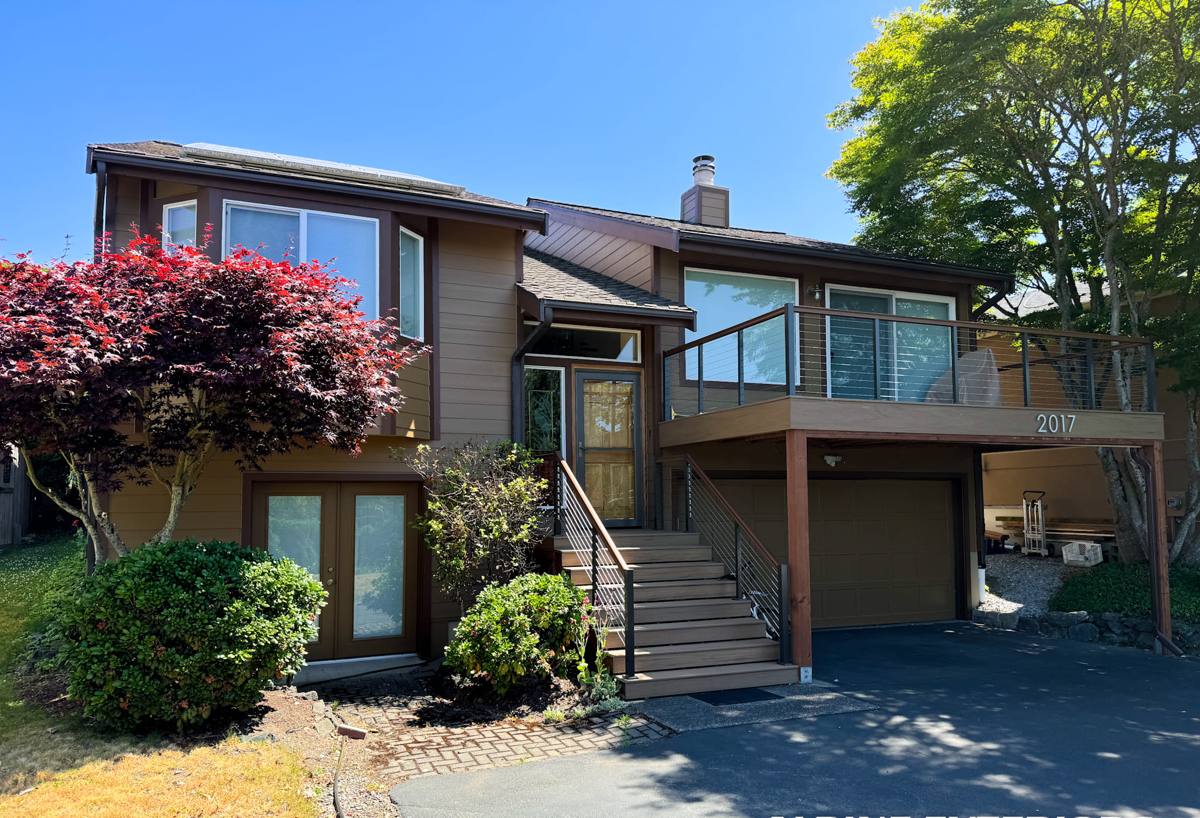
Why Coastal Exposure Changes the Window Job
Three conditions define what a correct new-construction window install looks like on Samish Island:
- Salt air: airborne salt accelerates corrosion on unprotected metal fasteners, hardware, and some window frame components, and it degrades certain sealants and finishes faster than inland exposure would.
- Driving rain: wind-driven rain hits window openings at an angle, which pushes water into gaps that a calm-weather install might get away with. Flashing details that would be adequate in a sheltered inland lot can fail here.
- Moss season: long stretches of damp, shaded weather from fall through spring keep exterior surfaces wet for days at a time, which means any water that does get past the window has little chance to dry out before it causes rot or mold in the framing.
None of these are exotic problems — they're the same forces every coastal Skagit County property deals with. But they add up, and a window install that ignores them tends to show its first symptoms as staining, soft trim, or a musty smell inside a wall cavity within a few years, well before the window itself would otherwise need attention.
What a Correct New-Construction Window Install Involves
The Rough Opening and Sheathing Interface
Everything starts with the rough opening being framed square, level, and to the exact dimension the window manufacturer calls for. On an exposed site like Samish Island, we also pay close attention to how the water-resistive barrier (house wrap) laps over and under the flashing at the opening — this is the layer that decides whether wind-driven rain that gets behind the siding ever reaches the framing.
Flashing, Not Just Caulk
Caulk is a backup, not a strategy. A proper install uses sill pan flashing at the bottom of the opening (so any water that gets in has somewhere to drain back out), self-adhered flashing tape at the jambs and head, and a head flashing detail that sheds water out and away from the top of the window. On a site that takes driving rain regularly, we treat this sequencing as non-negotiable — it's the difference between a window that stays dry for decades and one that quietly rots the wall around it.
Fasteners and Hardware
Given the salt air, we use fasteners and flashing components rated for coastal or marine exposure rather than standard-grade hardware. It costs a little more up front and saves the homeowner from hidden corrosion problems showing up behind the trim years later.
Air Sealing and Insulation
The gap between the window frame and the rough framing gets sealed with low-expansion foam or backer rod and sealant — enough to stop air and moisture movement without bowing the frame, which can affect how the window operates.
Choosing Windows for This Site
There's no single "best" window brand or material for every coastal build, but there are trade-offs worth understanding before you commit to a product for a Samish Island new-construction project.
| Frame Material | How It Handles Salt Air & Moisture | Maintenance Trade-Off |
|---|---|---|
| Vinyl | Doesn't corrode; performs consistently in coastal exposure | Low maintenance, but frame color and finish options are more limited |
| Fiberglass | Very stable, resists moisture and salt exposure well | Higher upfront cost; low ongoing maintenance |
| Aluminum-clad wood | Good moisture resistance on the exterior face; interior wood needs protection from any interior condensation | Most maintenance-intensive if the exterior seal is ever compromised |
| Bare wood | Least suited to this site's exposure without diligent, ongoing upkeep | Highest maintenance burden in a salt-air, high-moisture setting |
We'll walk through these options honestly, including where a given product's warranty structure or installation sensitivity matters for a coastal lot, rather than steering you toward whatever is easiest for us to install.
Glass and Performance Considerations
For a Samish Island build, we typically talk through:
- Double- or triple-pane glass with low-E coatings, weighed against the added weight and cost for the specific exposure of the elevation being glazed
- Argon or krypton gas fills, and what that actually buys in a marine climate versus an inland one
- Operable window styles (casement vs. single-hung vs. sliding) and which seal types perform better against driving, wind-pushed rain
- Screen and hardware finishes that resist salt corrosion over time
None of this needs to be complicated, but it's worth deciding deliberately rather than defaulting to whatever's standard in a builder's spec sheet written for an inland subdivision.
Our Process on a New-Construction Job
- Plan review: we look at elevations, orientation to prevailing wind and rain, and rough opening sizes before the window order goes in.
- Coordination with the builder/framer: timing matters — windows go in after sheathing and house wrap, before siding, and we coordinate that sequence so nothing gets rushed or skipped.
- Sill pan and flashing install: done in the correct shingle-lap order, bottom to top, so water is always directed out and down.
- Window setting and shimming: square, plumb, and to manufacturer tolerance, checked before final fastening.
- Air sealing and interior trim prep: sealed for air and moisture without over-foaming or distorting the frame.
- Final inspection: operation, seal, and flashing lap checked before siding closes the wall up.
That last step matters most on a coastal site — once siding goes on, any flashing mistake is hidden for years until it shows up as damage. We'd rather catch it while the wall is still open.
What This Costs, in Broad Terms
New-construction window pricing depends on window count, size, frame material, and glass package, so we won't quote a number without seeing the plans. In general terms, expect coastal-rated hardware and proper flashing materials to add a modest amount to the install cost compared to a standard inland build — that difference is small next to the cost of repairing rot or replacing a window system that failed early because of exposure it wasn't detailed for.
A Simple Maintenance Checklist for Samish Island Homeowners
- Rinse salt film off exterior frames and glass a few times a year, especially after storms
- Check exterior caulk lines and flashing laps annually for cracking or gaps
- Clear moss and debris from window sills, tracks, and nearby gutters before it holds moisture against the frame
- Test operable windows each season to catch hardware that's starting to bind or corrode
- Watch for interior condensation on cold, damp days — persistent fogging can signal a seal or ventilation issue worth checking early
Why It Matters to Hire a Crew That Already Works This Area
Samish Island isn't a typical residential lot, and a window install that would be perfectly fine in a sheltered inland neighborhood can fall short here. A crew that regularly works Burlington and the surrounding Skagit County coastline already knows which elevations take the worst of the wind-driven rain, how much salt exposure to plan for, and how long moss season actually runs in a given year. That familiarity shows up in small decisions — which flashing detail to use on a north-facing wall, which hardware finish to spec, how tight to plan the site visit schedule around the framing sequence — that a crew unfamiliar with the site might not think to make.
If you're planning new construction or an addition on Samish Island and want windows installed correctly the first time, we're happy to walk the plans with you and put together a straightforward, no-pressure estimate. There's a form below — reach out and we'll go from there.