 Burlington
 New-Construction Windows in Alger: A Different Job Than a Replacement
Alger sits in the unincorporated stretch of Skagit County between Burlington and the Samish flats, close enough to the water that salt air is part of daily life and far enough into the county that lots tend to be larger, treed, and served by wells and septic rather than city utilities. A lot of the building happening out here is new construction — custom homes, spec builds, additions, and shops with living space — not remodels. That matters, because installing windows into a house that doesn't exist yet is a genuinely different trade than swapping out old windows in a finished wall.
On a replacement job, the window has to work with whatever siding, trim, and flashing already exists. On new construction, we're setting the window into a raw rough opening, before siding goes on, and everything downstream — the weather-resistant barrier, the flashing, the trim, the siding itself — gets built around how that window is installed. Get the sequence wrong at this stage and the mistake gets sealed inside the wall for the life of the house. Get it right, and the window becomes one more layer of a wall system that's actually built to handle Skagit County weather.
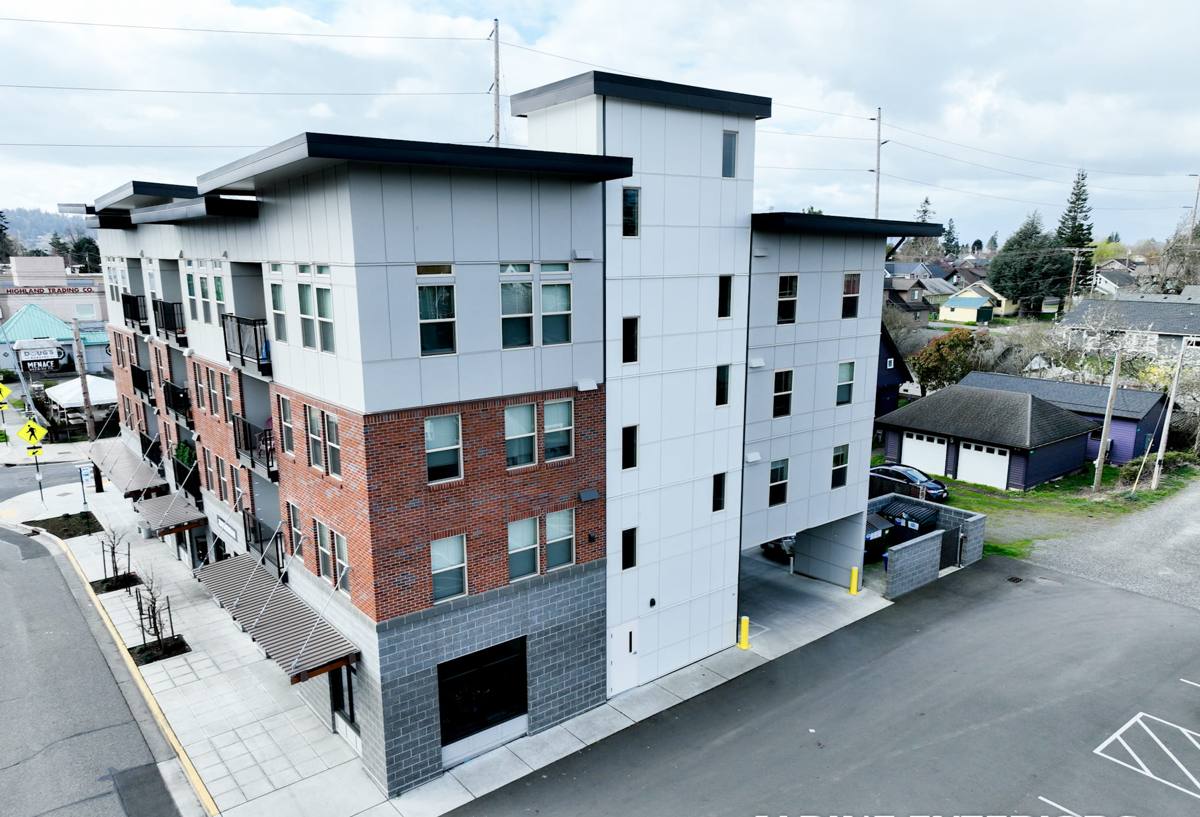
What Alger's Climate Demands From a New Window Install
Three things define building conditions out here, and all three show up in how we detail a new-construction window opening.
Salt Air
Alger's proximity to Samish Bay and the greater Puget Sound puts a steady low dose of salt-laden air on every exterior surface. It's not the same exposure as a beachfront property, but it's enough over years to accelerate corrosion on the wrong hardware — screws, cranks, screen frames, and cladding fasteners that aren't rated for coastal-adjacent conditions will show it well before an inland Skagit County home would. On new construction we get to choose every fastener and every piece of hardware from scratch, so this is the stage to spec for it, not fix it later.
Driving Rain
Pacific storms don't just drop rain here, they push it sideways, and a lot of Alger's building sites are open enough — farmland edges, cleared lots — that wind-driven rain hits window openings at an angle instead of straight down. A window that's only sealed at the face and not properly flashed at the sill will eventually take on water during a hard southwesterly, and on new construction that water has nowhere to go but into fresh framing.
Long Moss Season
Between the shade from mature conifers on a lot of Alger properties and the region's extended damp stretch from fall through spring, moss and algae get a long runway to establish themselves on any surface that stays wet — including window sills, trim, and the lower courses of siding around an opening. That's less about the glass and frame themselves and more about how the surrounding trim and flashing details are built to shed water instead of holding it.
Choosing a Frame Material for This Environment
There's no single "best" window for every new build, but some materials handle Skagit County's coastal-adjacent climate with a lot less maintenance than others. Here's how the common options stack up for a new-construction install in a spot like Alger.
| Frame Material | Salt Air / Moisture Behavior | Maintenance | Typical Lifespan | Best Fit |
|---|---|---|---|---|
| Vinyl | Won't corrode or rot; seams and hardware quality matter more than the frame itself | Low — occasional cleaning | 20–30+ years | Value-focused new builds and spec homes |
| Fiberglass | Very stable in moisture and temperature swings; holds paint and finishes well near salt air | Low | 30–40+ years | Custom homes prioritizing longevity |
| Wood-Clad | Exterior cladding protects the wood, but any breach in the clad or seal exposes wood to rot risk | Moderate — sealant and clad joints need periodic checking | 20–30 years with upkeep | Homeowners wanting a wood interior look who accept the upkeep tradeoff |
| Aluminum | Strong but prone to corrosion pitting in salt air unless properly finished; also conducts cold | Low to moderate | 20–30 years | Limited use — mainly larger commercial-style openings |
For most new builds in Alger, we steer clients toward vinyl or fiberglass, specifically because neither one gives salt air or standing moisture a foothold. If a homeowner wants the look of wood, wood-clad is workable, but we're honest that it comes with a maintenance commitment that vinyl and fiberglass don't — and that's a decision we'd rather someone make going in, not discover five years later.
Meeting Washington State Energy and Safety Code
New construction has to meet current Washington State Energy Code requirements for window performance — U-factor and solar heat gain coefficient targets that are stricter than what a lot of older Skagit County homes were built to. On a new build we're specifying glass packages that hit those numbers from day one, not retrofitting around them.
Code also governs where windows go and how they're built, not just their performance rating:
- Bedrooms need an egress-rated window of minimum size and sill height for emergency exit
- Windows near doors, stairs, tubs, and showers typically require tempered safety glass
- Window placement affects required wall bracing and structural rough opening framing, which has to be coordinated with the framer, not decided after the fact
- Flashing and water-resistive barrier integration is inspected as part of the building process on most new construction permits in the county
Working new construction means we're coordinating with the building department's inspection schedule, not just installing windows and moving on.
Our New-Construction Window Install Process
The sequence matters more on new construction than almost anything else about the job. Windows go in at a specific point in the build — after the weather-resistant barrier is up, before siding starts — and every layer has to lap correctly so water is always directed outward and down, never inward.
- Rough opening verification — confirm the opening is square, plumb, and sized correctly for the specified window before it ever arrives on site
- Sill pan flashing — install a sloped, sealed pan at the sill so any water that does get past the window has a built-in path back outside
- Window set and fastening — set the window level and square, fasten per the manufacturer's schedule to maintain warranty coverage
- Flashing integration — jamb and head flashing lapped correctly over the sill pan and under the housewrap above, so water sheds down and over every layer below it
- Air sealing — seal the interior gap between frame and framing for energy performance, using a method that doesn't trap moisture in the wall cavity
- Exterior trim and sealant — details finished so surfaces slope away from the frame and don't collect the standing moisture that feeds moss growth
Here's the pre-siding checklist we run on every new-construction window opening before we sign off and the crew moves to cladding:
- Rough opening dimensions confirmed against window schedule
- Sill pan flashing installed and sloped correctly toward the exterior
- Window shimmed, leveled, and squared before fastening
- Fastening pattern matches manufacturer spec for warranty compliance
- Jamb flashing laps over sill pan; head flashing laps under upper WRB
- No gaps or reverse laps anywhere in the flashing sequence
- Interior air seal complete without blocking any weep or drainage path
- Hardware and fasteners rated for coastal-adjacent, salt-air exposure
Working With Your Builder or General Contractor
Most of our new-construction window work in Alger comes through coordination with a builder or GC rather than direct from a homeowner buying a finished house. That changes how the job runs: we're working off the builder's framing schedule, showing up at the right point in the sequence, and communicating directly with the site super about any rough opening issues before they become a delay. On a custom home or owner-built project, we're glad to work directly with the homeowner too, but we still coordinate closely with whoever's running the framing and siding schedule so nothing gets installed out of order.
Because a lot of Alger building sites are rural — gravel driveways, tree cover, properties on well and septic rather than municipal service — access and scheduling around weather matter more than they would on a typical in-town lot. We plan around that instead of treating it as a surprise.
Mistakes We See on New Construction — and Build Around
Most window failures in new construction don't come from a bad window. They come from a flashing sequence that got rushed or done out of order. The most common issues we watch for on new builds:
- Reverse-lapped flashing — house wrap tucked under jamb flashing instead of over it, which funnels water into the wall instead of away from it
- Skipped sill pans — relying on sealant alone at the sill, which fails long before the flashing detail would
- Fastening through trim before flashing is complete — creates penetrations in the water-resistive barrier that don't get properly sealed
- Undersized rough openings forcing a squeezed install — leads to a window that's never quite square, which stresses seals and hardware over time
None of these show up at final walkthrough. They show up two, five, ten years later as stains, soft trim, or moss creeping up from a sill that never quite dries out — which is exactly why the install sequence gets our full attention up front, on every opening, not just the ones that are easy to reach.
Why Local New-Construction Experience Matters in Alger
A crew that mostly works in-town Burlington additions and a crew that regularly builds new in Alger's rural pockets aren't solving the same problems. Out here we're used to building sites without municipal water pressure to rinse tools, driveways that turn soft during the wet season, and homes sited close enough to the water that hardware specs change. We show up already knowing to spec corrosion-resistant fasteners, already building flashing sequences around wind-driven rain instead of straight-down rain, and already thinking about how a north-facing sill under fir cover is going to handle six months of damp before we ever set the first window.
That's the value of hiring a crew that already works this specific area over one that treats every new-construction site as a blank slate. The building code is the same countywide, but the conditions the window actually has to survive aren't.
If you're building new in Alger — whether you're a homeowner working with your own GC or a builder looking for a window install crew who already knows the local conditions — we're happy to walk the plans and give you a straightforward, no-pressure estimate. Use the form below to get started.