 Burlington
 Mount Vernon's Climate Puts Real Stress on a Deck
Mount Vernon sits low in the Skagit Valley, close enough to Puget Sound and the delta marshlands that homes here deal with a specific mix of weather: salt-tinged air moving in off the water, long stretches of driving rain from fall through spring, and a moss season that can run six months or more on shaded, north-facing exposures. None of that is dramatic on its own, but stacked together year after year, it's exactly the combination that breaks down a deck that wasn't built with this valley in mind.
Wood decking absorbs and releases moisture constantly in this climate, which is what drives cupping, splitting, and the endless cycle of sanding and re-staining. Composite decking was designed to solve that problem, but only when it's installed correctly for the conditions it's actually going to sit in. A composite deck installed the same way you'd build one in a dry inland climate will still trap moisture underneath, still grow moss in shaded corners, and still loosen at the fasteners faster than it should. The material matters less than the build.
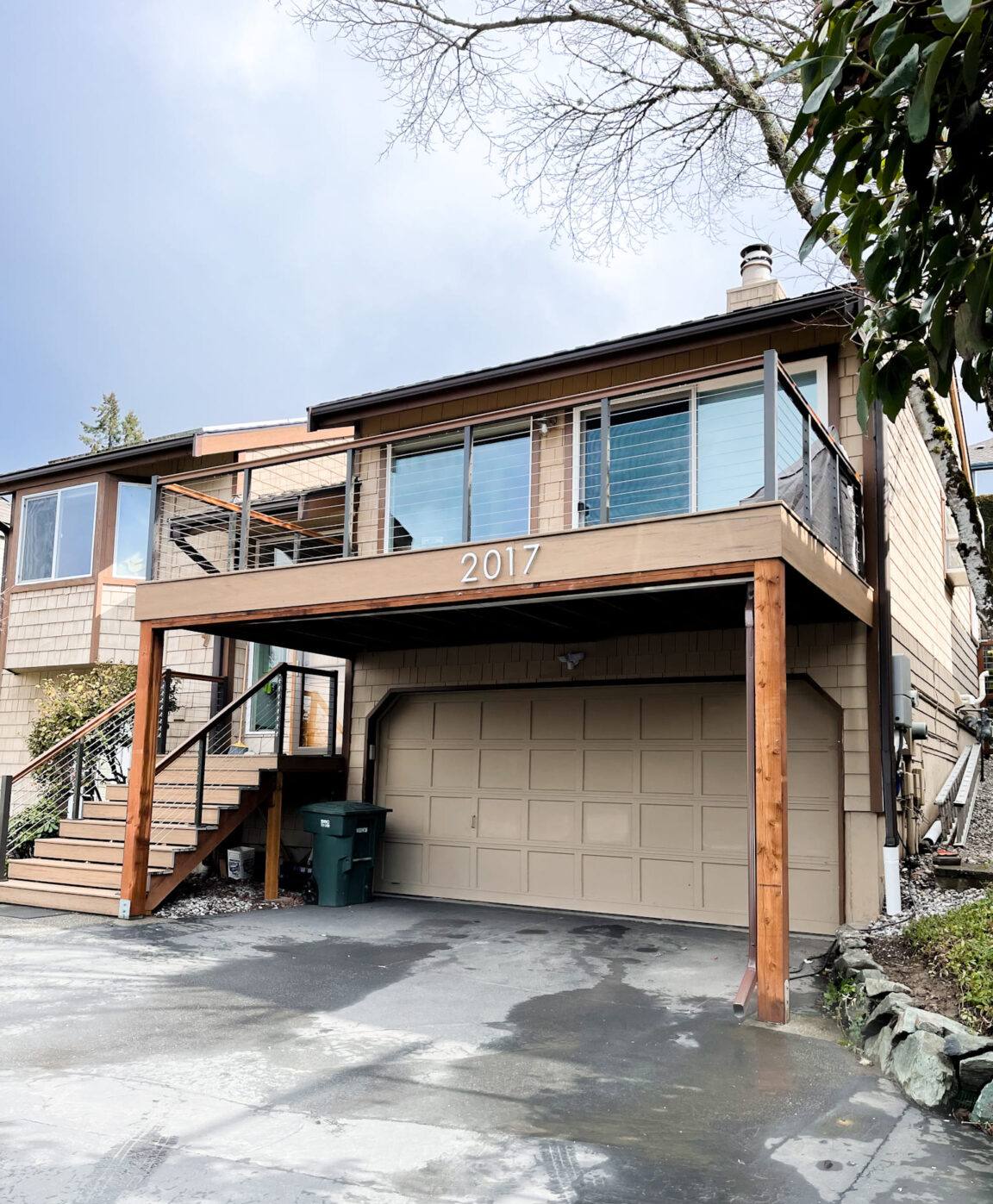
What a Correct Composite Deck Build Involves Here
Substructure and Framing
The frame underneath a composite deck does most of the real work in wet climates like ours. We use pressure-treated or naturally durable framing lumber sized and spaced to manufacturer spec, not stretched to save a few boards. In Skagit County's damp shoulder seasons, joist spacing that's a couple inches too wide shows up later as bounce and, eventually, board sagging between supports.
Flashing and Drainage
Ledger board flashing where the deck meets the house is the single most common point of failure we see on older decks in this area, composite or wood. Water finds its way behind an unflashed or poorly flashed ledger and rots the rim joist from the inside, which is invisible until the deck starts to feel spongy near the house. We flash every ledger connection and make sure the deck has a slight pitch away from the structure so water actually leaves instead of pooling.
Joist Protection and Fastening
Composite boards are graded moisture-resistant, but the framing underneath isn't unless you protect it. We wrap joist tops with a proper joist tape barrier so screw penetrations don't become entry points for water. Fastening itself should use hidden fastener clip systems where the board profile allows, which also gives a cleaner surface with no exposed screw heads to loosen or corrode from salt-laden air.
Ventilation Underneath
Low-clearance decks and ground-level decks need real airflow underneath, not just a gap. Poor underside ventilation is one of the biggest reasons composite decks develop mildew staining on the underside of boards and along the perimeter fascia in wetter regions like the Skagit Valley.
Composite Decking: Comparison and Cost Factors
Not all composite decking performs the same in a marine, high-moisture climate. The table below covers the general tiers you'll be choosing between and what actually matters for a Mount Vernon install.
| Decking Type | Moisture/Moss Resistance | Maintenance | Typical Lifespan |
|---|---|---|---|
| Basic capped composite | Good on top surface, cap doesn't fully wrap the board on all sides on some product lines | Occasional wash; still needs proper substructure drainage | 15-25 years |
| Fully capped composite (cap on all four sides) | Best resistance to moisture wicking and moss growth at cut ends and edges | Lowest of the composite tiers | 25-30+ years, per manufacturer warranty terms |
| Uncapped/older-style composite | Prone to surface mold and moisture absorption in wet climates | Highest; periodic cleaning and sealing often needed | Shorter effective life in marine climates |
| PVC decking | Excellent moisture resistance, no wood fiber content | Low | 25-30+ years |
Installed cost for a composite deck in this area runs roughly in the mid-to-upper range compared to pressure-treated wood, largely because of board cost, hidden fastener labor, and proper substructure work. We'll always walk you through the real number for your specific footprint and framing condition rather than quoting off a square-footage rule of thumb.
Cost Factors Worth Understanding Before You Budget
- Height off grade — low-clearance decks need extra ventilation detailing that adds labor
- Existing framing condition — reusable vs. needs full rebuild changes the number significantly
- Railing system — composite or metal railing typically costs more than basic wood but matches the deck's low-maintenance intent
- Stair count and complexity — stairs are the most labor-intensive part of most deck projects
- Board pattern — picture-frame borders and diagonal layouts add material waste and cut time
Our Process for a Mount Vernon Composite Deck
1. On-Site Assessment
We walk the existing structure (or the build site for new construction), check drainage patterns around the foundation, note sun and shade exposure since that tells us where moss pressure will be worst, and measure for proper joist spacing against the composite manufacturer's span tables.
2. Framing and Flashing
Any compromised framing gets replaced, not patched. Ledger flashing and joist tape go in before a single deck board is placed — this is the step that determines whether the deck holds up in Skagit County's wet season or starts failing quietly from underneath within a few years.
3. Decking Installation
Boards go down with the fastening system specified for that product line, with attention to expansion gaps since composite material moves with temperature more than people expect. Field cuts and ends get properly capped or treated per manufacturer instructions so raw edges aren't left exposed to moisture.
4. Railing, Stairs, and Finish Details
Railing posts get blocked and fastened to solid framing, not just through the rim board. Stair stringers are sized for the actual rise and run of the site, not a stock template.
5. Walkthrough
We go over care basics with you directly — what routine cleaning your specific product needs, what to expect the first wet season, and what warranty coverage applies to the boards and hardware.
Moss, Mildew, and the Long Wet Season
Composite decking resists rot, but it isn't immune to surface moss and mildew, especially in shaded parts of a yard or under mature trees, which is common on established Mount Vernon lots. Moss needs organic debris and standing moisture to get a foothold — leaves and needles left to decompose in board grooves are the usual starting point. A deck with good drainage, proper board spacing, and airflow underneath will shed moss pressure far better than one that traps moisture against the surface.
Routine care in this climate is simple but matters: sweep debris out of the grooves before the fall rains settle in, rinse the surface periodically through the wet months, and keep gutters and downspouts near the deck clear so runoff isn't dumping extra water onto the decking itself.
Mistakes We Commonly Fix
A lot of the composite deck problems we get called out for aren't a failure of the decking material — they're shortcuts taken during installation, often by out-of-area crews unfamiliar with how wet this region actually gets:
- No ledger flashing, leading to hidden rot at the house connection
- Joists spaced for a drier climate's span tables, causing board sag over time
- Missing joist tape, allowing moisture into fastener penetrations
- Decks built tight to grade with no ventilation gap, trapping moisture and encouraging moss and mildew underneath
- Cut board ends left uncapped where they meet stairs or borders
Why a Crew That Already Works Mount Vernon Matters
Skagit County's mix of coastal-influenced weather, valley moisture, and long shoulder seasons isn't the same as building decks in a drier part of the state, and it shows in the details a crew either knows to handle or doesn't. A contractor who regularly works Mount Vernon and Burlington properties already understands the drainage patterns, the moss pressure on shaded lots, and the framing practices that hold up through a full Skagit Valley winter — not just a generic install checklist. That local familiarity is what keeps a composite deck performing the way it's supposed to for the full length of its warranty, instead of developing quiet problems that only show up years later.
Is Your Deck Project Ready? Quick Checklist
- Do you know the current condition of your existing framing, if you have a deck already?
- Is there shade or tree cover that will push moss pressure on part of the new deck?
- Do you know your ledger connection point and whether it's currently flashed?
- Have you thought through railing material — composite/metal vs. wood?
- Do you have a rough sense of stair requirements based on grade change?
- Are gutters and drainage near the deck area functioning well?
If you're weighing a composite deck for a Mount Vernon property, we're happy to take a look and talk through what your specific site actually needs — no pressure, no generic quote off a square-footage guess. Fill out the form below and we'll set up a free estimate.