 Burlington
 Anacortes homes sit closer to open salt water than almost anywhere else in Skagit County, and that changes what a roof actually has to survive. Salt-laden air off Rosario Strait and the Guemes Channel corrodes exposed metal faster than it would inland. Storms off the water push rain sideways into eaves, valleys, and flashing rather than straight down. And the tree cover common on Anacortes lots keeps shaded roof slopes damp long enough for moss to take hold and stay established most of the year. A metal roof, installed correctly, handles all three of those conditions better than most other roofing materials — but "installed correctly" is doing a lot of work in that sentence, and it's worth understanding what that actually means before you commit to a project.
Why Metal Roofing Suits an Anacortes Home
Metal roofing has a real advantage in a marine climate like this one: it's inorganic. Moss and algae need an organic surface to establish roots into, and a properly finished metal panel doesn't give them one the way an asphalt shingle's granule surface can. Water sheds off a standing seam roof faster and more completely than it does off a shingled roof, which matters on a Skagit County roof that may only get a handful of fully dry days between storms during the wet season. And because metal panels run in long continuous runs rather than overlapping individual shingles, there are fewer seams and edges for wind-driven rain to work into in the first place.
None of that means metal roofing is maintenance-free or automatically the right fit for every house. It means that, done right, it holds up to the specific combination of salt air, sustained moisture, and moss pressure that an Anacortes roof deals with better than most alternatives — and that advantage is largest when the installation details are handled correctly from the start.
What Salt Air Actually Does to a Roof
Salt air accelerates corrosion on any exposed metal, and a roof has more exposed metal than most people realize — not just the panels themselves, but fasteners, flashing, ridge caps, and any exposed cut edges. On a home within a few miles of the water, that corrosion pressure is real and constant, not occasional. It doesn't announce itself with a dramatic failure. It shows up years later as rust streaking at fastener heads, pitting at cut edges that weren't properly coated, or galvanic corrosion where two incompatible metals were allowed to touch. The fix isn't complicated, but it has to be built in at installation — it can't be added after the fact.
What a Correct Metal Roof Installation Involves
A metal roof is a system, not just a set of panels laid over the old roof. Getting it right in a coastal Skagit County setting means paying attention to details that don't show up on a basic estimate but determine whether the roof performs for its full expected life or starts causing problems within a few years.
Panel and Fastener Material
Not every metal roofing product is built for coastal exposure. We select panel gauges, finishes, and fastener hardware rated for marine environments rather than the lighter-duty options that are perfectly fine further inland but underperform here. Galvanic corrosion — the reaction that happens when two dissimilar metals are in contact in the presence of moisture — is a real risk if flashing, fasteners, and panels aren't matched correctly, and it's one of the most common causes of premature metal roof failure in coastal areas.
Flashing and Water Management
Valleys, ridges, eaves, and any roof penetration — vents, chimneys, skylights — are where a metal roof's water resistance is actually decided. Flat panel sections rarely leak; poorly detailed flashing does. In a climate with driving, wind-pushed rain, flashing has to be lapped and sealed to handle water moving sideways and upward under wind pressure, not just water running straight downhill under gravity.
Ventilation and Underlayment
Metal roofs need proper attic and roof-deck ventilation to manage condensation, which matters more in a climate that stays cool and damp for long stretches of the year. A high-quality synthetic underlayment adds a secondary water barrier beneath the panels, which is cheap insurance against the rare case where wind-driven rain or ice gets past the panel seams themselves.
Fastening Pattern and Panel Expansion
Metal panels expand and contract with temperature swings, and a correct installation accounts for that movement with proper clip spacing and fastening patterns rather than fixing panels rigidly in place. Get this wrong and you get oil-canning — visible waviness in the panel — or, worse, fastener stress that eventually opens up a leak path.
Standing Seam vs. Exposed-Fastener Metal Roofing
Homeowners researching metal roofing usually run into two main systems, and the difference matters more in a wet coastal climate than it does elsewhere.
| Factor | Standing Seam | Exposed-Fastener Panel |
|---|---|---|
| Fastener exposure | Concealed beneath interlocking seams | Visible screws through the panel face |
| Long-term water resistance | Higher — no exposed penetrations to seal and re-seal | Lower — exposed fasteners rely on washers that degrade over time |
| Upfront cost | Higher | Lower |
| Maintenance over time | Minimal if installed correctly | Periodic fastener and washer inspection needed |
| Coastal/salt-air suitability | Well suited when panel and clip metal are matched correctly | Workable, but exposed fasteners are more vulnerable to salt-air corrosion |
Exposed-fastener panel systems aren't a bad product across the board, and they have a real place on outbuildings, shops, and budget-conscious projects. But the exposed screws depend on rubber washers that harden and shrink with age and UV exposure, and each one is a potential leak point that grows over the life of the roof. In a climate where the roof rarely gets a long dry stretch to reveal a slow leak before it does interior damage, we generally steer homeowners toward standing seam for primary residential roofs in this area, and reserve exposed-fastener systems for applications where the lower cost outweighs that tradeoff.
Moss and the Roof-Wall Connection
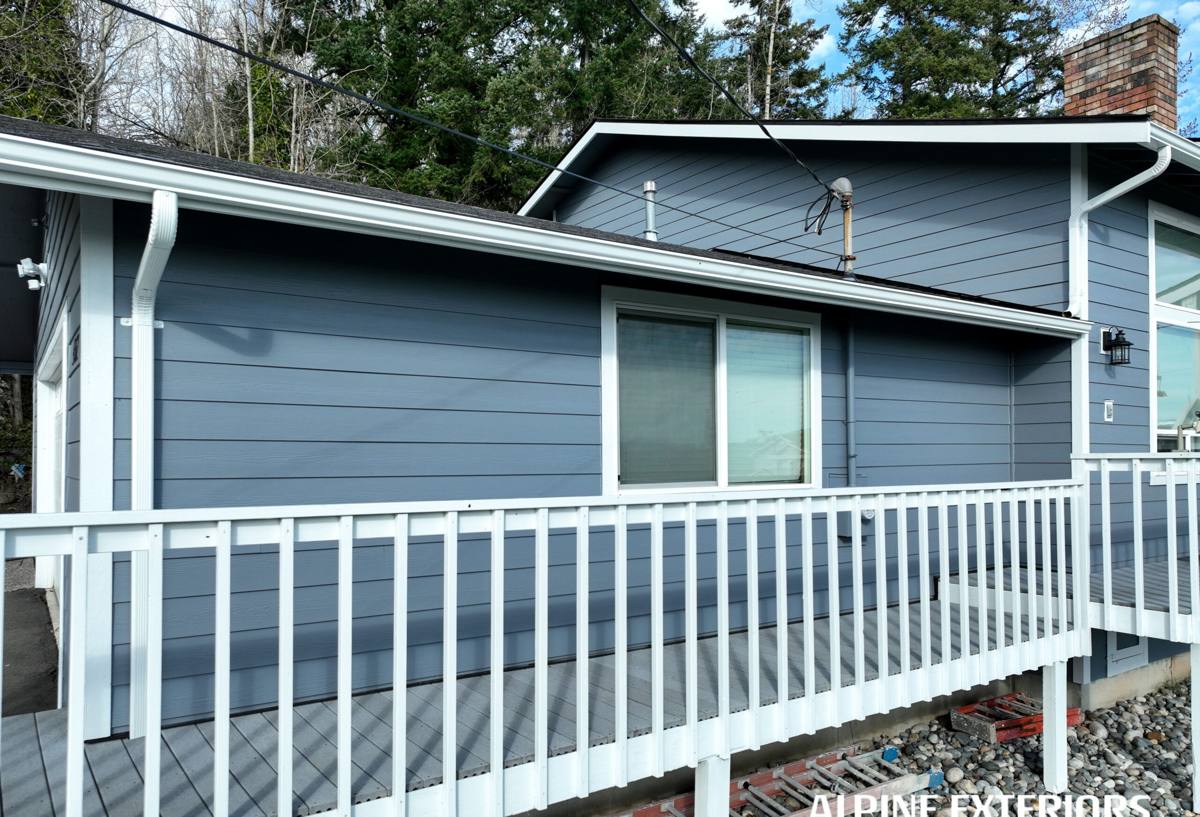
Moss doesn't respect the line between roof and wall. Shaded, north-facing roof slopes and the siding just below them deal with the same sustained dampness, and moss that establishes in a roof valley or along an eave can hold moisture against flashing and fascia long after a storm has passed. Because roofing and siding share flashing details at eaves, rakes, and wall transitions, a crew that treats the two systems as unrelated is more likely to miss the detail where they actually meet — and that's usually where a leak eventually starts. We handle roofing and siding work with that connection in mind rather than as two separate, disconnected trades.
Reducing Moss Pressure Without Chemicals You Don't Want
A metal roof already resists moss better than an organic shingle surface, but it isn't immune, especially in the joints, fastener recesses, and debris that can collect in valleys under tree cover. Keeping gutters and valleys clear of needles and leaf litter, and trimming back overhanging branches where practical, does more to keep moss pressure down long-term than any one-time treatment.
How Our Process Works
We start with an on-site inspection of the existing roof, deck condition, and any problem areas the homeowner has already noticed — staining, sagging, or interior signs of a past leak. From there we walk through material and system options with actual tradeoffs, not a single default recommendation, and give a written scope that spells out flashing details, underlayment, and fastening approach, not just "metal roof installed." Tear-off, when needed, lets us inspect the roof deck itself for hidden moisture damage before anything new goes down — a step that matters in a climate where a slow leak can go undetected under the old roofing for longer than homeowners expect. Installation follows manufacturer specifications for panel and clip type, and we walk the finished roof with the homeowner before calling the job done.
- On-site inspection of the existing roof and deck, including any known trouble spots
- Written scope of work detailing panel type, flashing approach, underlayment, and fastening method
- Tear-off and deck inspection where the existing roof is being replaced, not just covered
- Coastal-rated panel, clip, and fastener hardware matched to avoid galvanic corrosion
- Flashing integration at every valley, penetration, and roof-wall transition, not just field panels
- Final walkthrough with the homeowner before the job is considered complete
Cost Factors for a Metal Roof in Anacortes
We don't publish blanket pricing because the honest number depends on the specific house, but the factors that move cost up or down are consistent enough to explain plainly.
| Factor | How It Affects Cost |
|---|---|
| Roof size and pitch | Steeper or more complex rooflines take more labor and material to detail correctly |
| Panel system chosen | Standing seam runs higher up front than exposed-fastener panel systems |
| Number of valleys, penetrations, and transitions | Each one needs individual flashing work, adding labor time |
| Existing deck condition | Hidden rot or moisture damage found during tear-off adds repair scope |
| Tear-off vs. re-cover | Full tear-off costs more up front but allows deck inspection and correct new underlayment |
| Access and site conditions | Tree cover, steep lots, or difficult staging can affect labor time |
Why a Crew That Already Works Anacortes Matters
Metal roofing installation isn't a niche skill nationally, but installing it correctly for this specific coastline is a narrower specialty than a lot of homeowners realize. A crew that already works Anacortes and the rest of Skagit County has seen where local roofs actually fail — which valleys collect debris, which orientations hold moss longest, which fastener choices corrode fastest this close to salt water — and builds that knowledge into every job rather than treating each house as a generic install. That local pattern recognition is hard to replace with a general contractor working from a national spec sheet, and it's often the difference between a roof that performs quietly for decades and one that develops a slow, hard-to-trace leak within a few years.
What to Look For in a Metal Roofing Contractor Here
- A track record of metal roofing work specifically in Skagit County's coastal conditions, not just a general service area claim
- A clear explanation of how galvanic corrosion is avoided between panel, clip, and fastener metals
- Willingness to walk through flashing details at valleys and penetrations before work begins, not just after a problem shows up
- Proper licensing, bonding, and insurance verifiable before any contract is signed
- A written scope of work and warranty terms you can read and understand before committing
Maintaining a Metal Roof Once It's Installed
A correctly installed metal roof asks for very little upkeep, but a little goes a long way in this climate. Keeping gutters and valleys clear ahead of the wet season prevents debris buildup that holds moisture against panels and flashing. A periodic visual check after major storms — looking for lifted flashing, debris in valleys, or early moss establishment on shaded slopes — catches small issues before they become interior leaks. Beyond that, a metal roof installed to spec generally doesn't need the recoating or granule maintenance that other roofing materials require over their service life.
If you're weighing a metal roof for a home in Anacortes, we're glad to take a look at your specific roof, walk through what your slopes and exposure are actually dealing with, and give you a straight, no-pressure estimate.