 Burlington
 Metal Roofing Built for Lyman's Climate
Lyman sits in the Skagit Valley, where the weather doesn't do a home any favors. Winters bring long stretches of steady rain, spring and fall carry damp, low-light stretches that never quite dry out, and shade from surrounding trees and hillsides keeps roofs wet longer than homes out in the open. Add in the moisture the whole region pulls off Puget Sound and the river valley, and you've got conditions that are hard on any roofing material — but especially hard on ones that rely on granules, seams, or porous surfaces to keep water out. Metal roofing handles that combination better than almost anything else on the market, provided it's installed correctly. That "provided" is doing a lot of work, and it's the reason this page exists.
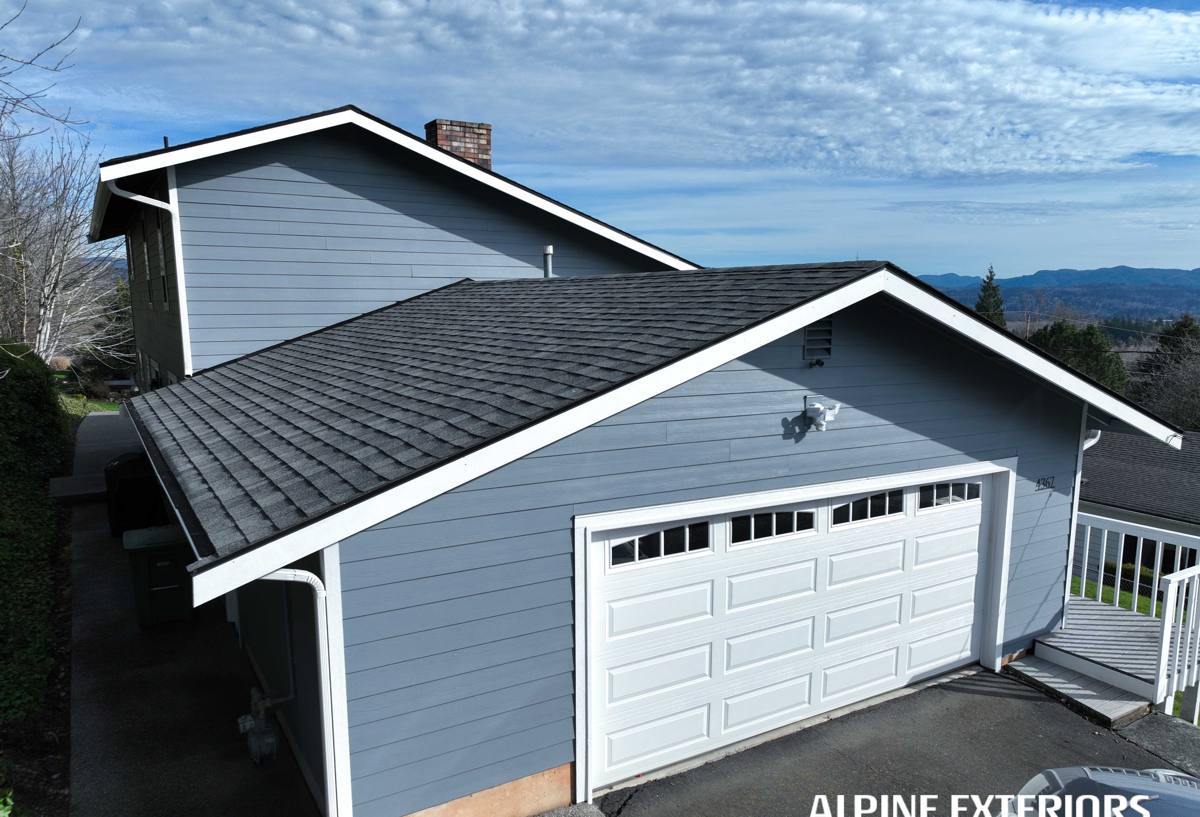
What Lyman Homes Are Actually Up Against
Before talking about metal panels, it helps to be honest about what's working against a roof out here.
Moss and Organic Growth
Skagit County's combination of shade, moisture, and mild temperatures is close to ideal for moss. On asphalt shingles, moss roots into the granule surface, lifts tabs, and holds water against the deck long after the rain stops. That slow, constant dampness is what shortens a shingle roof's life out here far more than any single storm does.
Driving Rain and Wind-Driven Water
Storms coming through the valley don't just fall straight down — wind pushes rain sideways under shingle edges, around poorly flashed penetrations, and into any gap that wasn't sealed with intention. A roof that only sheds water well in calm conditions isn't built for this area.
Salt-Influenced Air
The broader Skagit Valley and Puget Sound region carries a mild salt influence in the air, especially with the marine weather systems that move through. It's not the harsh, direct salt spray you'd get right on the open coast, but over years it can accelerate corrosion on unprotected or poorly coated metal fasteners, flashing, and trim. Material choice and coating quality matter more here than they would in a dry inland climate.
Freeze-Thaw and Temperature Swings
Skagit County doesn't get brutal winters, but it does get enough freeze-thaw cycling to matter. Water that's trapped under moss, in a clogged valley, or behind failed flashing can freeze, expand, and open up small problems into bigger ones over a single winter.
Why Metal Roofing Makes Sense in This Climate
Metal roofing addresses most of what's listed above directly, not incidentally.
- Smooth, hard panel surfaces give moss spores and algae almost nothing to root into, compared to the textured, granulated surface of asphalt shingles.
- Steep water shed and few horizontal laps mean less opportunity for wind-driven rain to work its way underneath.
- Quality coated steel and aluminum resist corrosion far longer than exposed fasteners or bare metal, which matters given the region's mild salt influence.
- Panels don't absorb water the way a shingle mat can, so freeze-thaw cycling doesn't degrade the material itself.
- A correctly installed metal roof routinely outlasts two or more asphalt shingle roofs, which matters when re-roofing in the Pacific Northwest is neither cheap nor pleasant to live through.
None of that means metal roofing is maintenance-free or foolproof. It means the failure points move — from the field of the roof to the details: seams, fasteners, flashing, and ventilation. Get those right and a metal roof will genuinely outperform other options here. Get them wrong and you can end up with condensation problems, noise complaints, or leaks that are harder to trace than a simple shingle failure.
Choosing the Right Metal Roofing System
Not all metal roofing is built the same, and the right choice depends on the home, the budget, and how long the owner plans to stay in it.
| System | How It's Fastened | Best For | Trade-Offs |
|---|---|---|---|
| Standing Seam | Concealed clips, no exposed fasteners on the panel field | Long-term durability, resale value, homes with moderate to steep pitch | Higher upfront cost; requires experienced installers to get seams and clip spacing right |
| Exposed-Fastener Panel | Screws driven through the panel face into the deck or purlins | Lower budgets, outbuildings, and simpler roof geometries | Fasteners and their gaskets are a maintenance item and eventual failure point; needs periodic inspection |
| Stone-Coated Steel | Interlocking panels with a granulated coating | Homeowners who want a shingle or shake look with metal's underlying durability | More installation steps; coating adds some texture that can hold moisture longer than smooth panel |
For most Lyman homes, we lean toward standing seam when the budget allows it. The lack of exposed fasteners removes the single most common long-term failure point in this climate — a fastener gasket that dries out, shrinks, and starts letting water through years down the road. Exposed-fastener systems aren't wrong, they just come with a maintenance commitment that not every homeowner wants to take on.
Material: Steel vs. Aluminum
Both hold up well when properly coated. Steel is generally more affordable and very strong; aluminum resists corrosion inherently and is a common choice near marine-influenced air, which makes it worth discussing given the Puget Sound moisture that moves through this region. We'll walk through which makes more sense for your specific roof rather than defaulting to one or the other.
What a Correct Metal Roofing Installation Actually Involves
This is where most of a metal roof's performance is decided — long before the panels themselves ever go down.
Deck Inspection and Prep
We check the existing deck for soft spots, rot, and prior water damage, particularly around valleys and penetrations where past moss and moisture issues tend to concentrate. Any compromised sheathing gets replaced before anything else happens.
Underlayment
Metal roofing needs a synthetic or high-temperature underlayment rated for the expansion and contraction metal panels go through, and it needs full ice-and-water protection at eaves, valleys, and penetrations. In a climate with this much sustained moisture, underlayment isn't a formality — it's the backup system if anything upstream ever fails.
Ventilation
Metal conducts temperature differently than shingles, and without correct intake and exhaust ventilation, condensation can form on the underside of the panels — a problem that shows up as mysterious "leaks" that have nothing to do with the roof surface itself. We size and balance ventilation as part of the job, not as an afterthought.
Flashing and Penetrations
Chimneys, vents, skylights, and valleys are where the majority of real-world roof leaks happen, metal or otherwise. Custom-formed flashing, correctly lapped and sealed in the right order, is non-negotiable — especially with wind-driven rain being as common as it is in this valley.
Fastening and Panel Layout
Panel layout gets planned before the first piece goes up, accounting for expansion, roof geometry, and how water will actually move across the surface in a real storm — not just in a straight-line rain.
Our Process, Start to Finish
- On-site evaluation — We look at the existing roof, deck condition, ventilation, and any moss or moisture history specific to the property.
- System recommendation — We walk you through standing seam vs. exposed-fastener vs. stone-coated options honestly, based on your roof and budget, not a one-size answer.
- Written estimate — Clear scope, material specs, and pricing before any work begins.
- Tear-off and deck repair — Old roofing removed, deck inspected and repaired as needed.
- Underlayment and flashing — Full moisture barrier and custom flashing at every penetration and transition.
- Panel installation — Installed to manufacturer spec with correct fastening, clip spacing, and expansion allowance.
- Final walkthrough — We review the finished roof with you and cover basic care going forward.
Ongoing Care: What Actually Keeps a Metal Roof Performing
Metal roofing needs far less upkeep than shingles, but "far less" isn't "none." A short list of habits goes a long way in this climate:
- Keep gutters and valleys clear of needles and debris — even on metal, standing debris holds moisture against seams and fasteners longer than it should.
- Trim back overhanging branches where practical to reduce shade and debris load, both of which encourage moss and algae growth nearby.
- Do a visual check after major windstorms for lifted trim, loose fasteners, or debris caught in valleys.
- Have exposed-fastener systems inspected periodically — gaskets are a wear item and are cheap to replace proactively versus after a leak.
- Avoid pressure washing metal panels directly; it can drive water under laps and damage coatings. A soft rinse handles most buildup.
What Metal Roofing Costs and What Drives the Price
We won't quote a number without seeing the roof, but the factors that move price up or down are consistent across jobs.
| Factor | Effect on Cost |
|---|---|
| Panel system (exposed-fastener vs. standing seam) | Standing seam typically costs more due to labor and concealed-fastener hardware |
| Roof pitch and complexity | Steeper, multi-plane roofs with more valleys and penetrations take longer and cost more to flash correctly |
| Deck condition | Rot or soft sheathing found during tear-off adds repair cost, but skipping it isn't an option |
| Material (steel vs. aluminum) | Aluminum generally runs higher but offers stronger inherent corrosion resistance |
| Tear-off vs. overlay | Full tear-off costs more upfront but is the only way to properly inspect and prep the deck |
Metal roofing costs more upfront than asphalt shingles almost every time. The way to think about it isn't the sticker price alone — it's the price divided by the years of service you actually get, plus the maintenance and re-roofing cycles you're avoiding along the way.
Why a Local Crew Matters for This Job
Metal roofing rewards contractors who already understand the specific conditions it's going into. A crew that regularly works Skagit County knows how much moss pressure a shaded, low-slope section is likely to see, how far wind-driven rain travels under a poorly lapped flashing detail in this valley, and how the region's damp stretches affect curing times and scheduling. That's knowledge you don't get from a manufacturer's install manual alone — it comes from having done the work here, on homes with the same climate exposure yours has. It also means someone is local if a question comes up five or ten years down the road, rather than a crew that installed a roof once and moved on to the next county.
If you're weighing metal roofing for a home in Lyman, we're glad to come take a look, walk the roof, and give you an honest read on what it needs — no pressure, no upsell. Reach out using the form below to set up a free estimate.