 Burlington
 Lyman sits in the Skagit Valley east of Burlington, close enough to the river and the surrounding tree cover that a deck out here spends most of the year damp, shaded, or both. That combination — salt-laden air moving up the valley, driving rain that doesn't let up for days at a stretch, and a moss season that runs longer than it does in drier parts of the state — is hard on any exterior surface, but it's especially hard on a structure that sits low to the ground, catches runoff from the house, and often sits under trees for at least part of the day. This page covers what deck repair actually involves for a Lyman property, what we look for, and how we approach the work.
What Skagit Valley Weather Does to a Lyman Deck
A deck fails from the ground up and from the inside out, not from the surface down. Water works into end grain, fastener holes, and the ledger connection at the house long before it shows up as a soft board or a gray, weathered surface. In a valley climate like this one, that process runs faster than it would in a drier region because the wood or composite substructure rarely gets a real chance to dry out between storms.
Three conditions do most of the damage. Driving rain from Pacific storm systems pushes water sideways and up under boards and railings, not just straight down onto the surface, so it finds gaps that a purely vertical rain never would. Moss and mildew take hold on shaded, damp surfaces — common under tree cover around Lyman — and hold moisture against the wood or decking material long after the rain has stopped, which is exactly the kind of sustained dampness that accelerates rot in wood framing and staining in composite surfaces. And salt-laden air moving up the valley corrodes exposed fasteners, joist hangers, and railing hardware faster than it would further inland, which matters most at the connections holding the whole structure together.
Why Lyman's Setting Makes This Worse Than a Generic Deck Problem
A lot of decking material and hardware is rated and marketed for a national-average climate — one with real dry stretches where a deck gets to shed moisture and reset. Lyman doesn't get much of that. Between tree cover, valley humidity, and a wet season that runs long, a deck here stays damp more of the year than a deck in a drier part of the state, and that changes what "normal wear" looks like and how soon a repair actually needs to happen.
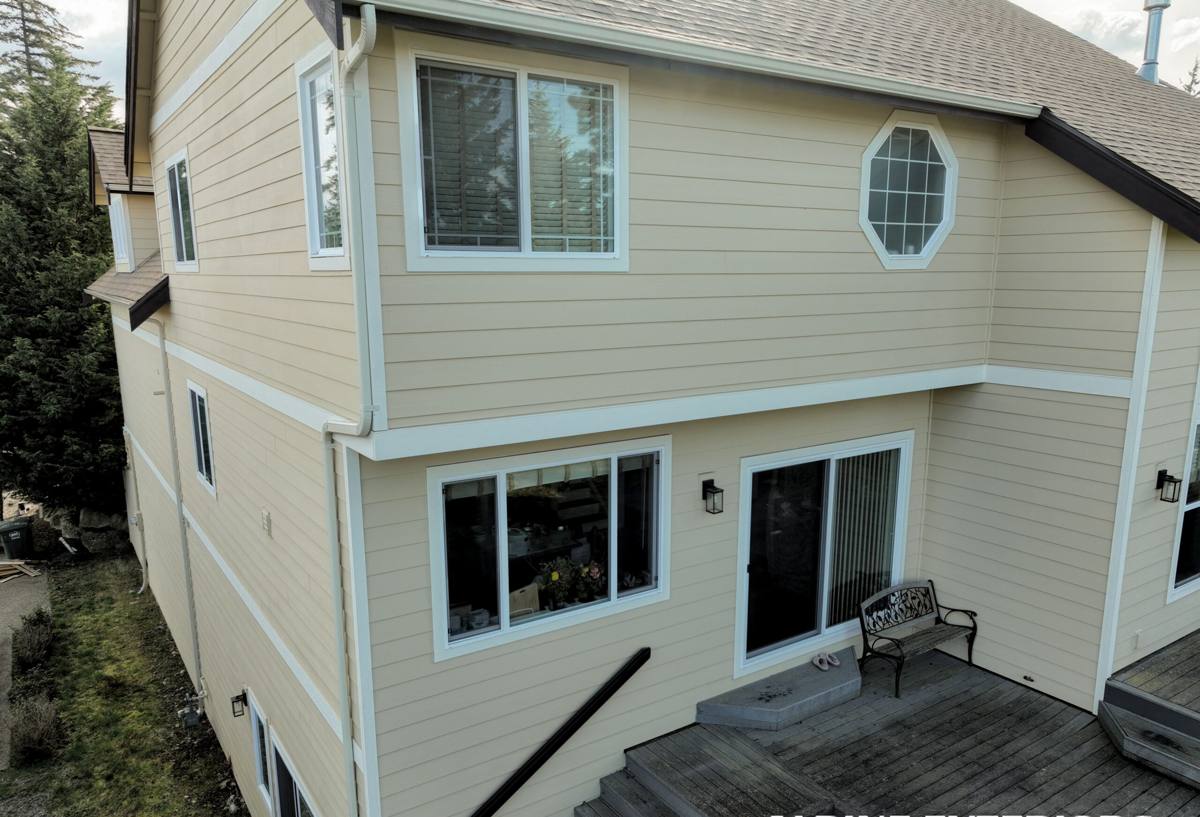
What a Deck Repair Actually Needs to Cover Here
Deck repair isn't just replacing the boards that look bad. In this climate, the boards are often the last thing to fail, not the first — by the time a board is visibly rotted or a composite surface is staining, the fasteners and framing underneath have usually been dealing with moisture for a while already. A correct repair starts with the structure and works outward.
The Ledger Connection
The ledger board — where the deck attaches to the house — is the single most important connection on the structure, and it's also the one most likely to be hiding a problem. Flashing at this joint keeps water from running behind the ledger and into the house rim joist. If that flashing was installed poorly or has failed over time, moisture gets trapped exactly where it does the most damage and is hardest to see without pulling boards. We check this connection on every repair call, even when the visible complaint is somewhere else on the deck.
Framing and Fasteners
Joists, beams, and posts need to be checked for soft spots, cracking, and corrosion at every fastener and hanger. In a valley climate with this much sustained moisture, standard-grade fasteners corrode faster than they would in a drier region, and a corroded joist hanger is a structural problem, not a cosmetic one. We look at hardware grade as part of every inspection, not as an afterthought.
Decking and Railings
Whether the surface is wood or composite, damaged boards need to be identified individually rather than assumed to all need replacement — some sections often hold up fine while others, usually the shadier or lower spots, fail first. Railings get checked separately, since loose or corroding railing hardware is both a safety issue and often an early sign of the same moisture problems affecting the rest of the structure.
How We Approach a Repair Call in Lyman
We start with a full inspection, not just a look at whatever prompted the call. A soft board or wobbly railing is often a symptom, and treating only the symptom means the same problem shows up again in a season or two.
- Inspect the whole structure — ledger connection, framing, fasteners, and surface, not just the reported issue
- Identify the actual cause — flashing failure, corroded hardware, trapped moisture from shade or debris, or simple material fatigue
- Scope the real repair — which boards, hardware, or framing members actually need replacing, and which don't
- Match materials appropriately — hardware graded for this climate, and decking that reasonably matches what's already there where a full resurface isn't warranted
- Explain what we find plainly — including when a deck needs less work than a homeowner expected, or when a full resurface makes more sense than patch repairs
We don't upsell a full rebuild when a targeted repair will hold, and we don't recommend a patch job when the framing underneath tells us it won't last. The goal is an honest scope based on what's actually wrong, not a default answer.
Repair vs. Resurface vs. Rebuild
Not every deck problem calls for the same level of work, and the right answer depends on how far the damage has spread and whether the substructure is sound.
| Situation | Typical Approach | What It Involves |
|---|---|---|
| A few damaged boards, sound framing | Targeted repair | Replace affected boards and fasteners, check surrounding hardware |
| Widespread surface wear, framing still sound | Resurface | Replace decking across the structure while keeping the existing frame |
| Rot or corrosion in framing, ledger, or posts | Structural repair or rebuild | Replace affected framing members and hardware before addressing the surface |
| Ledger flashing failure with hidden water damage | Structural repair | Open the connection, address rot, correct the flashing, then rebuild that section |
Cost Factors for Lyman Deck Repairs
We don't publish blanket pricing because the real cost depends entirely on what an inspection finds, but the factors that move a repair's cost up or down are consistent enough to lay out honestly.
| Factor | How It Affects Cost |
|---|---|
| Extent of hidden damage | Rot or corrosion found once boards come up can add scope beyond the original complaint |
| Ledger and framing condition | Structural repair costs more than surface-level board replacement |
| Decking material | Composite and PVC boards generally cost more than wood but hold up longer in shaded, damp conditions |
| Hardware grade | Coastal-rated or stainless fasteners cost more upfront but resist corrosion far longer in this climate |
| Access and site conditions | Tree cover, tight clearance under the deck, or difficult staging can affect labor time |
Signs a Lyman Deck Needs Attention
Some of these are obvious, and some are easy to miss until they've been a problem for a while. Worth checking for on a regular basis, especially heading into or coming out of the wet season.
- Soft or spongy spots underfoot, even small ones — these almost always mean moisture has reached the framing
- Railings or posts that flex or feel loose when pushed
- Visible moss or persistent green staining on the surface, especially in shaded corners
- Rust streaking near fasteners or hardware, a sign of corrosion starting underneath
- Gaps or separation where the deck meets the house at the ledger board
- Standing water that doesn't drain within a reasonable time after rain stops
- Boards that have cupped, split, or visibly separated from their fasteners
Maintenance That Actually Extends a Deck's Life Here
Repair addresses what's already gone wrong; a few habits slow down how fast the next problem shows up, which matters more in a climate that doesn't offer much of a dry stretch to recover in between storms.
- Keep gaps between boards clear of leaves and debris so water and airflow can move through as designed
- Trim back branches or landscaping that keep sections of the deck shaded and damp longer than the rest
- Check railing posts and visible hardware a couple of times a year, especially after the wetter months
- Address soft spots or movement right away rather than waiting for a scheduled inspection — these are structural signs
- Reseal or refinish wood decking on a schedule appropriate to the product, since shade and valley moisture shorten the useful interval between treatments here
Why It Matters That We Already Work in Lyman
A crew that mostly works drier or more exposed parts of the county can still do competent deck repair, but a shaded, valley-floor property like the ones around Lyman has patterns that come up more often here than elsewhere in Skagit County — moss buildup on north-facing and tree-covered sections, fastener corrosion tied to sustained dampness rather than a single storm event, and ledger connections that need to account for water sitting against the house longer than it would on a more exposed lot. Working this area regularly means we're not guessing at how those conditions behave. We know what hardware grade actually holds up under this level of sustained moisture and what a ledger flashing detail needs to survive a real Skagit Valley wet season, because we've handled decks with these exact conditions before.
That familiarity also makes for a more accurate first estimate — less back-and-forth once the work is underway, because the inspection already accounts for how a Lyman lot behaves rather than applying a generic checklist written for a different climate.
Get an Honest Look at Your Deck
Whether you're dealing with a specific problem — a soft board, a loose railing, water pooling where it shouldn't — or just want a straight assessment of where your deck stands after another wet Skagit season, we're glad to walk the site and tell you plainly what we find, including if the answer is that it doesn't need much yet. Reach out below for a free, no-pressure estimate.