 Burlington
 Board & Batten in Lyman: A Style That Only Works If the System Behind It Is Right
Board and batten is one of the most requested siding styles we see in the Lyman area — the vertical lines read as classic Pacific Northwest farmhouse or modern craftsman depending on the trim and color, and it fits the barns, outbuildings, and older homes scattered through this part of Skagit County. It also has a reputation, earned over decades of cedar and vinyl installs, for being one of the harder styles to get right. The vertical boards and narrow battens create a lot of seams, a lot of fastening points, and a lot of opportunities for water to find its way behind the cladding if the install isn't done correctly. In a climate that delivers salt-laden air off the Sound, long stretches of driving rain, and a moss season that seems to start earlier every year, "close enough" board and batten doesn't hold up. We only install it as a James Hardie fiber cement system, built the way this style needs to be built for a home near Lyman and Burlington.
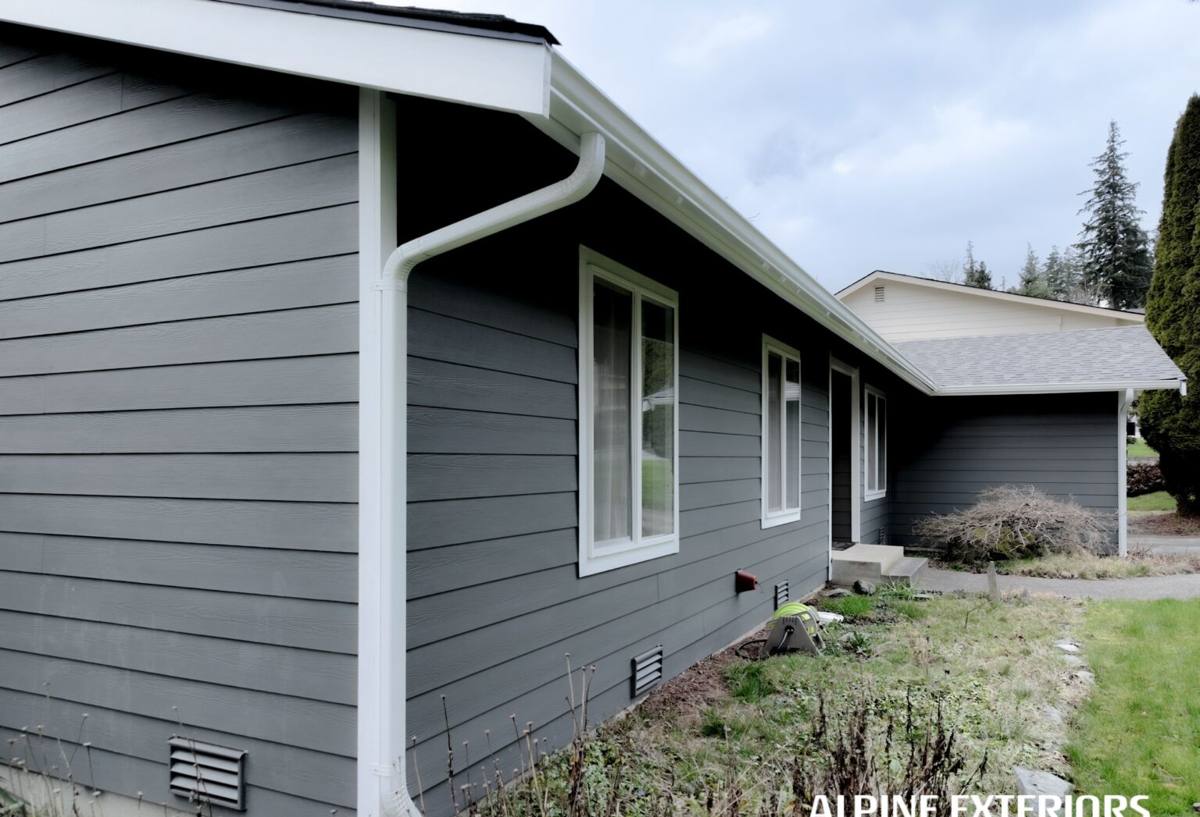
What Skagit County's Climate Does to Board & Batten Siding
Board and batten's vertical seams behave differently than horizontal lap siding. Water doesn't shed off each course the same way — it runs straight down the face of the panel and along the batten edges, which means every seam, every fastener, and every piece of trim is a potential entry point if it isn't sealed and flashed correctly. In this region that matters more than most places, for a few specific reasons:
- Salt air off the nearby Sound accelerates corrosion on fasteners, flashing, and any exposed metal — cheap or improperly coated hardware fails years before the siding around it would.
- Driving rain off winter storms doesn't just fall straight down; it gets pushed sideways into vertical seams and battens, which is exactly where a poorly built board and batten system leaks first.
- Moss and algae season runs long here — shaded north and west walls stay damp for weeks at a time, and any siding material that absorbs moisture or has exposed raw wood edges will feed moss growth and slow rot.
None of this makes board and batten a bad choice for a Lyman home. It means the material and the installation both have to be built for these conditions, not for a drier climate where the same style gets away with shortcuts.
What a Correct Board & Batten Installation Actually Involves
A lot of the failures we get called out to inspect on older homes in the Burlington and Lyman area trace back to the same handful of shortcuts. Getting board and batten right means paying attention to the parts nobody sees once the job is done:
Drainage and Rain Screen
Vertical siding needs a drainage gap behind it so any water that does get past the surface can drain and dry instead of sitting against the wall sheathing. This is non-negotiable in a climate with this much sustained rainfall.
Weather-Resistive Barrier and Flashing
Every window, door, and penetration needs proper flashing integrated with the weather barrier, lapped correctly so water is directed out and down, never trapped behind the cladding. Board and batten's vertical runs make flashing details at the top and bottom of each wall section especially important.
Fastening Pattern
Both the base panel and the battens need to be fastened per the manufacturer's specification — correct fastener type, spacing, and embedment. Undriven or overdriven nails, or fasteners that hit only the panel and miss the framing, are one of the most common causes of loose boards and premature failure.
Sealed, Not Just Butted, Seams
Where boards meet trim, corners, and penetrations, the joint needs to be sealed with the right product, not just butted tight and left to the elements. In a driving-rain climate, a gap that looks fine on install day opens up within a season or two if it wasn't properly treated.
Why We Install James Hardie for Board & Batten — Not Cedar, LP, or Vinyl
Board and batten is available in cedar, engineered wood, vinyl, and fiber cement, and each one behaves differently once it's exposed to years of Skagit County weather. We made the decision to install only James Hardie fiber cement, and for this particular style the reasoning is even more pronounced than it is for lap siding.
| Material | How It Handles This Climate | Why We Don't Install It |
|---|---|---|
| Cedar board & batten | Beautiful when new; absorbs moisture readily, especially at cut edges and battens | Requires ongoing refinishing and sealing to resist rot and moss in a wet climate; labor-intensive to maintain long-term |
| LP SmartSide panels | Engineered wood substrate; performs reasonably when installed and maintained precisely | Wood-based core means any breach in the factory coating or a poorly sealed cut edge invites moisture damage over time |
| Vinyl board & batten | Low cost, low maintenance, but thin material flexes and gaps in wind | Doesn't resist wind-driven rain intrusion at seams as well as a rigid fiber cement system, and the look is thinner and less authentic |
| James Hardie fiber cement | Non-combustible, dimensionally stable, factory-finished, engineered for Pacific Northwest moisture | What we install — see below |
James Hardie's fiber cement doesn't absorb water the way wood-based products do, it doesn't expand and contract the way vinyl does in temperature swings, and it holds a factory-applied ColorPlus finish that's baked on rather than field-painted, which matters enormously on a style with this many exposed edges and seams. Hardie's HZ5 product line is specifically engineered for wetter, cooler climates like ours — it's built to resist the moisture cycling that this part of Washington puts siding through year after year.
Colors and Finish for a Lyman-Area Home
Board and batten's strong vertical lines make color choice more visible than it is on lap siding — the contrast between the batten shadow lines and the field color is part of the look. ColorPlus finishes come pre-baked at the factory in a range of colors that hold up to UV and moisture without the fading and chalking that field-applied paint shows within a few years, which matters here where damp, shaded walls are prone to visible weathering and mildew streaking if the finish isn't durable. We'll walk through color and trim combinations that fit the surrounding homes and architecture in the Lyman and Burlington area rather than pushing a one-size answer.
Our Process for a Board & Batten Project
Every project starts with an on-site inspection of the existing walls, sheathing, and trim — not just a measurement for materials. On a style like board and batten, what's behind the old siding matters as much as what goes back up.
- On-site assessment of existing siding, sheathing condition, and any moisture or rot found during removal
- Confirmation of drainage plane and weather-resistive barrier, repaired or replaced as needed
- Proper flashing at all windows, doors, and penetrations before a single board goes up
- James Hardie panel and batten installation per manufacturer fastening specification
- Sealed joints and trim details built for driving rain, not just dry-weather appearance
- Final walk-through so you know exactly what was done and why
Cost Factors for Board & Batten in This Area
Board and batten typically costs somewhat more than standard lap siding on a like-for-like basis, mostly due to the added labor of installing and fastening both the base panels and the individual battens. Exact pricing depends on your home's size, current wall condition, and trim complexity, but the factors below generally drive the estimate:
| Factor | Why It Affects Cost |
|---|---|
| Existing wall condition | Rot or moisture damage found during tear-off needs repair before new siding goes up |
| Wall height and complexity | Gables, dormers, and multiple stories add labor and material cutting |
| Trim and batten spacing | Tighter batten spacing or custom trim details increase material and install time |
| Access | Rural lots and outbuildings around Lyman sometimes need extra staging or equipment access |
We'll give you an itemized, honest number after seeing the home — not a phone-quoted range that changes once we're on site.
Why a Crew That Already Works Lyman Matters
Lyman sits in a part of Skagit County with its own mix of older farmhouses, newer builds, and rural properties, and a crew that regularly works this area already understands the wall conditions and weather exposure common here — from moss buildup on shaded north walls to the driving rain patterns that come through in winter storms. That familiarity shows up in the details: how flashing gets integrated at trim, how battens get sealed at penetrations, and how the whole system is built to shed water rather than just look finished on install day. It also means a warranty claim or a maintenance question down the road doesn't require explaining your property to someone who's never seen it.
Maintenance and Long-Term Care
One of the practical advantages of a correctly installed Hardie board and batten system in this climate is how little upkeep it asks for compared to cedar. There's no re-staining or re-sealing schedule to keep up with. Periodic rinsing to keep moss and algae from establishing on shaded walls, an annual look at caulked joints and trim, and prompt attention if a panel is ever impacted are really the extent of it. That's a meaningful difference over a 20-30 year ownership horizon in a climate this wet.
If you're considering board and batten siding for a home in the Lyman or Burlington area, we're happy to take a look and give you a straightforward, no-pressure estimate — including an honest read on your current siding's condition before you commit to anything.